
Monuments of the Iberian Peninsula
A catalogue of 196 castles, citadels, monasteries, cathedrals, churches, shrines, mosques, hermitages and windmills. Filter by type or region, or search by name.
 Castle
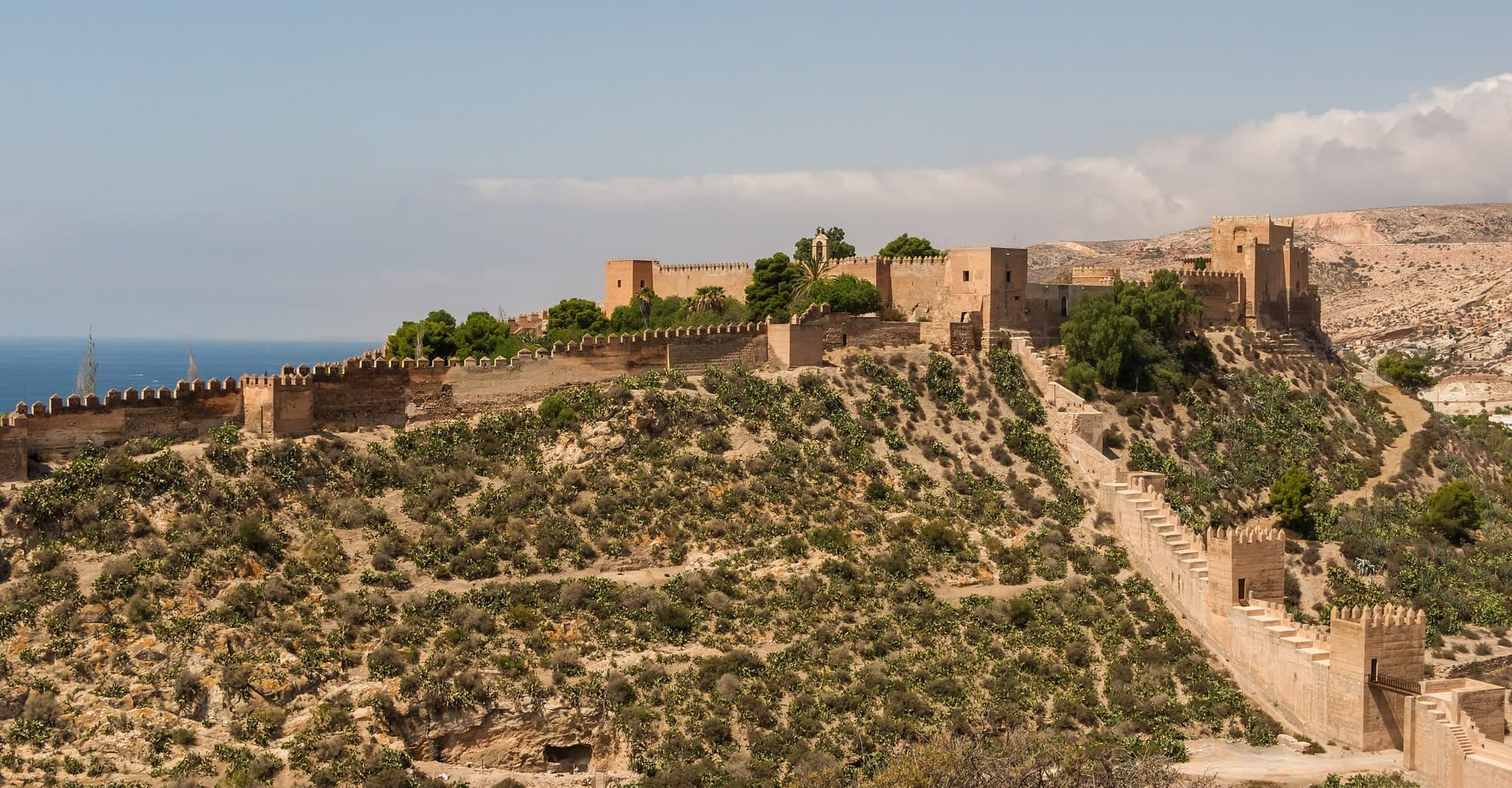
Alcazaba and Walls of San Cristóbal Hill
Almost a thousand years of history on a hilltop in Almería: one of the largest and best-preserved Moorish alcazabas on the peninsula, joined to a ring of walls and a Christian castle.
 Castle
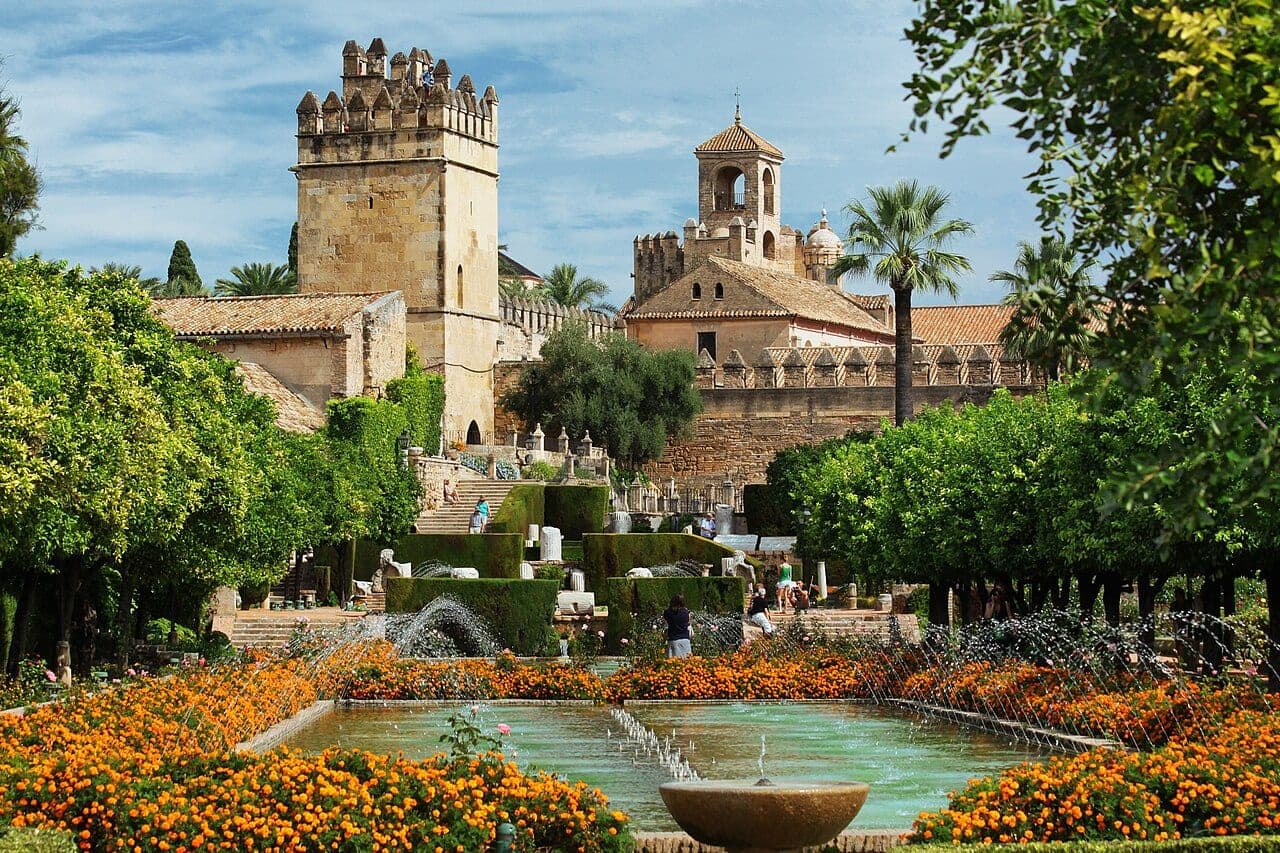
Alcázar of the Christian Monarchs
Beside the Guadalquivir, the Alcázar of the Christian Monarchs sums up centuries of Córdoba's history: Romans, Umayyads, Almohads, Castilian kings, the Inquisition and a prison.
 Castle
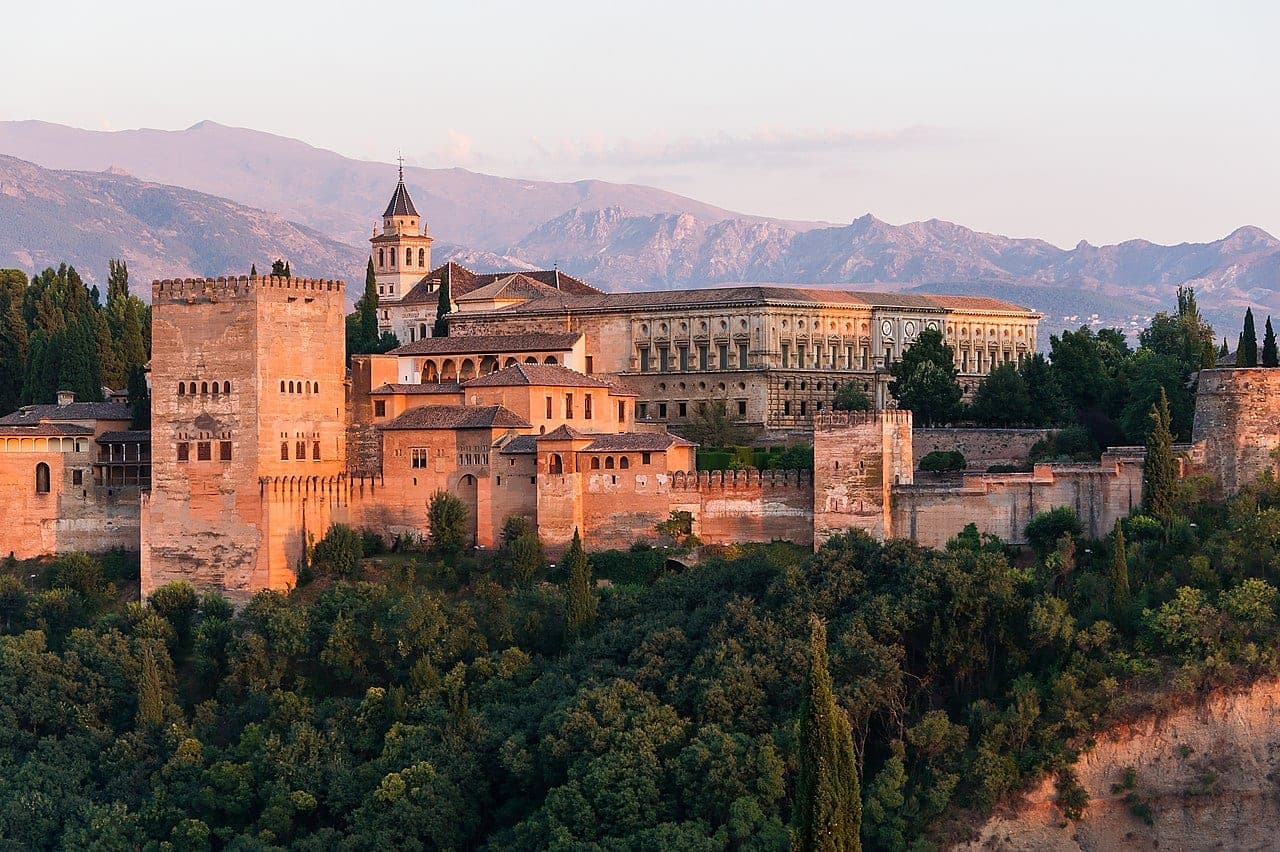
Alhambra
A Nasrid palatine city overlooking Granada, with palaces whose decoration ranks among the high points of Andalusi art, along with gardens and an alcazaba woven into the landscape.
 Church
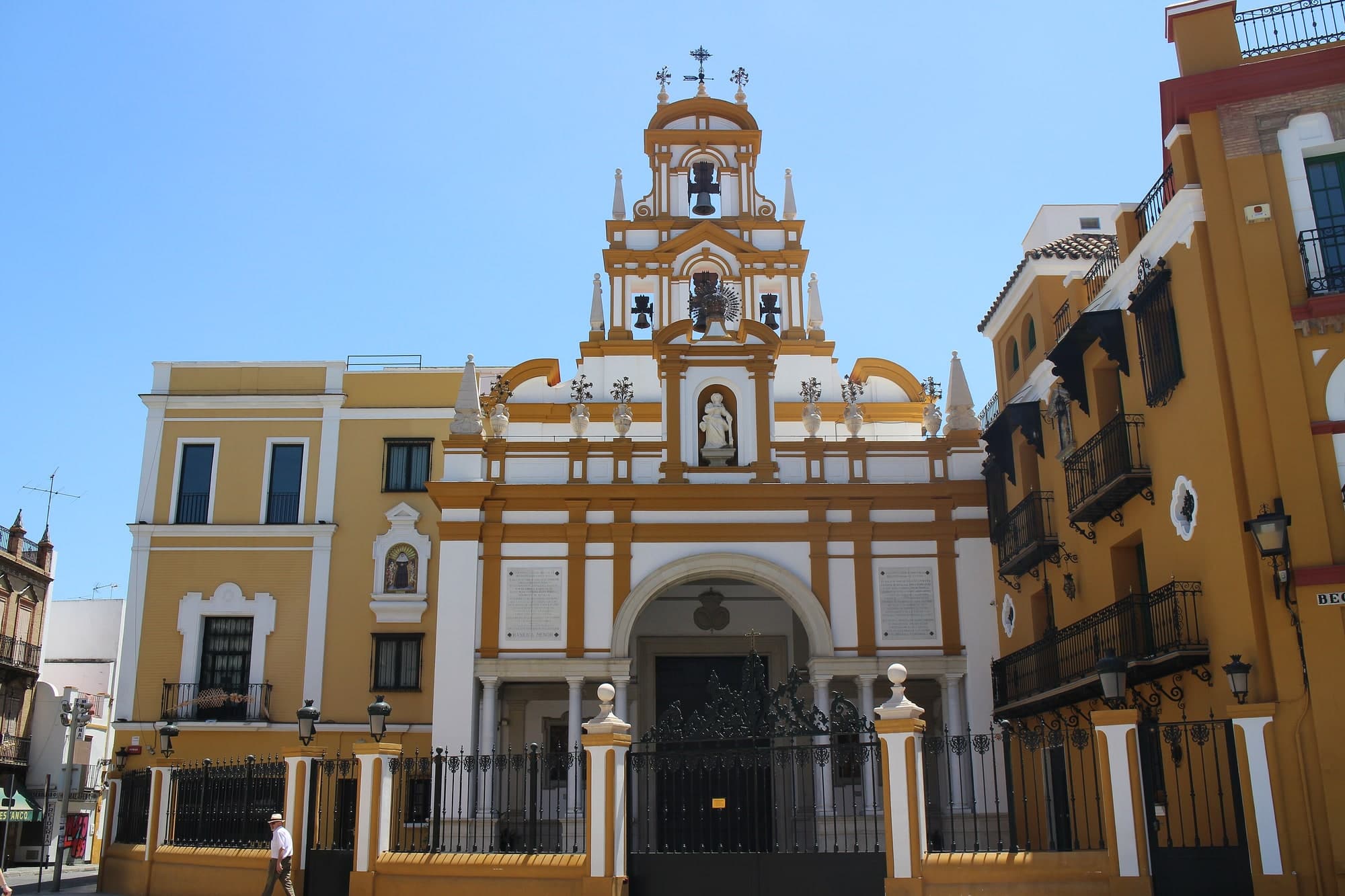
Basílica de la Macarena
Beside the Ronda Histórica, the Basílica de la Macarena is home to the Esperanza Macarena and her brotherhood, the stars of Seville's Madrugada in the early hours of Good Friday.
 Church
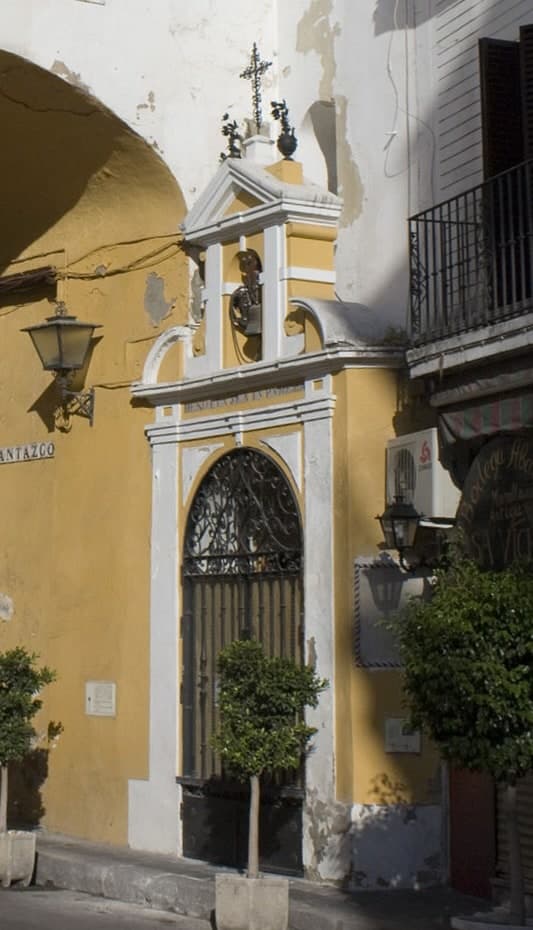
Chapel of the Pura y Limpia
A small 18th-century street chapel beside the Postigo del Aceite, one of the few surviving reminders in Seville of popular devotion to the Immaculate Conception.
 Monastery
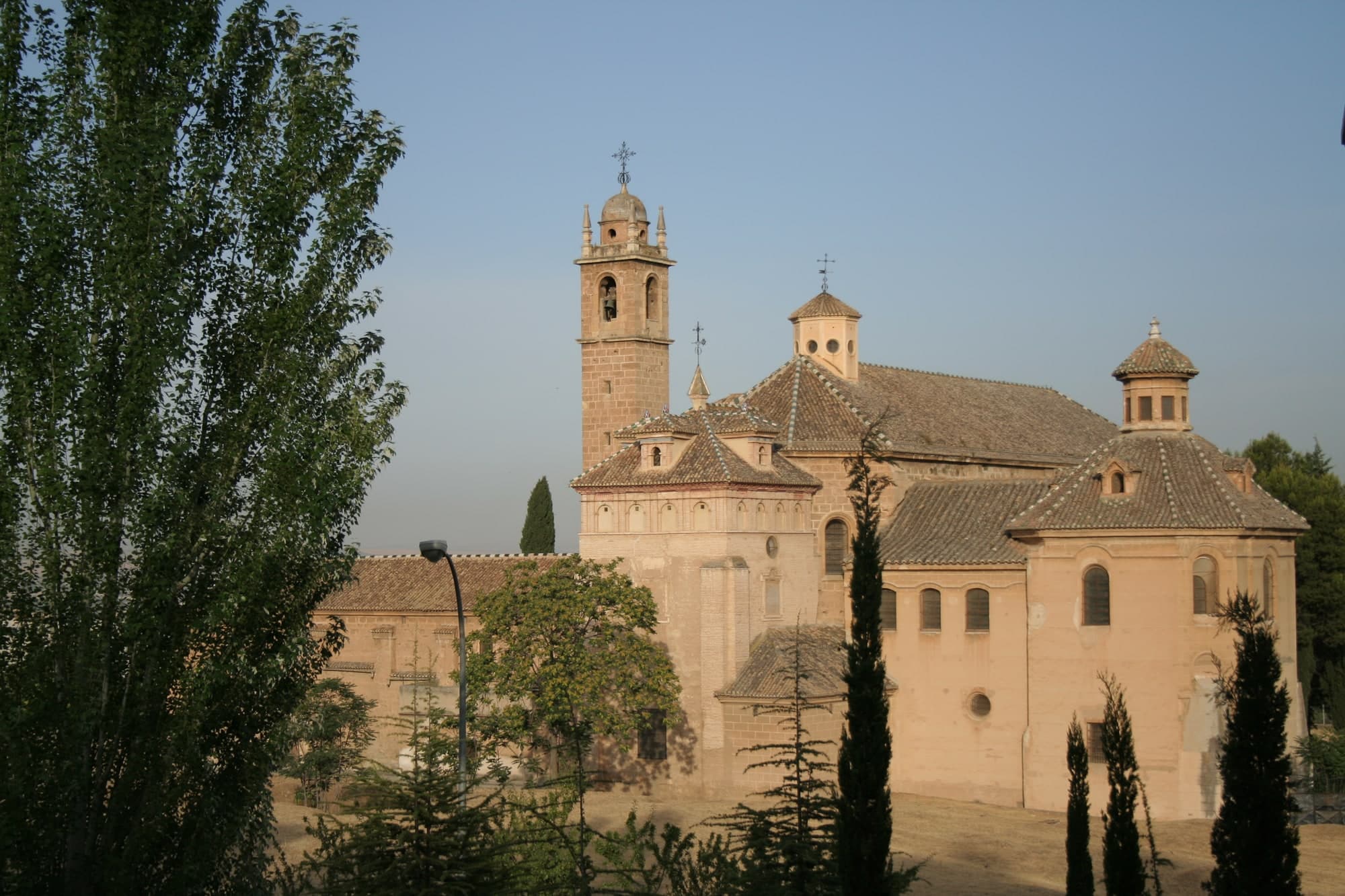
Granada Charterhouse
The Granada Charterhouse, a monastery founded in the 16th century, is one of the high points of Spanish Baroque architecture and an unmissable visit in the city.
 Castle
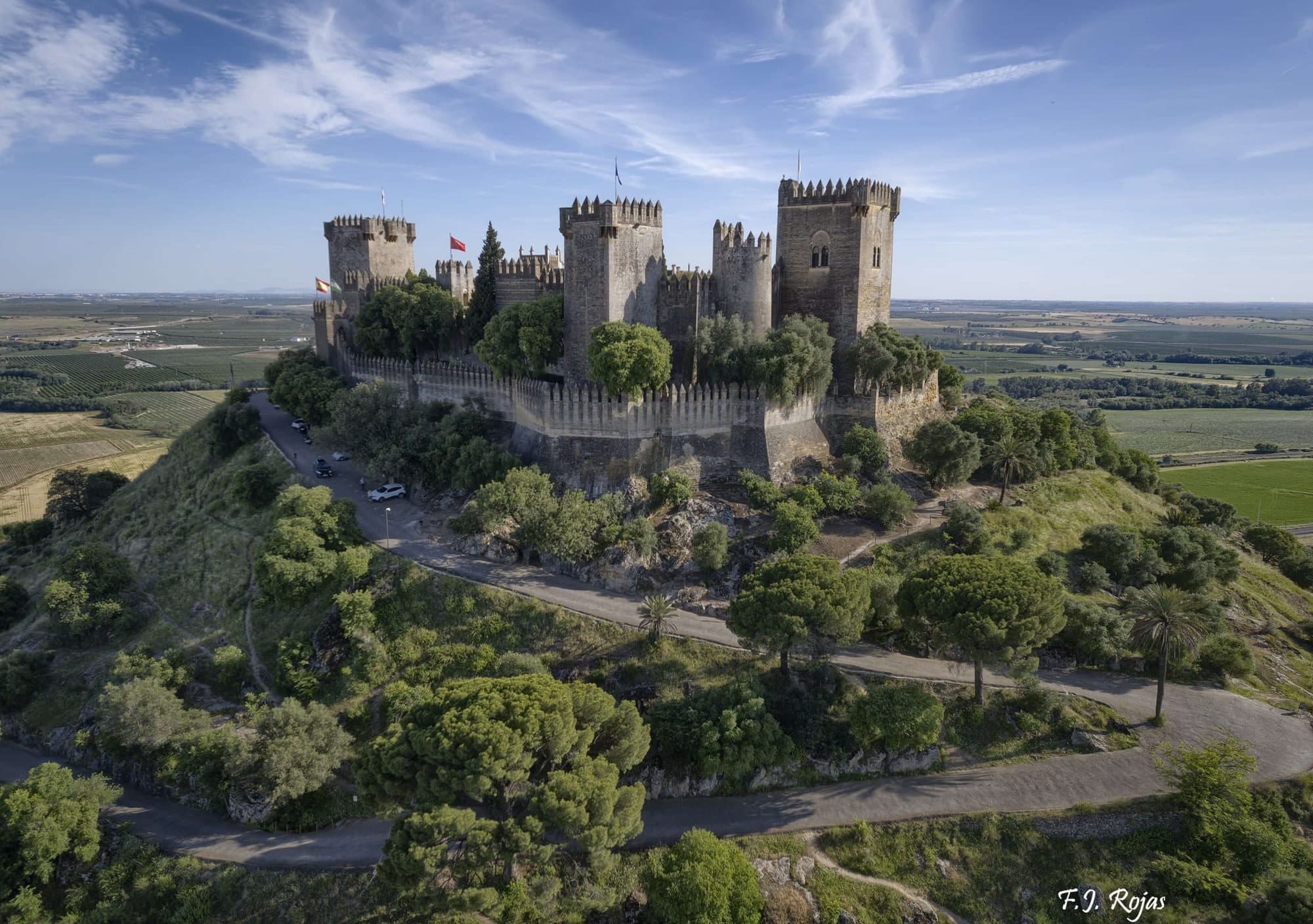
Almodóvar del Río Castle
An Andalusi fortress dating from 760, perched on the hill of El Redondo, with imposing towers and a careful early 20th-century restoration that keeps it standing.
 Castle
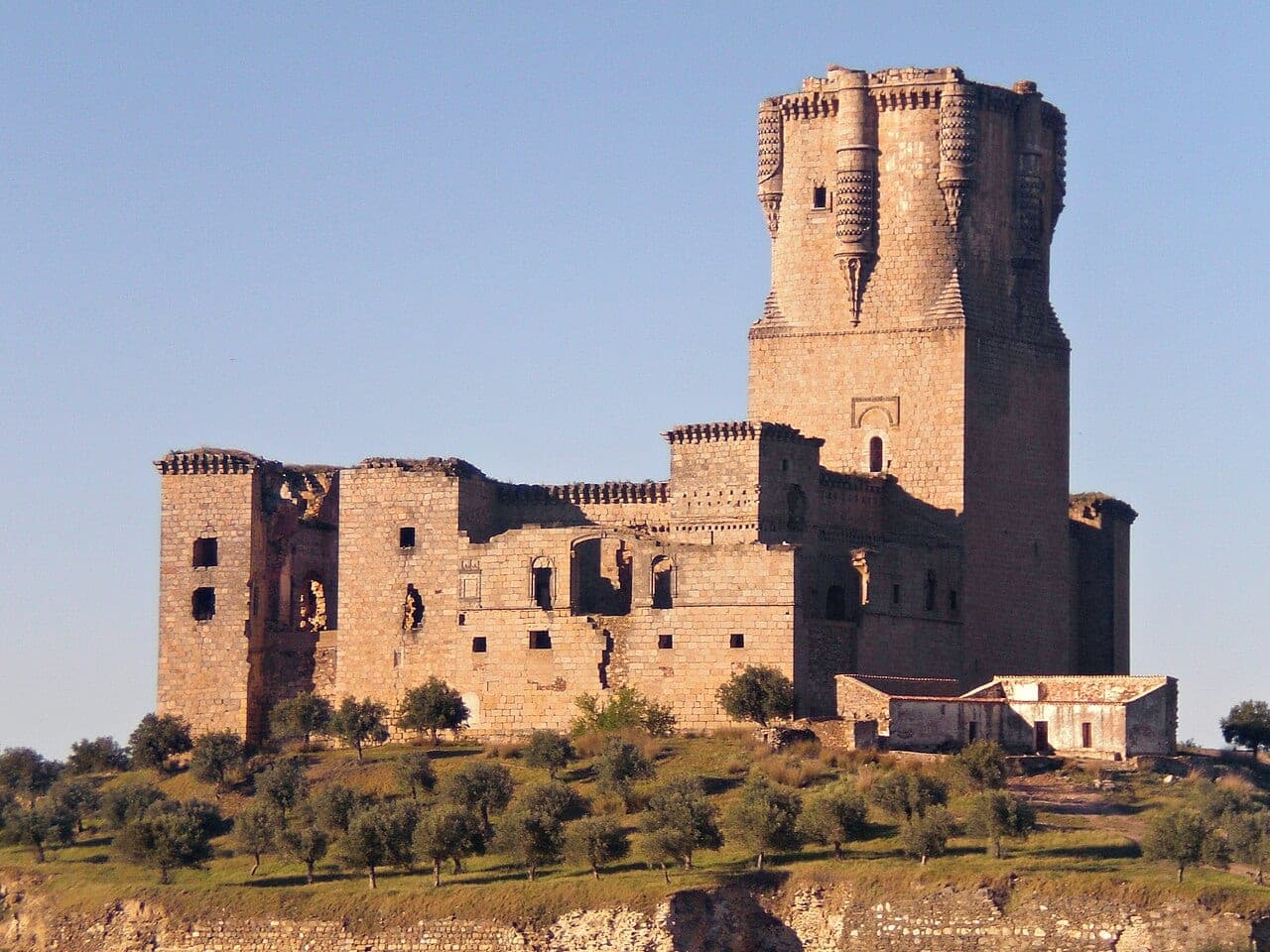
Belalcázar Castle
A 15th-century Gothic military fortress with a Renaissance palace and a 47-metre keep, the tallest of any castle on the Iberian Peninsula.
 Castle
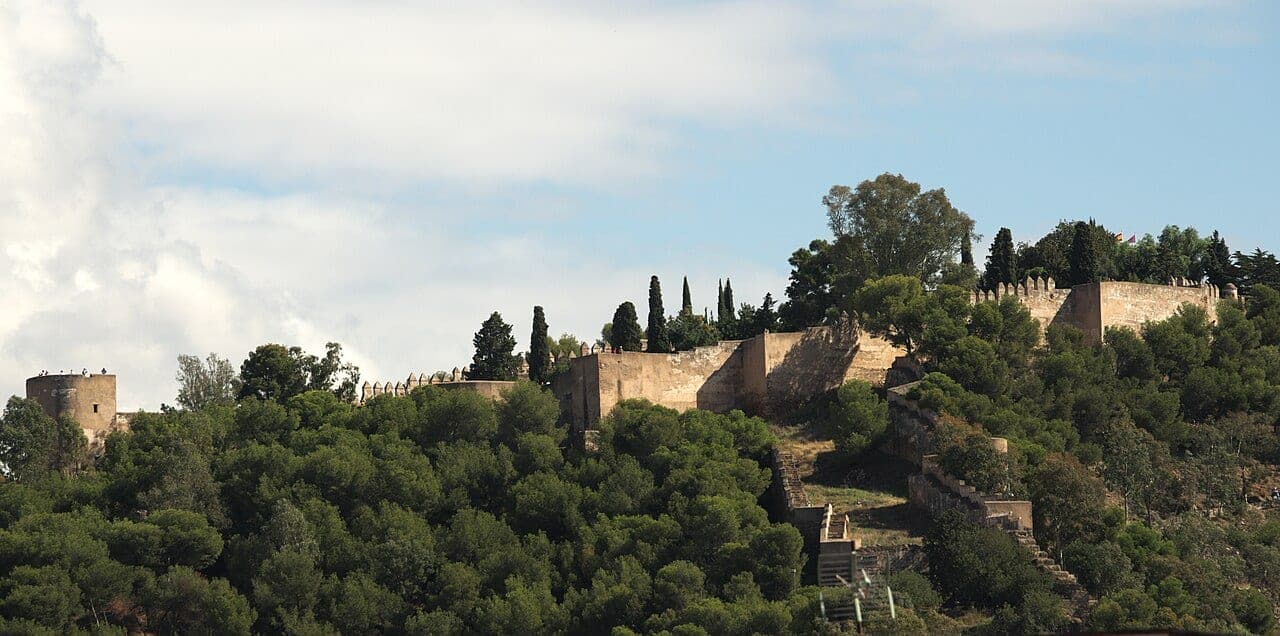
Gibralfaro Castle
Gibralfaro Castle, also known as the Alcázar of Gibralfaro, is one of the fortifications that form part of the historic heritage of the city of Málaga.
 Castle
La Calahorra Castle
Beneath a stern fortress overlooking the Marquesado del Zenete lies one of the earliest and most dazzling Renaissance interiors in Spain, carved in Carrara marble.
 Castle
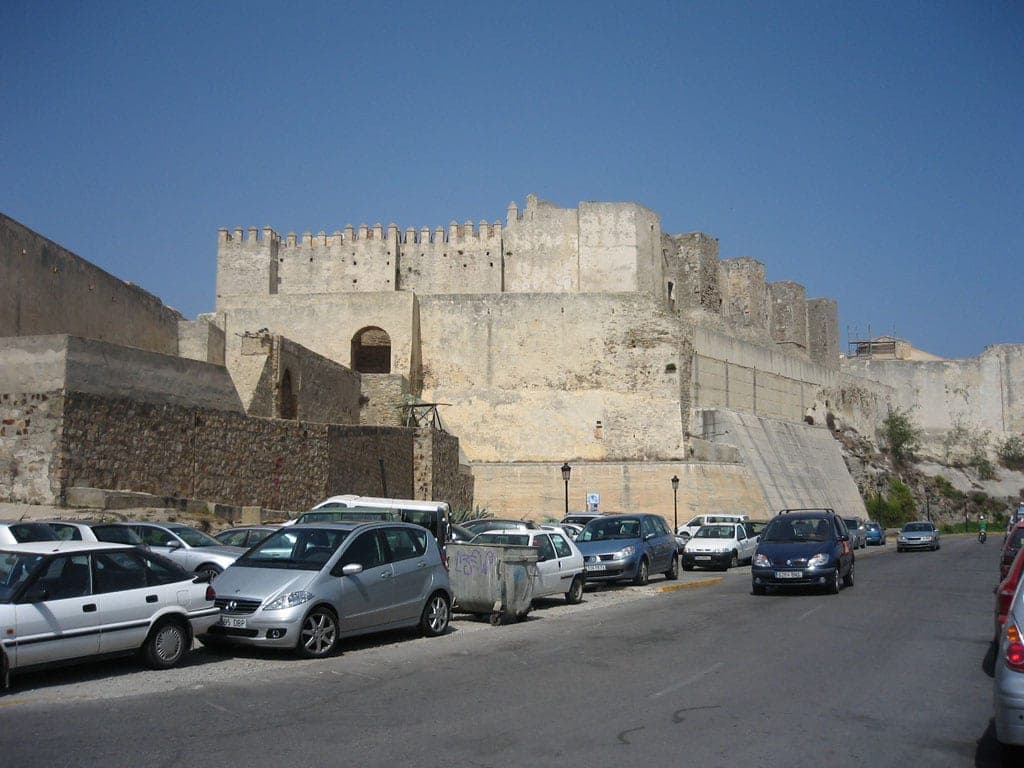
Tarifa Castle
A Caliphate-era fortress overlooking the Strait of Gibraltar, the castle of Guzmán el Bueno holds centuries of military history at the southernmost point of the peninsula.
 Castle
Vejer de la Frontera Castle
A medieval fortress in Vejer de la Frontera, in the province of Cádiz: an essential stop for understanding the past of one of the province's best-known towns.
 Castle
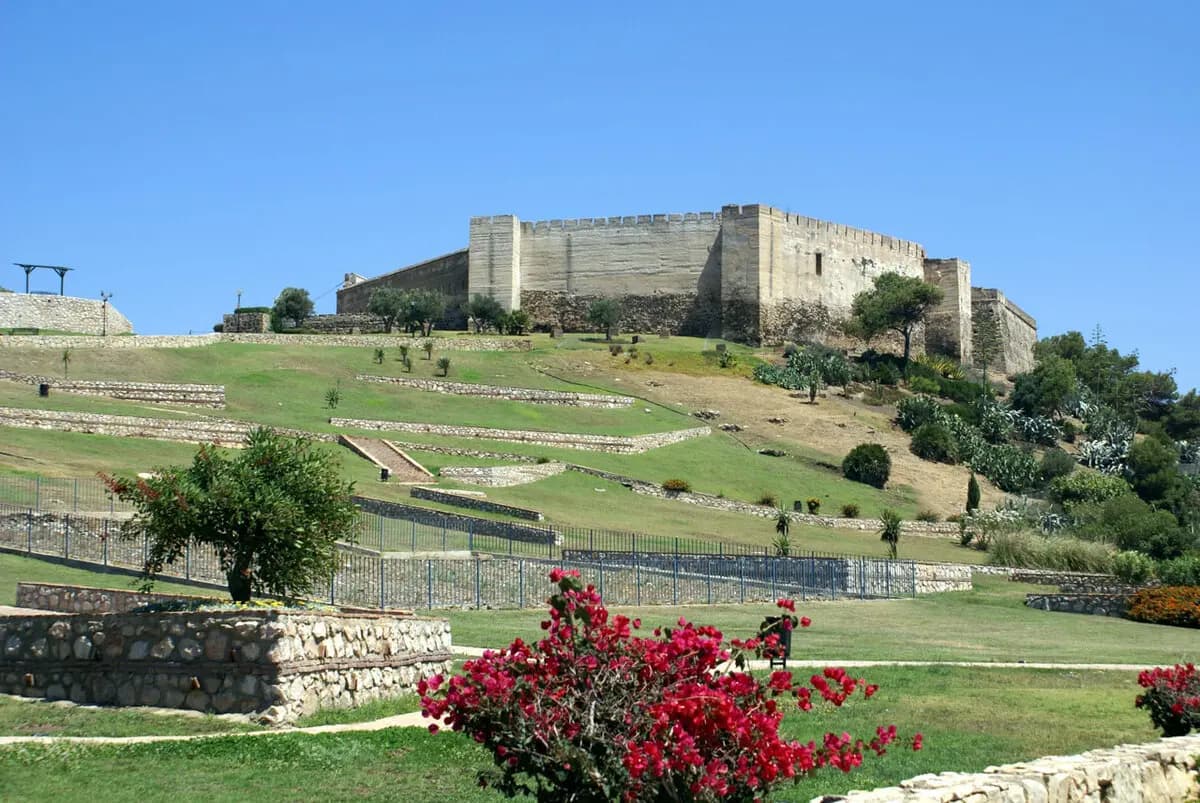
Sohail Castle
An octagonal Almoravid alcazaba built on the site of Roman Suel, with towers, wall-walks and an imposing horseshoe-arched gateway that once kept watch over the old Marbella road.
 Cathedral
 of the Holy Cross
Set beside the sea and visible from almost anywhere in the city, Cádiz Cathedral blends Baroque and Neoclassical styles after more than a century of building work, and you can climb its Clock Tower.
 Cathedral
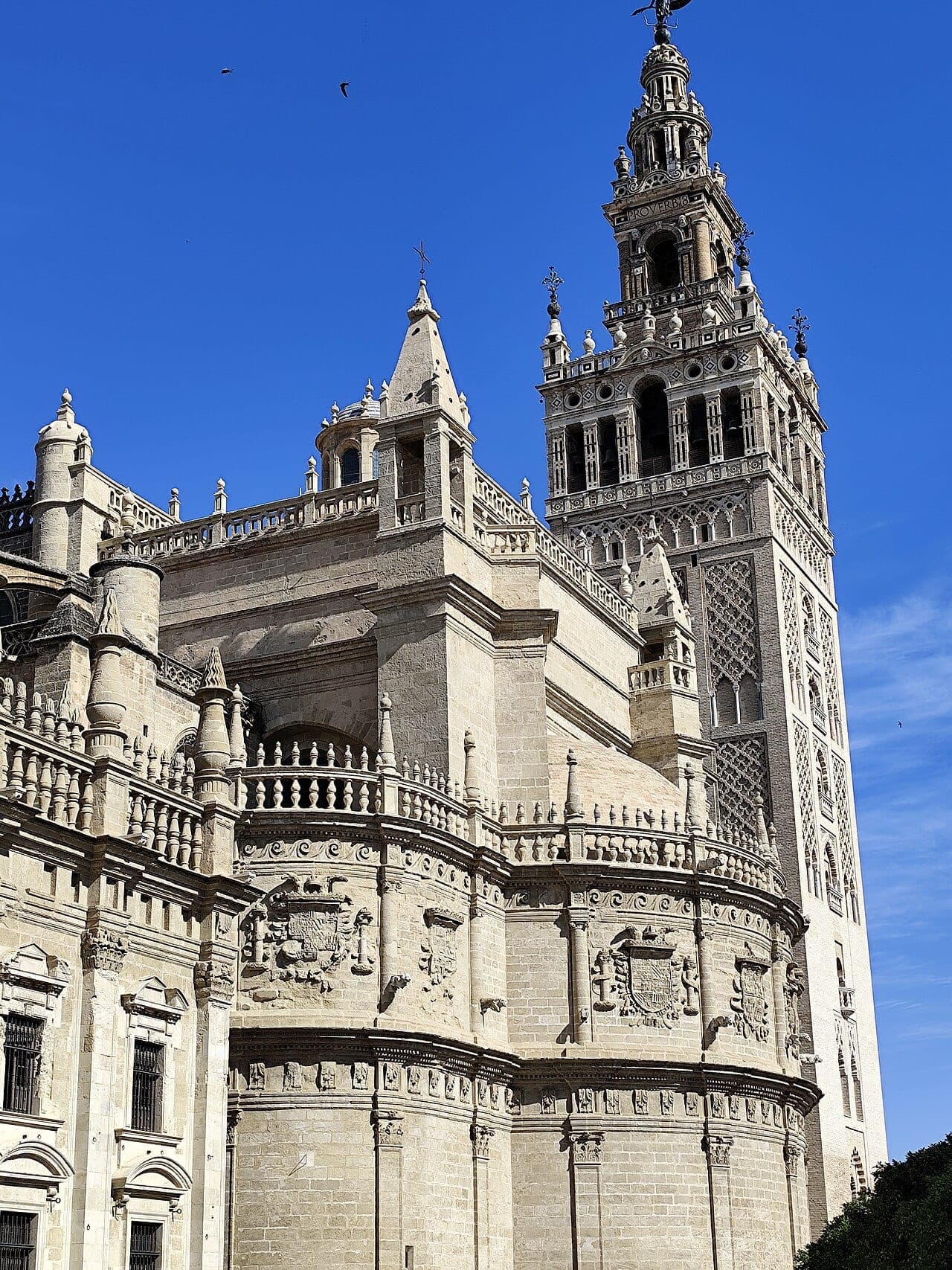
Seville Cathedral
The largest cathedral in the world by area, built on the site of the old great mosque, it is home to the Giralda, the Patio de los Naranjos and the tomb of Christopher Columbus.
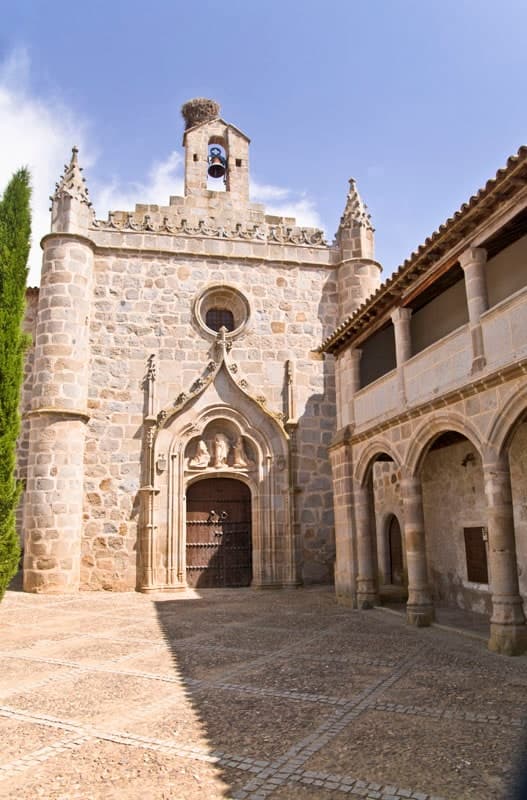 Monastery
Convent of Santa Clara de la Columna
A late medieval convent in Belalcázar, in the north of the province of Córdoba, declared a Site of Cultural Interest in 1982 and a silent witness to several centuries of history.
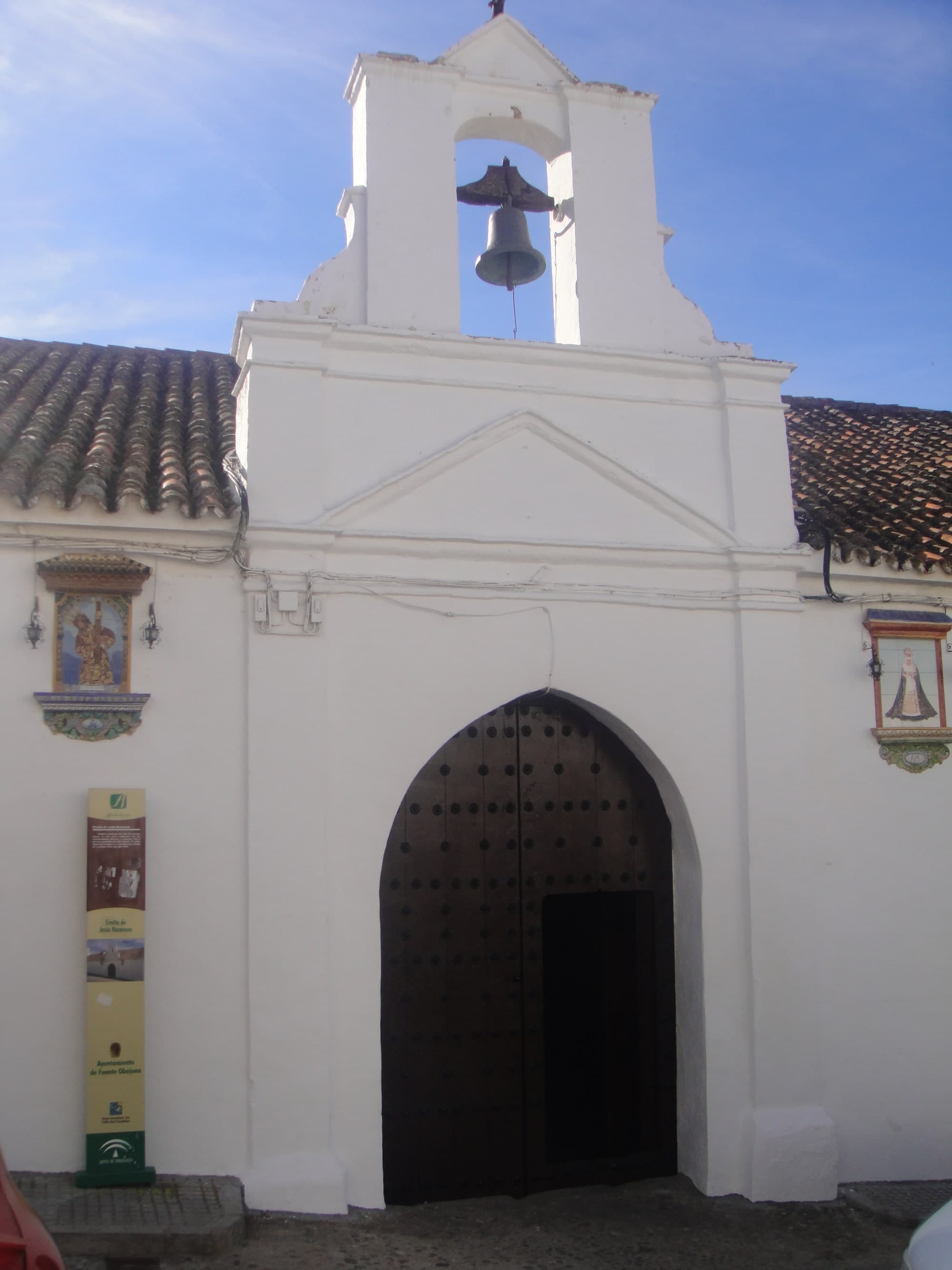 Hermitage
 of Jesús Nazareno
A Mudéjar hermitage in the heart of Fuente Obejuna, formerly the church of San Miguel, whose Islamic air left historians puzzled for years.
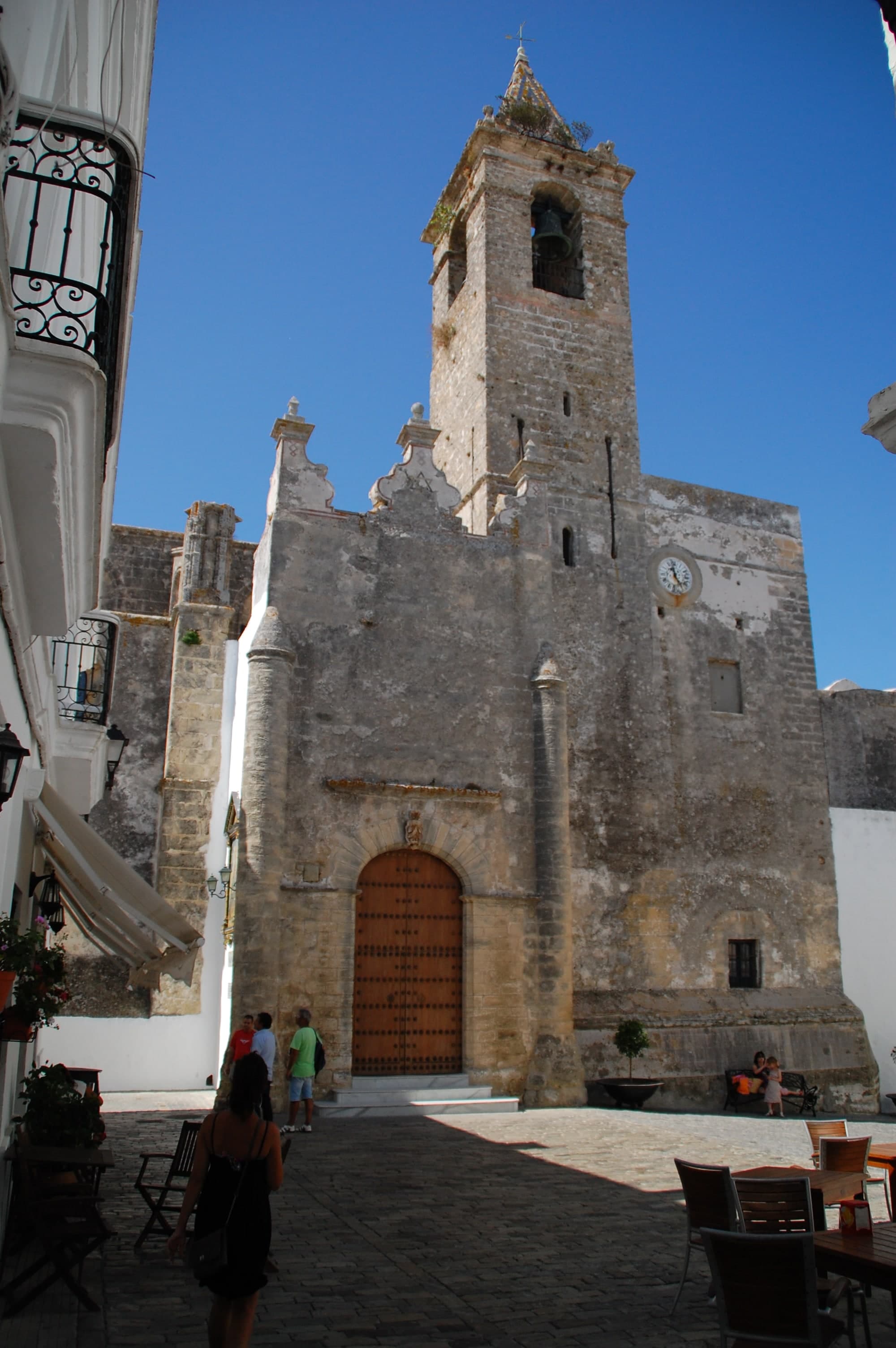 Church
 of the Divino Salvador (Vejer de la Frontera)
At the very top of Vejer, within its walled precinct, this Mudéjar church built over a former mosque reveals two churches from different periods fused into one.
 Church
 of San Miguel
One of Córdoba's Fernandine churches, built over a former mosque which in turn stands on the Roman forum: centuries of history layered on a single site.
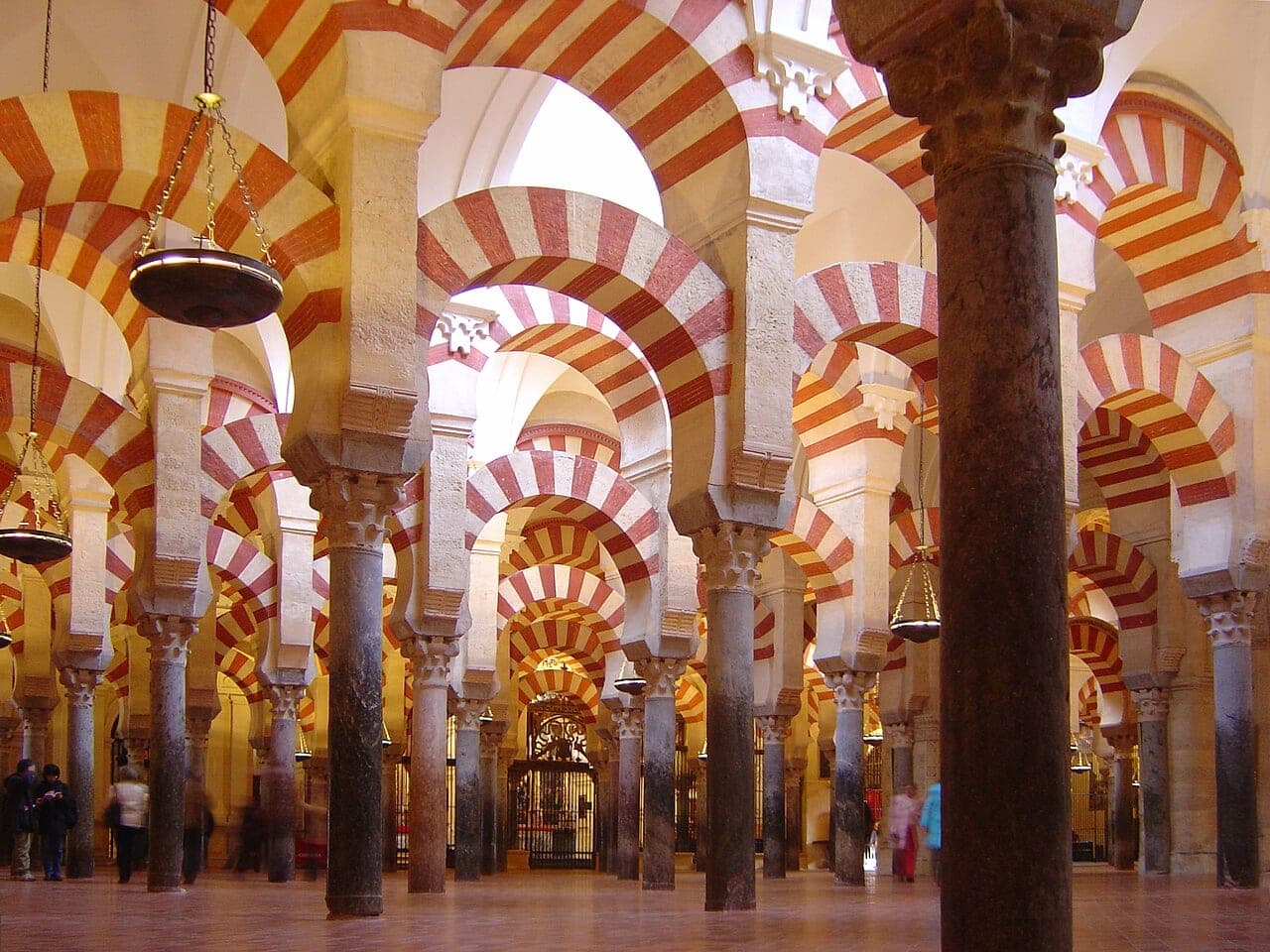 Cathedral
Mosque-Cathedral of Córdoba
Congregational mosque, Christian cathedral and UNESCO World Heritage Site: the great monument of Caliphal art, where twelve centuries of history coexist under a single roof.
 Mosque
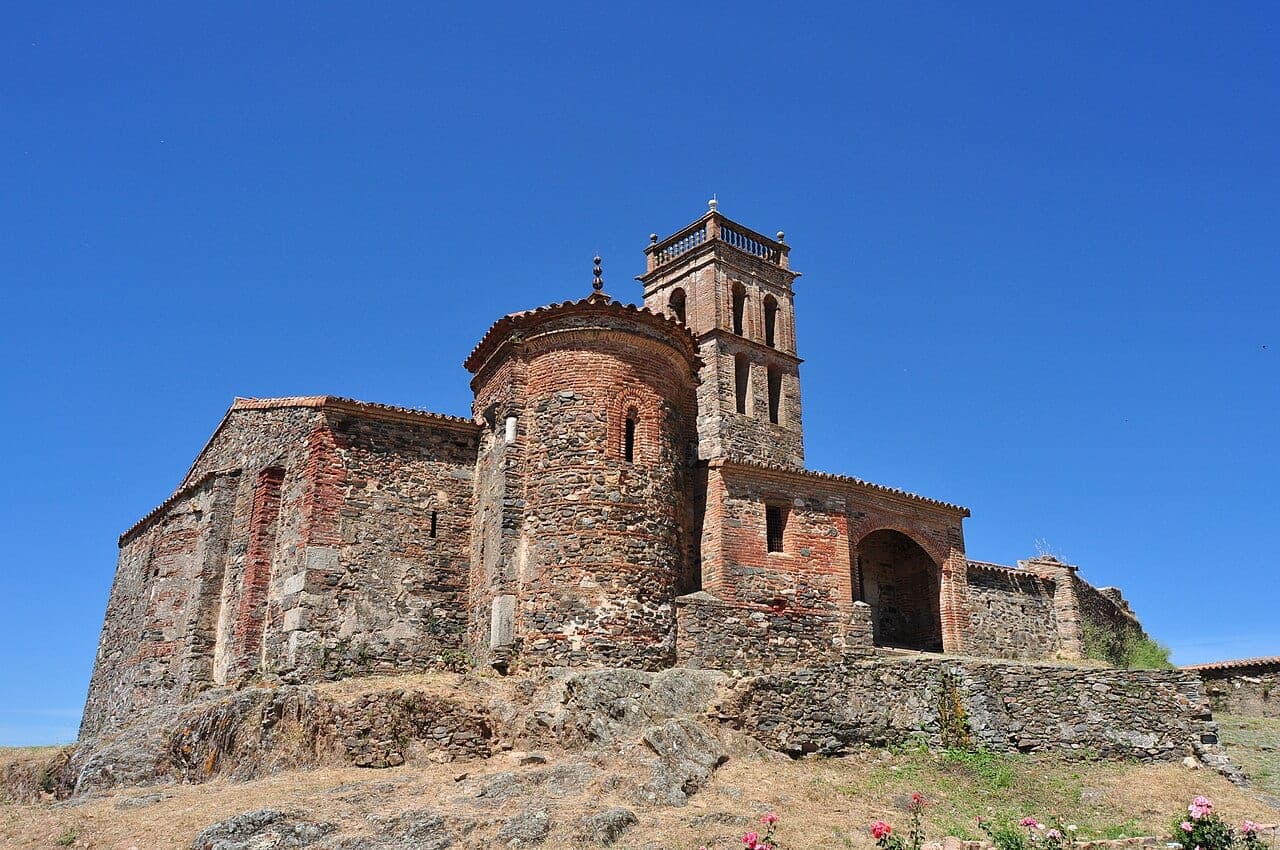
Almonaster la Real Mosque
The only Andalusi mosque to survive almost intact in rural Spain, tucked away inside Almonaster Castle and bearing traces of Roman, Visigothic, Caliphal and Christian builders.
 Mosque
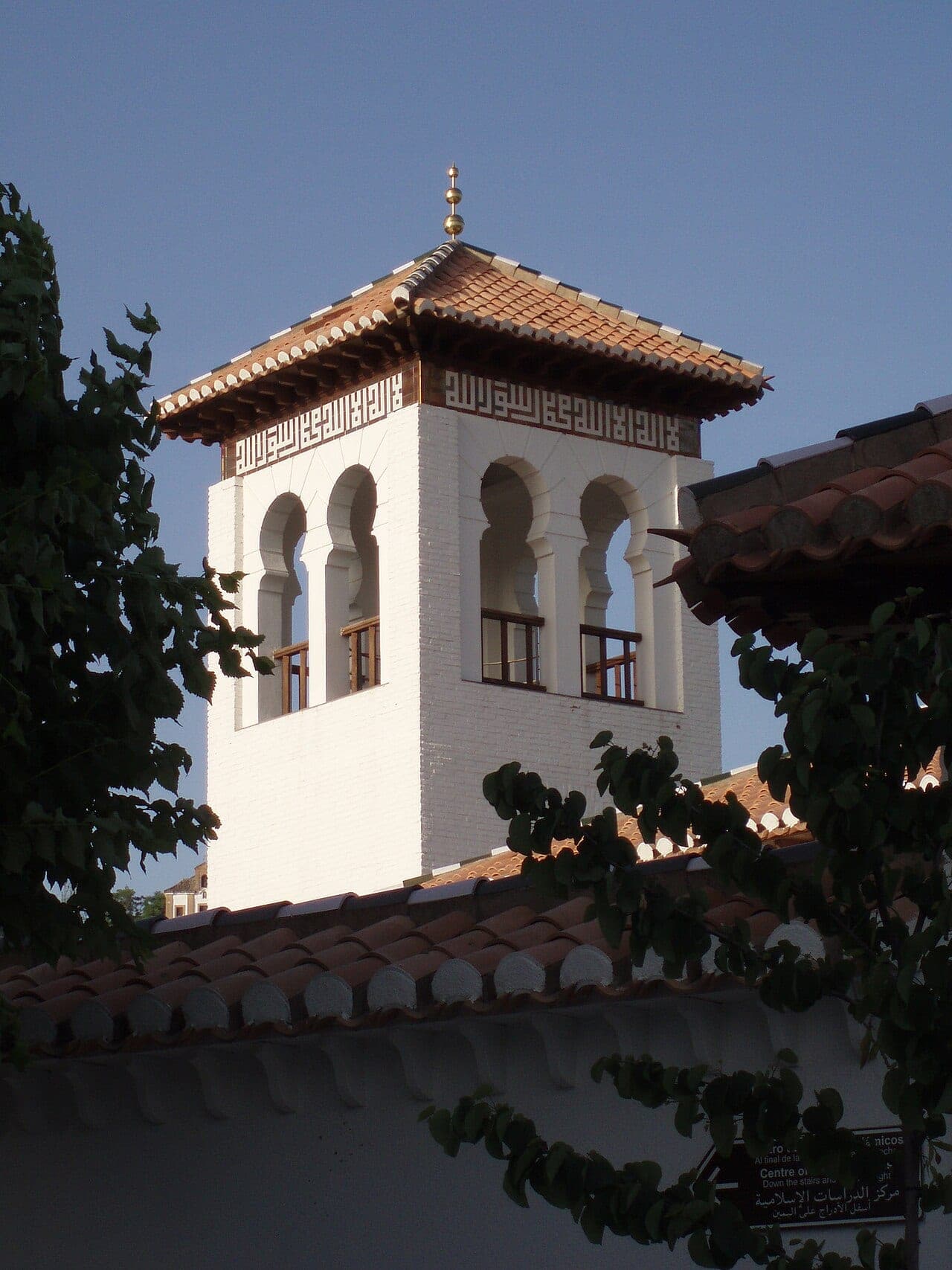
Great Mosque of Granada
The first mosque built in Granada since 1492, gazing out from the Albaicín towards the Alhambra and Sierra Nevada, with a Mediterranean garden and echoes of Córdoba, Jerusalem and Istanbul.
 Monastery
Museum of Fine Arts of Seville
One of Spain's great art galleries, housed in the former Convent of La Merced and essential viewing for anyone wanting to discover Murillo, Zurbarán and Valdés Leal.
 Castle
Palace of the Enríquez de Ribera
Renaissance palace built by the Ribera family in the 16th century on the site of Bornos's former Fontanar Castle, with a Renaissance and Arab garden and an interpretation centre.
 Monastery
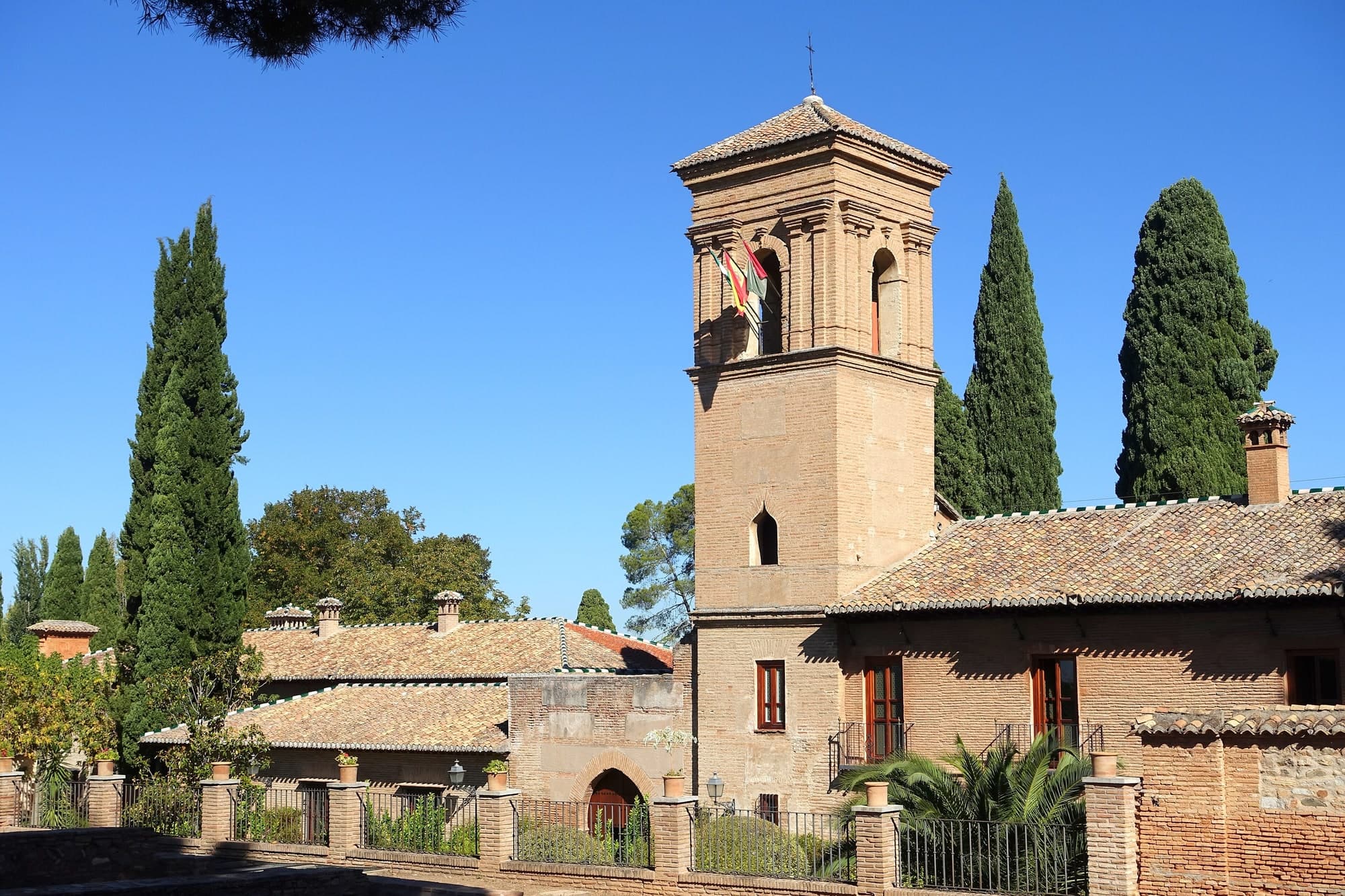
Parador de San Francisco
A former Franciscan convent built over a Nasrid palace within the Alhambra, where the Catholic Monarchs once lay at rest and where travellers now stay.
 Church
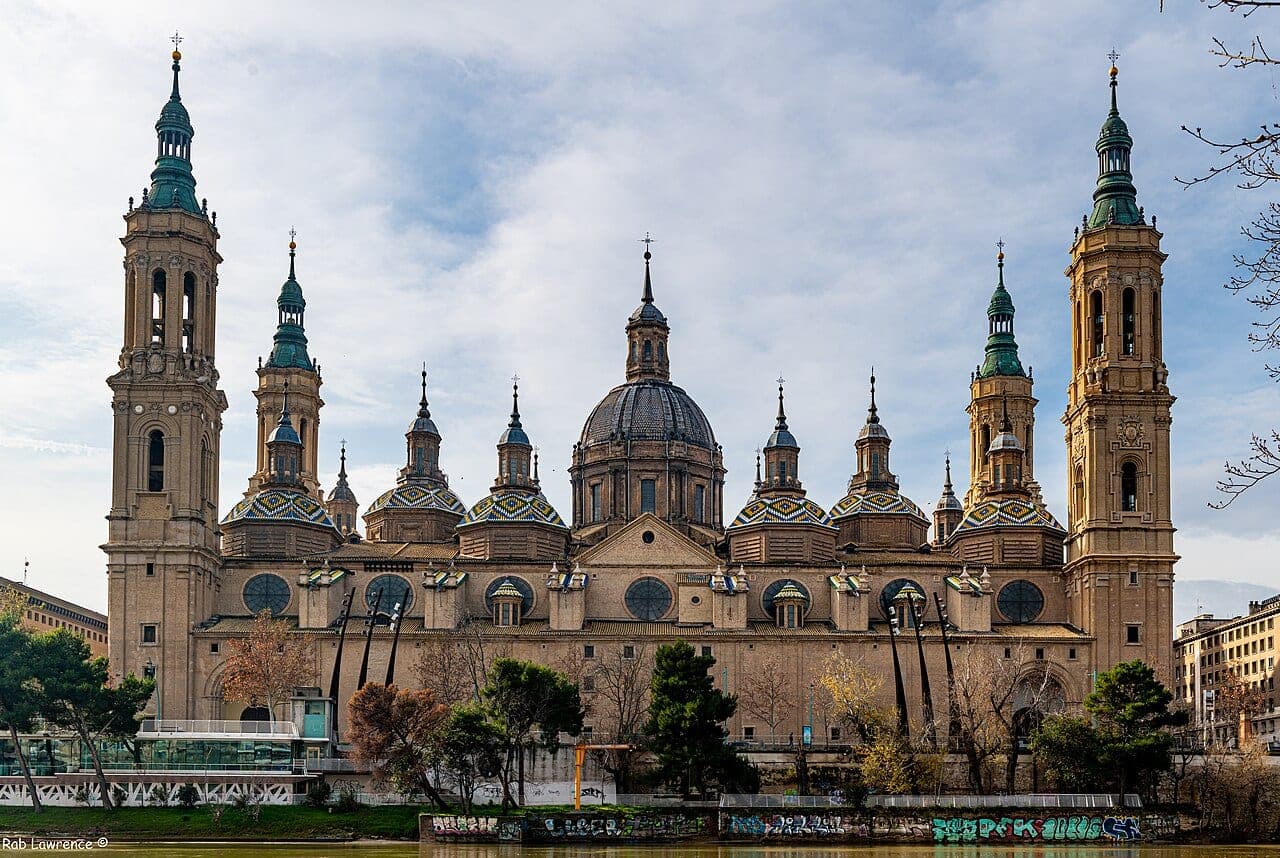
Basilica of Our Lady of the Pillar
A Baroque church beside the Ebro that houses the jasper column venerated as the first Marian shrine in Christendom, along with Damián Forment's superb Renaissance altarpiece.
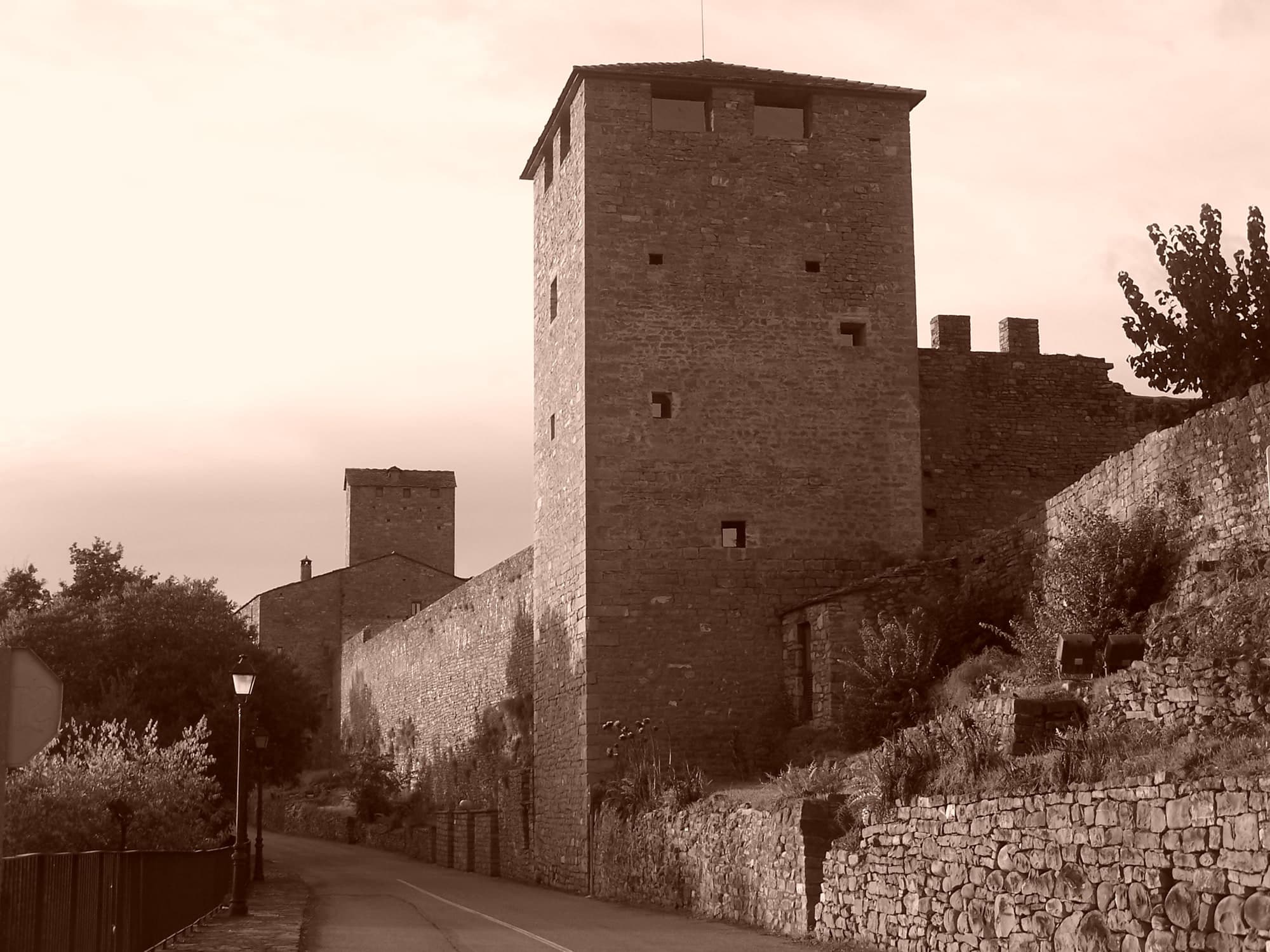 Castle
Aínsa Castle
At the western end of Aínsa's main square, this castle, declared a monument in 1931, watches over the meeting of the Ara and Cinca rivers and today comes alive with music and fairs.
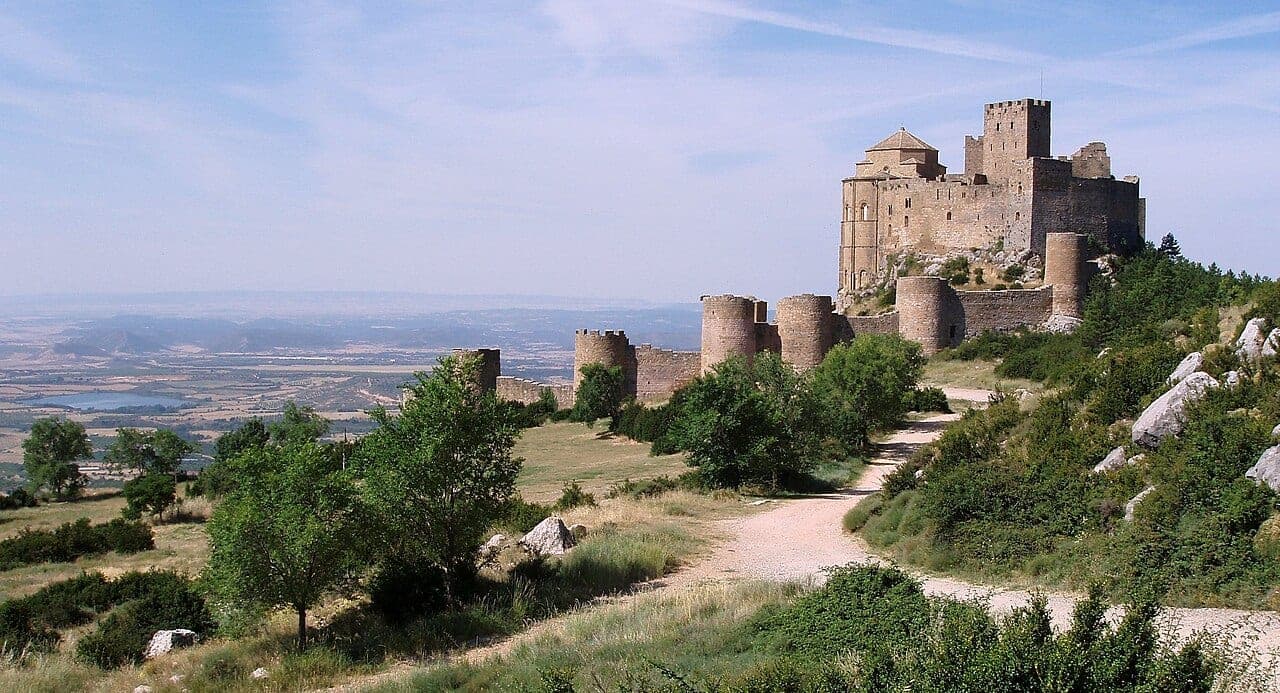 Castle
Loarre Castle
Perched on the rock and gazing out over the Hoya de Huesca, Loarre Castle is reputed to be the best-preserved Romanesque fortress in Europe.
 Castle
 of the Luna Family
Perched on a rocky hillock overlooking Mesones de Isuela stands one of the largest castles in Aragon, once held by the Knights Templar and later by the powerful House of Luna.
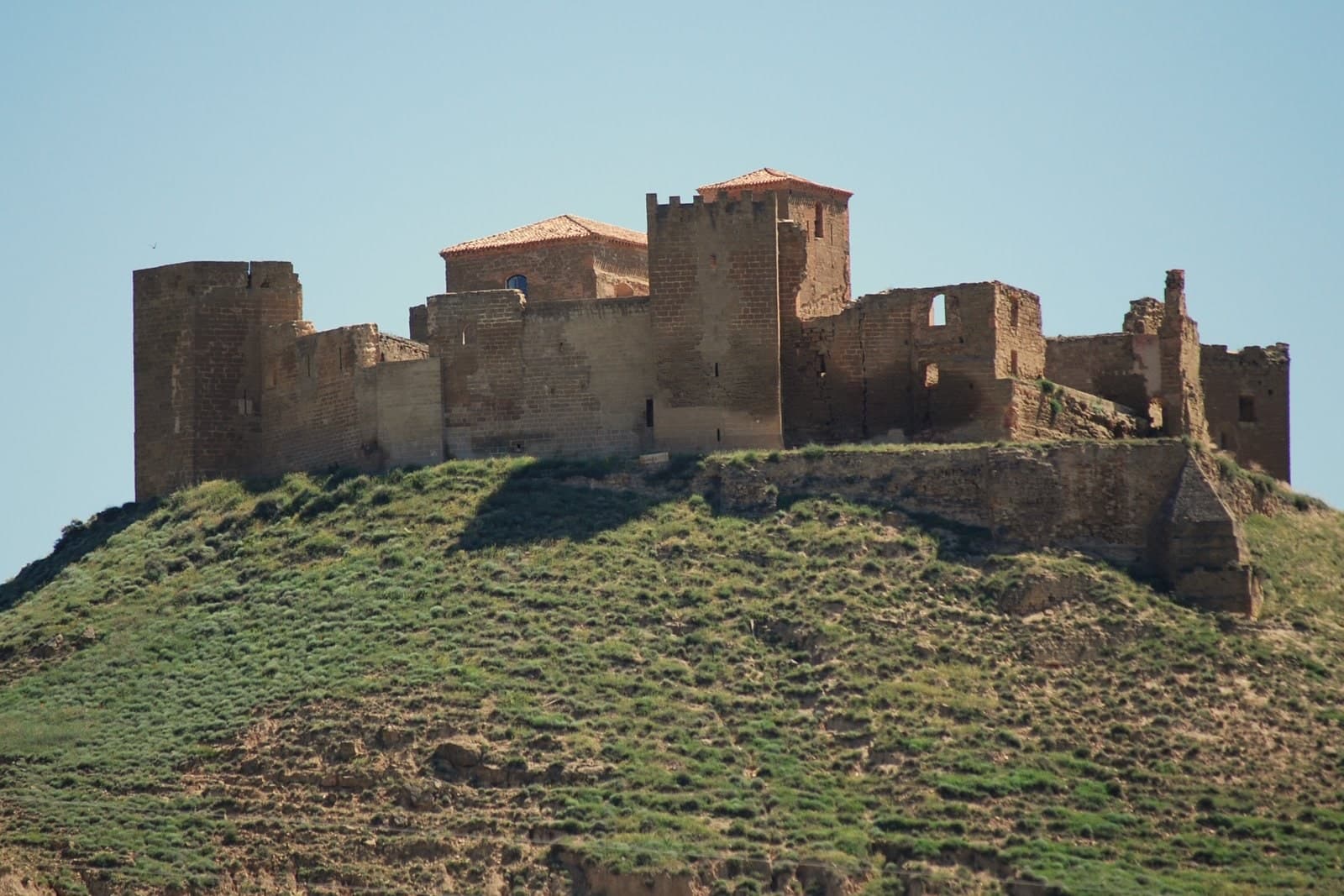 Monastery
Montearagón Castle
A Romanesque castle-abbey crowning Monte Aragón, cradle of the Royal House of Aragon and one of the most remarkable monasteries of the Middle Ages, now lying in ruins opposite Huesca.
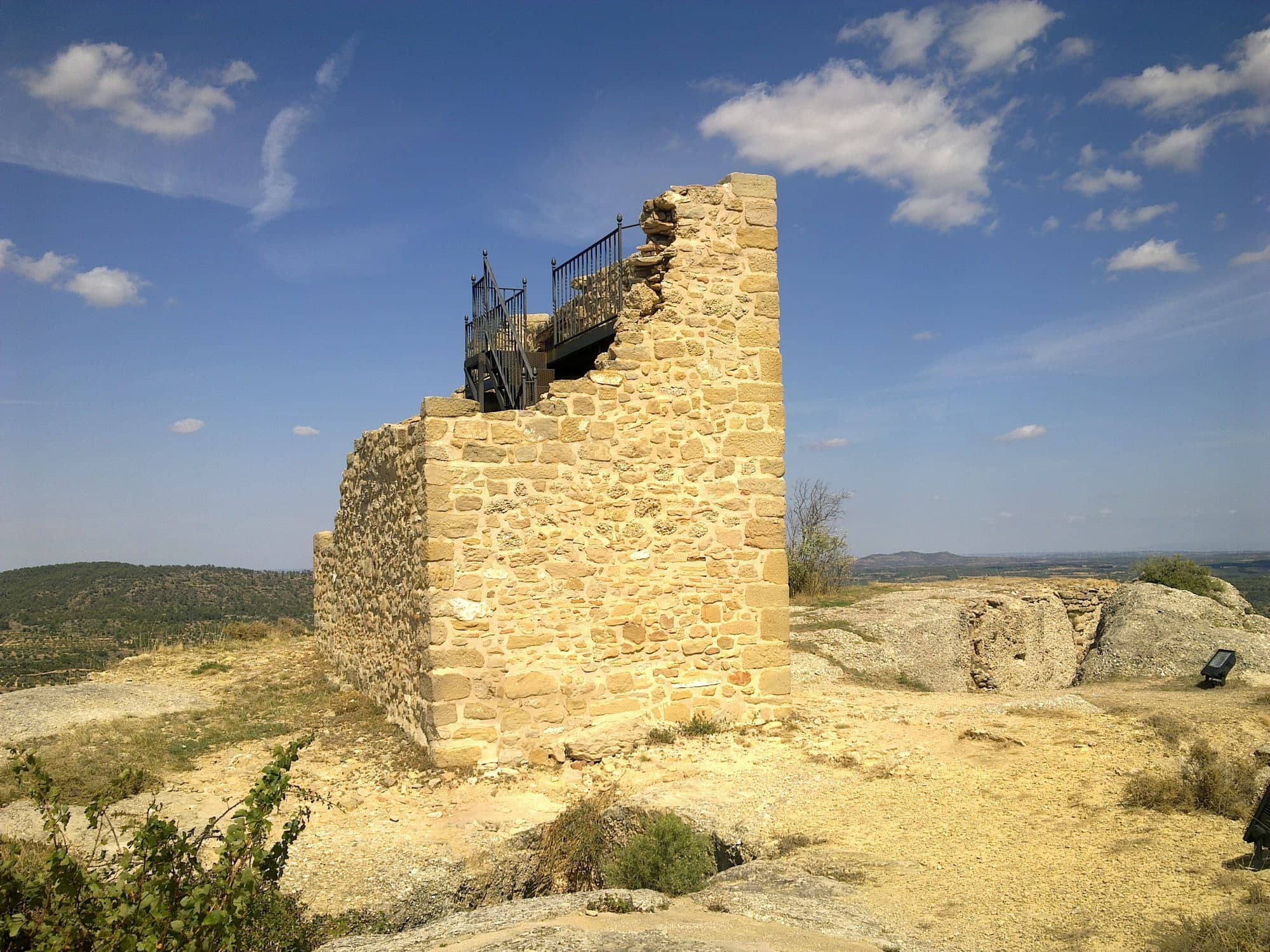 Castle
Santa Bárbara Castle (La Fresneda)
On the hill overlooking La Fresneda, the scant remains of the Order of Calatrava's medieval castle invite you to imagine the Matarraña's past.
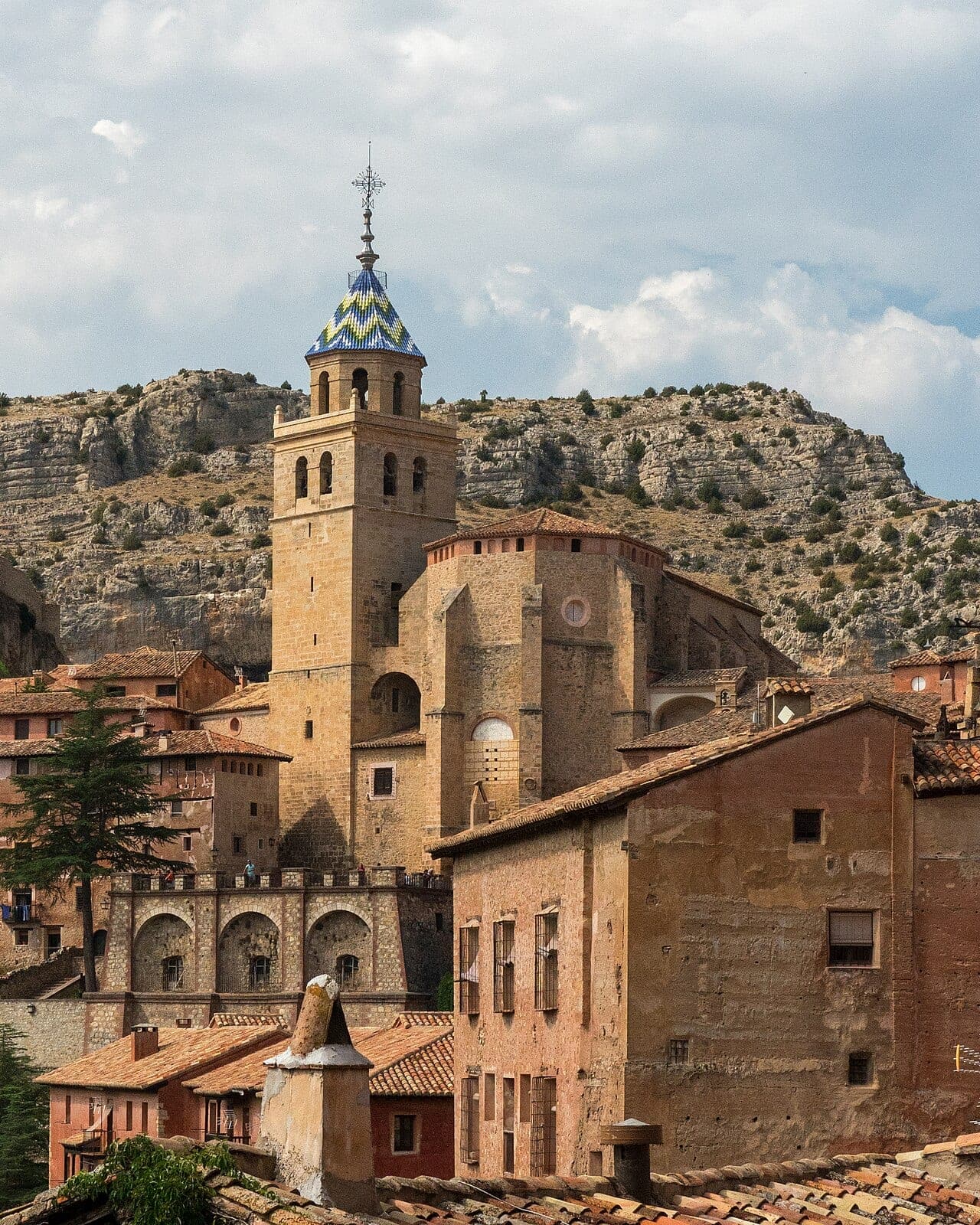 Cathedral
Albarracín Cathedral
The Cathedral of the Saviour, which shares its status as a seat of the Diocese of Teruel and Albarracín, is a key part of the historic monumental ensemble of this village in the province of Teruel.
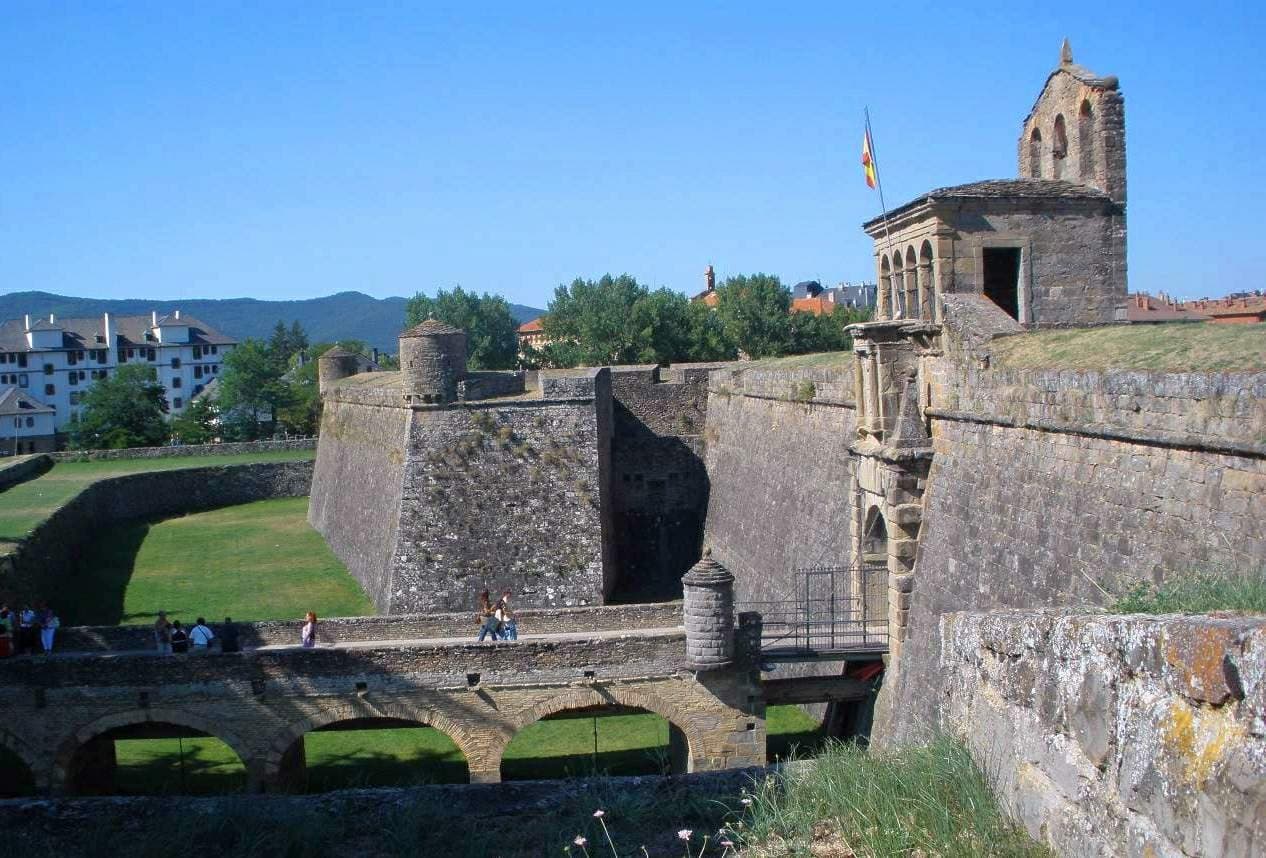 Citadel
 of Jaca
An Italian-style fortress that hides a remarkable museum inside, with more than 35,000 lead soldiers and a room devoted to the art of war.
 Cathedral
Co-Cathedral of Santa María del Romeral
In Monzón, the Co-Cathedral of Santa María del Romeral shares the seat of its diocese with Barbastro and is protected as a Site of Cultural Interest.
 Church
Hermitage of the Virgen de los Navarros
In Fuentes Claras, the hermitage of the Virgen de los Navarros is home to the village's most deeply rooted devotion, an essential stop for understanding the soul of this town in the province of Teruel.
 Hermitage
 of Santo Domingo
A harmoniously proportioned Baroque hermitage in Lécera, with a stuccoed dome and a slender octagonal lantern that crowns its bold, solid exterior.
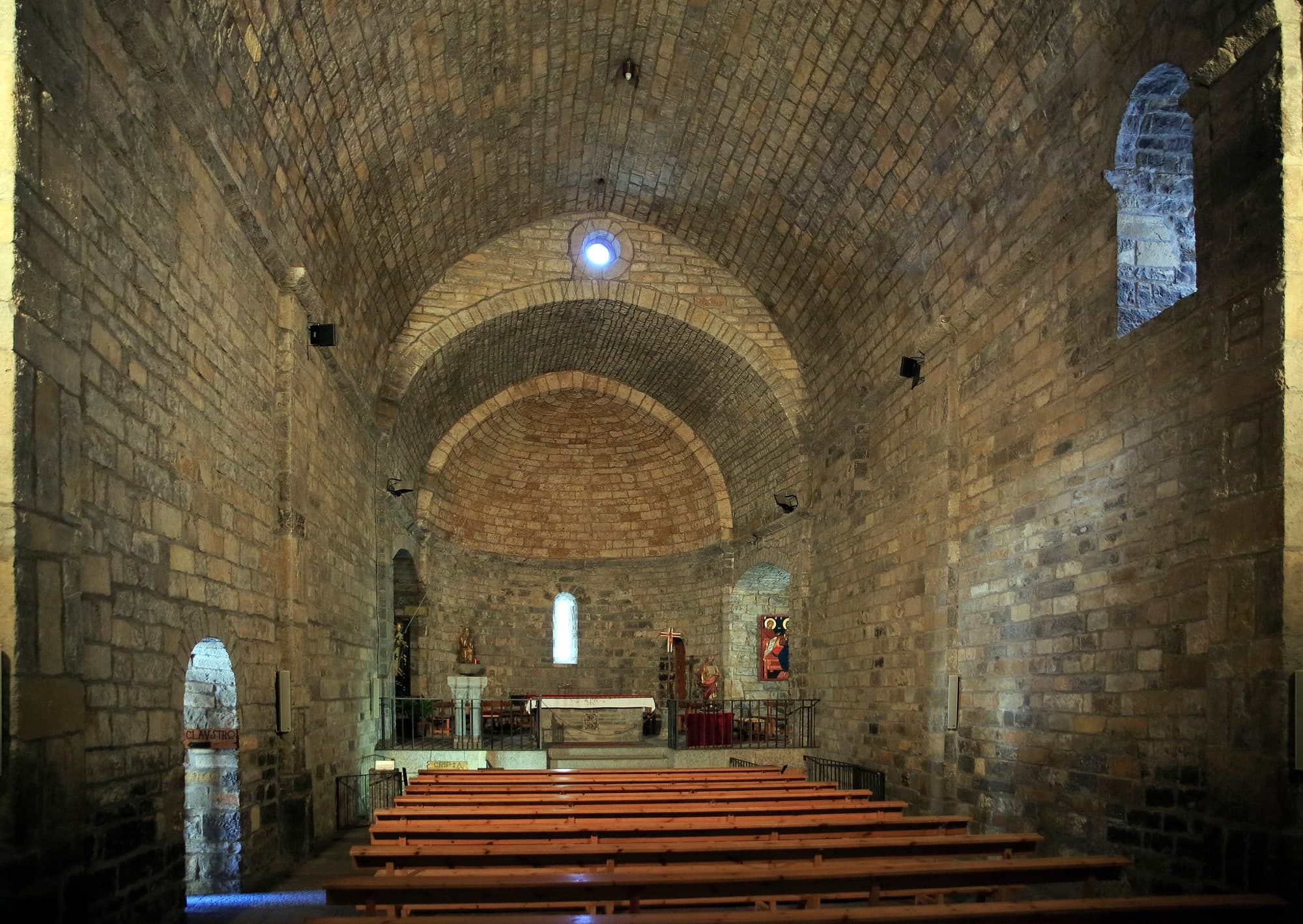 Church
 of Santa María (Aínsa)
Aínsa's Romanesque collegiate church, austere and monumental, regarded as one of the finest examples of Aragonese Romanesque in the Sobrarbe district.
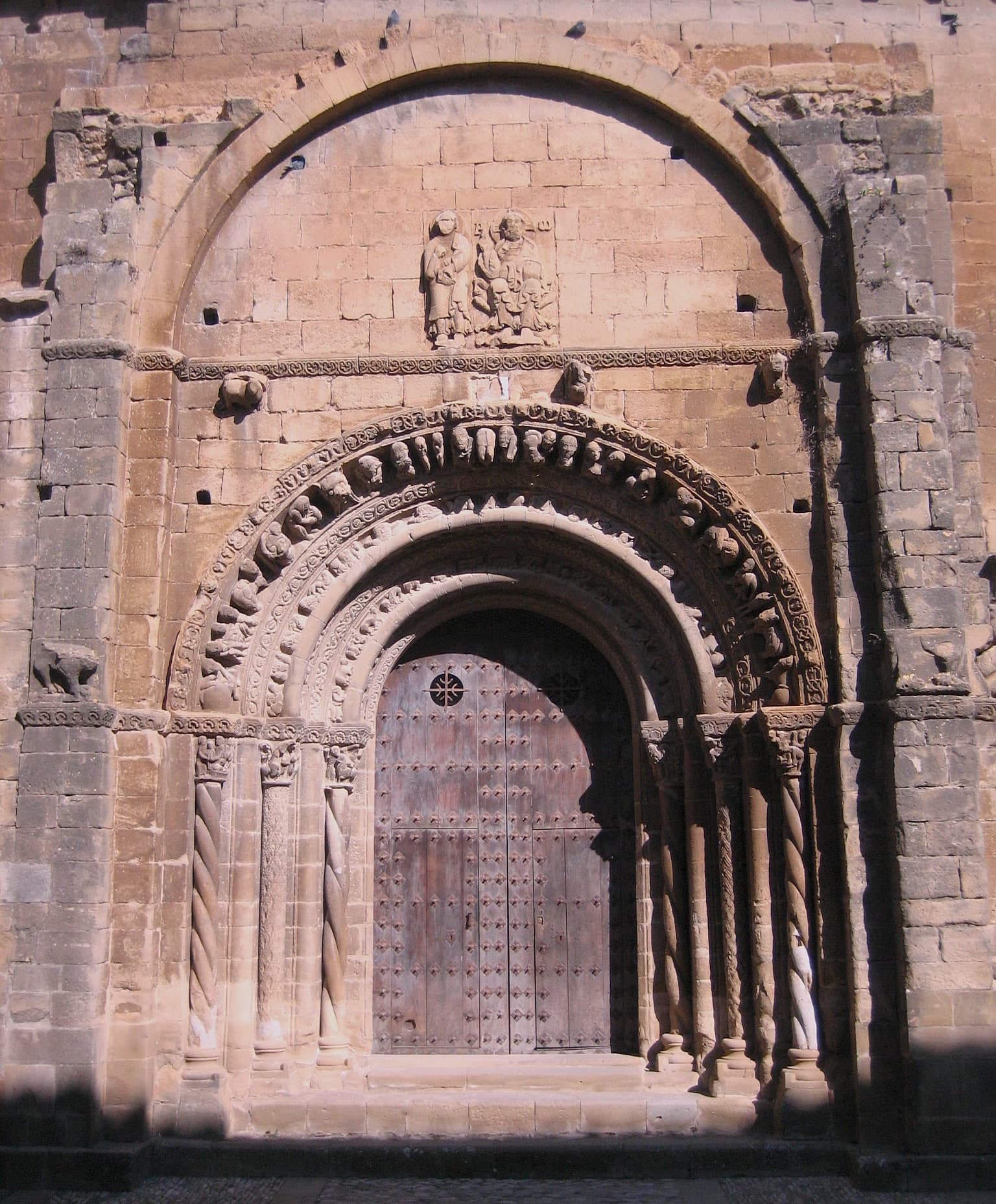 Church
 of Santa María la Mayor
A 12th-century Romanesque church in Uncastillo, built by Ramiro II of Aragon and famed for the sculpture on its south portal, attributed to the Master of Oloron.
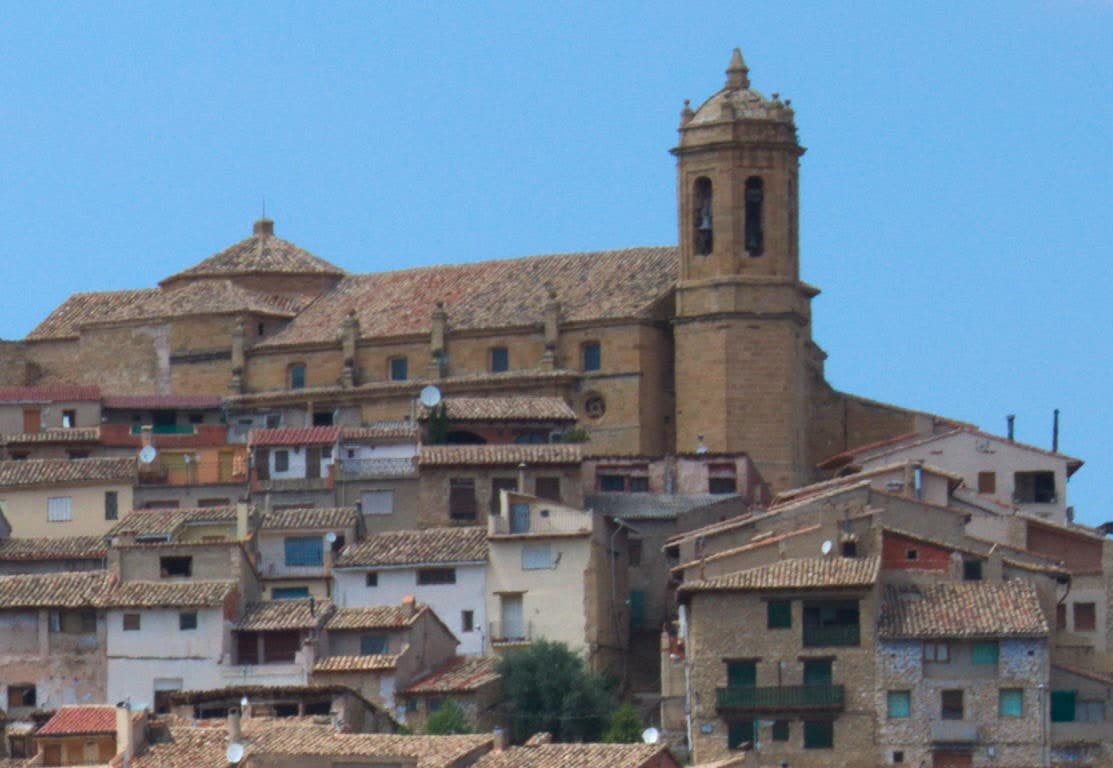 Church
 of Santa María la Mayor (La Fresneda)
A 17th-century Baroque parish church in La Fresneda, dedicated to Santa María la Mayor, or Our Lady of the Snows – an essential stop when exploring this corner of Teruel.
 Monastery
 of Our Lady of Rueda
A Cistercian monastery in Sástago, in the Ribera Baja del Ebro, protected as a monument since 1924 and an essential stop for anyone exploring the heritage of the province of Zaragoza.
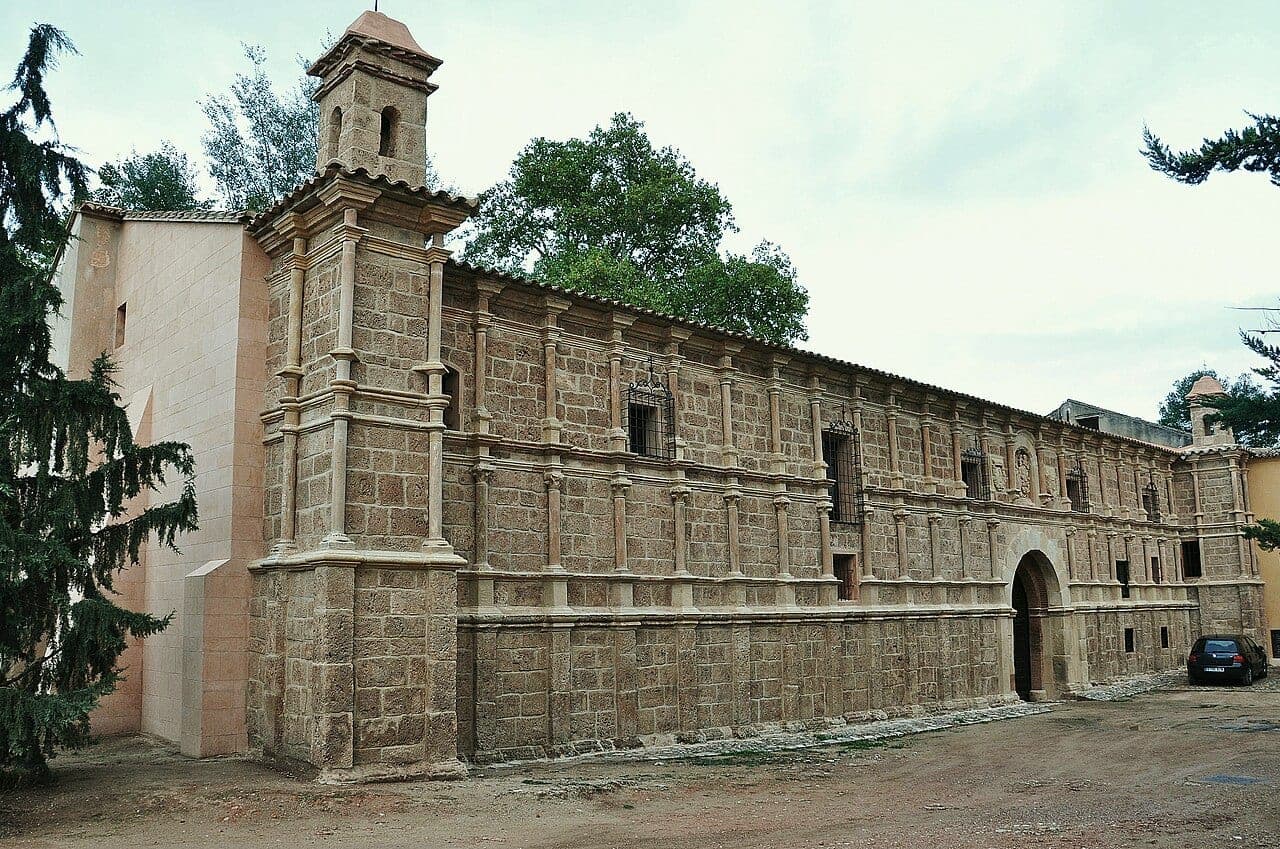 Monastery
Monasterio de Piedra
A former 12th-century Cistercian monastery beside the River Piedra in Nuévalos, where Gothic, Renaissance and Baroque styles sit side by side in one of the most visited spots in Aragon.
 Monastery
 of San Pelay
The ruins of a medieval monastery beside the Sía ravine, near Gavín, forgotten for centuries and rediscovered in the winter of 1997.
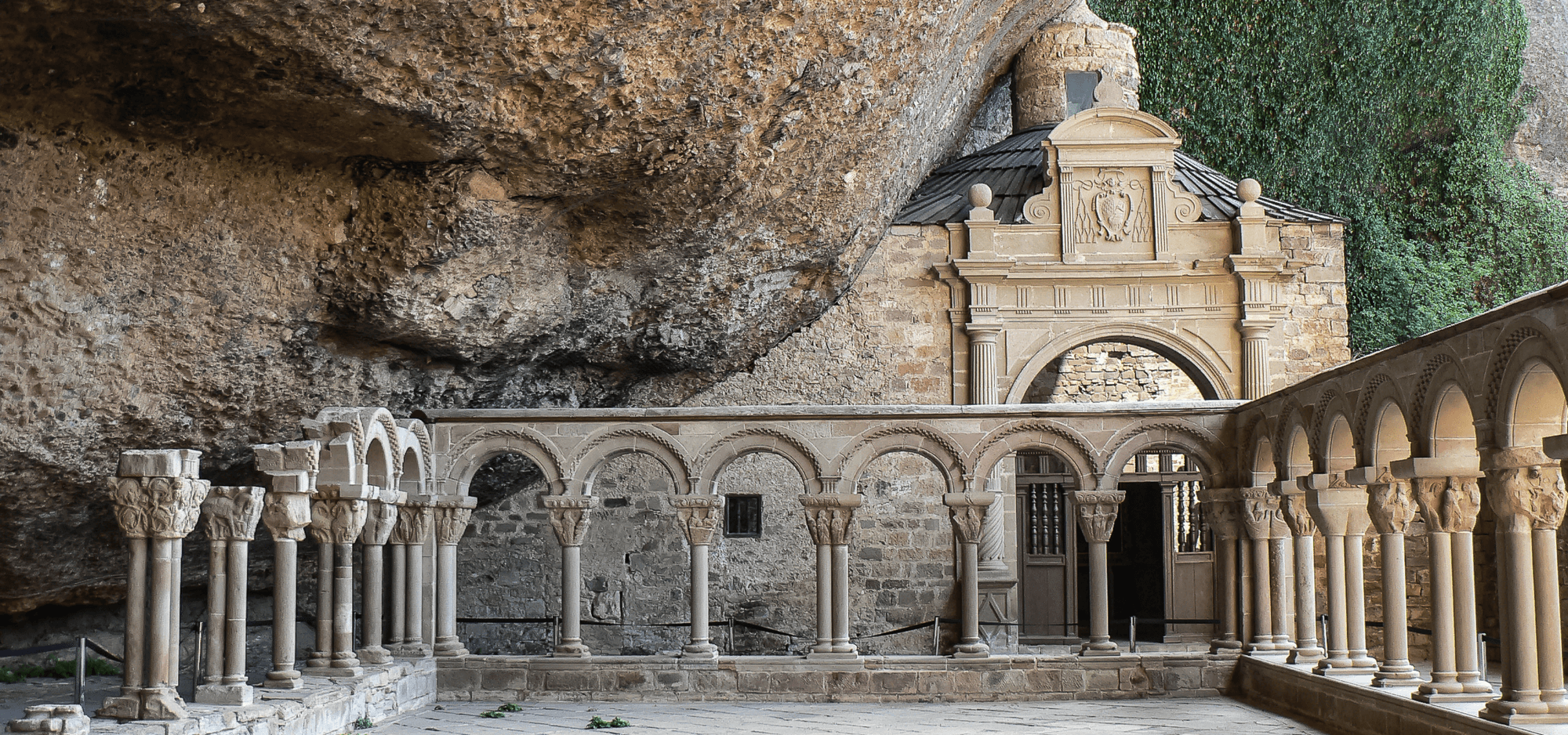 Monastery
Old Monastery of San Juan de la Peña
Tucked beneath a huge overhang of rock, the monastery where the legend of Aragon was born holds a Romanesque cloister with extraordinary capitals and the pantheon of the kingdom's first kings.
 Castle
Aljafería Palace
Pleasure palace of the taifa kings of Saraqusta and later residence of the Aragonese monarchs, the Aljafería is the great jewel of 11th-century Hispano-Muslim art.
 Monastery
Royal Monastery of Santa María de Veruela
A 12th-century Cistercian abbey near Vera de Moncayo, and an essential stop for anyone exploring the Tarazona y el Moncayo district.
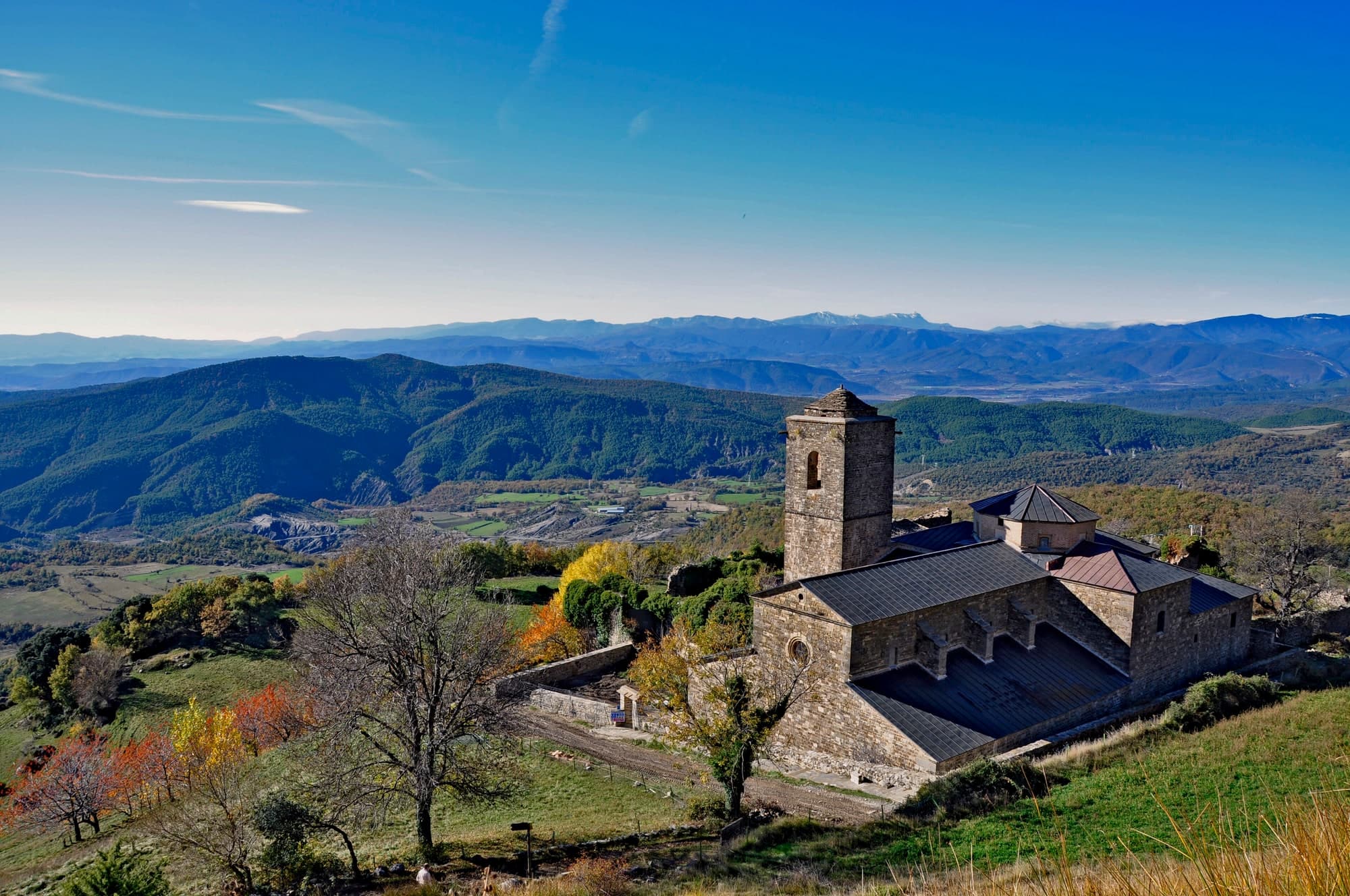 Monastery
Royal Monastery of San Victorián
A monastic complex set 1,200 metres above sea level at the foot of Peña Montañesa, in the heart of Sobrarbe and just a few kilometres from Aínsa: history and mountains in a single landscape.
 Church
Basilica of Covadonga
A Neo-Romanesque church of pink limestone in Covadonga, built between 1877 and 1901 and raised to the rank of minor basilica in the same year it was completed.
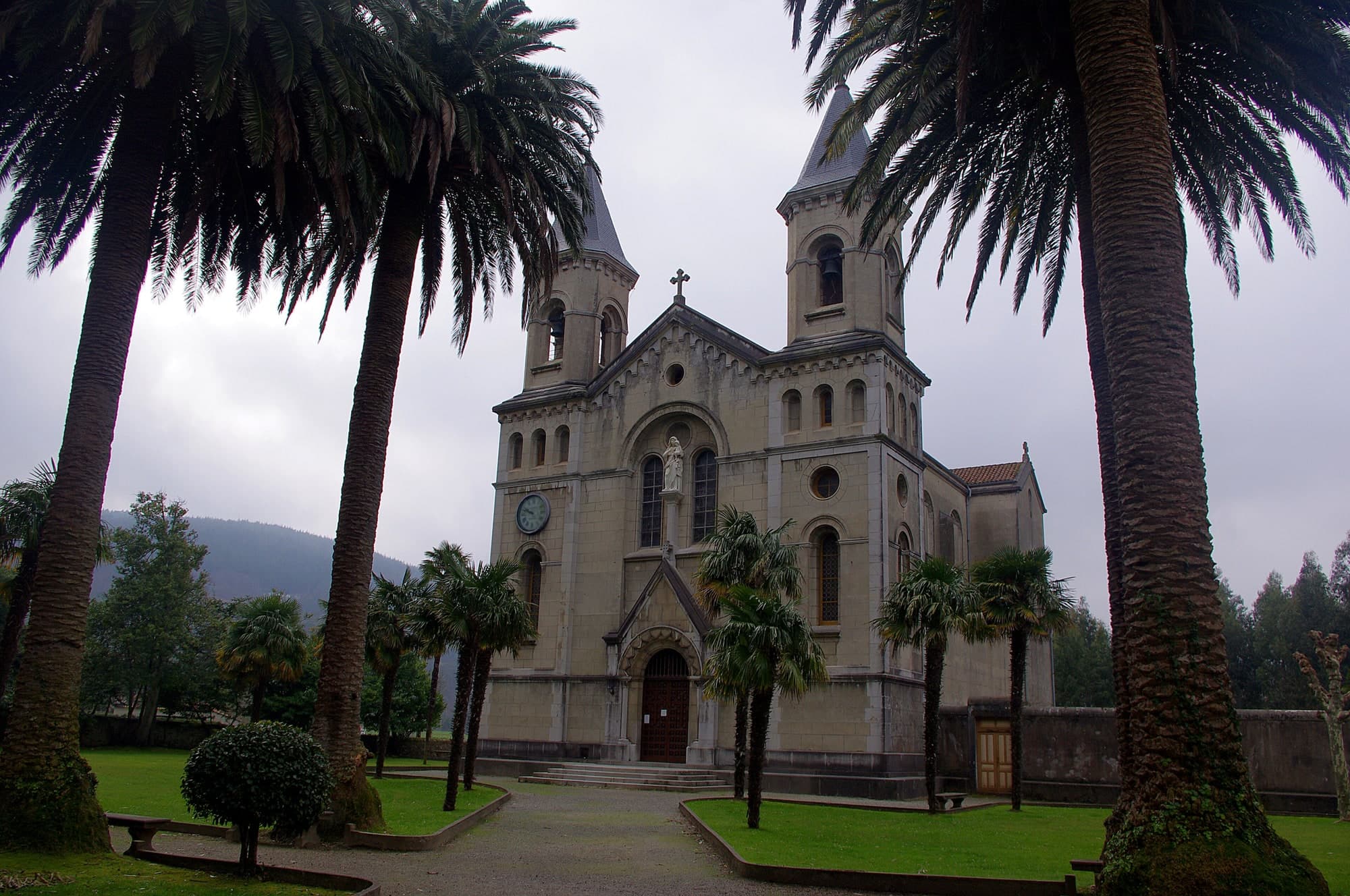 Church
 of Jesús de Nazareno (Cudillero)
Neo-Romanesque church and pantheon commissioned by Fortunato de Selgas next to La Quinta in El Pito, inaugurated in 1914 by Infanta Isabel de Borbón.
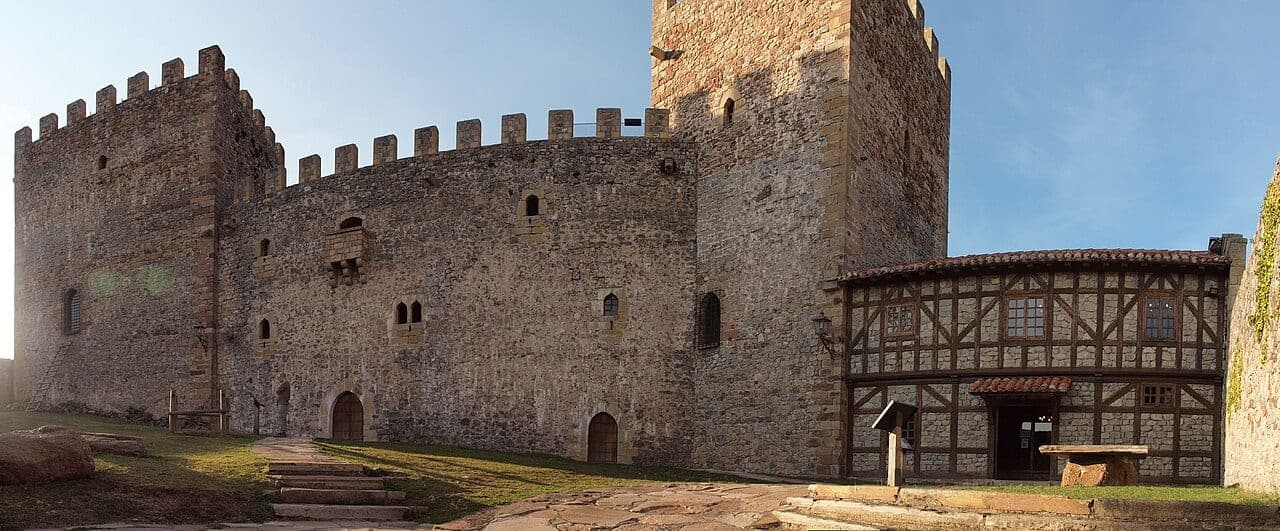 Castle
Argüeso Castle
A medieval fortress perched on a hillock in Campoo de Suso, in southern Cantabria, visible from afar and protected as a site of cultural interest since 1983.
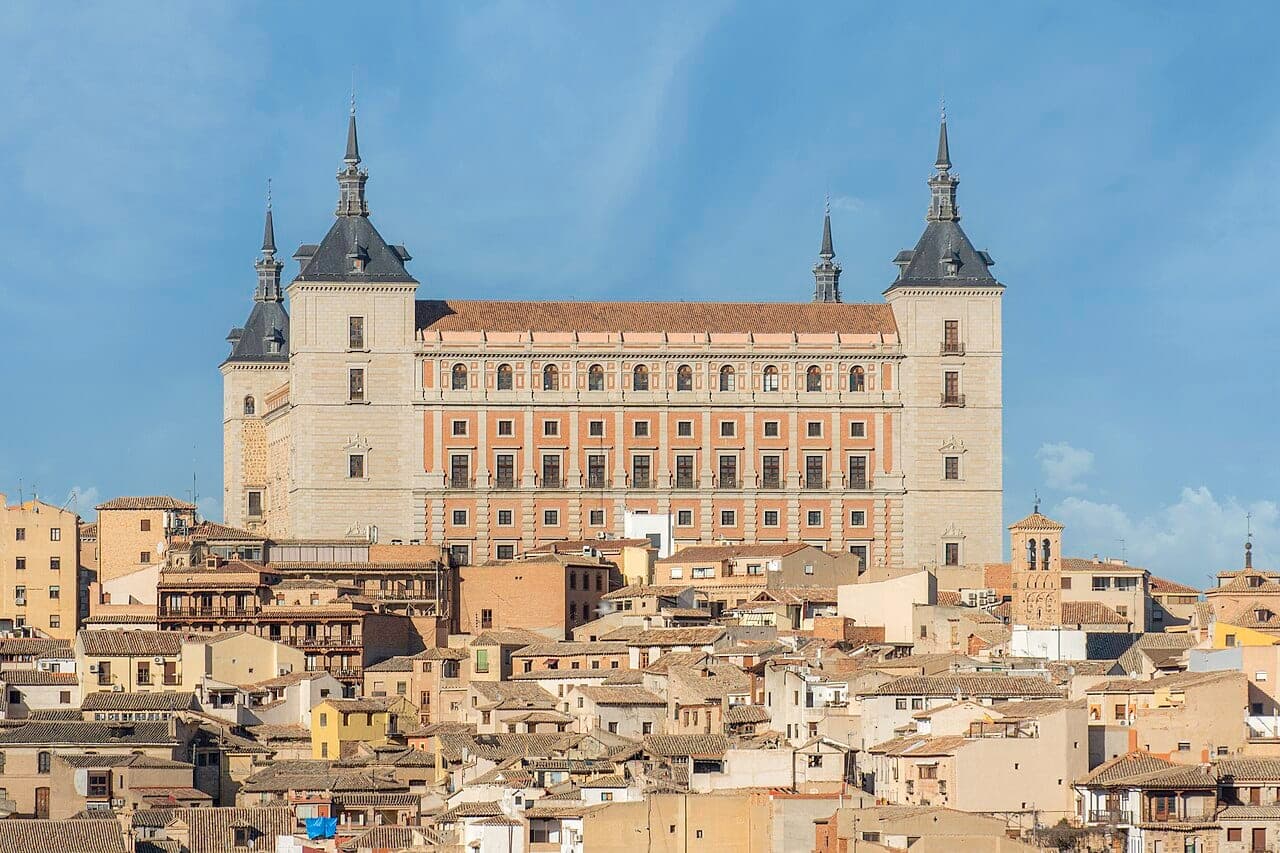 Castle
Alcázar of Toledo
Crowning the highest point of Toledo, the Alcázar sums up centuries of history, from Roman palace to imperial residence, and today houses the Army Museum and the Library of Castile-La Mancha.
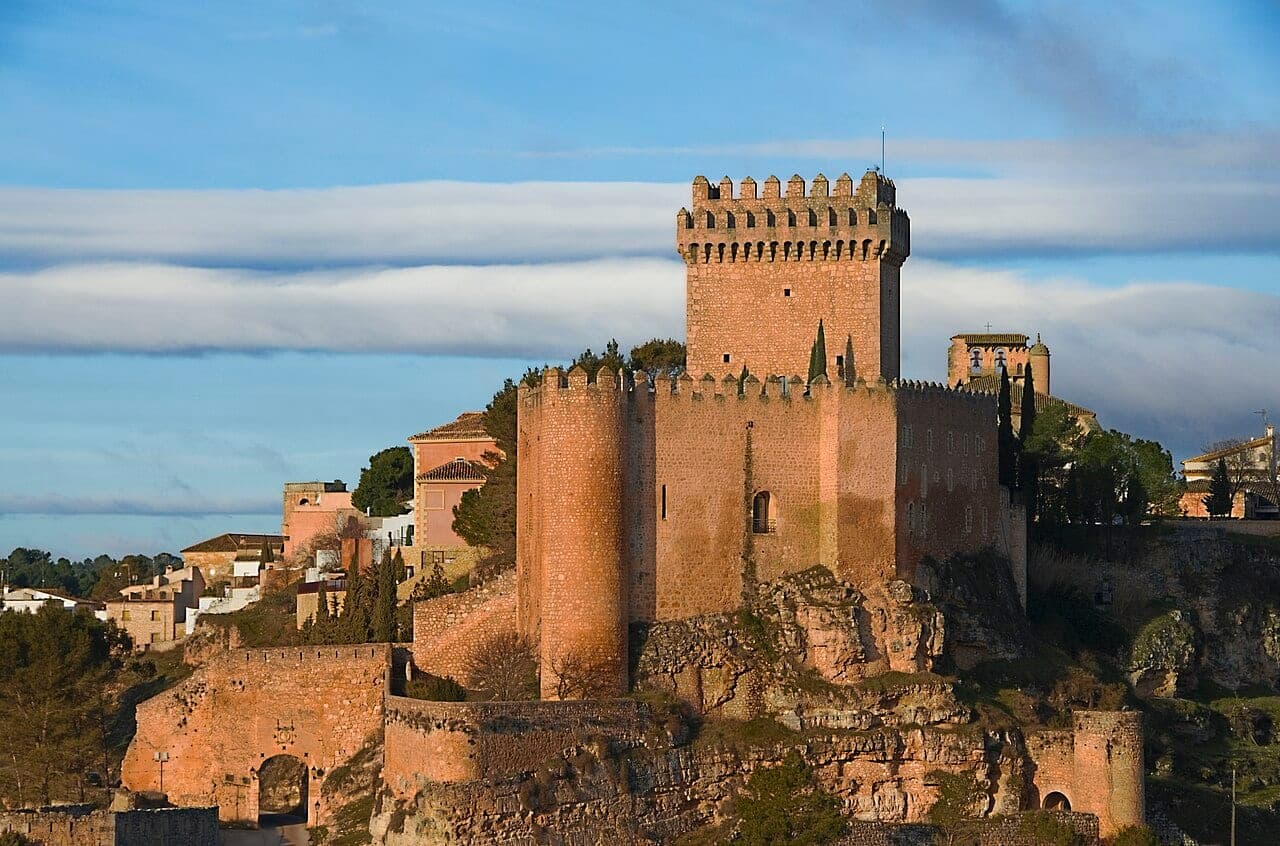 Castle
Alarcón Castle
The castle and walled town of Alarcón, in Cuenca, which together with their five outlying towers form a remarkable stronghold, listed as a Site of Cultural Interest since 1992.
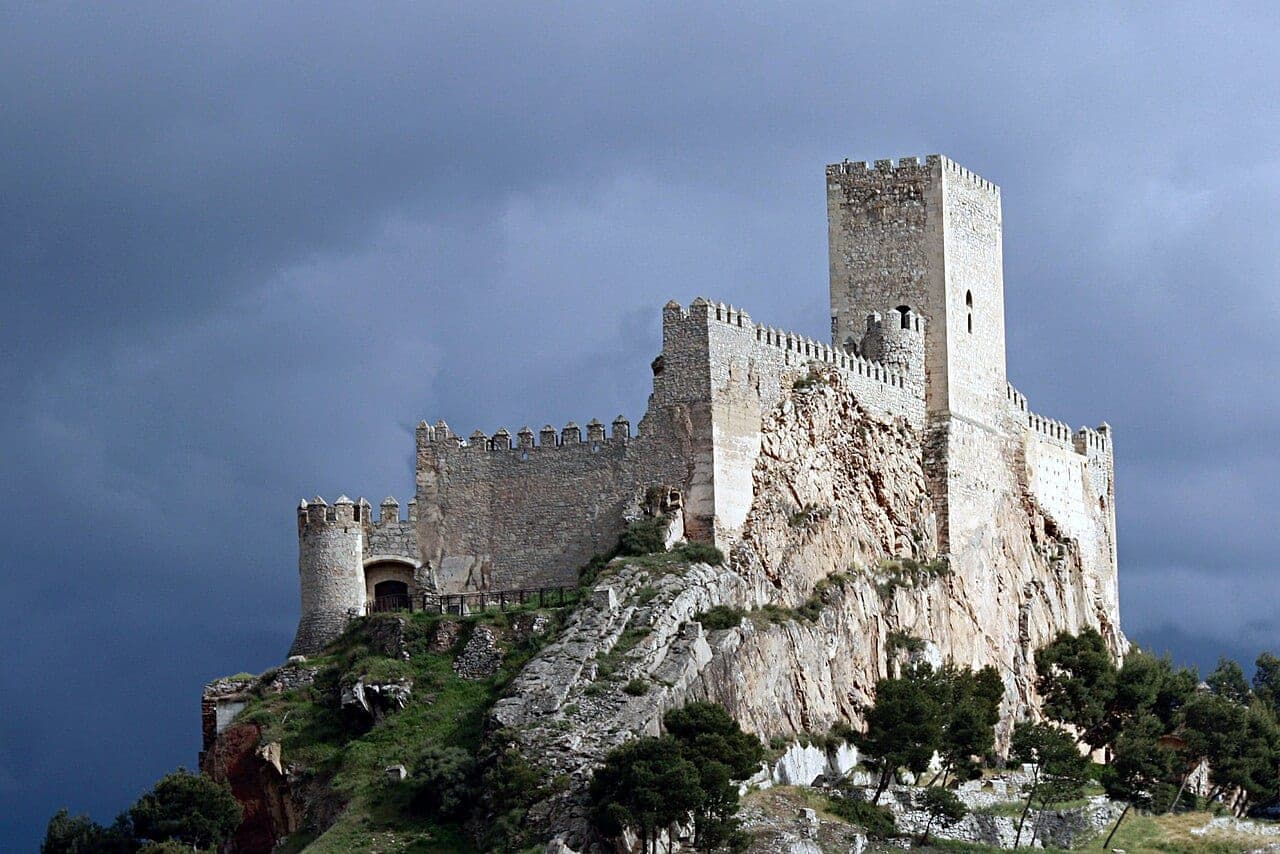 Castle
Almansa Castle
Almansa Castle, in the province of Albacete, is a Bien de Interés Cultural listed as a monument and an essential stop for anyone exploring the heritage of Castilla-La Mancha.
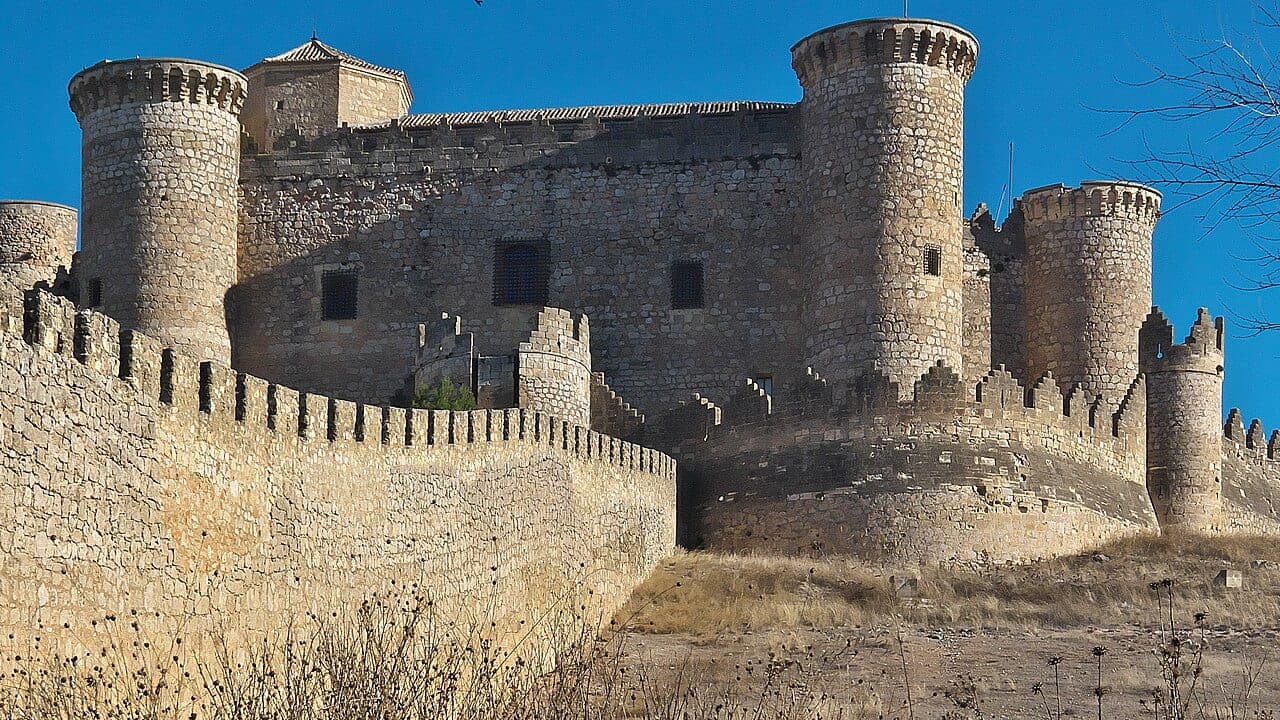 Castle
Belmonte Castle
A fortress rising above the hill of San Cristóbal on the outskirts of Belmonte, protected as a monument since 1931 and now a Site of Cultural Interest.
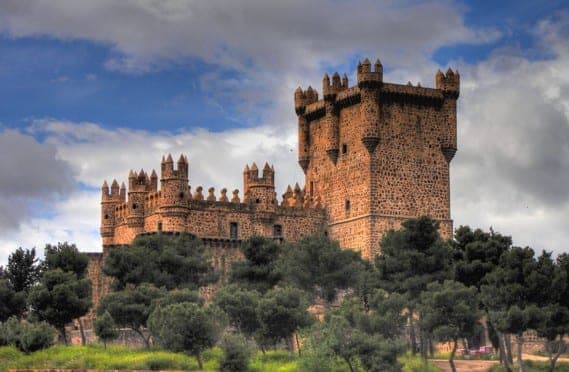 Castle
Guadamur Castle
Guadamur Castle is a fortification in the province of Toledo that gives character to the village around it and deserves a stop on any route through the province.
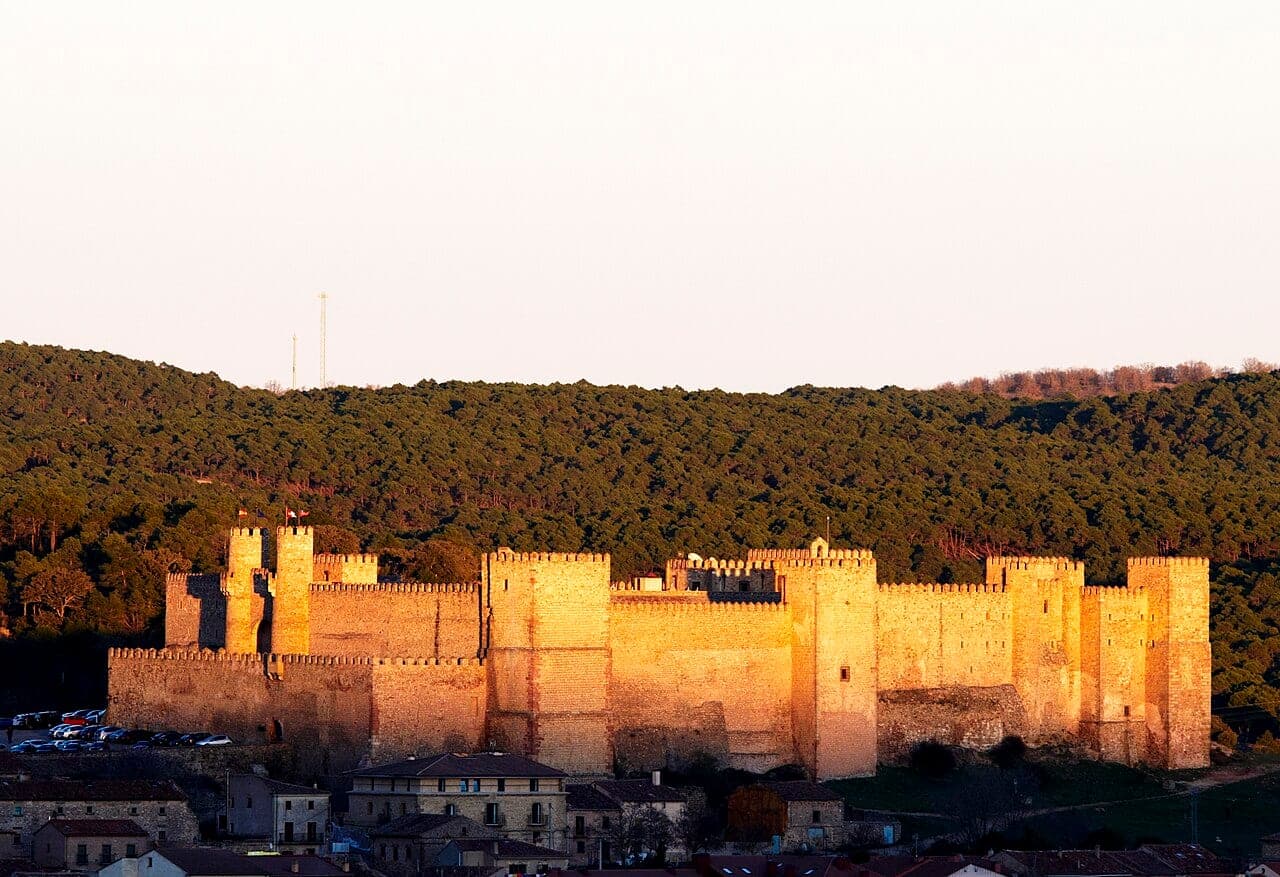 Castle
Sigüenza Castle
Palace-fortress of the bishops of Sigüenza, built in the 12th century on the site of a Muslim fortress and now a Parador, bearing witness to nine centuries of history.
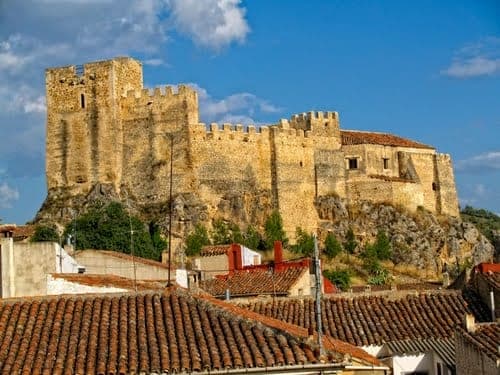 Castle
Yeste Castle
A fortress of Andalusi origin later converted into a palatial residence, Yeste Castle keeps watch over a landscape of mountain ranges and river sources from the heart of the village.
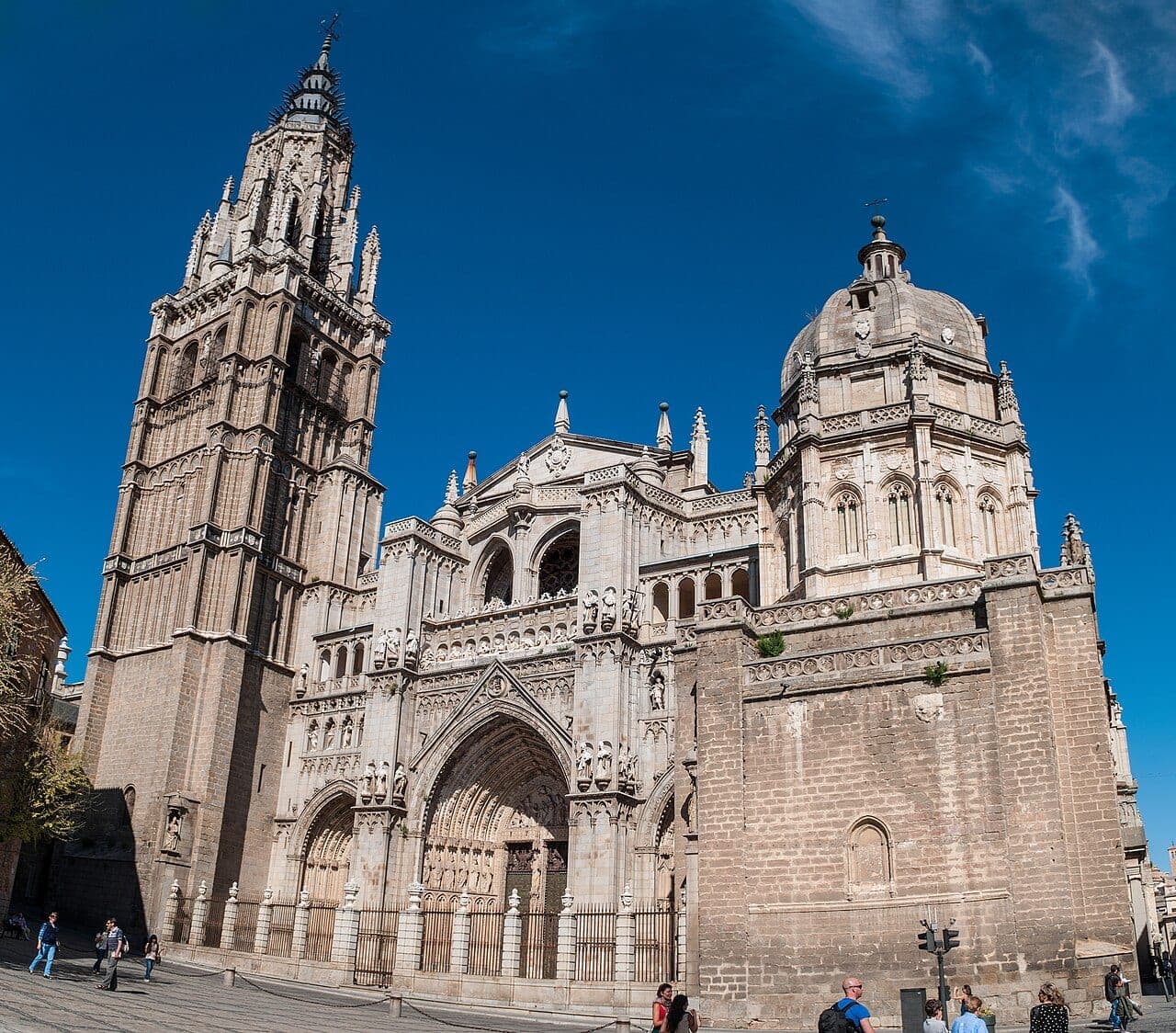 Cathedral
Toledo Cathedral
The primatial church of Spain and, for many, the crowning achievement of Spanish Gothic, Toledo Cathedral distils almost three centuries of building ambition into white stone.
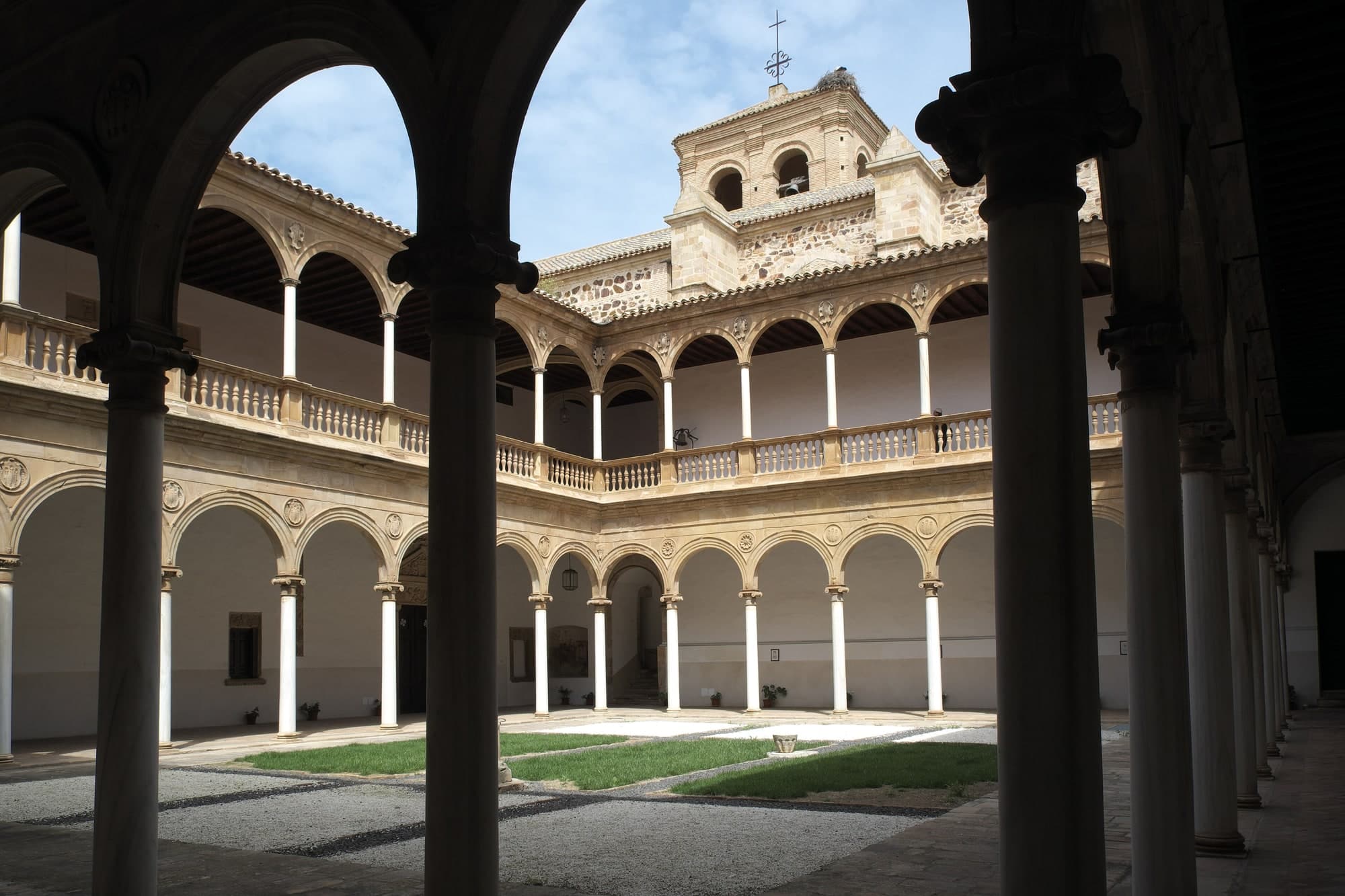 Monastery
Convent of the Assumption of Calatrava
A convent in Almagro, in the province of Ciudad Real, whose name brings together the dedication to the Assumption and the name of Calatrava. A worthwhile stop for anyone exploring the town at a leisurely pace.
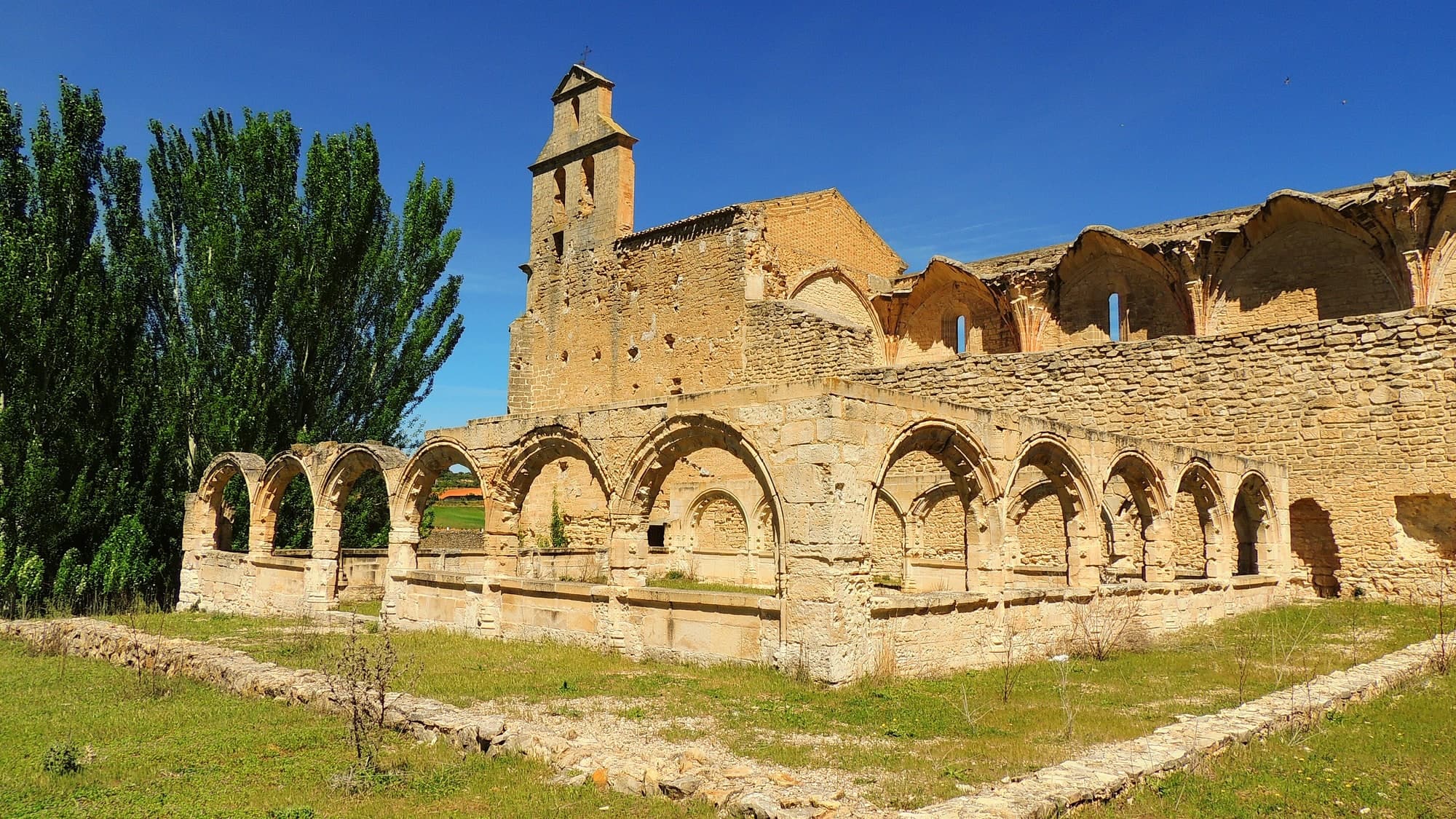 Monastery
Convent of Nuestra Señora del Rosal
The Convent of Nuestra Señora del Rosal, in Priego (Cuenca), is an unassuming stop for anyone touring the villages of Cuenca province and keen to discover their heritage.
 Monastery
Convent of Santa Isabel de los Reyes
The Toledo convent of Santa Isabel de los Reyes, a worthwhile stop for anyone keen to discover the religious heritage of the Imperial City.
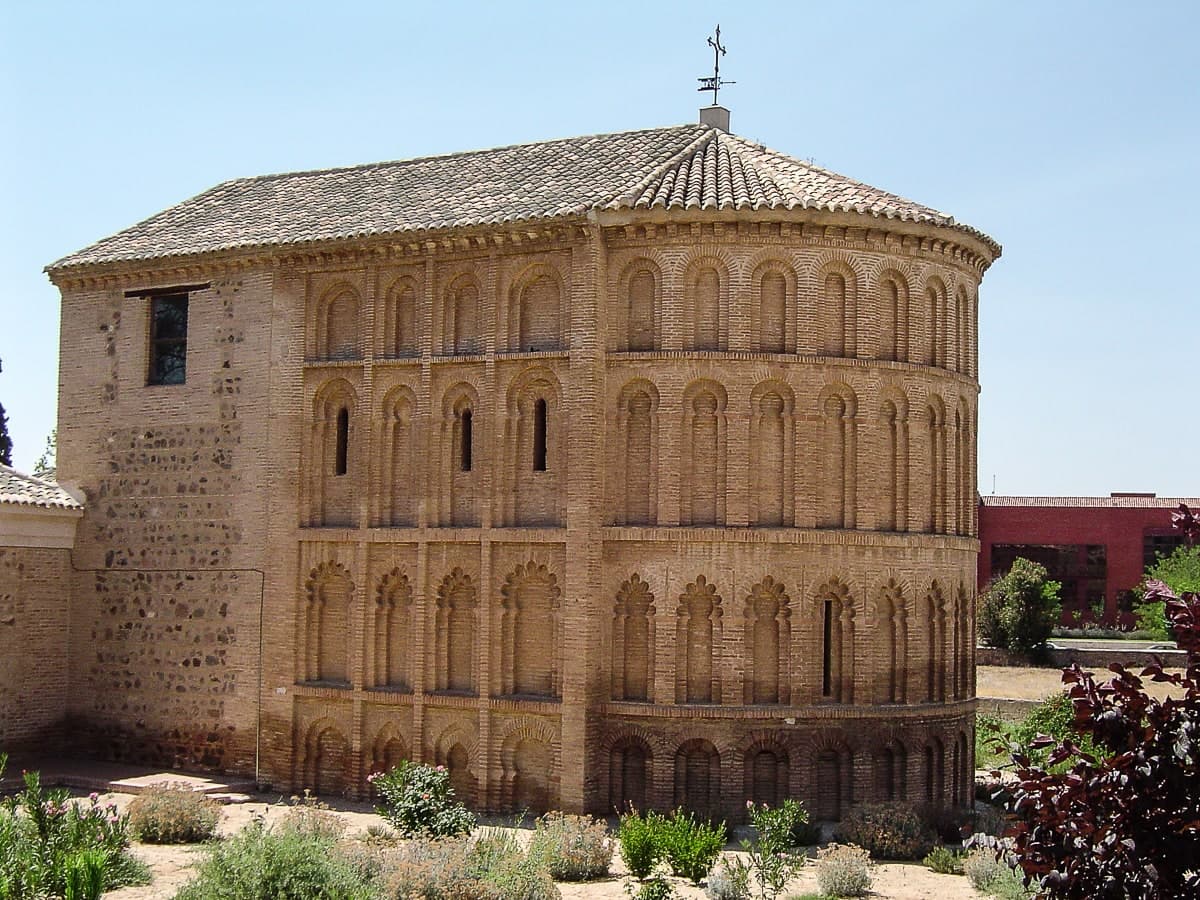 Hermitage
 of Cristo de la Vega
The Hermitage of Cristo de la Vega is one of Toledo's religious buildings, an evocative stop for anyone wishing to get to know the city beyond its most famous monuments.
 Mosque
 of Cristo de la Luz
A small caliphal oratory dating from 999, set beside one of Toledo's ancient gates, it is the best preserved of the city's mosques and the birthplace of Mudéjar art.
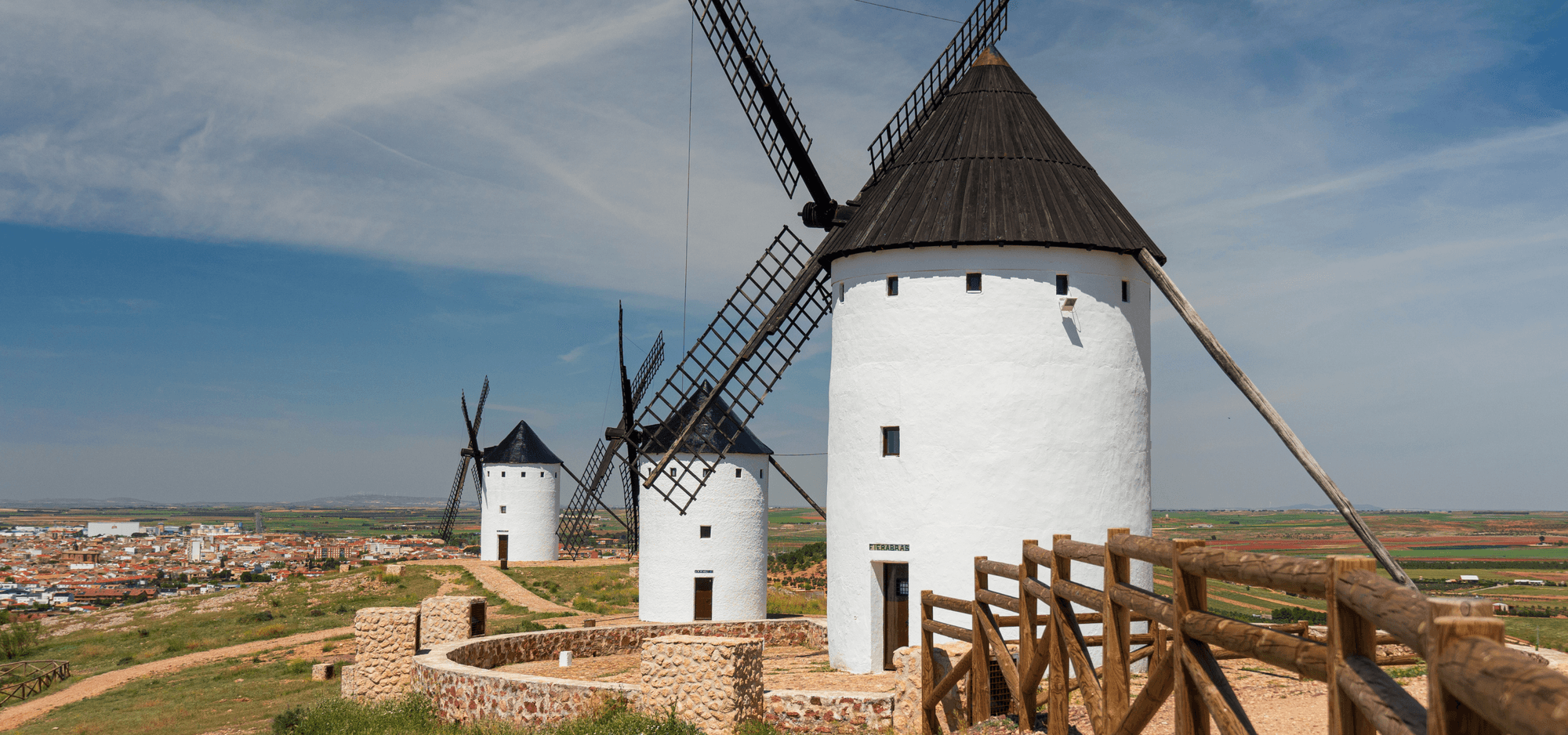 Windmill
s of Alcázar de San Juan
Towers of the Order of St John, Golden Age convents and lagoons with flamingos: the La Mancha landscape surrounding the windmills of Alcázar de San Juan.
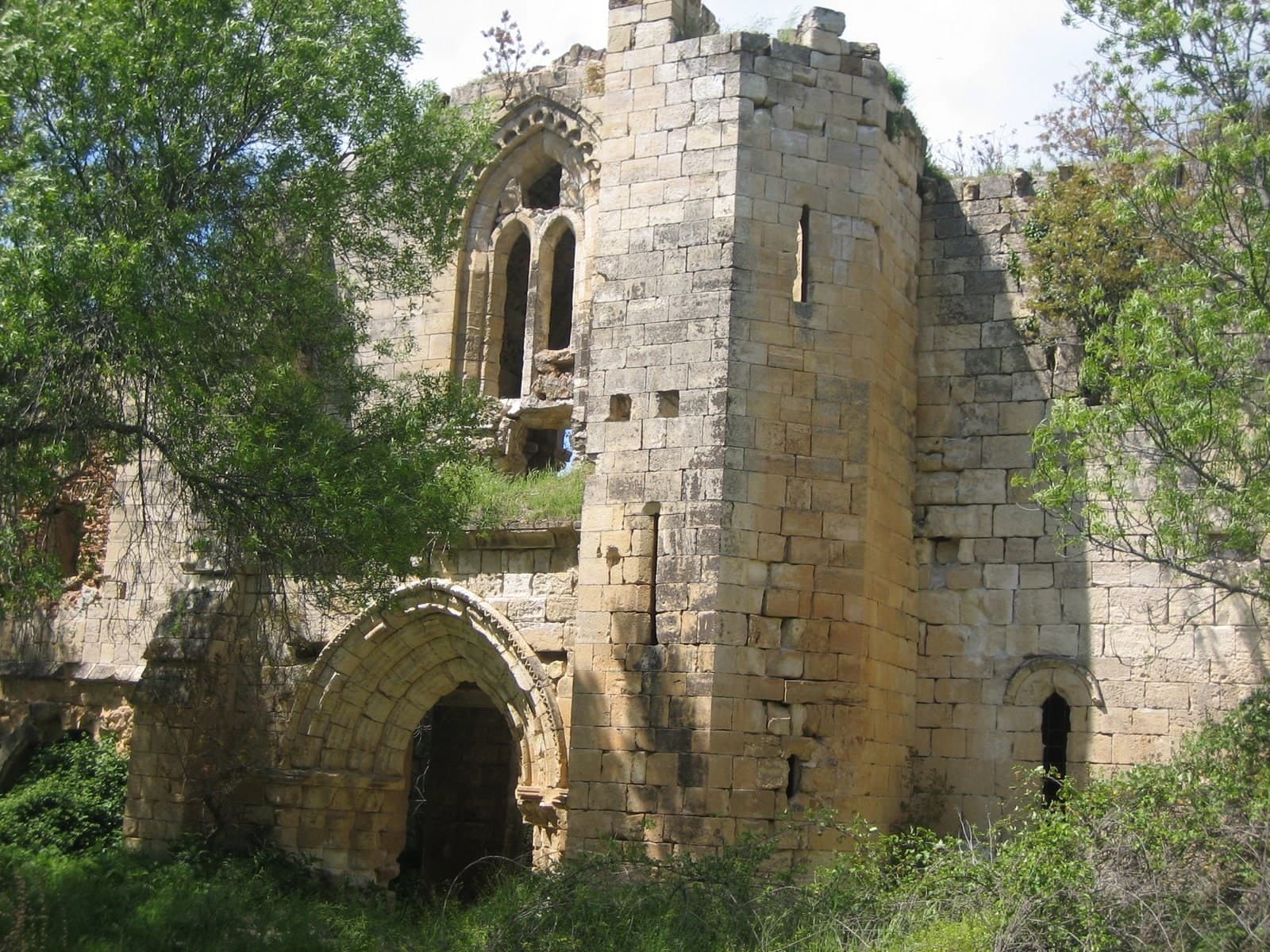 Monastery
Bonaval Monastery
Santa María de Bonaval, a Cistercian monastery founded in 1164 in Retiendas, offers a glimpse into more than eight centuries of history in the province of Guadalajara.
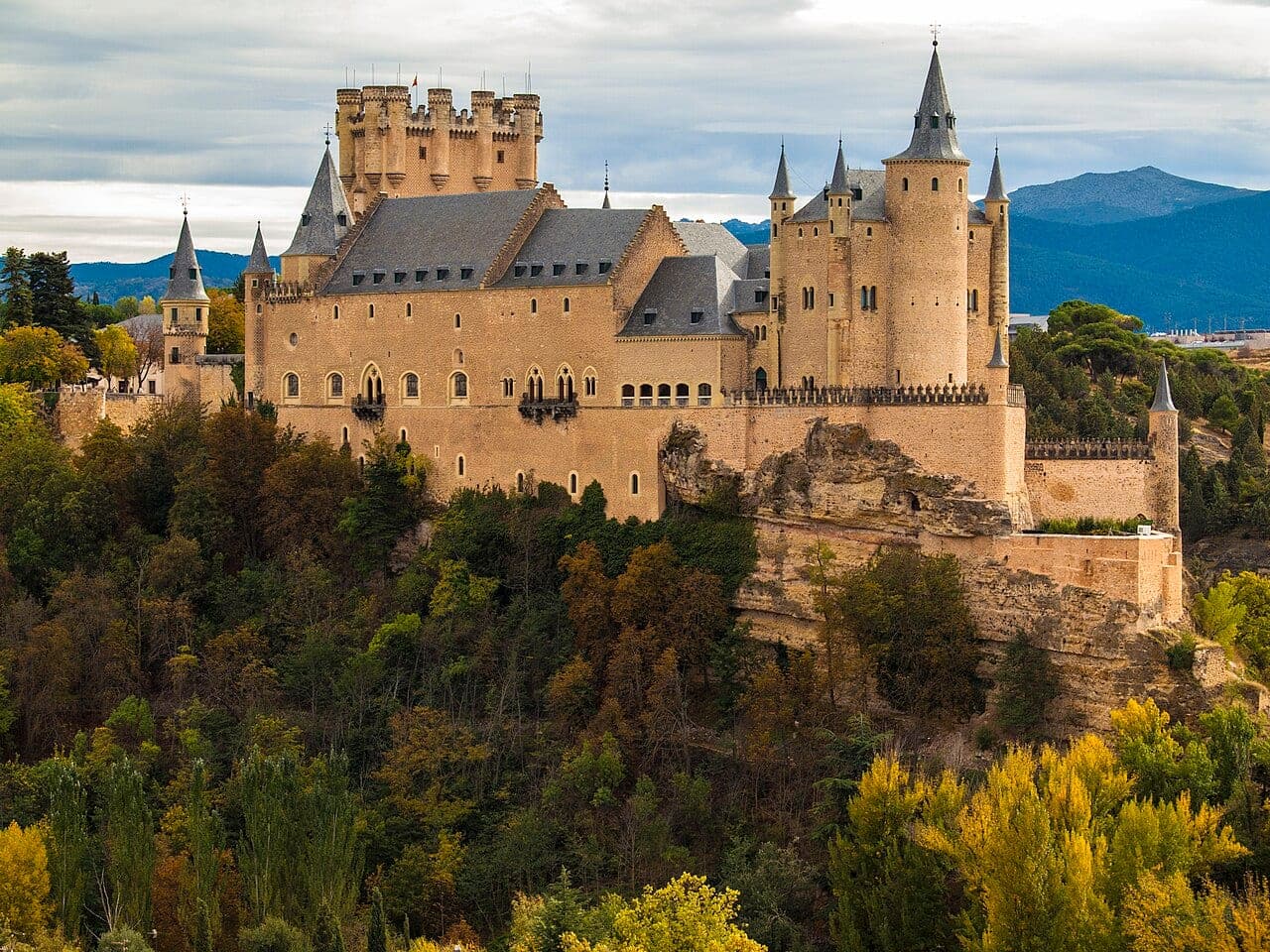 Castle
Alcázar of Segovia
Jutting out like a ship's prow over the Eresma valley, the Alcázar of Segovia was a royal residence for centuries and is one of the most famous medieval castles in the world.
 Church
Basilica of San Vicente
Ávila's great Romanesque basilica, dedicated to the martyred siblings Vincent, Sabina and Christeta, is a World Heritage Site and one of the finest examples of the style in Spain.
 Castle
Berlanga de Duero Castle
Rising above Berlanga de Duero, this castle sums up centuries of history: Muslim fortress, Castilian stronghold, seigneurial residence and artillery bastion.
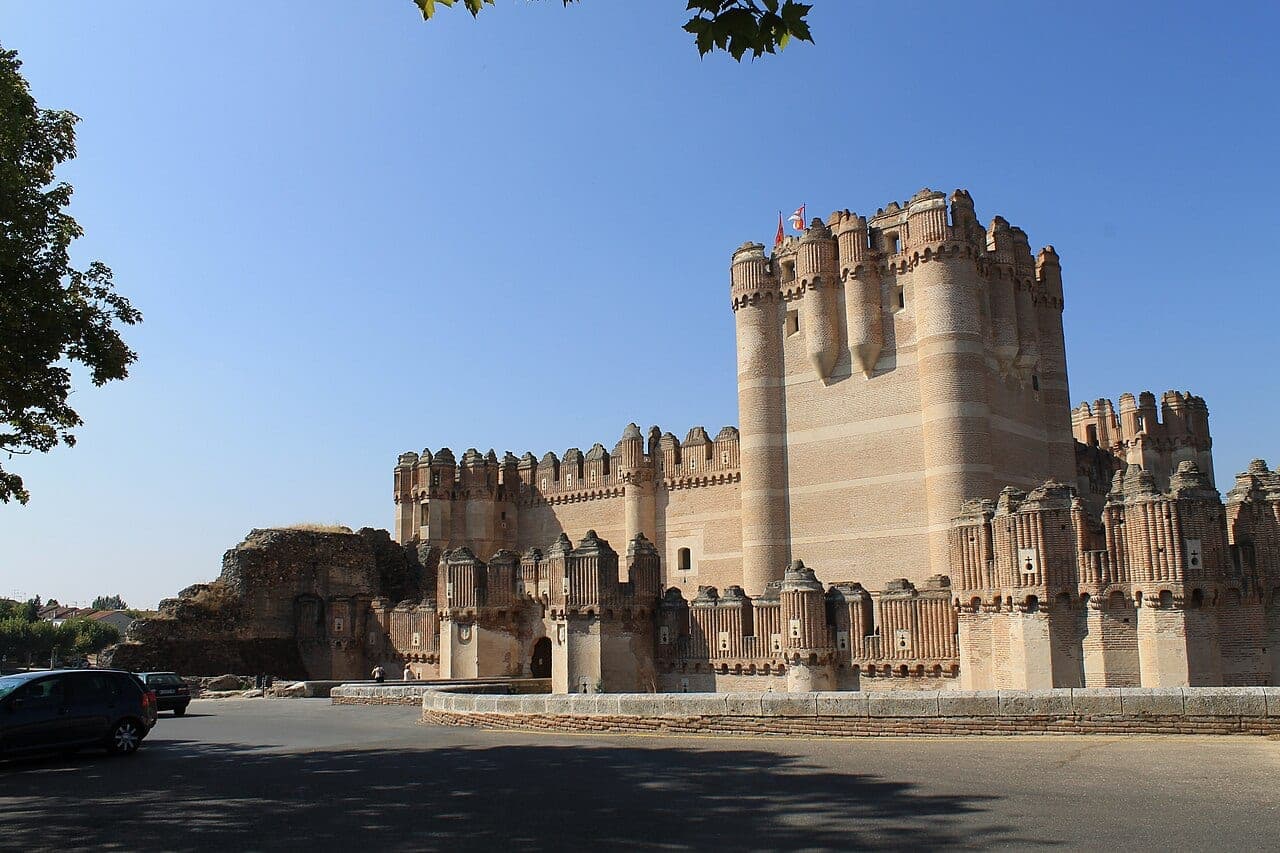 Castle
Coca Castle
A jewel of Gothic-Mudéjar architecture built in the 15th century, Coca Castle is a fortress so admired that it has replicas in Olmedo and even in Austria.
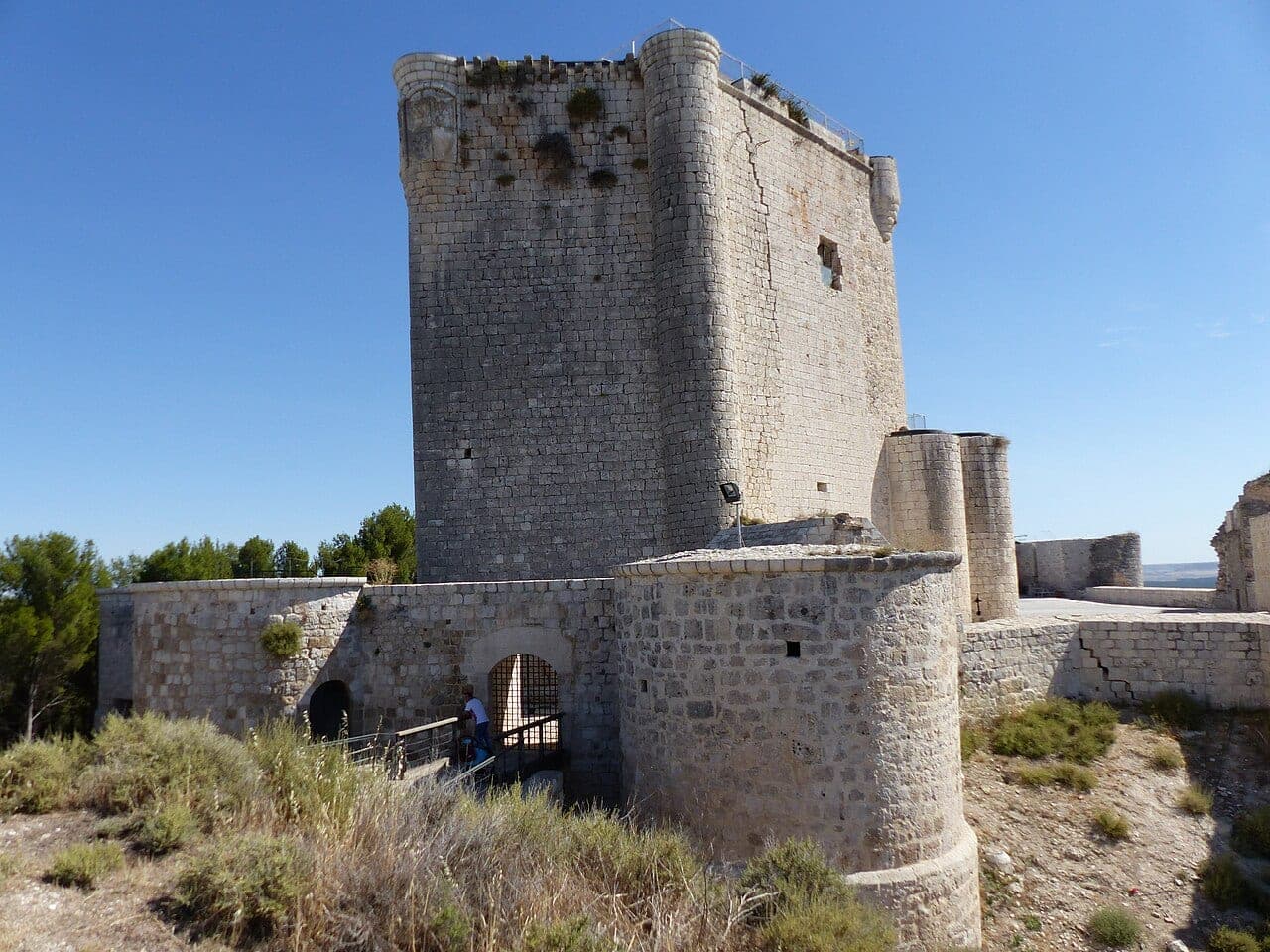 Castle
Íscar Castle
Íscar Castle, in the province of Valladolid, is a fine excuse to discover this corner of Castile and León by following the trail of its fortress.
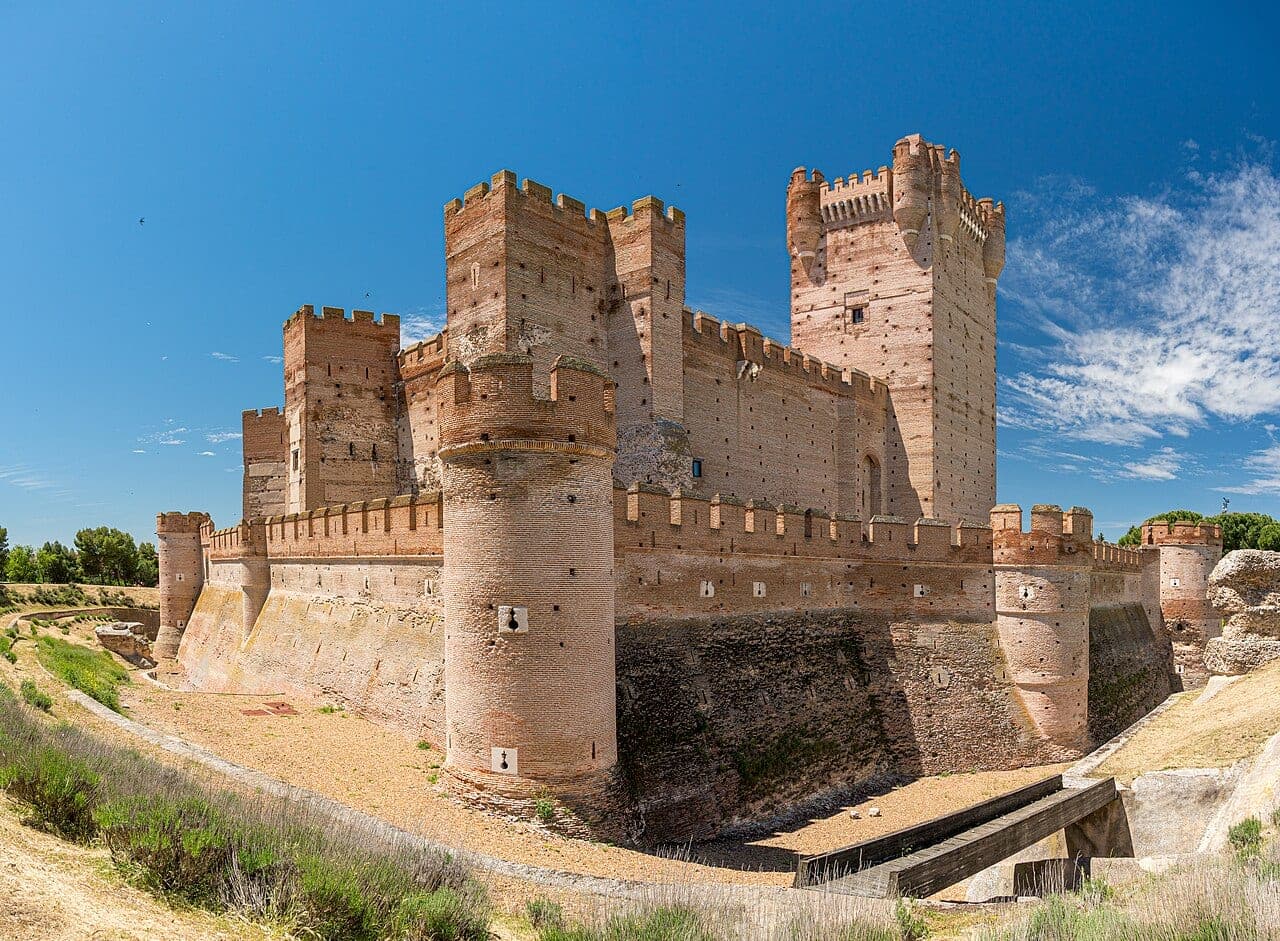 Castle
 of La Mota
Built in reddish brick on a low hill overlooking Medina del Campo and the surrounding district, the Castle of La Mota is one of the finest examples of the Valladolid School.
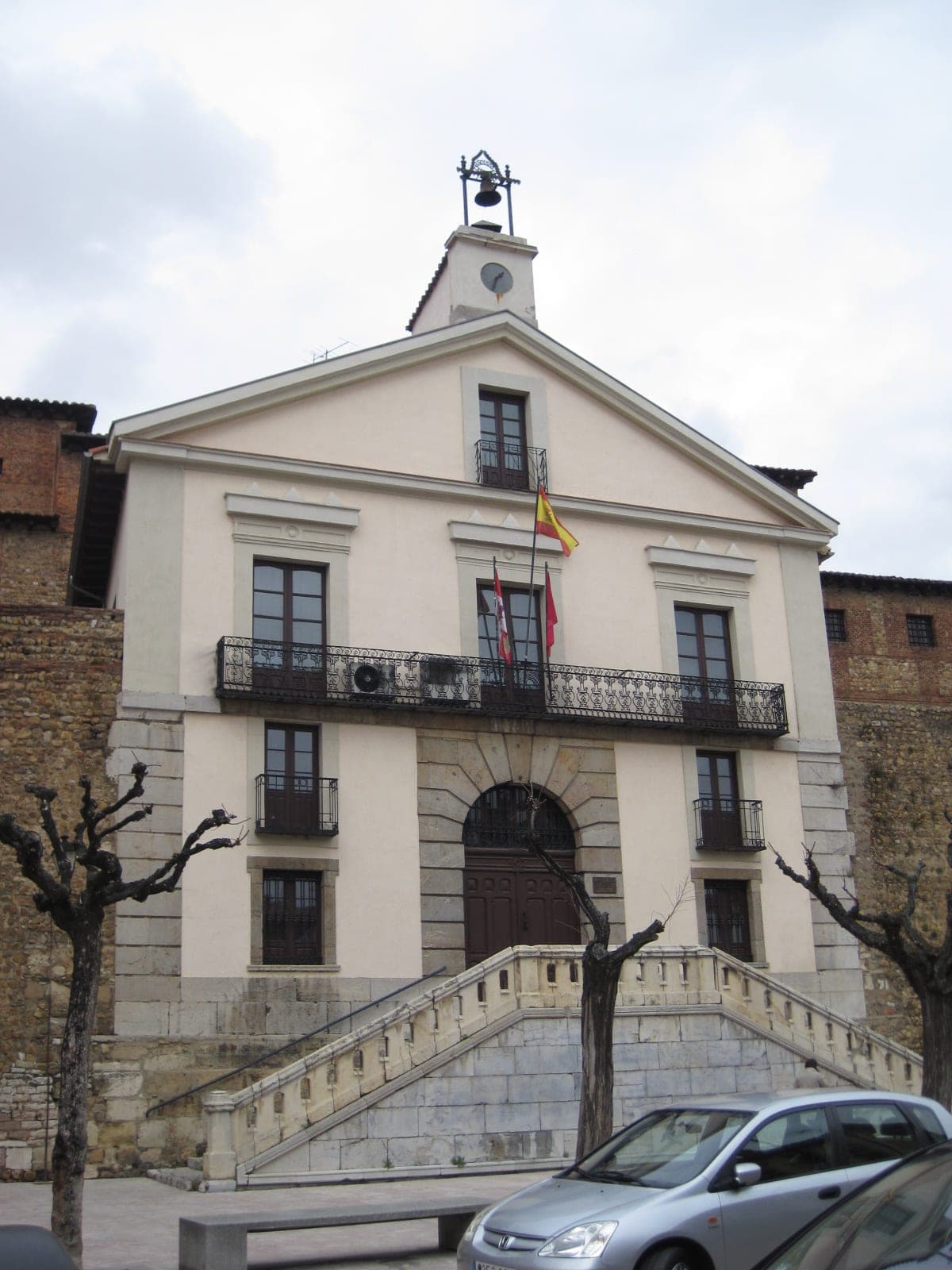 Castle
León Castle
León's citadel, known in the Middle Ages as the towers of León, which went from serving as a prison to housing the Provincial Historical Archive since 1982.
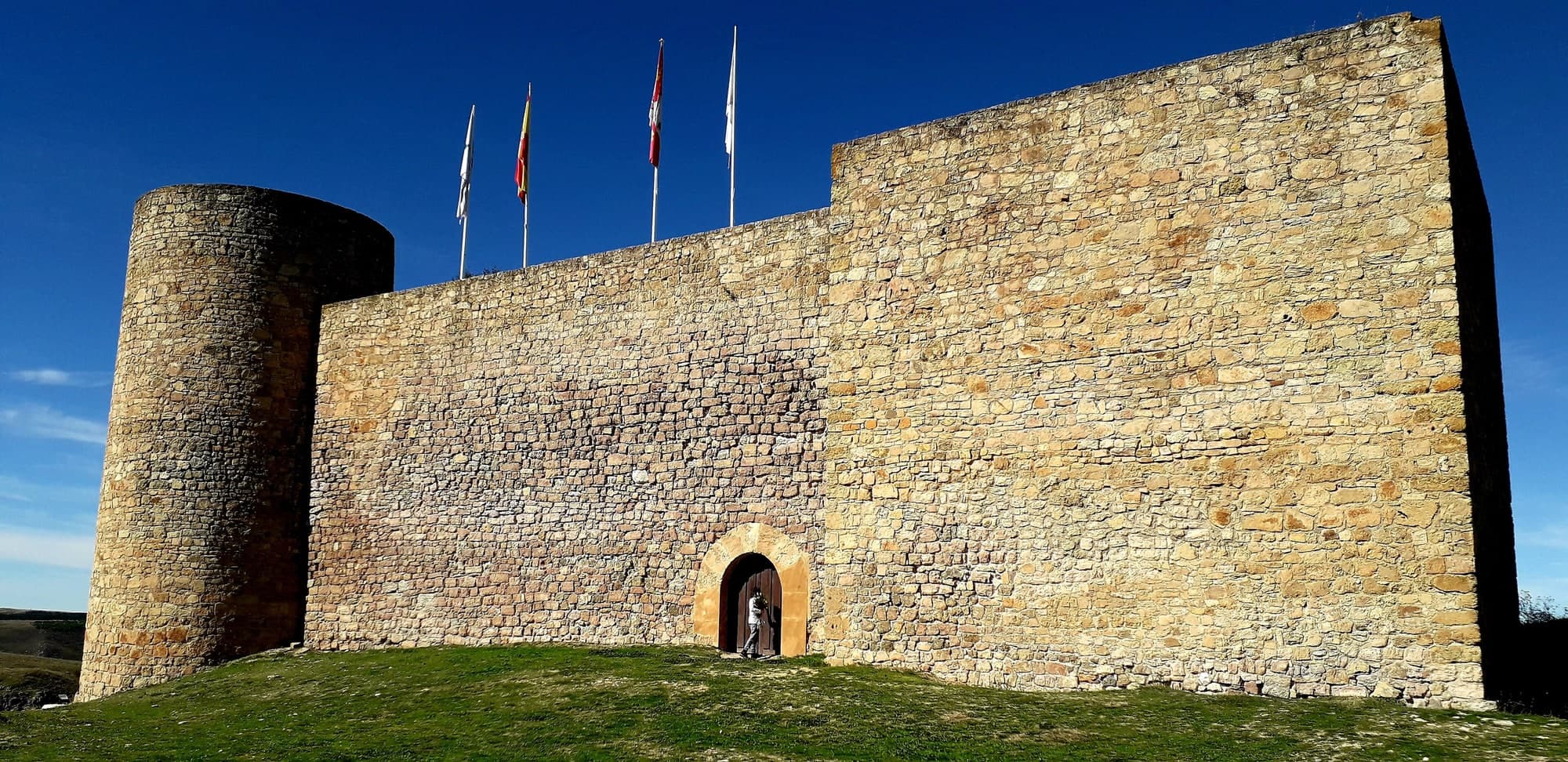 Castle
Medinaceli Castle
A medieval fortress that shares its name with the town of Medinaceli in the province of Soria, and an enticing stop for anyone exploring the defensive heritage of Castile and León.
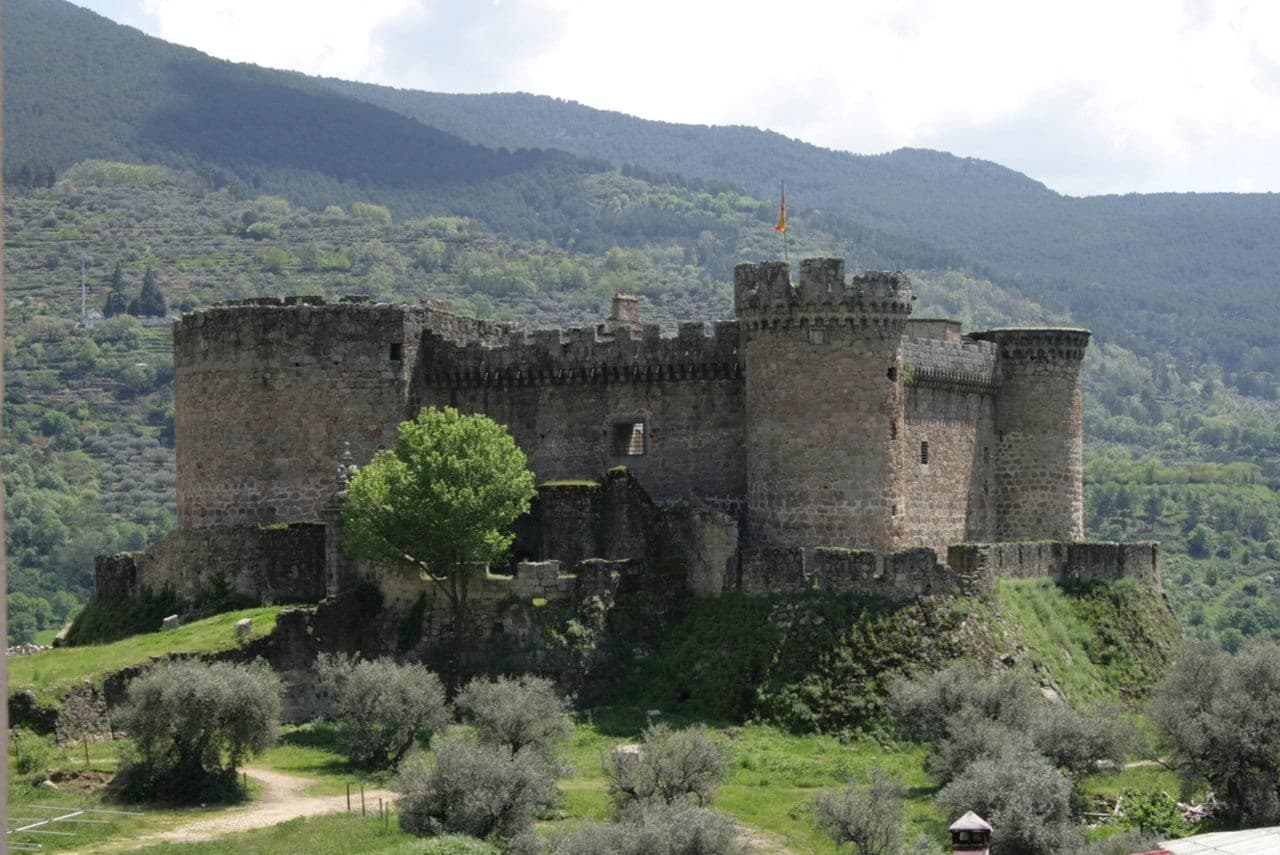 Castle
Mombeltrán Castle
A 15th-century fortress built by Beltrán de la Cueva above the Mombeltrán valley, featuring a barbican, corner towers and an elegant Renaissance doorway.
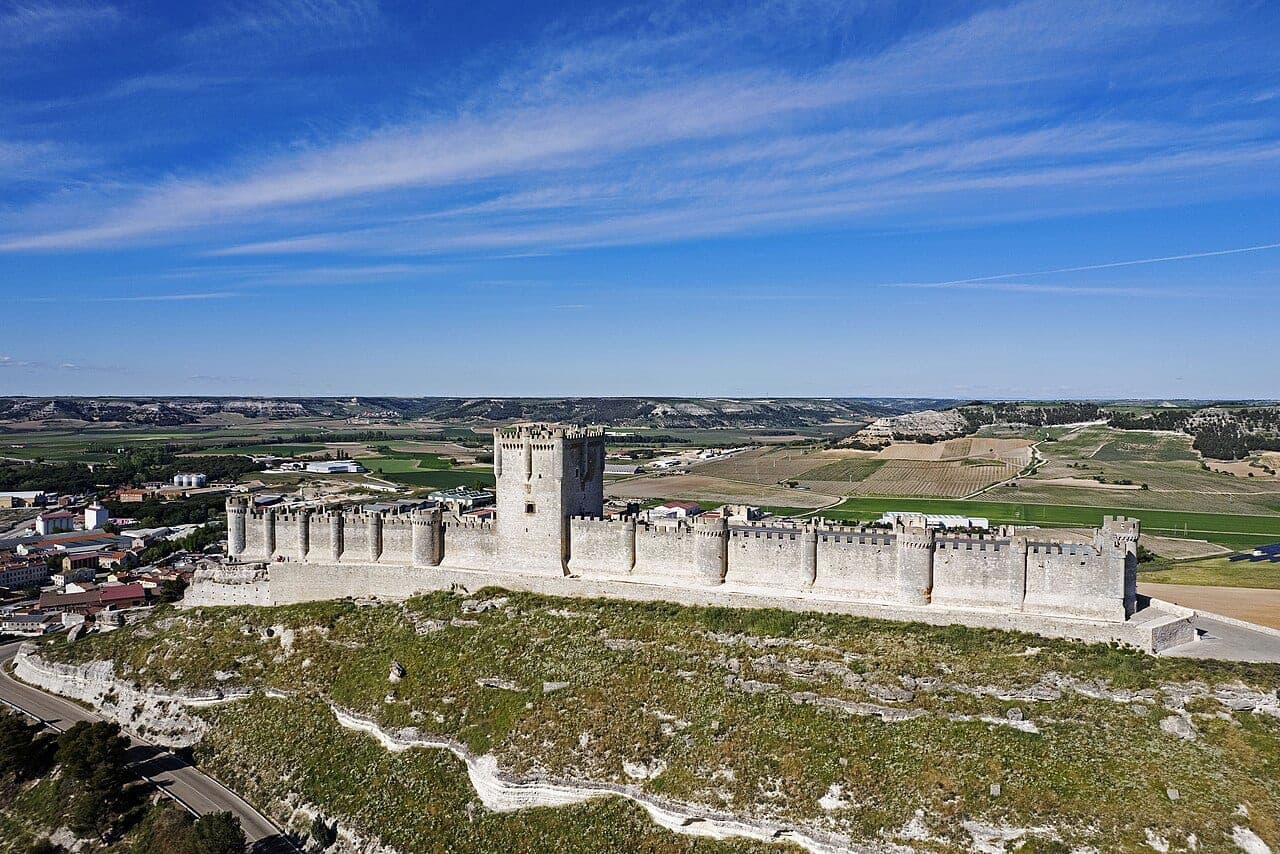 Castle
Peñafiel Castle
Long and narrow, like a ship run aground on a hilltop, Peñafiel Castle towers over this town in the province of Valladolid and houses the Provincial Wine Museum within its walls.
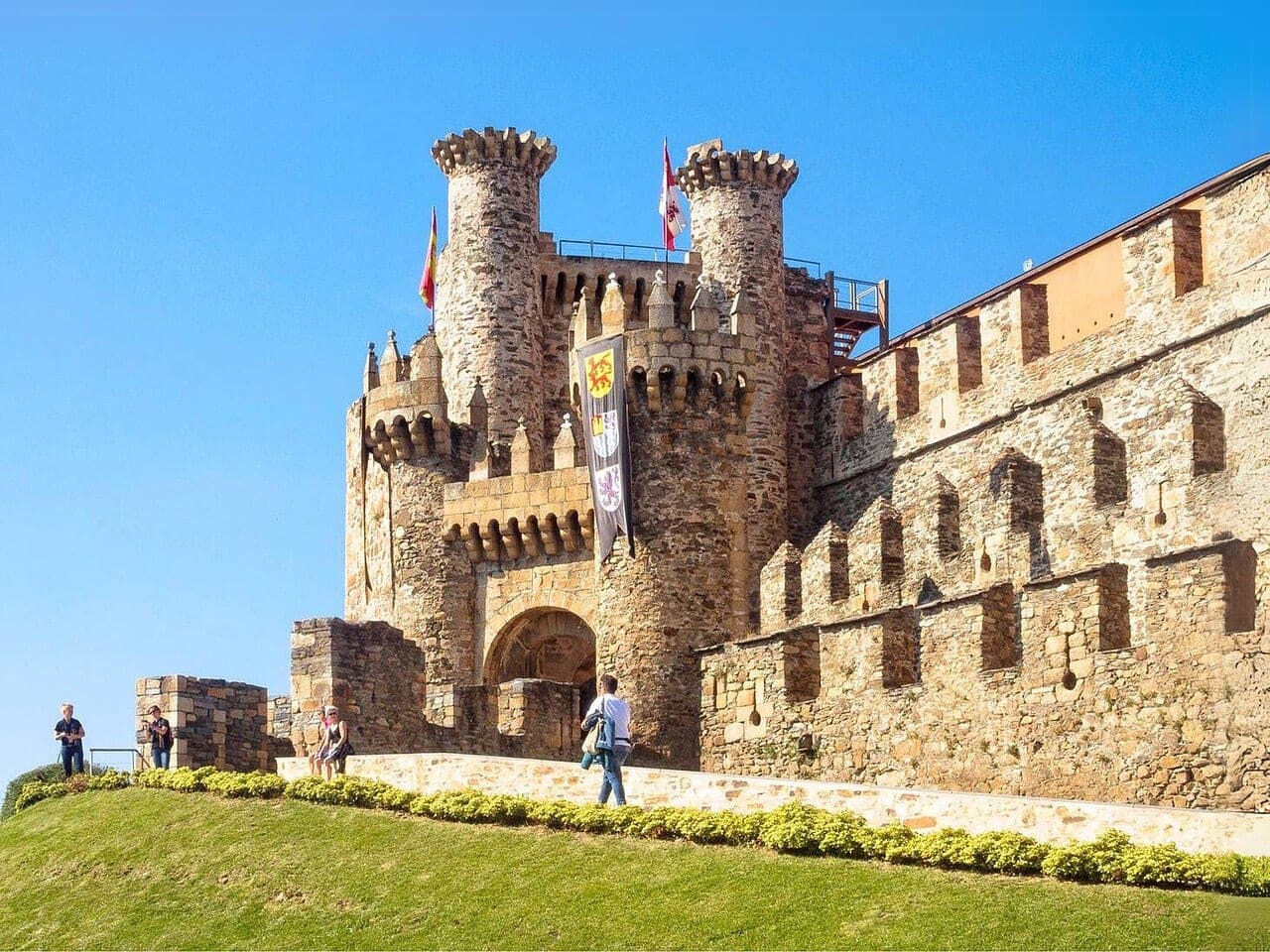 Castle
Ponferrada Castle
A 12th-century Templar fortress rising above the confluence of the Boeza and the Sil, a jewel of medieval military architecture and an essential stop on the Camino de Santiago.
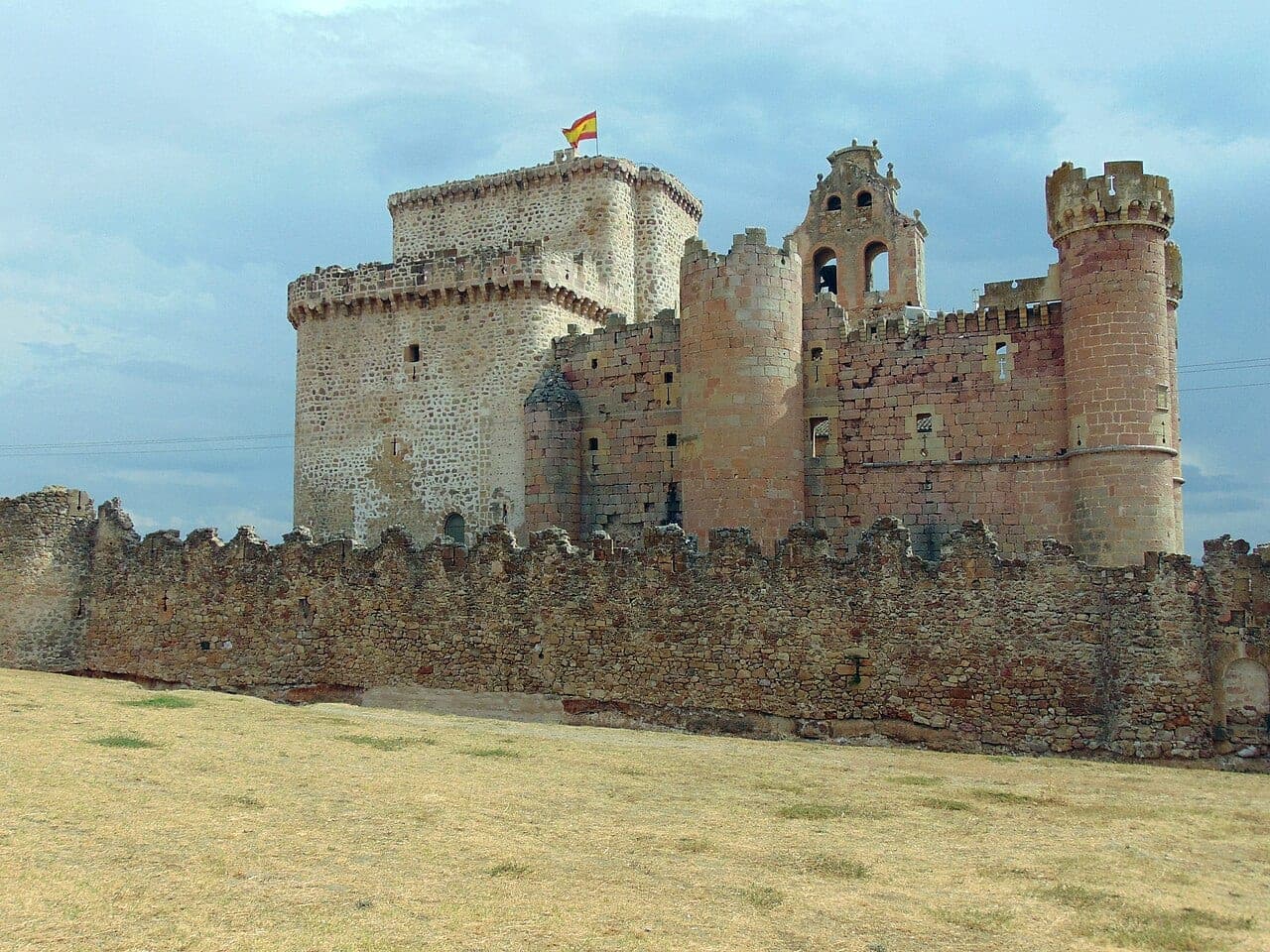 Castle
Turégano Castle
A 12th-century fortress crowning a promontory above the Segovian town of Turégano, the town's emblem and a National Monument since 1931.
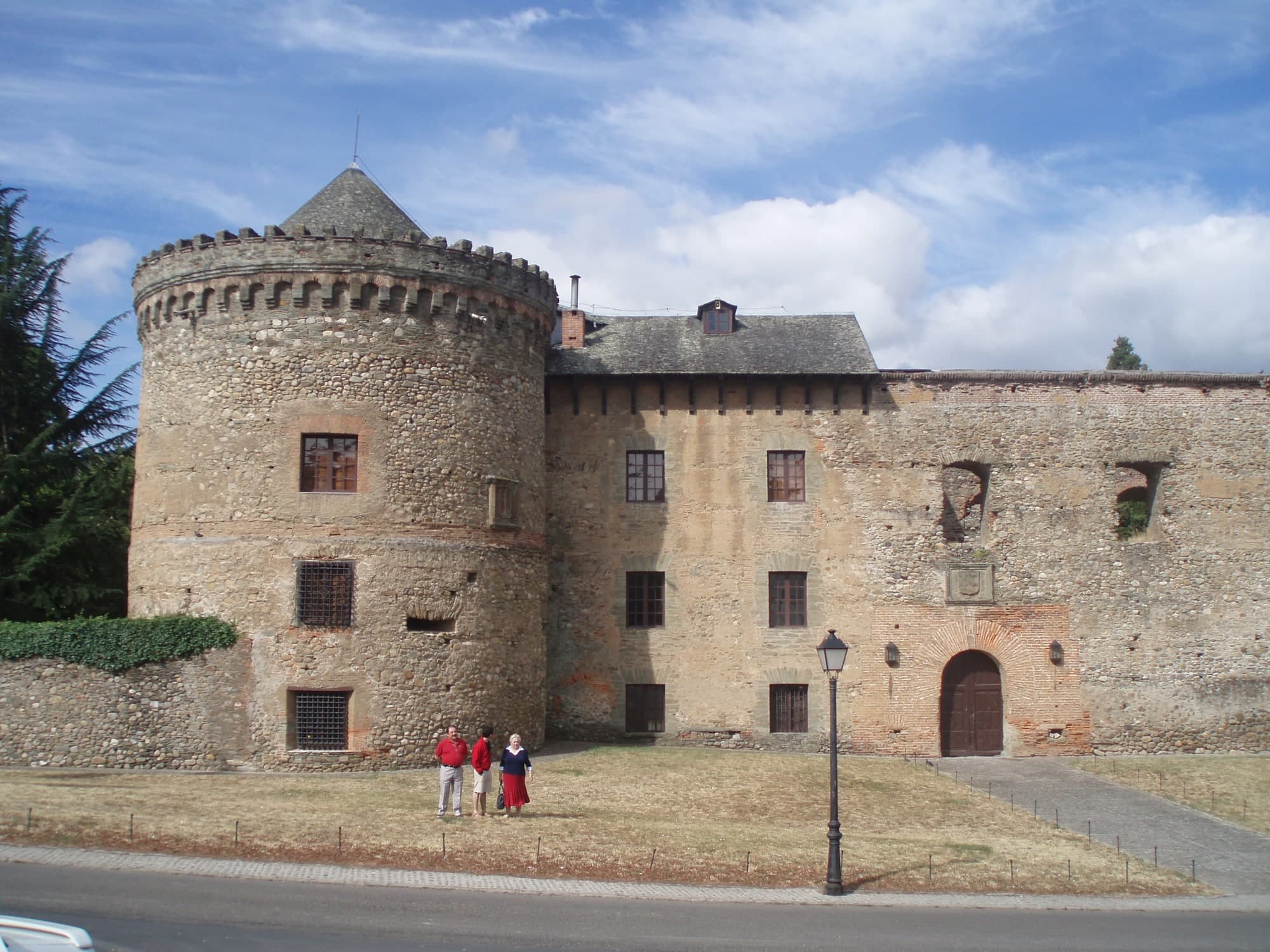 Castle
-Palace of the Marquesses of Villafranca
The castle-palace of the Marquesses of Villafranca, in the heart of El Bierzo and closely tied to the Camino de Santiago, is a stop steeped in history for pilgrims and curious travellers alike.
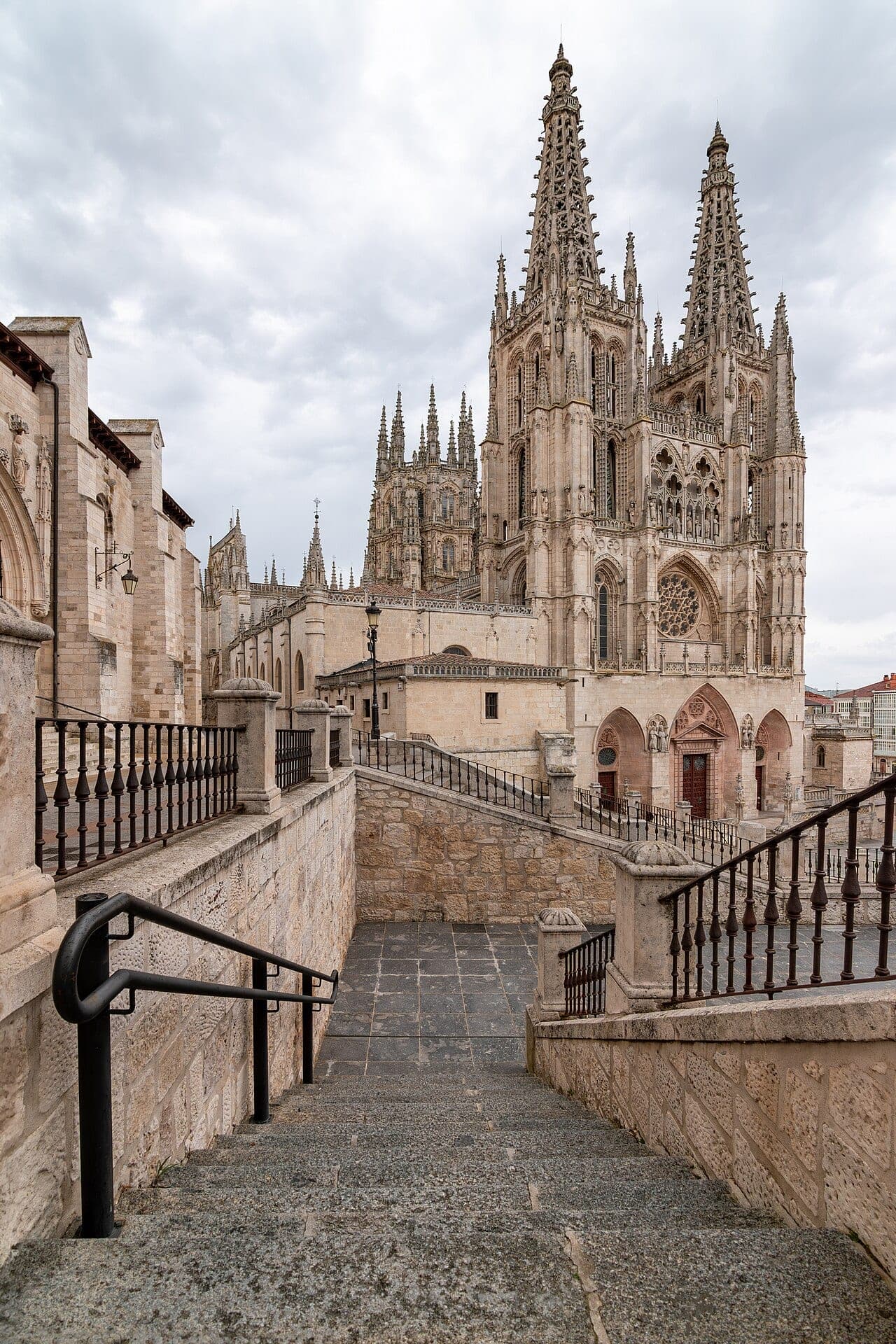 Cathedral
Burgos Cathedral
A jewel of Spanish Gothic begun in 1221 and a World Heritage Site in its own right, with openwork spires, the Constable's Chapel, the tomb of El Cid and the famous Papamoscas.
 Cathedral
El Burgo de Osma Cathedral
Gothic since 1232 and completed in neoclassical style, El Burgo de Osma Cathedral preserves the memory of one of the oldest dioceses in Spain.
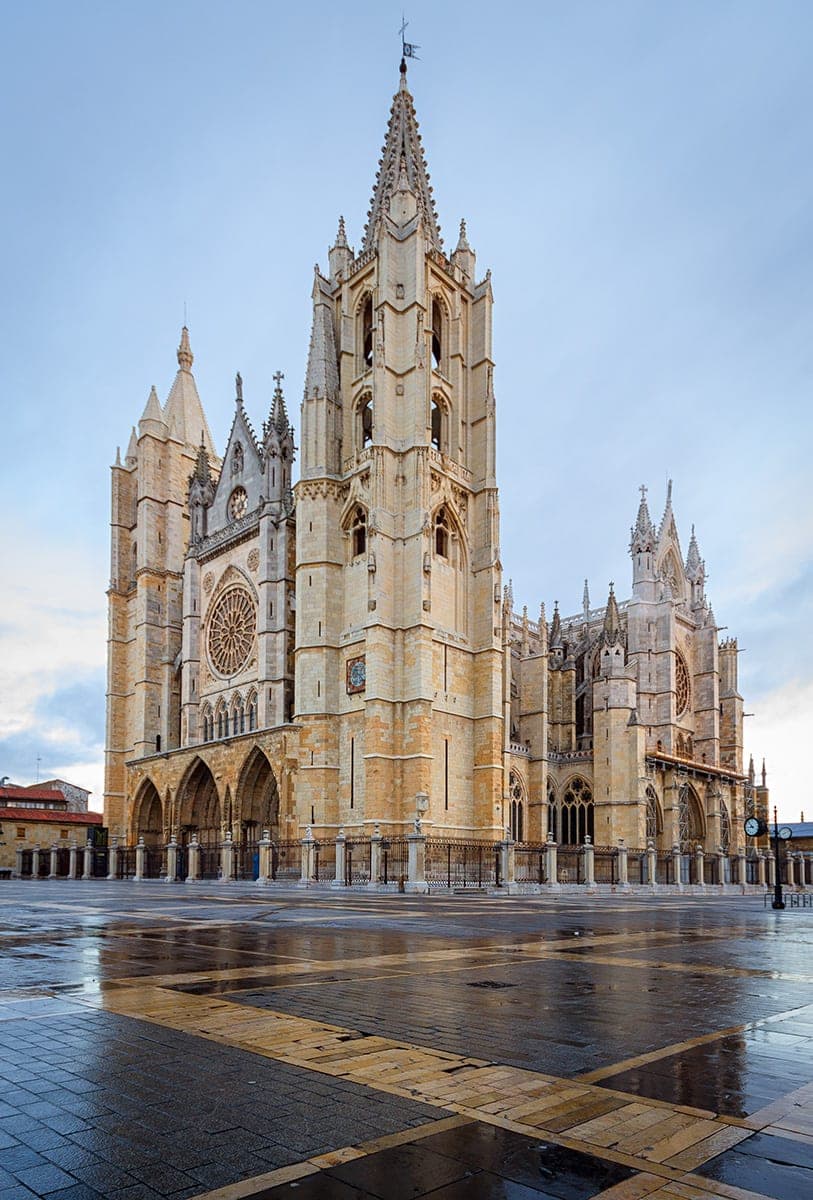 Cathedral
León Cathedral
The Pulchra Leonina, a jewel of French-influenced Gothic right on the Camino de Santiago, where the walls all but disappear to make way for one of the largest collections of medieval stained glass in the…
 Cathedral
 of Our Lady of the Assumption, Valladolid
A Herrerian cathedral left half-built: Juan de Herrera's grand project in the heart of Valladolid, with Baroque additions and a story of thwarted ambition.
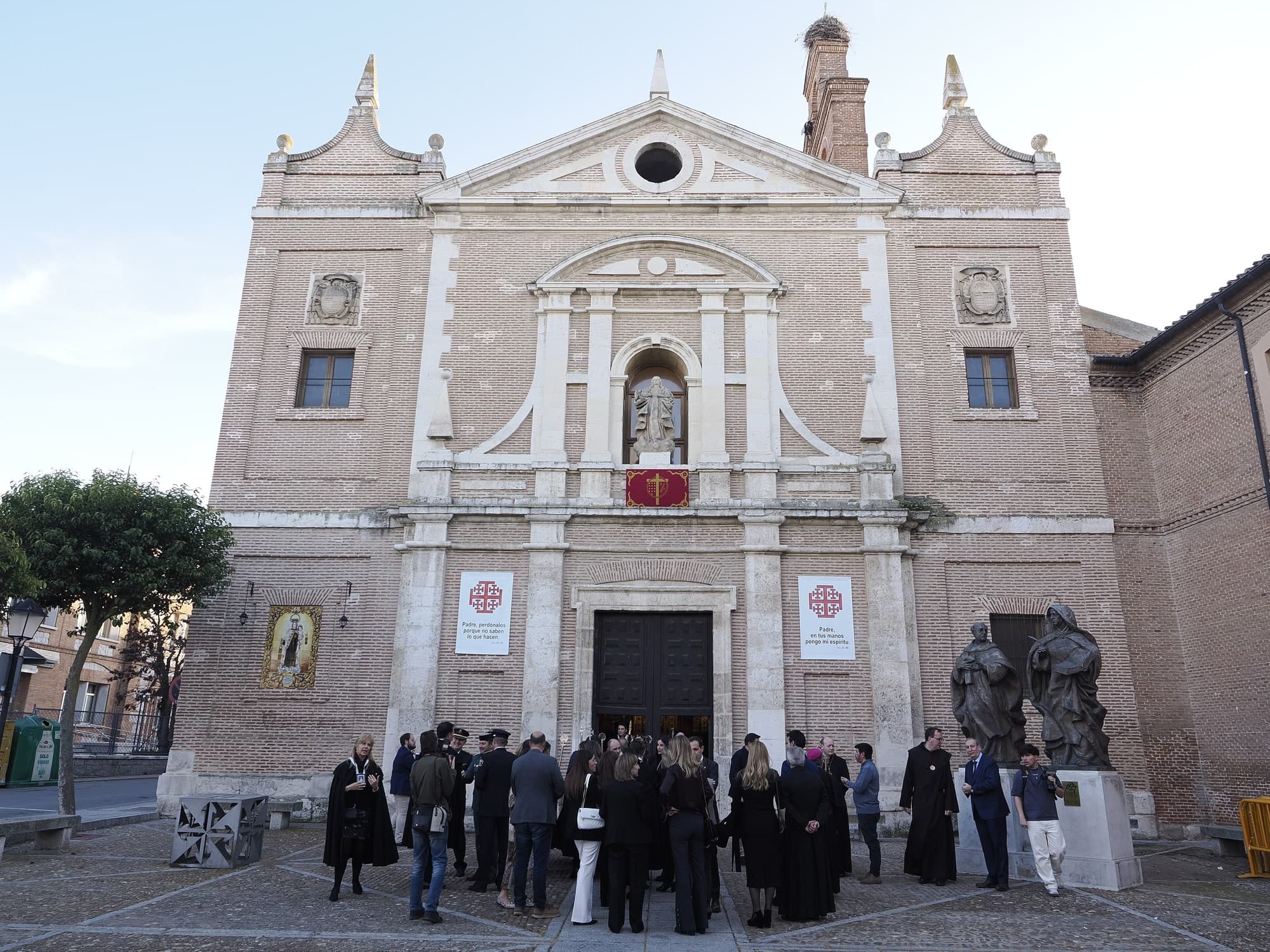 Monastery
Convent of the Discalced Carmelite Fathers
A convent in Medina del Campo that has been home to the Discalced Carmelites since 1981, with a Latin-cross church and an austere nave covered by a barrel vault.
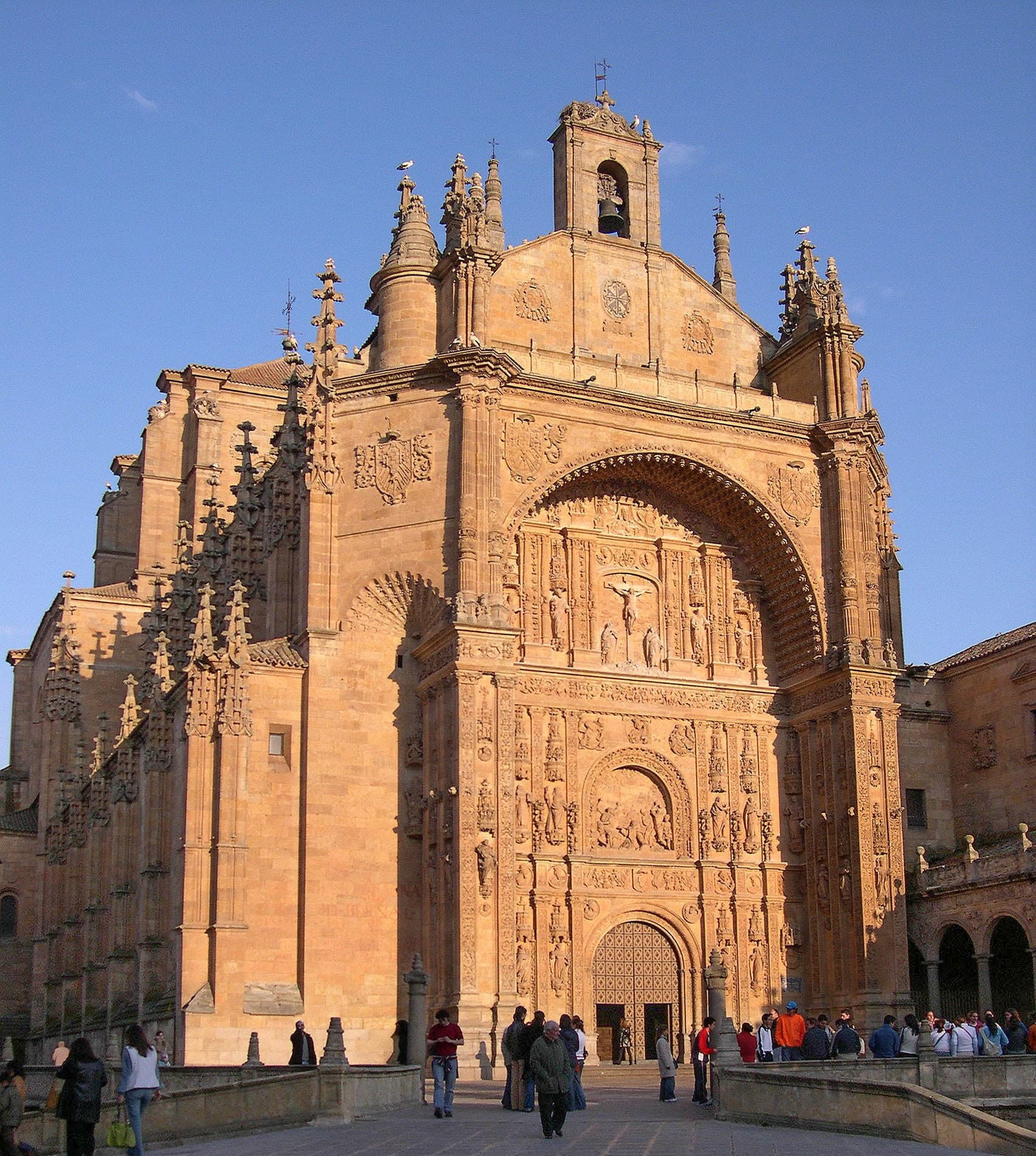 Monastery
Convent of San Esteban
A Dominican convent in the very heart of Salamanca, on the Plaza del Concilio de Trento, and a natural stop for anyone exploring the city on foot.
 Monastery
Convent of San Francisco
A former Franciscan convent in Segovia that now houses the Artillery Academy, an intriguing example of how a religious building can take on a new life while remaining part of the city.
 Monastery
Convent of Santa Clara
In Villacastín, the Convent of Santa Clara holds almost four centuries of Poor Clare life within walls raised in the 17th century at the behest of the Counts of Molina de Herrera.
 Church
 of Nuestra Señora de los Reyes
A medieval fortified church in Grijalba, in the province of Burgos, declared a Site of Cultural Interest (Bien de Interés Cultural) in 1983: a place built as much for prayer as for resistance.
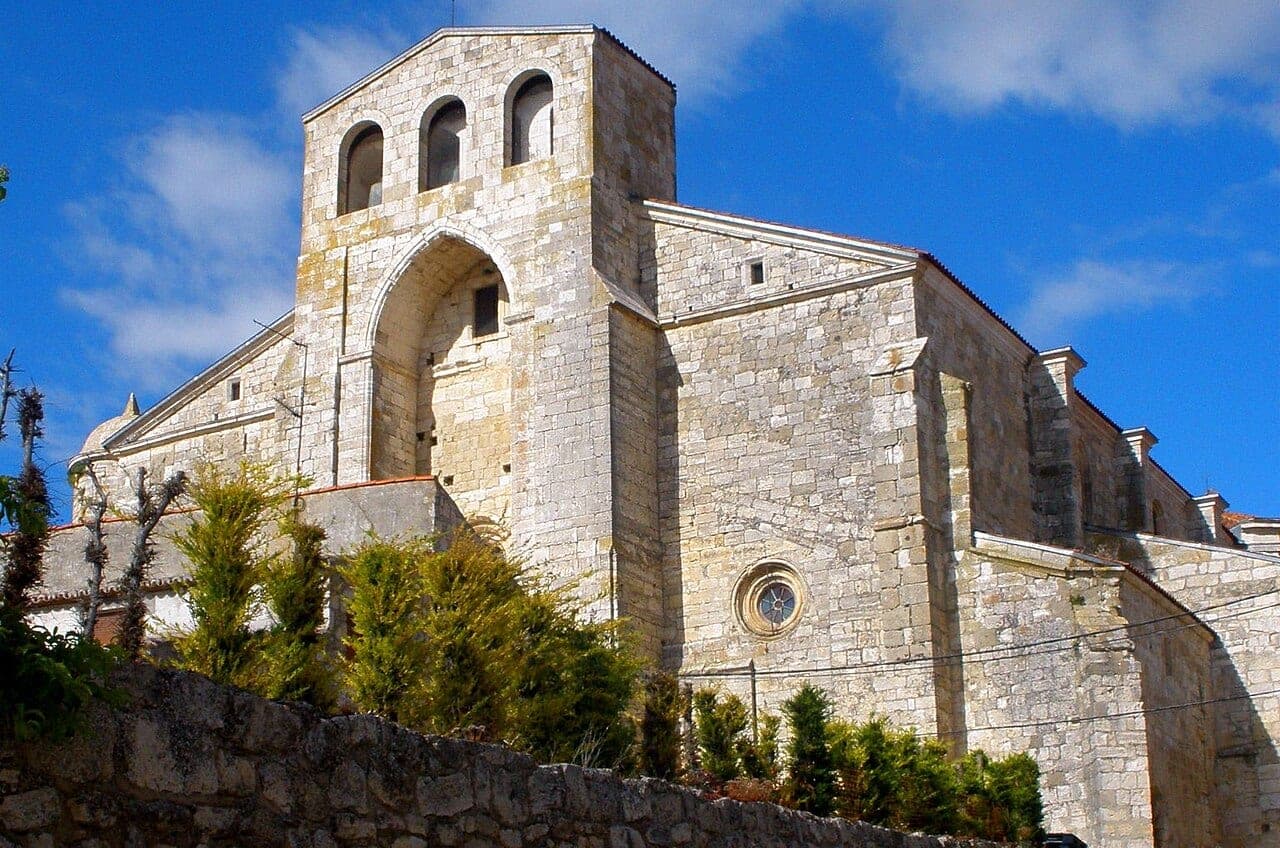 Church
 of San Juan Bautista
A Catholic church dedicated to St John the Baptist in the heart of Palenzuela's old town, and a fine excuse to explore the villages of El Cerrato in Palencia at a leisurely pace.
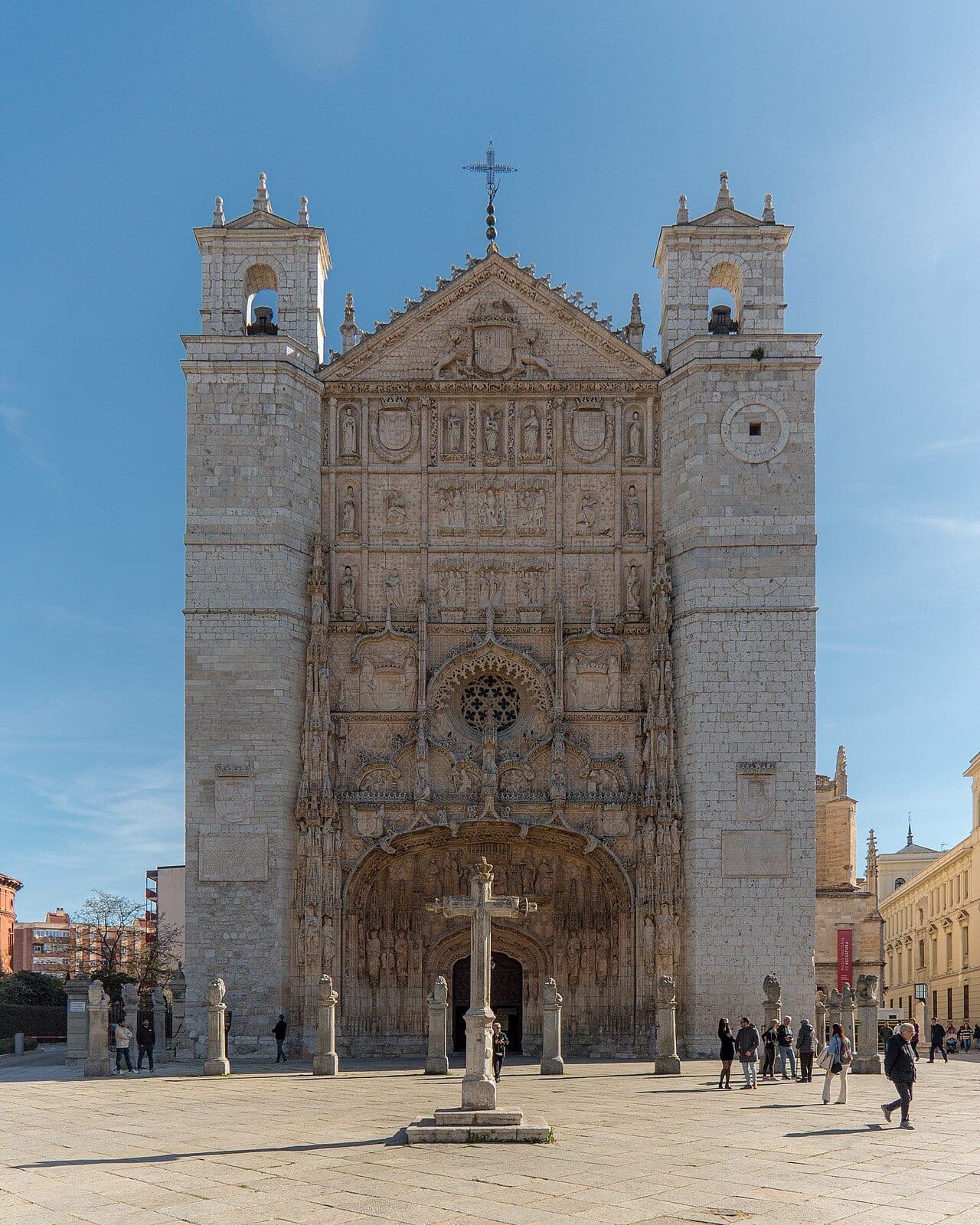 Church
 of San Pablo
A Dominican convent church built between 1445 and 1616, where Philip II and Philip IV were baptised, in the heart of Valladolid's old royal quarter.
 Church
 of Santa María (Paredes de Nava)
A 15th-century church built on the site of a former synagogue in Paredes de Nava, dedicated to Our Lady of Cantomenudo and renovated in the 17th century by the Balbuena family.
 Church
 of Santiago Apóstol
The Church of Santiago Apóstol in Calzada de los Molinos, Palencia, is a simple, authentic stop for anyone exploring the villages of Castile at an unhurried pace.
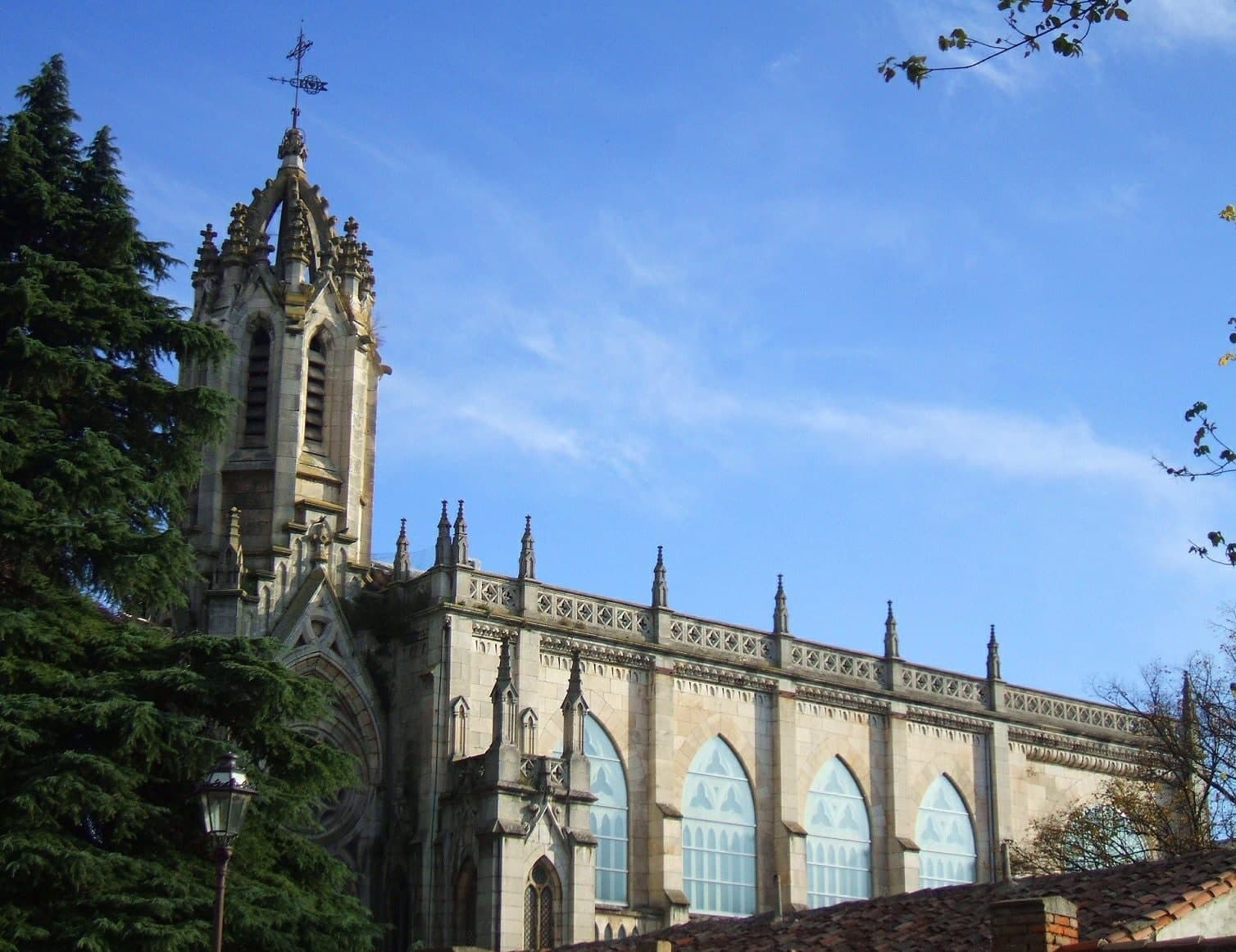 Monastery
Salesian Monastery of Burgos
A convent of Salesian nuns on Calle Barrantes in Burgos, a quiet corner of cloistered life that invites you to discover the city's more secluded side.
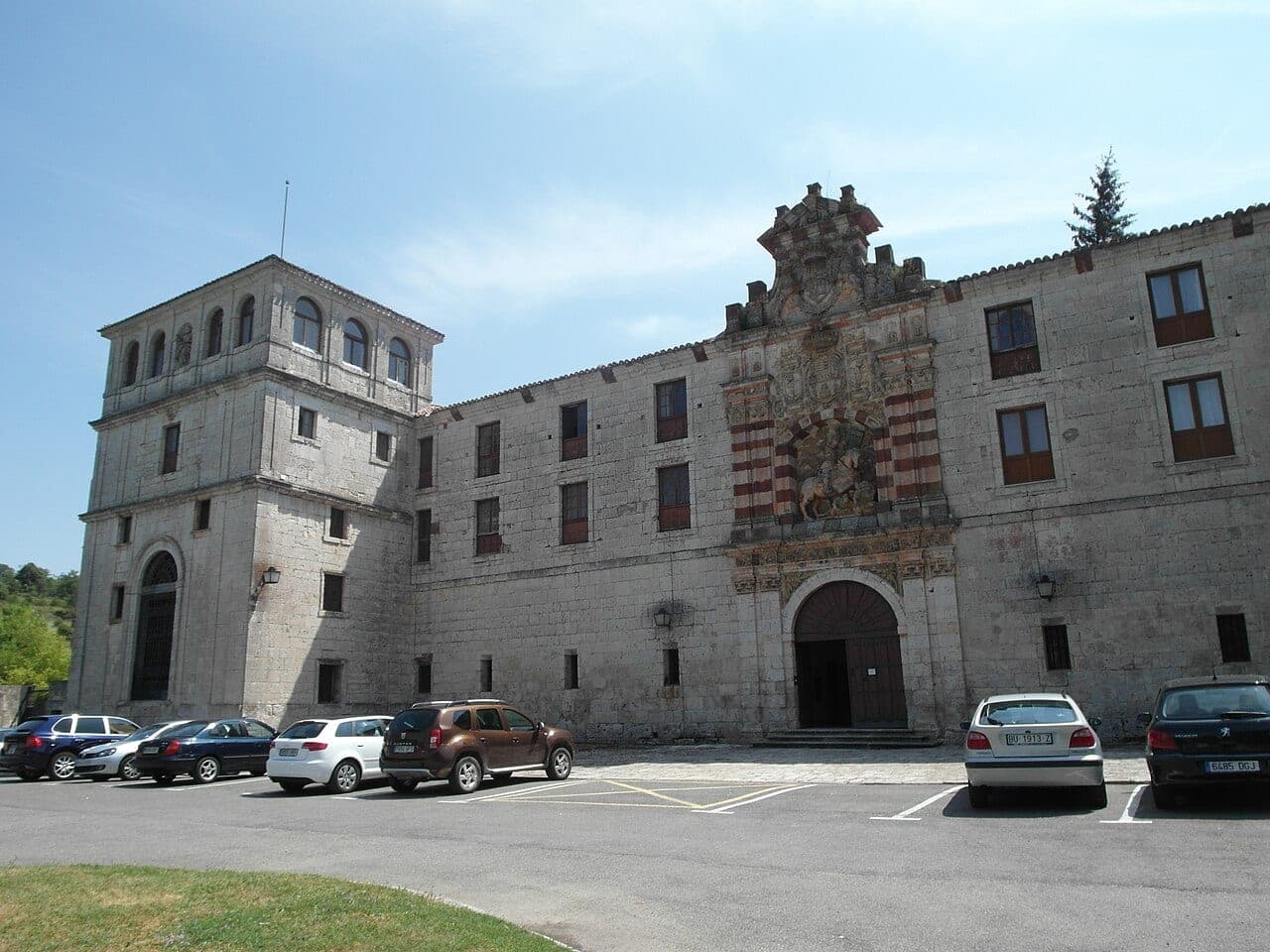 Monastery
 of San Pedro de Cardeña
A Trappist abbey just 10 km from Burgos, a Historic-Artistic Monument since 1931 and linked to the UNESCO-recognised legacy of the Camino de Santiago.
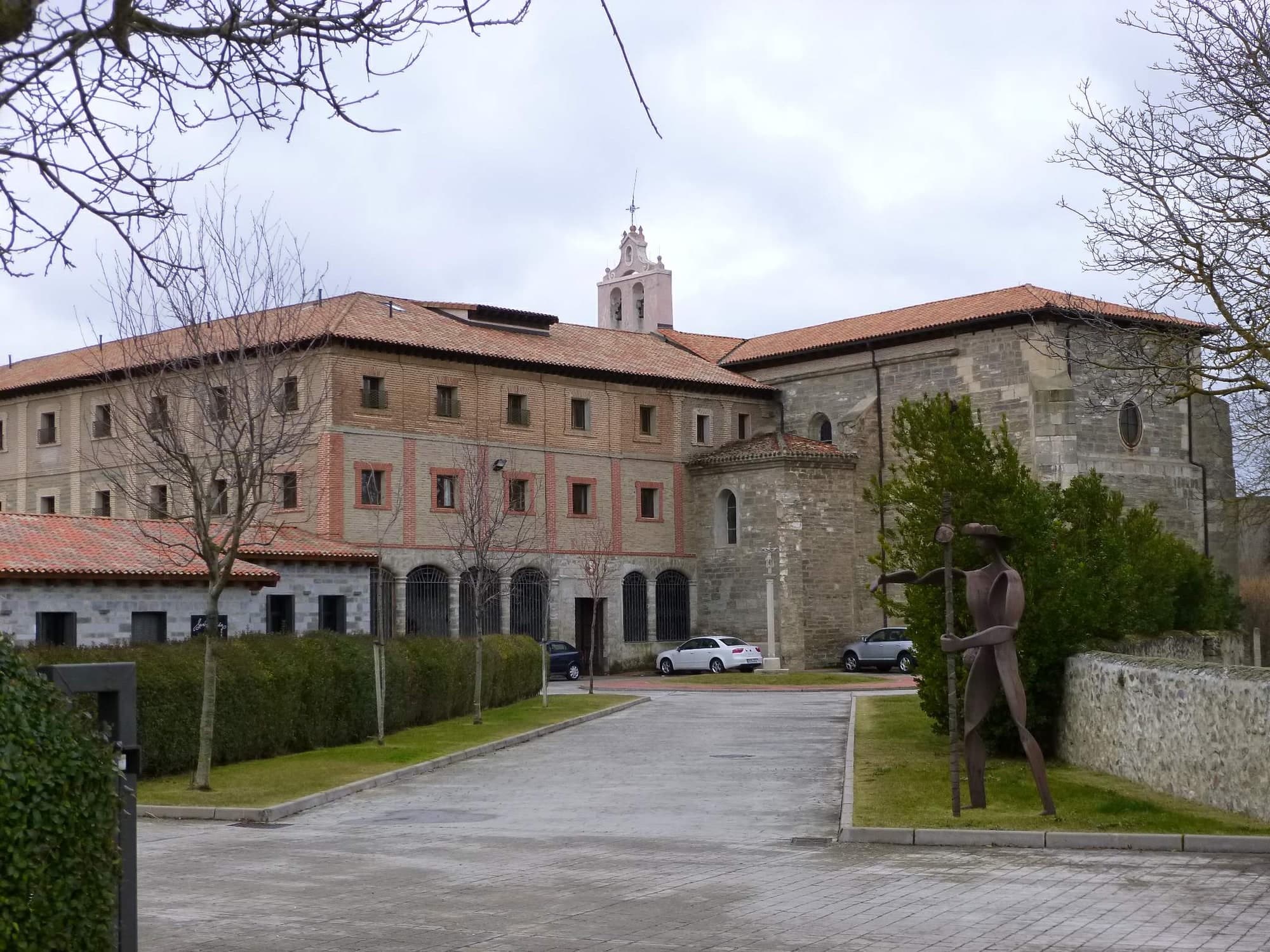 Monastery
 of Santa Clara
A convent of Poor Clare nuns in Belorado, also known as Nuestra Señora de Bretonera, recognised as an associated element of the Camino de Santiago.
 Monastery
 of Santa María de Sandoval
A former 12th-century Cistercian monastery, now partly in ruins, whose church blends Cistercian Romanesque with late Gothic, close to the Way of St James as it crosses the province of León.
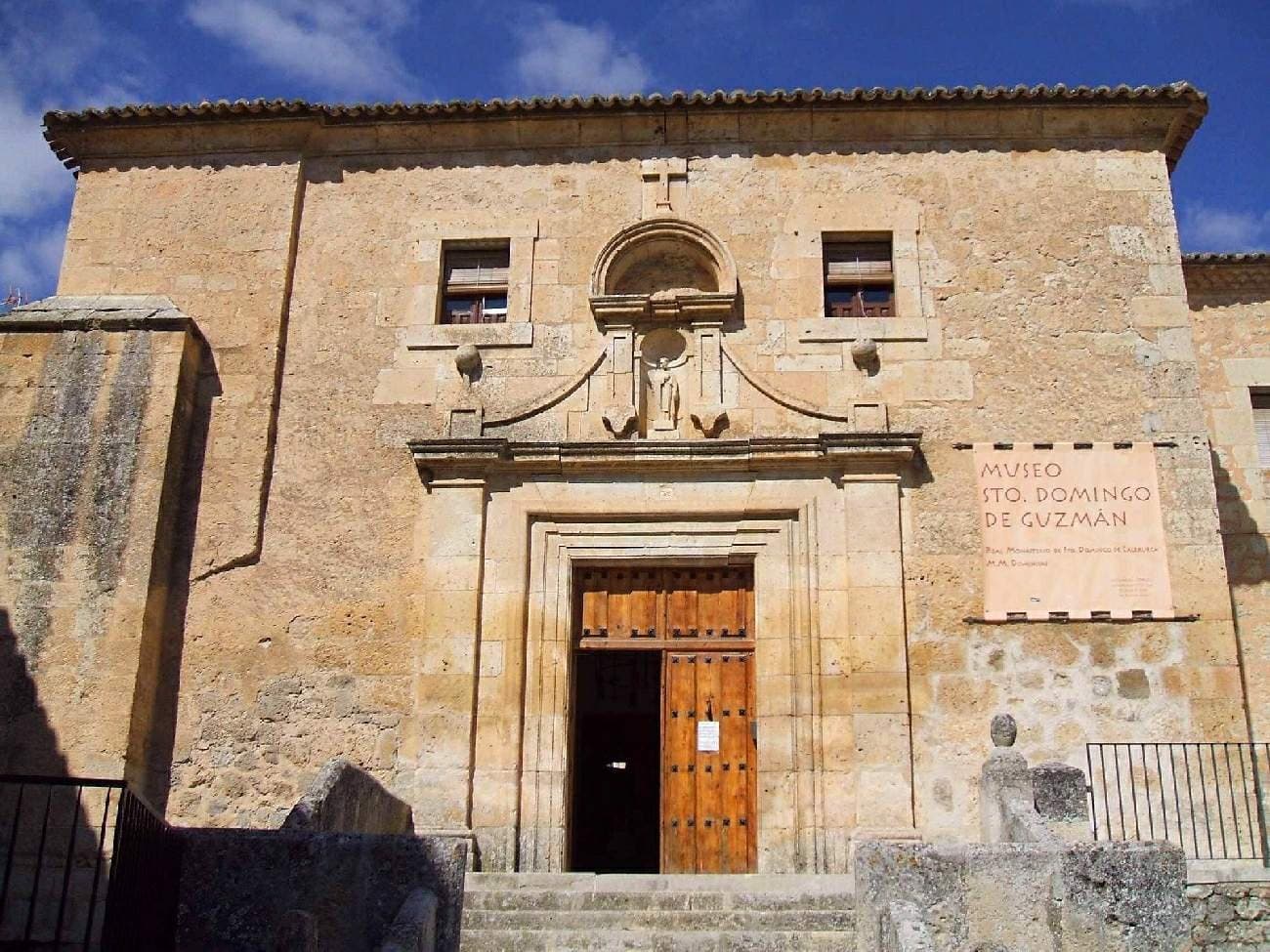 Monastery
 of Santo Domingo
The Royal Monastery of Santo Domingo de Guzmán, in Caleruega, invites you to take your time discovering one of the monastic sites of the province of Burgos.
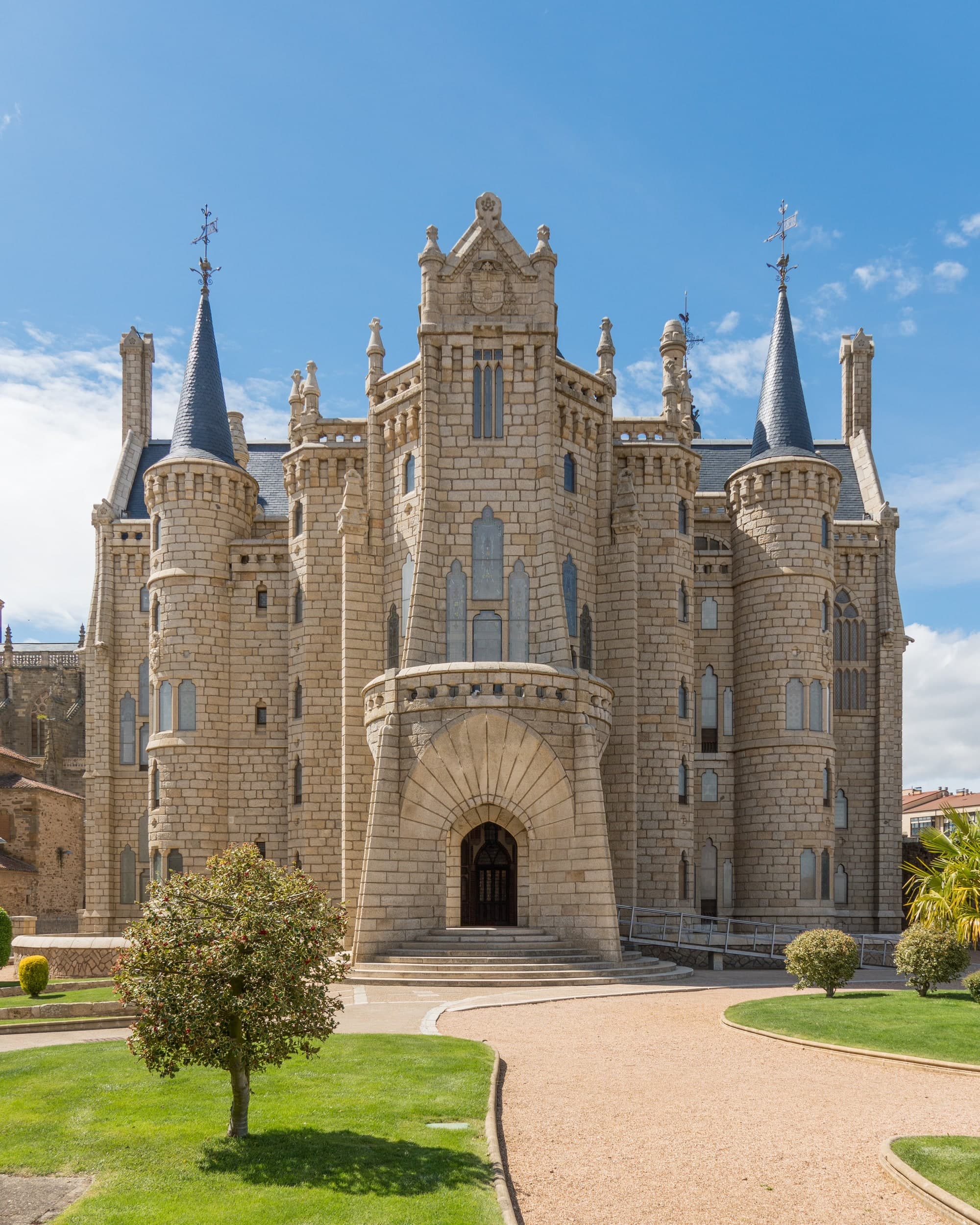 Castle
Episcopal Palace
A fairytale castle in white granite beside Astorga Cathedral: the palace Gaudí dreamed up for a bishop friend, now home to the Museum of the Ways.
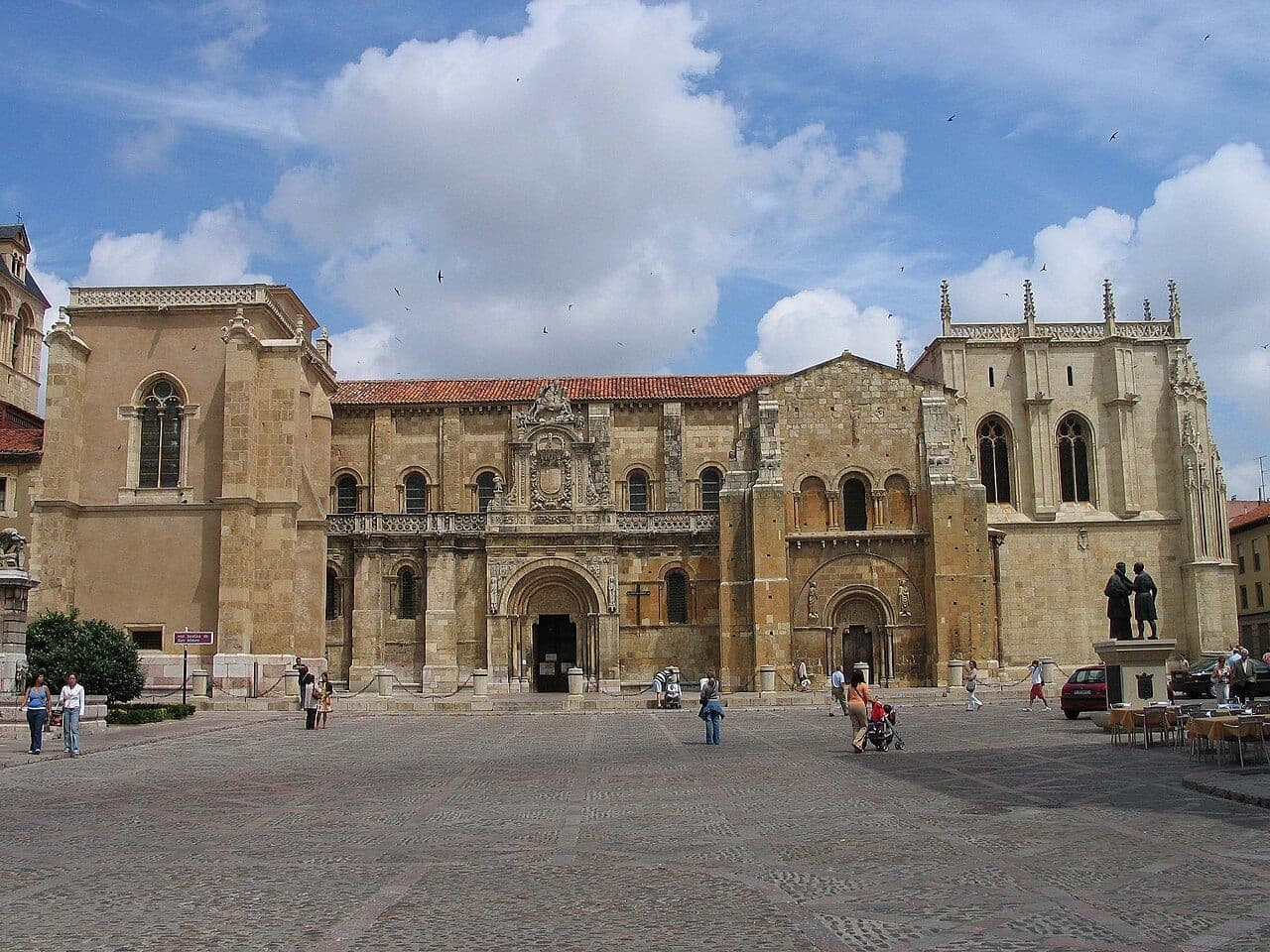 Church
Royal Collegiate Church of San Isidoro, León
A jewel of Spanish Romanesque, San Isidoro in León houses a Royal Pantheon with original mural paintings and capitals that make it a unique piece of its era.
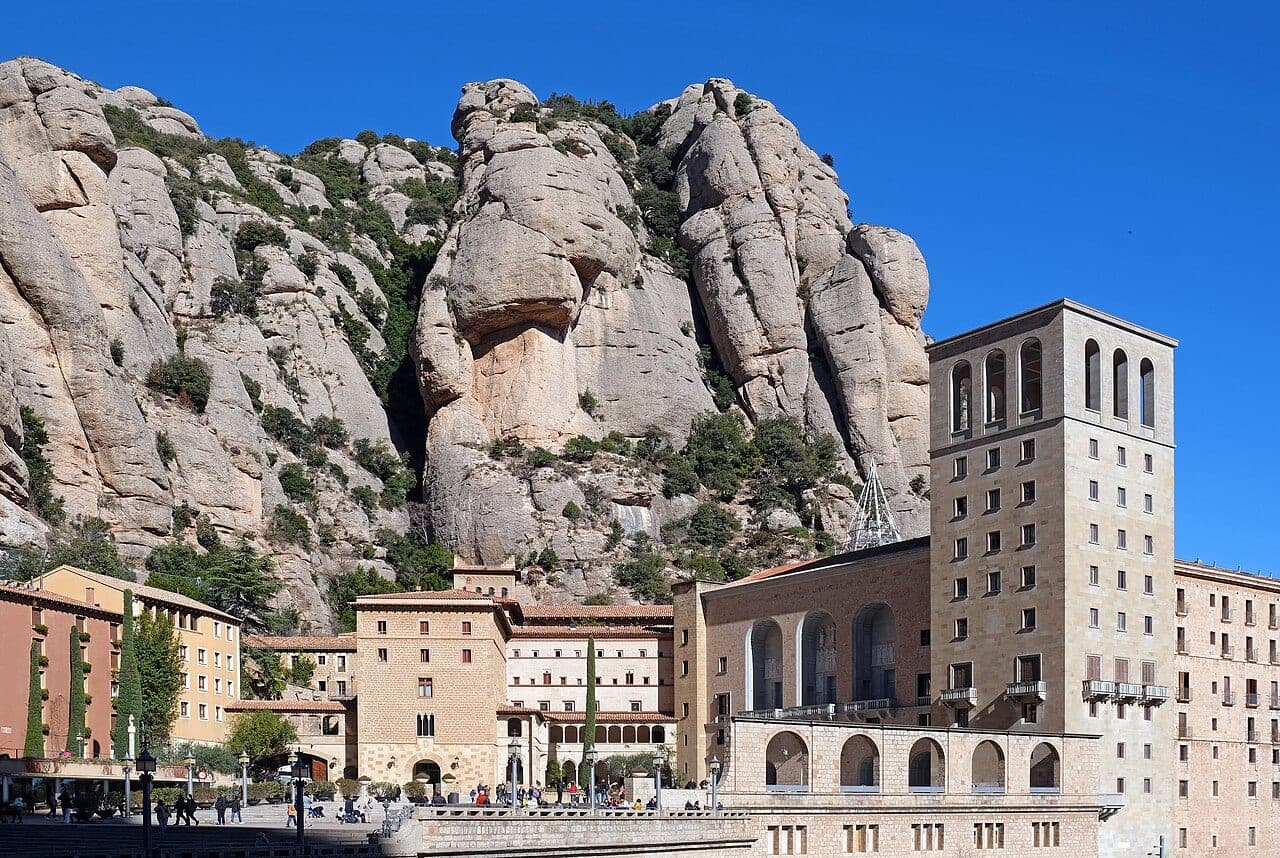 Monastery
Montserrat Abbey
A Benedictine abbey perched 720 metres up on the mountain of Montserrat, a symbol of Catalonia, a destination for pilgrims and home to one of the oldest boys' choirs in Europe.
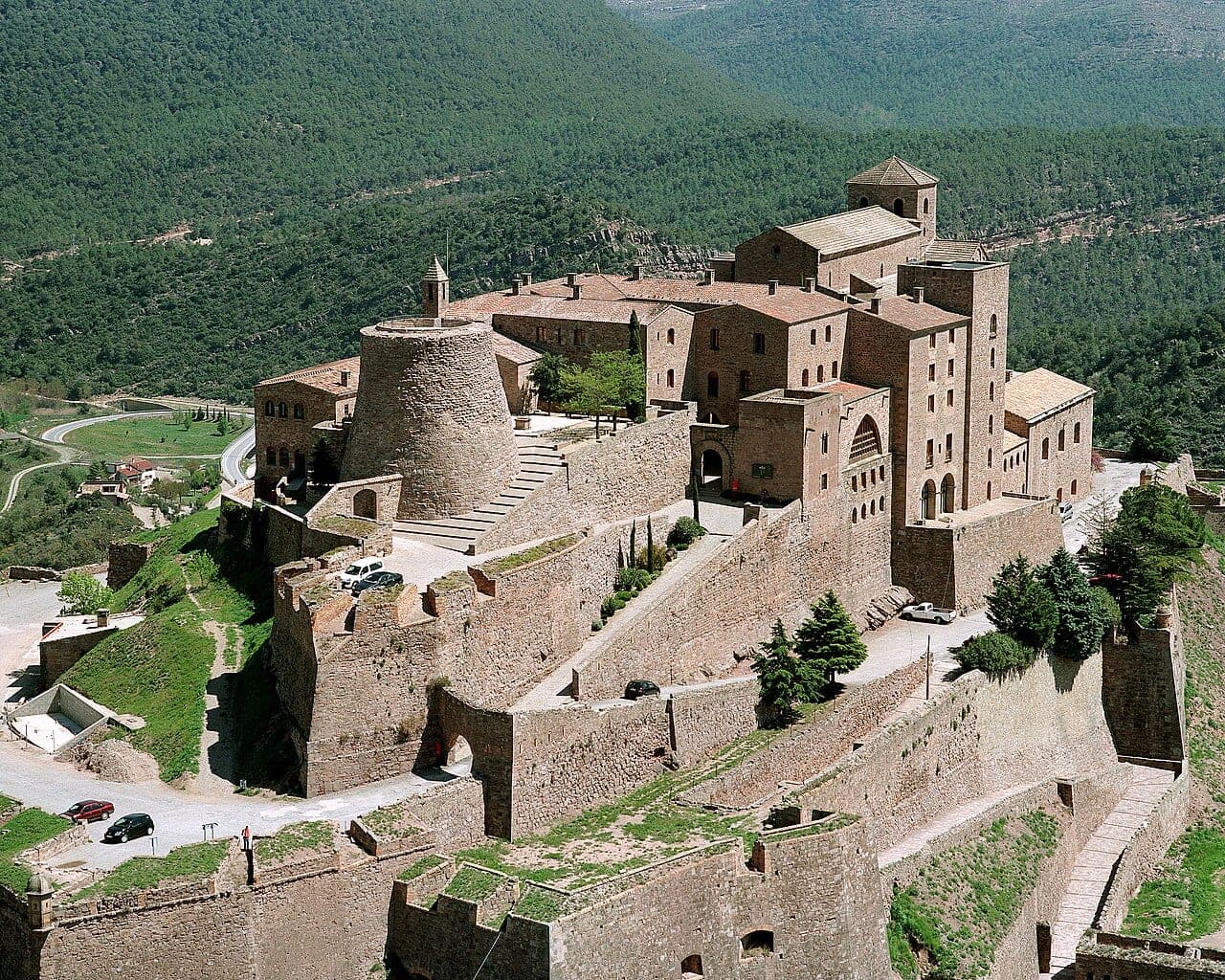 Castle
Cardona Castle
Set on a hill overlooking both the salt valley and the Cardener valley, Cardona Castle is probably the most important medieval fortress in Catalonia.
 Castle
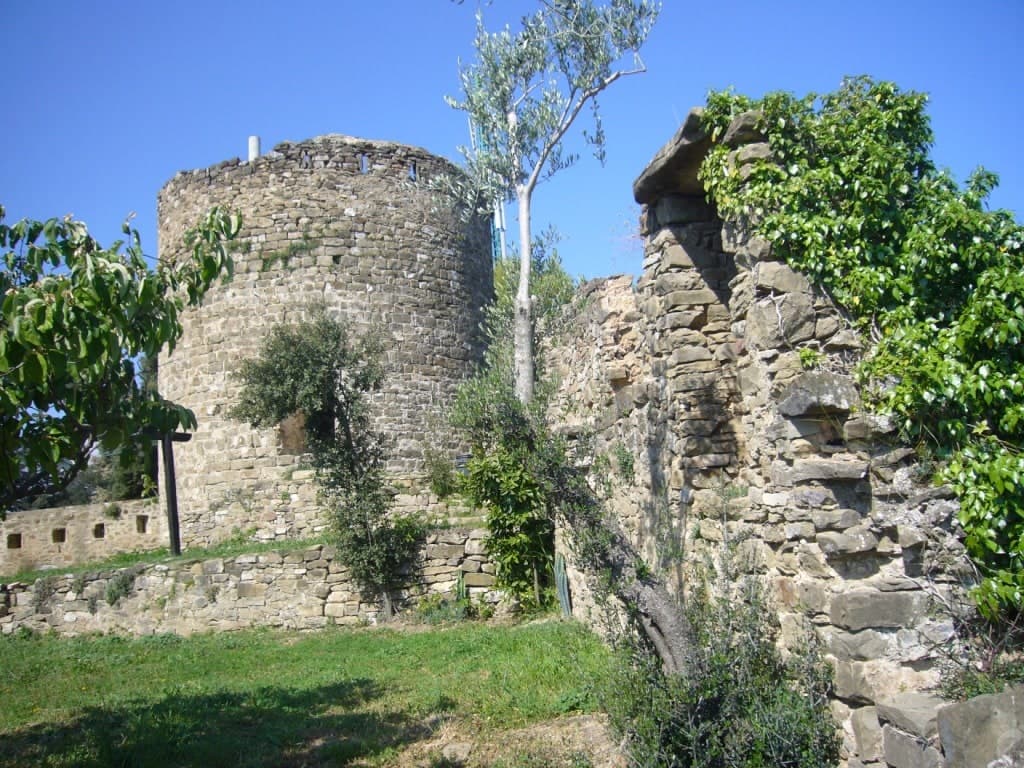
Montagut Castle
An 11th-century fortress crowning the hill of Montagut, 597 metres up, in the heart of the Garrotxa district of Girona.
 Castle
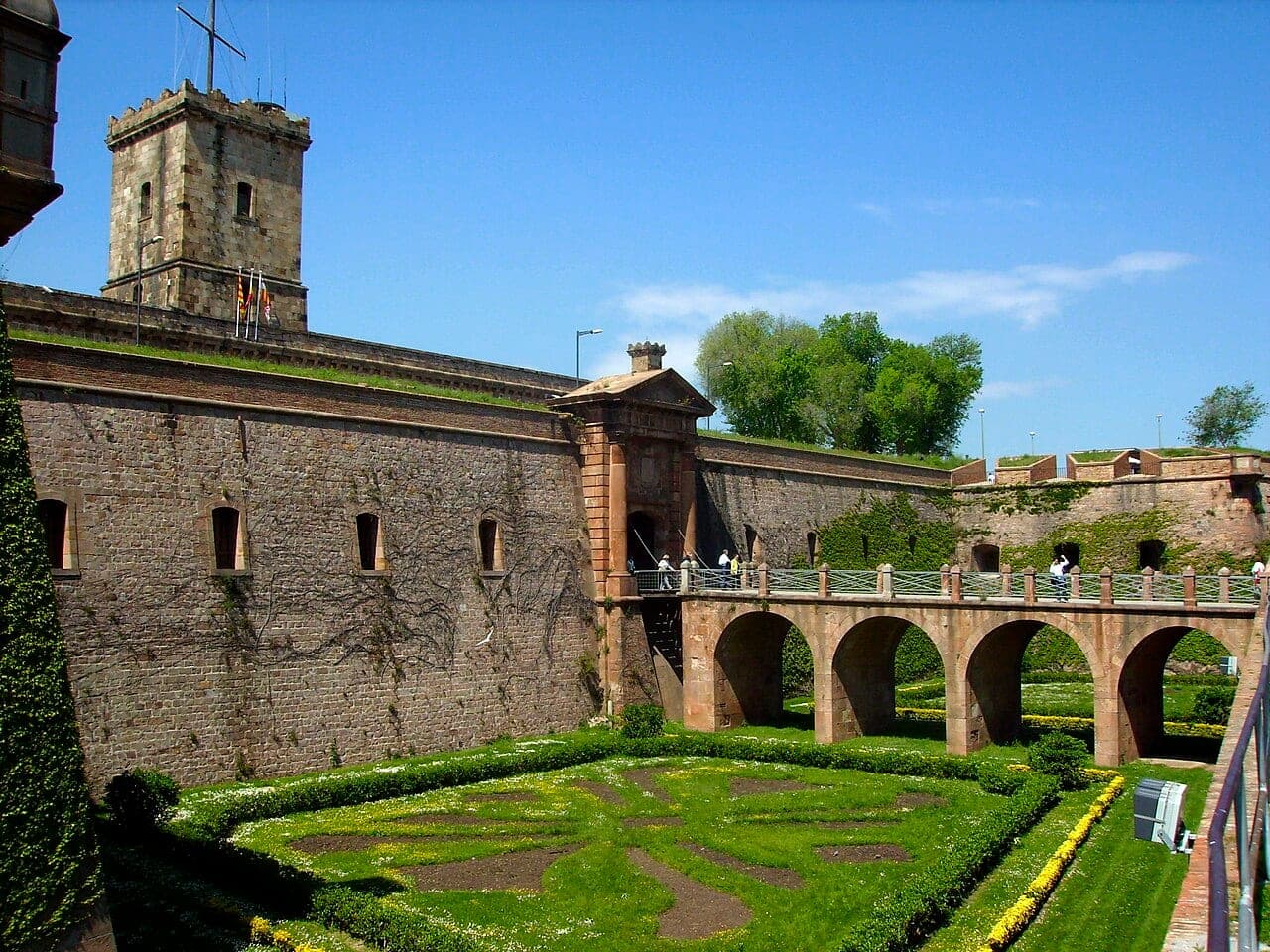
Montjuïc Castle
A former military fortress perched atop Montjuïc hill, witness to many episodes in Barcelona's history and now in the city's hands.
 Castle
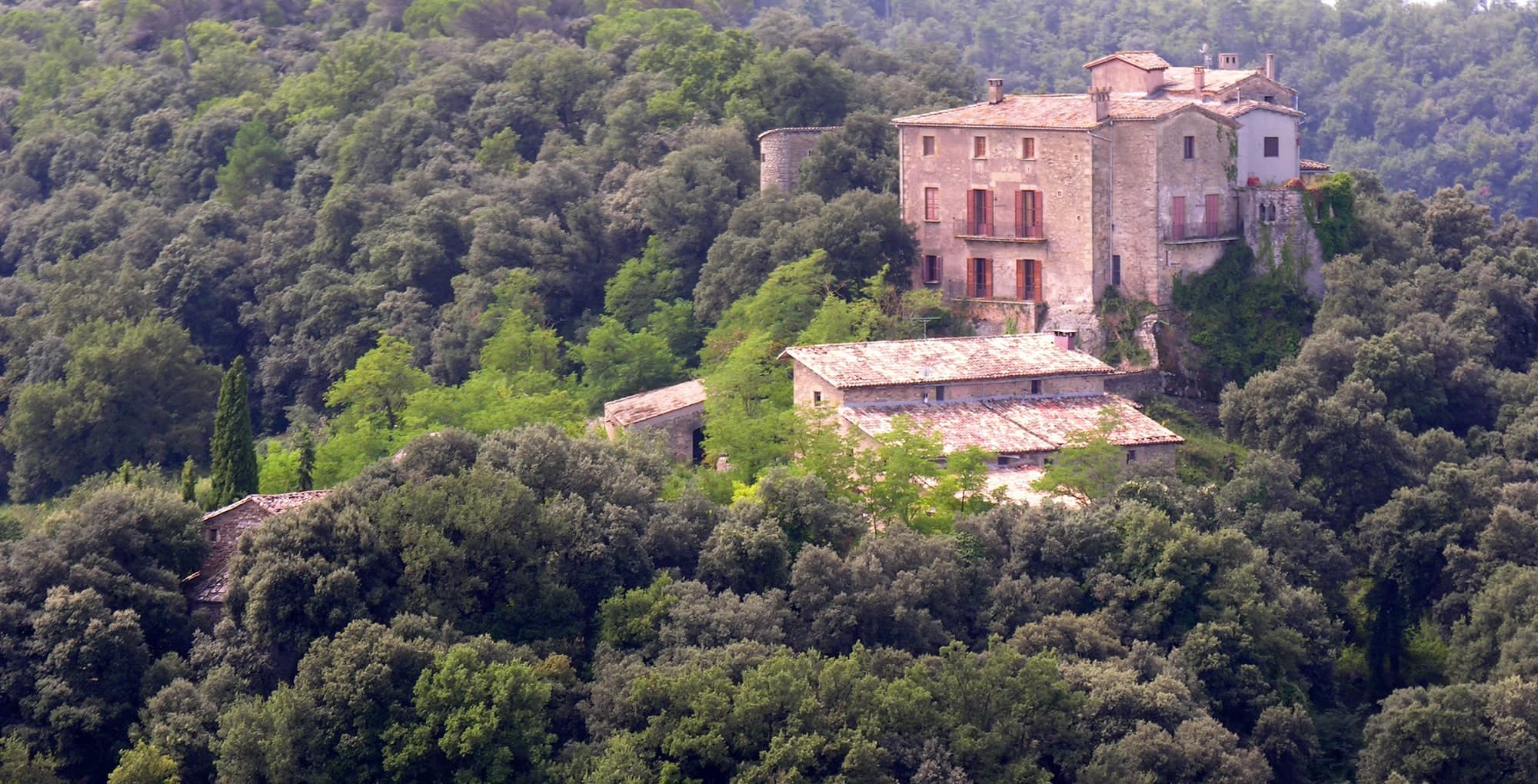
Savassona Castle
A medieval castle in Tavèrnoles, protected as a Property of Cultural Interest since 1949 and as a Cultural Asset of National Interest, inviting visitors to discover the area's past.
 Cathedral
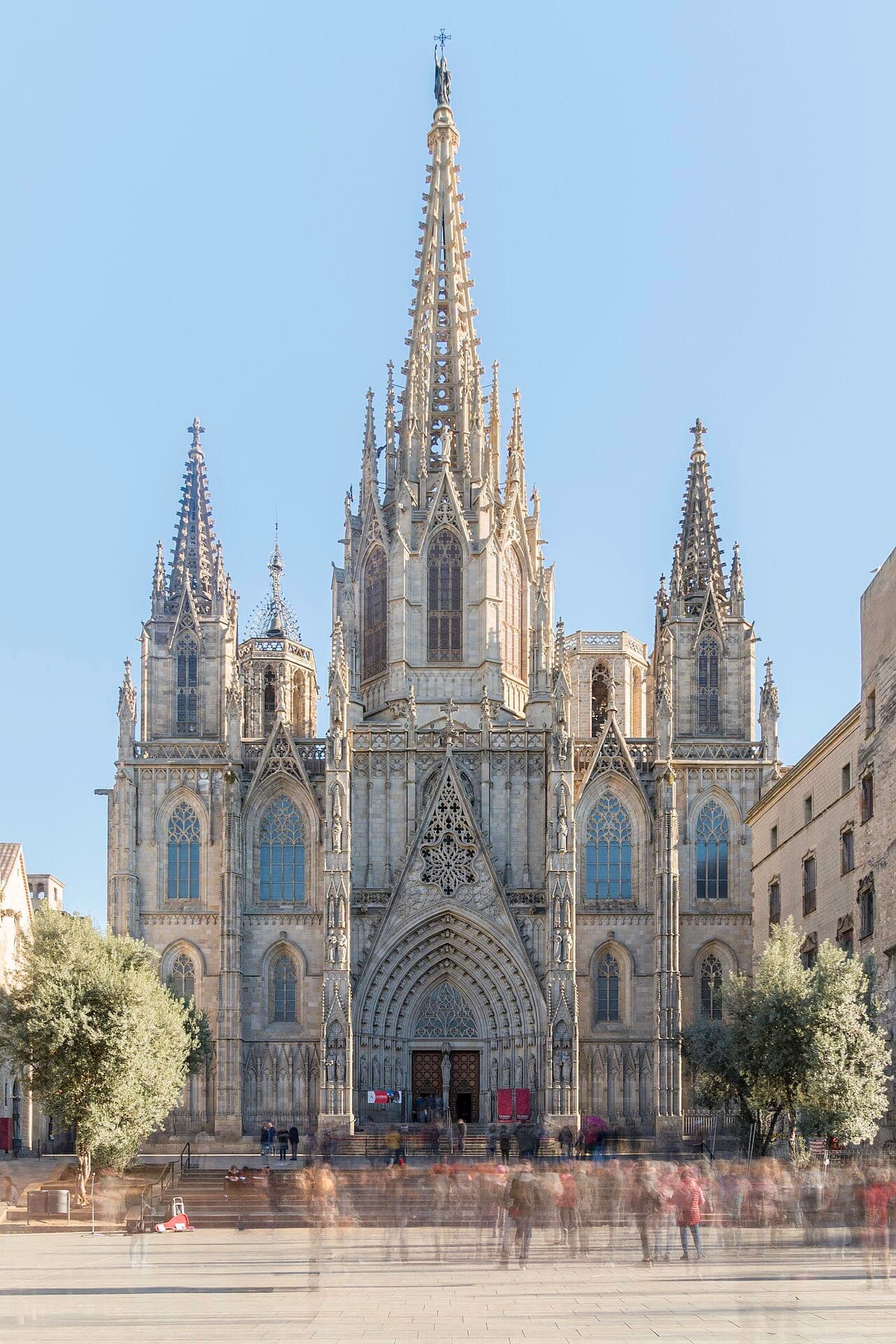
Barcelona Cathedral
La Seu of Barcelona, a Gothic jewel built between the 13th and 15th centuries, preserves the memory of Saint Eulalia and has a cloister that is home to thirteen white geese.
 Cathedral
Girona Cathedral of Saint Mary
Crowning the highest point of Girona, the Cathedral of Saint Mary boasts the widest Gothic nave in the world and a 12th-century Romanesque cloister.
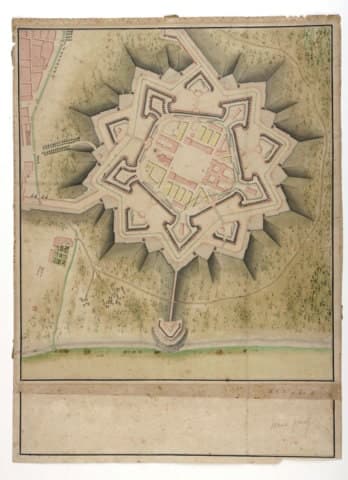 Citadel
Barcelona Citadel
A fortress built by Philip V to keep Barcelona in check and torn down in 1868, whose traces survive in three buildings and in the park that took its place.
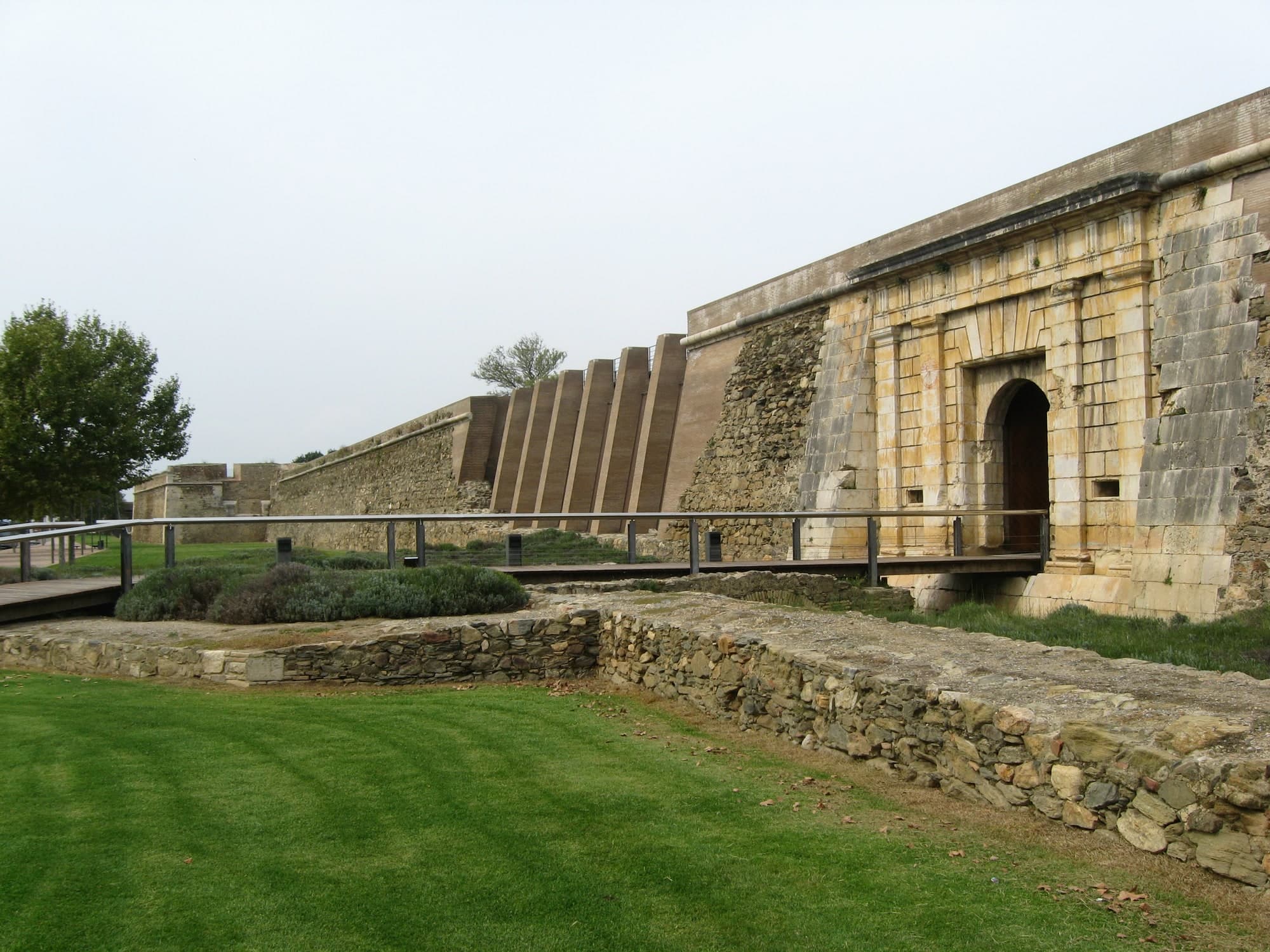 Citadel
 of Roses
Renaissance walls whose refortification was ordered by Charles I, sheltering within them the memory of Rhode, the enigmatic Greek colony from which Roses grew.
 Hermitage
Sant Medir Hermitage
A small hermitage of Romanesque origin tucked away in Collserola, beside an old Roman road, where the popular Sant Medir pilgrimage takes place every 3 March.
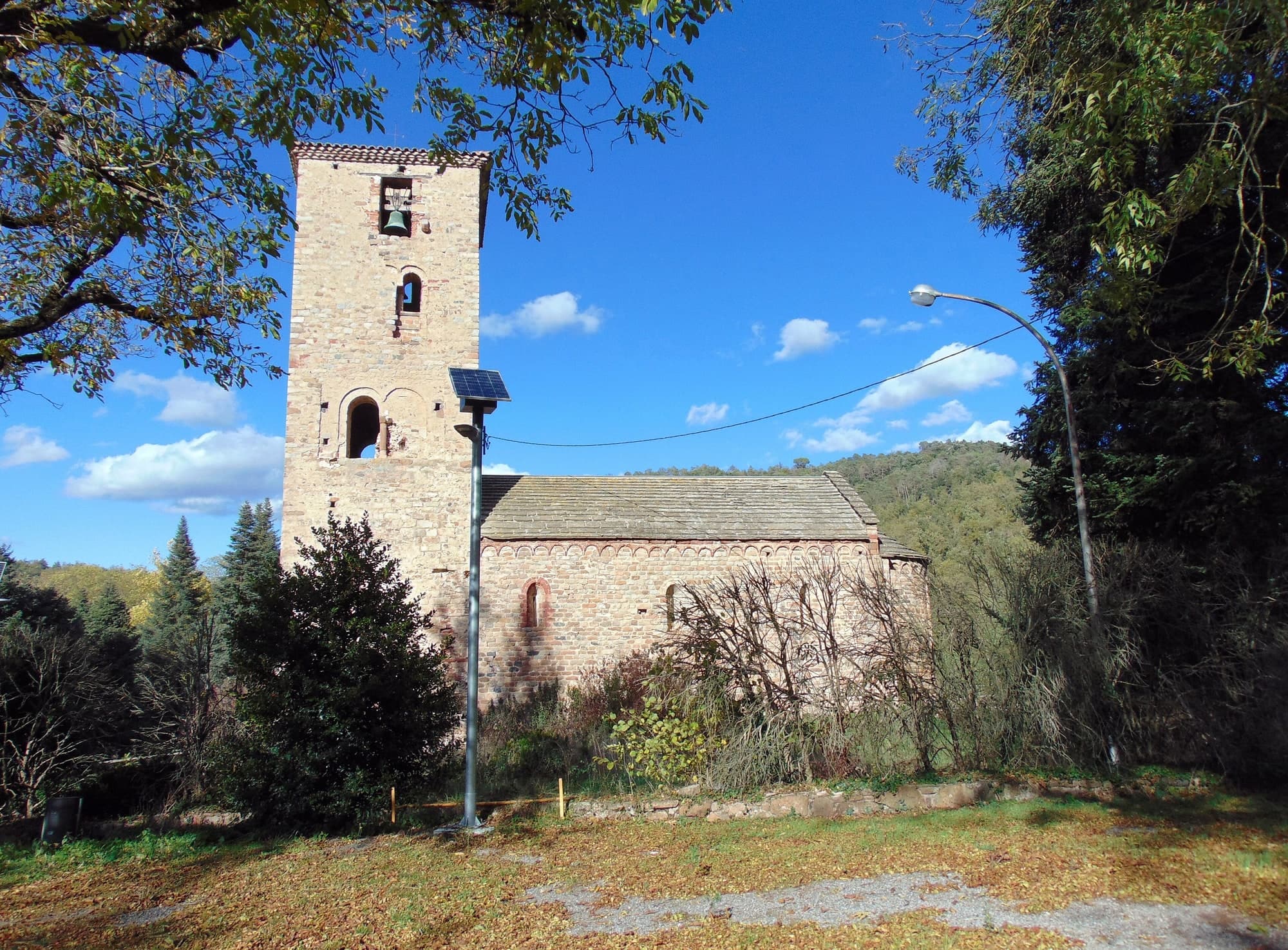 Church
 of Sant Sadurní
A Lombard Romanesque church in Sant Sadurní d'Osormort, a small village in the comarca of Osona that deserves an unhurried stop.
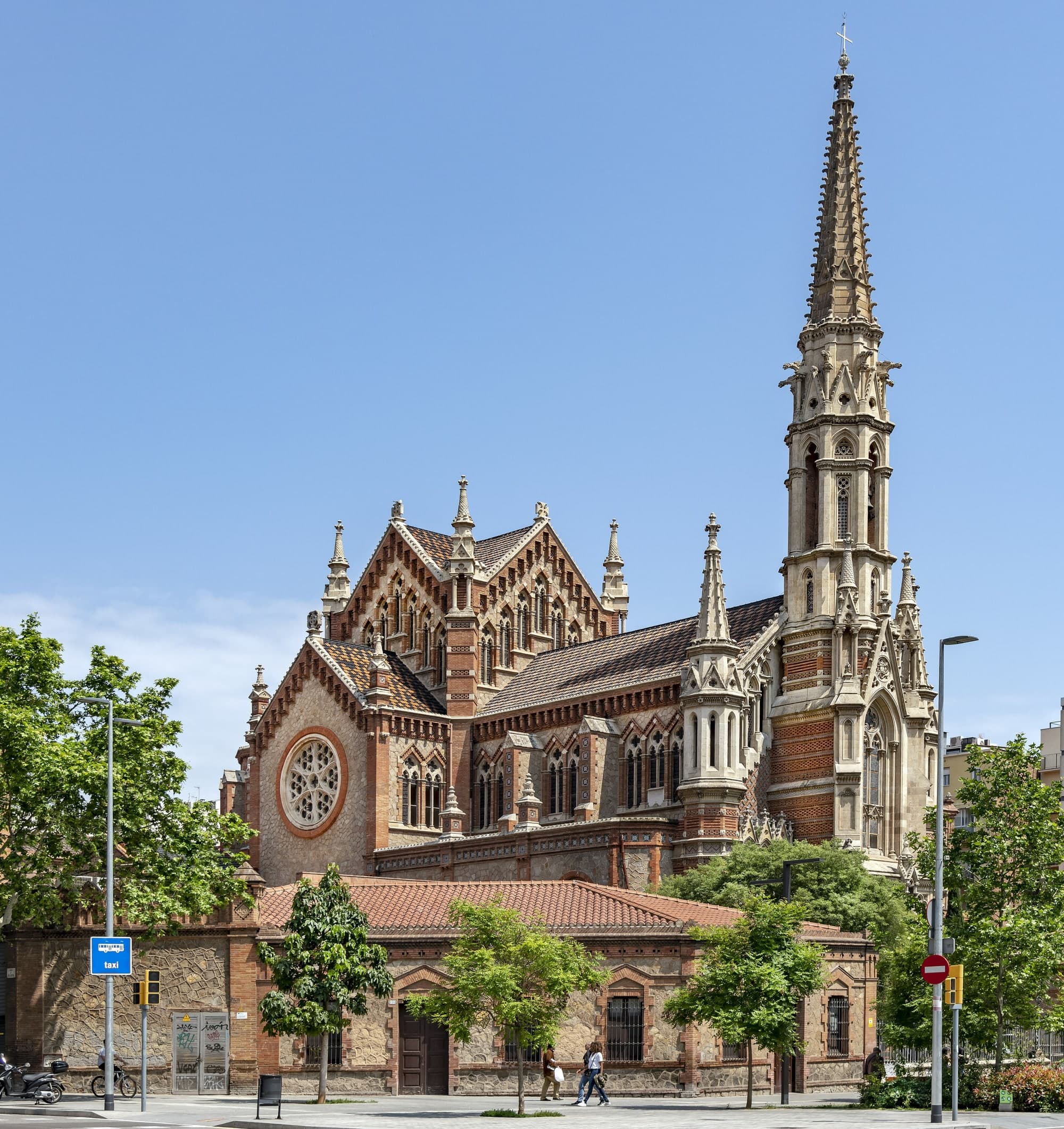 Monastery
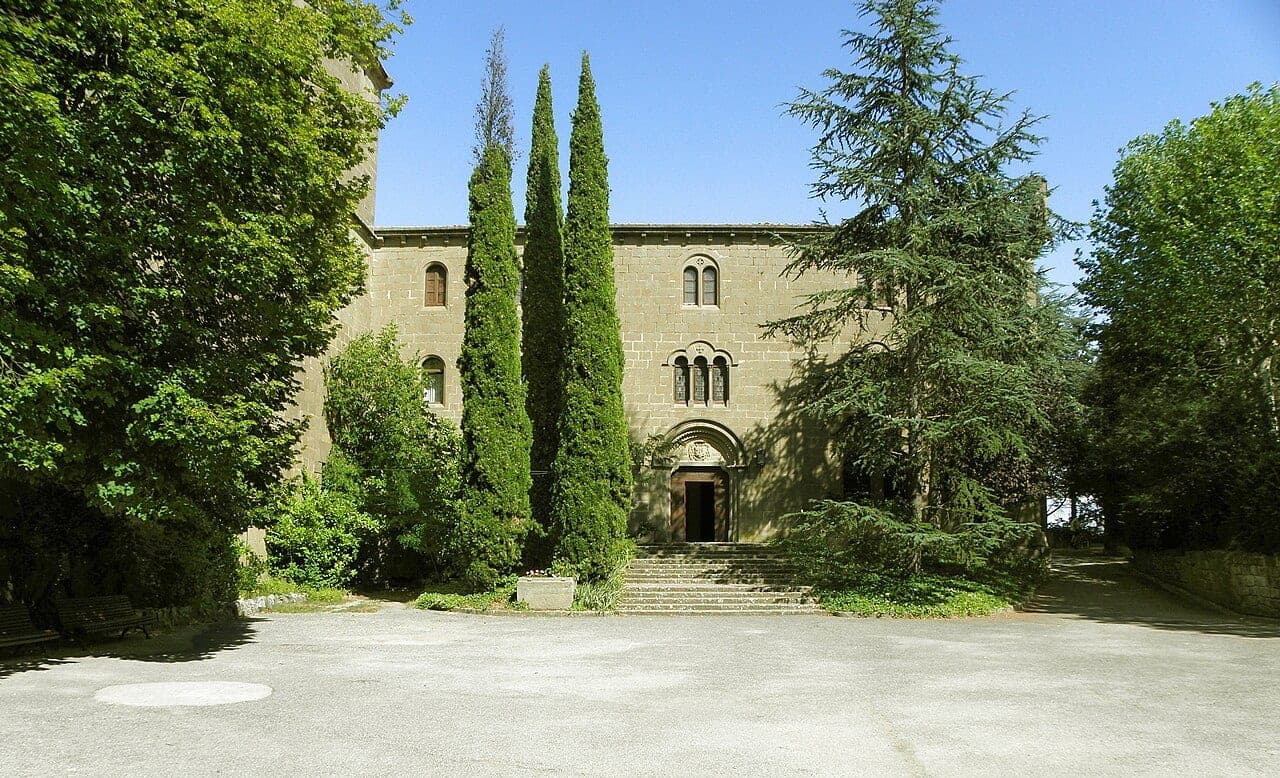
Church and Convent of Las Salesas
Right on Passeig de Sant Joan, the church and former convent of Las Salesas together make up the most important work by the architect Joan Martorell i Montells.
 Monastery
 of El Miracle
A Benedictine monastery within the Sanctuary of El Miracle, in Riner, where a small community of monks linked to Montserrat keeps monastic life alive.
 Monastery
Pedralbes Monastery
The Royal Monastery of Santa Maria de Pedralbes is a Gothic complex in Barcelona that, for eleven years, housed part of the Thyssen-Bornemisza collection.
 Monastery
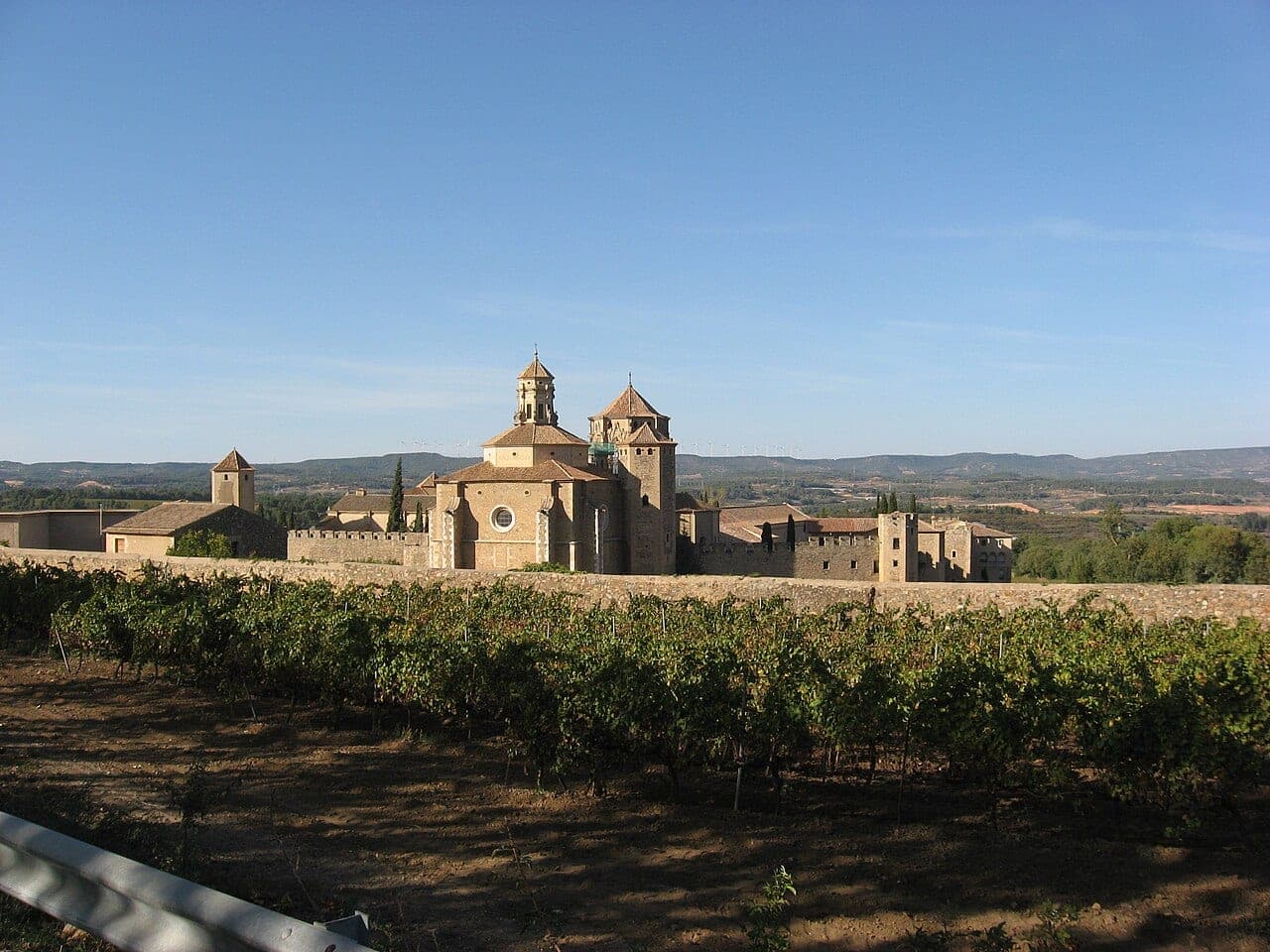
Poblet Monastery
The archetypal Cistercian abbey and former burial place of the kings of Aragon, Poblet is a UNESCO World Heritage Site that is still home to a community of monks in the heart of the Conca de Barberà.
 Monastery
 of Sant Joan de les Abadesses
An ancient monastery in the Ripollès that gives its name to the town around it and which, until the year 945, was the only convent for women in the whole of Catalonia.
 Monastery
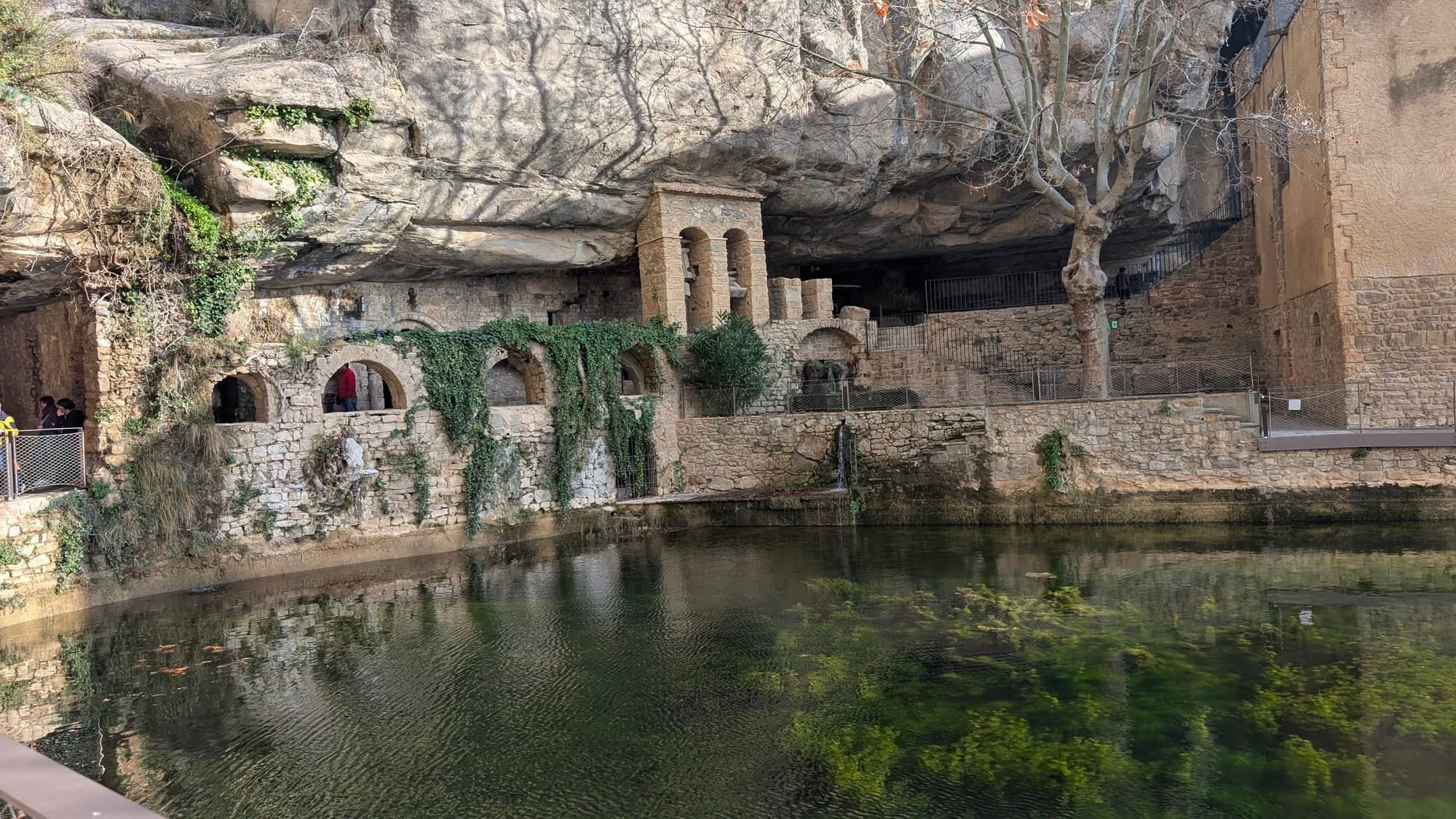
Sant Miquel del Fai Monastery
An 11th-century Benedictine monastery with a church carved into the rock, beside the Rossinyol waterfalls on the Cingles de Bertí cliffs (Barcelona).
 Monastery
 of Sant Cugat
A former Benedictine abbey built between the 9th and 14th centuries, once the most important in the County of Barcelona, with a cloister that alone makes the visit worthwhile.
 Monastery
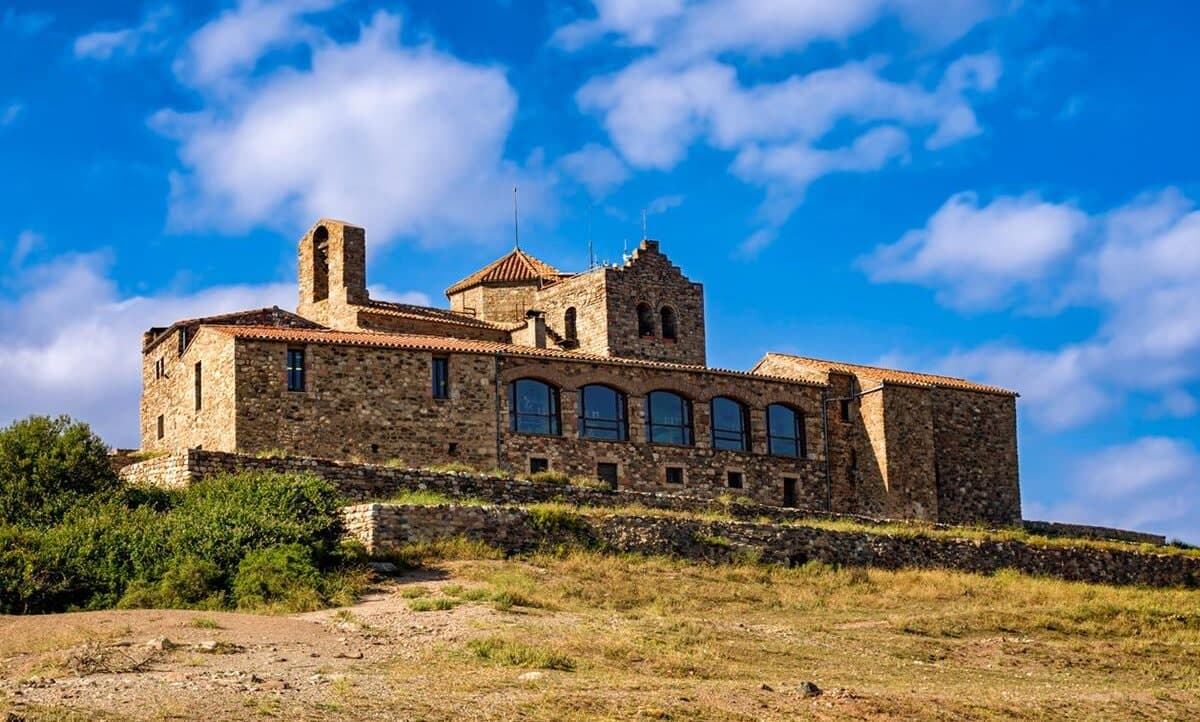
Sant Llorenç del Munt Monastery
Perched on top of La Mola, this 11th-century Romanesque monastery, a half-scale replica of Sant Cugat, rewards the climb with reddish stone, silence and views over the Vallès.
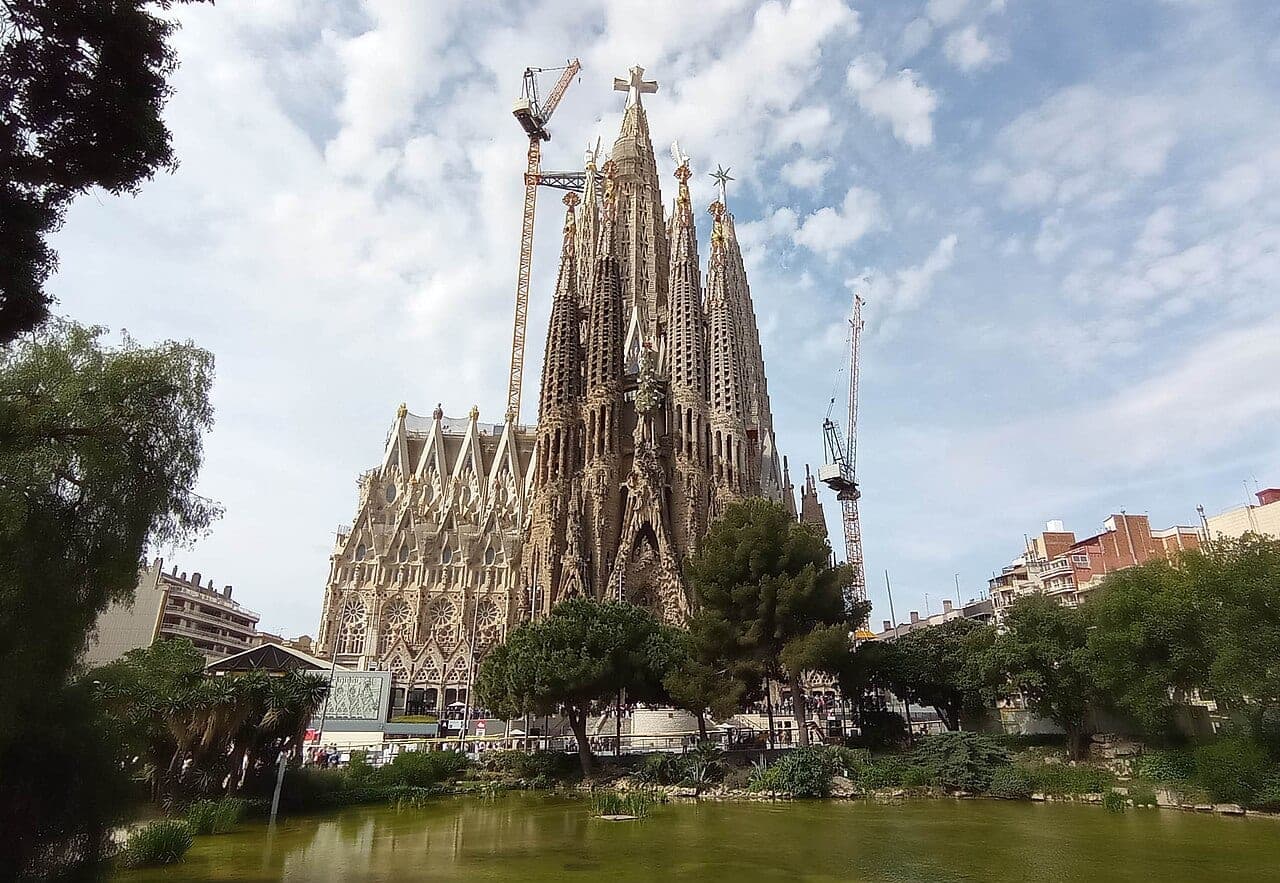 Church
Sagrada Família
Gaudí's unfinished masterpiece, a stone forest of a temple under construction since 1882 that is now the tallest church in the world and the crowning jewel of Catalan Modernisme.
 Monastery
Sant Benet de Montserrat
An abbey of Benedictine nuns perched on a slope of Montserrat, a place of silence and prayer renowned for its handmade ceramics: vases, painted tiles and small sculptures.
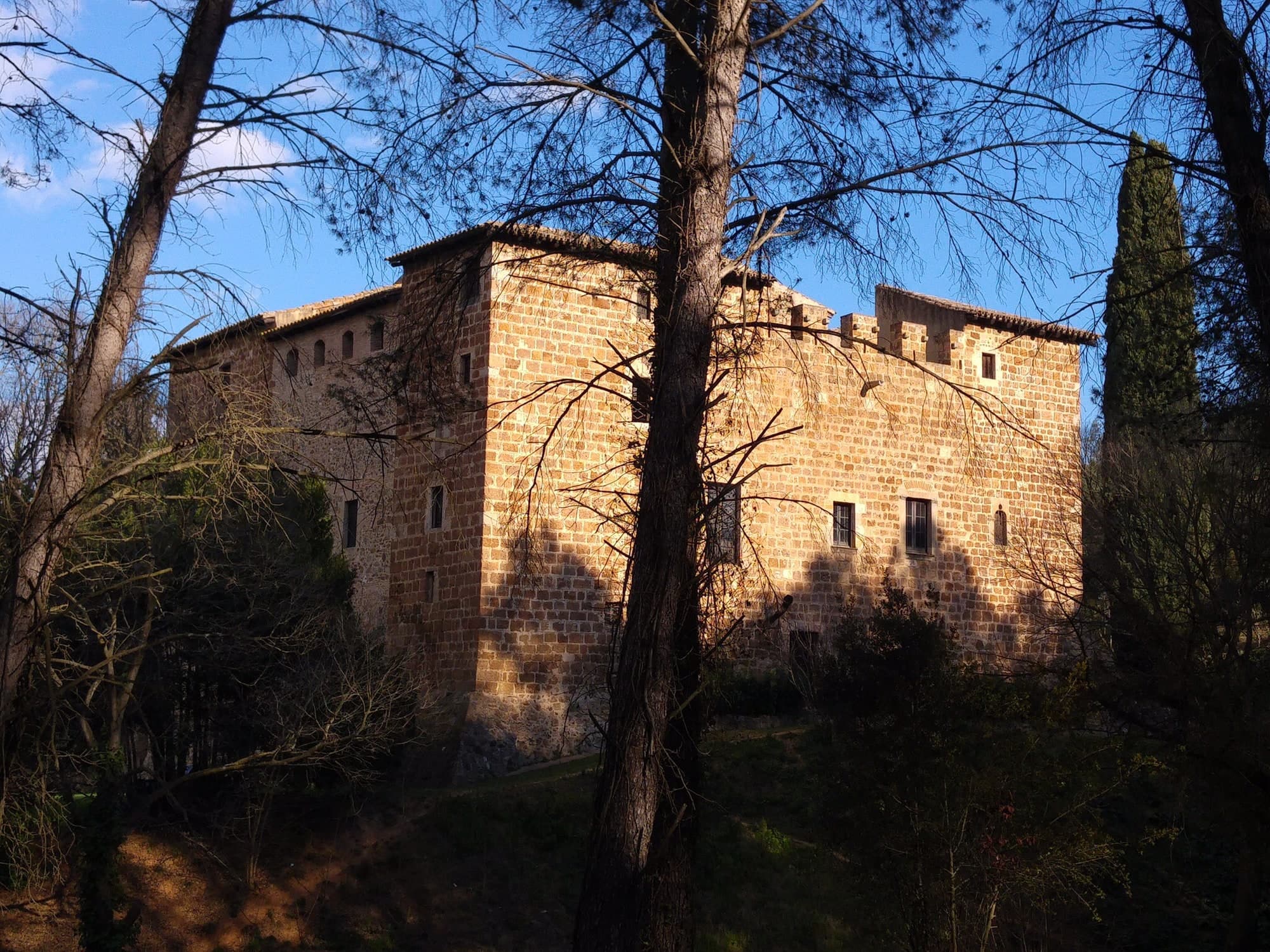 Castle
Torre Negra of Sant Cugat
A Romanesque castle of dark stone between Collserola and the Vallès, the source of long-running legal disputes with the monastery of Sant Cugat and today one of the best-preserved in the area.
 Church
Basilica of El Salvador
A Valencian Gothic church built in Burriana after the conquest by James I, a monument in stone to his first great victory and now a minor basilica.
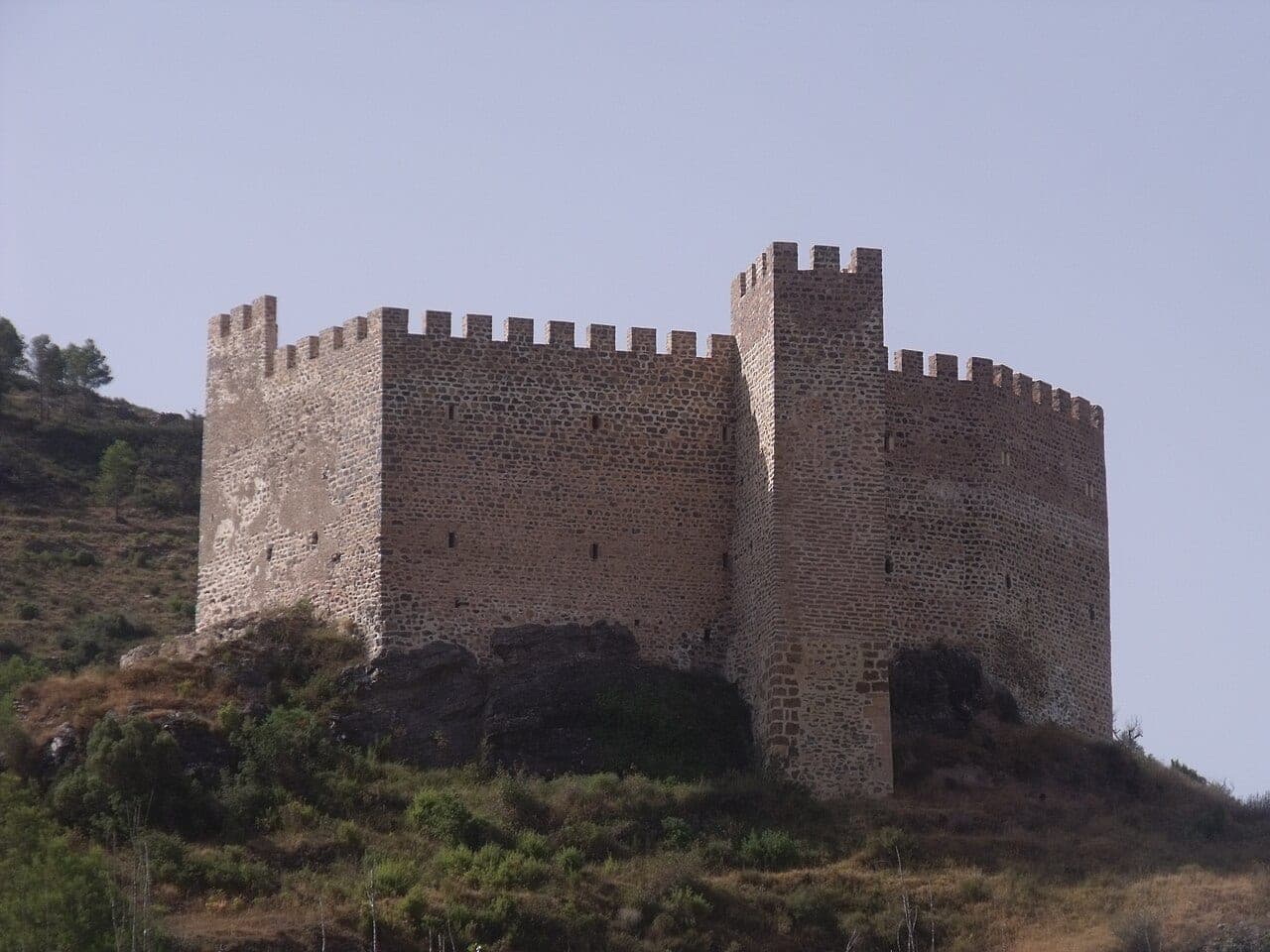 Castle
Gaibiel Castle
A small fortress perched on top of La Umbría hill, facing Gaibiel, protected as a Site of Cultural Interest (Bien de Interés Cultural) in the heart of Castellón's Alto Palancia.
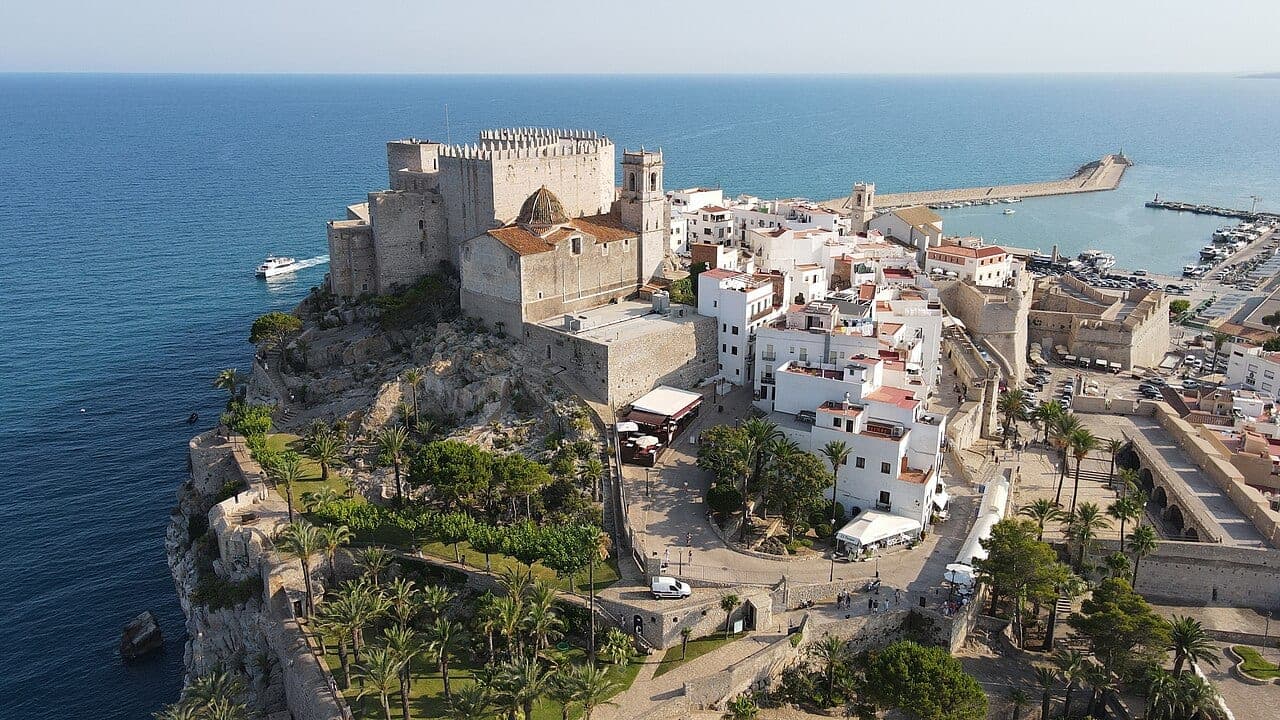 Castle
Peñíscola Castle
A Templar fortress crowning the rock of Peñíscola that served as the papal seat of Pope Luna, the obstinate pontiff who gave rise to the Spanish expression «mantenerse en sus trece» («to stand firm on one's thirteen»).
 Castle
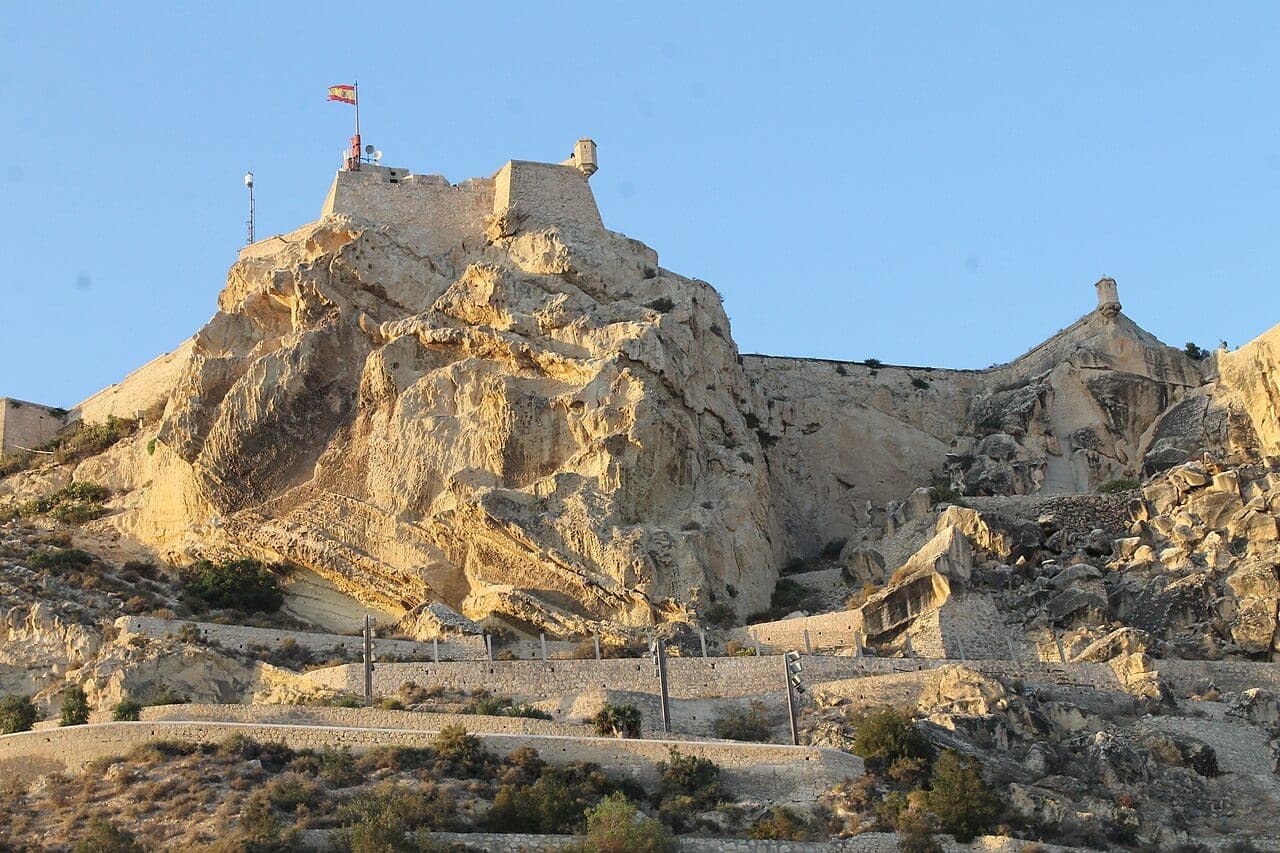
Santa Bárbara Castle
A fortress perched on Mount Benacantil, right in the heart of Alicante, commanding views over the entire bay and the profile of the famous «Moor's face».
 Castle
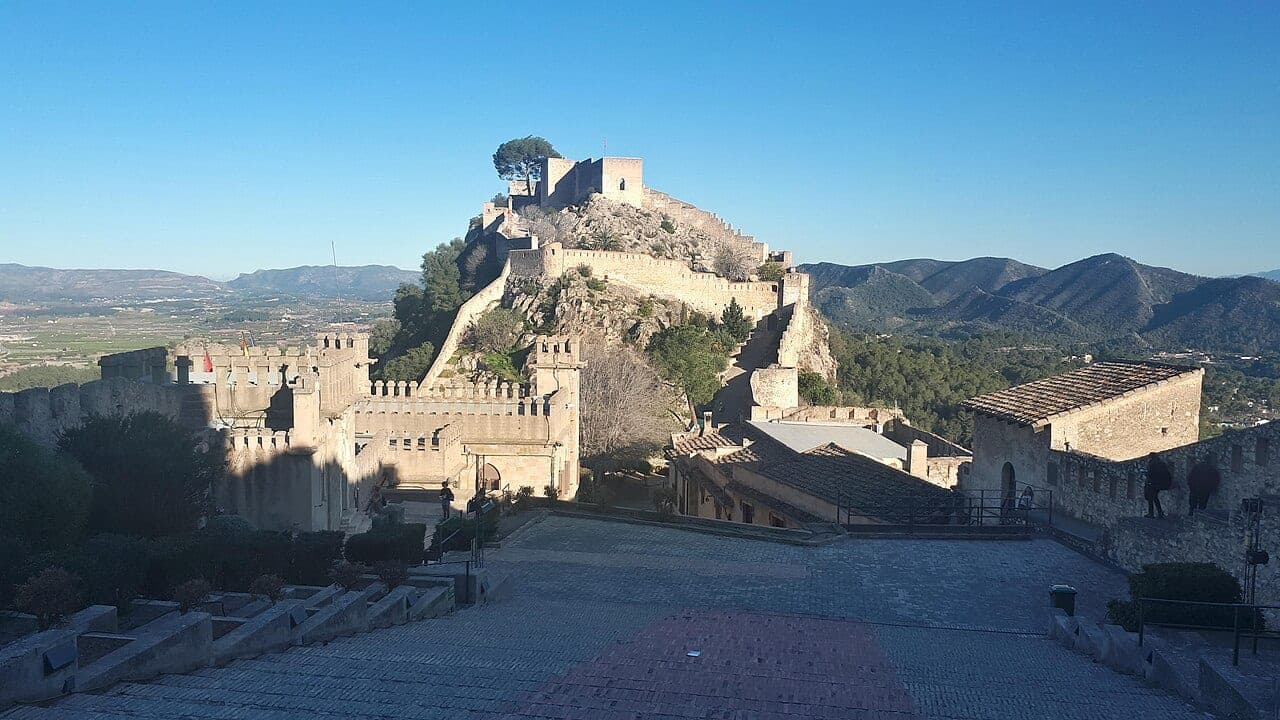
Xàtiva Castle
A double fortress in the Valencian Gothic style that crowns Xàtiva, facing the Serra Vernisa, and which the town has made the central emblem of its coat of arms.
 Cathedral
Segorbe Cathedral
Segorbe Cathedral, built from the 13th century onwards alongside the town walls, boasts an unusual Valencian Gothic cloister with a trapezoidal plan that is striking in its simplicity.
 Monastery
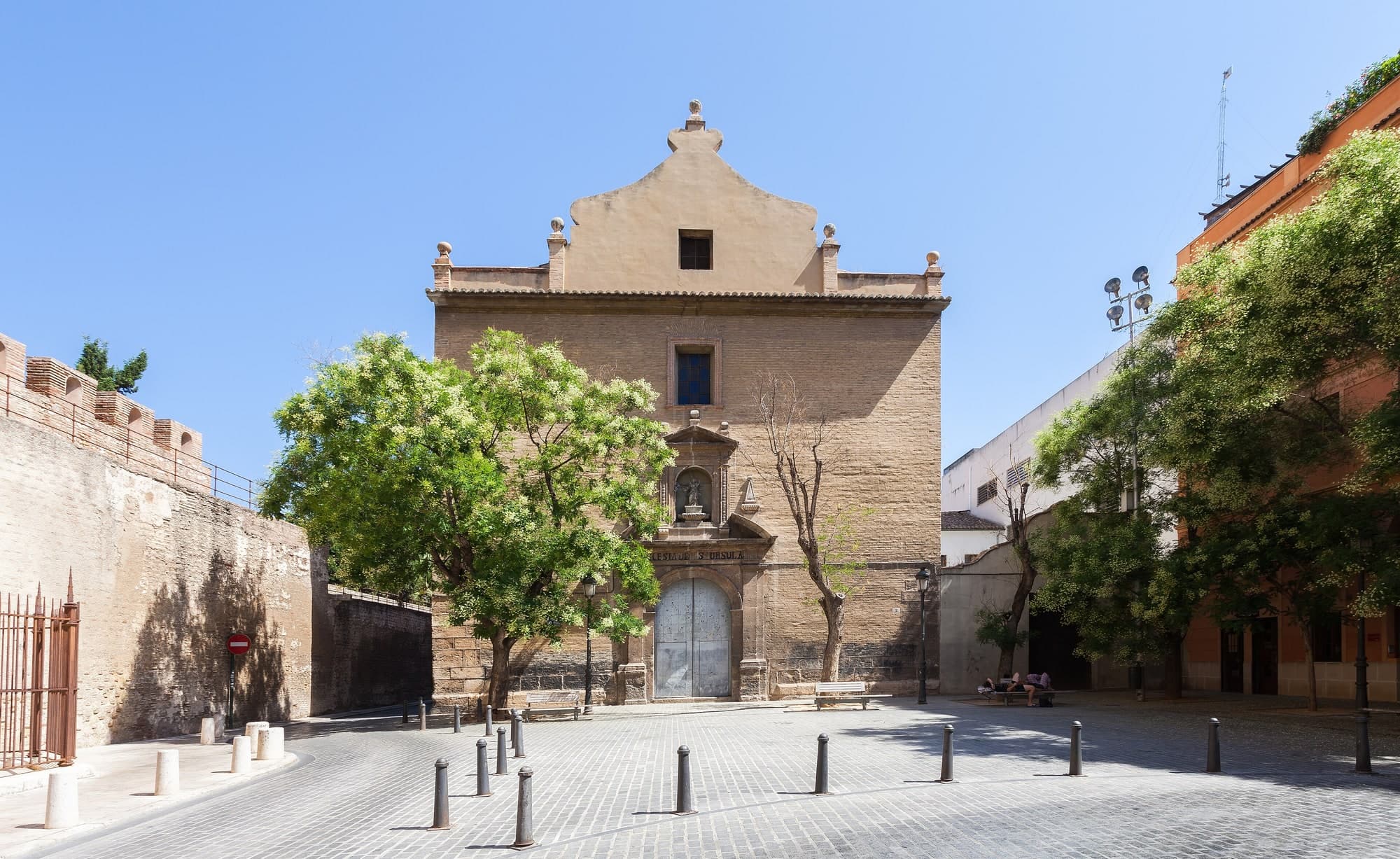
Convent of Santa Úrsula
A Catholic convent right in the centre of Valencia, dedicated to Saint Ursula, that invites you to pause and discover a quieter side of Valencia amid streets bursting with life.
 Hermitage
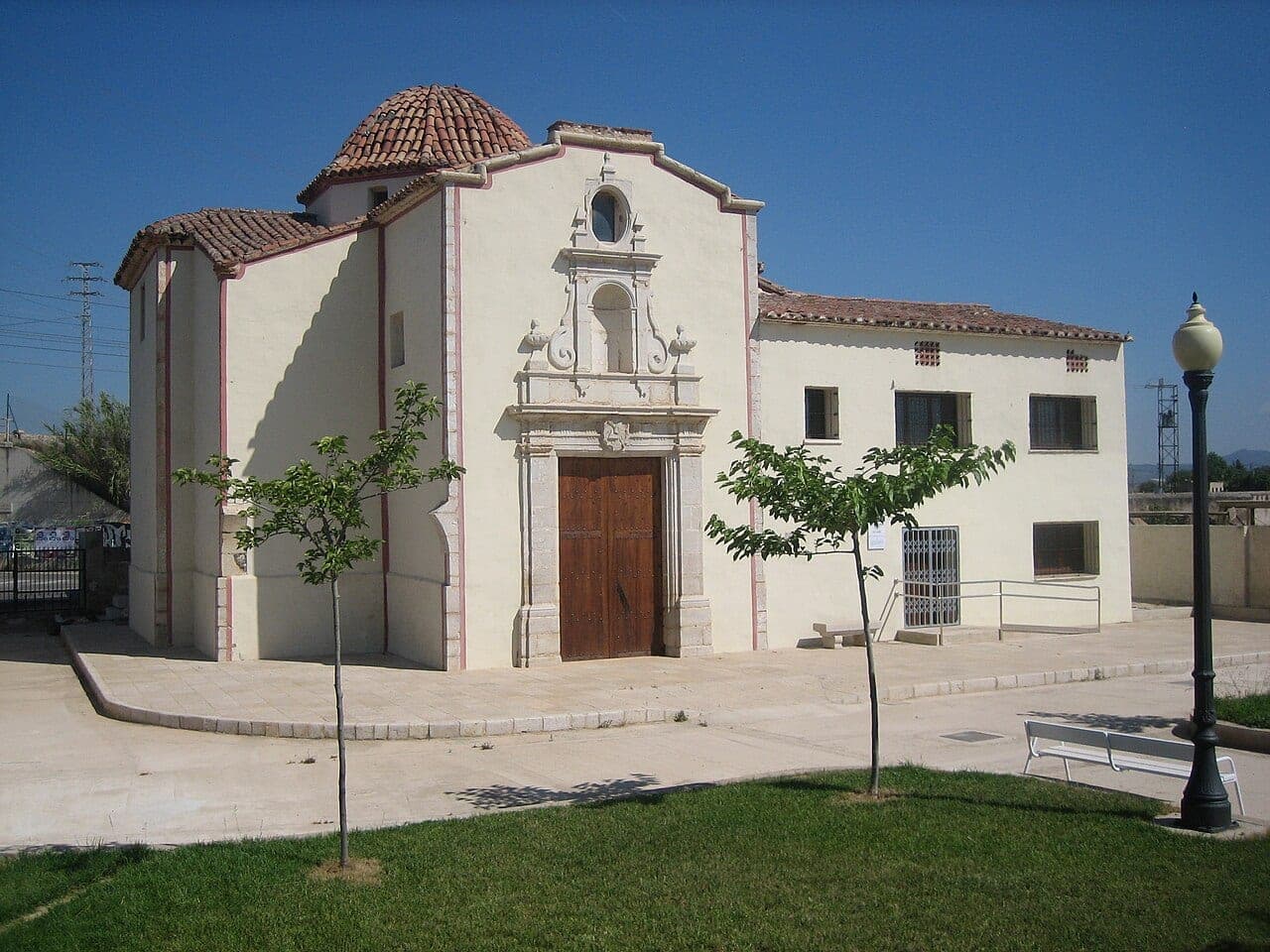
 of San Gregorio
A small hermitage on the outskirts of Vinaròs, at a crossroads of traditional paths, ideal as the destination for a short walk from the town centre.
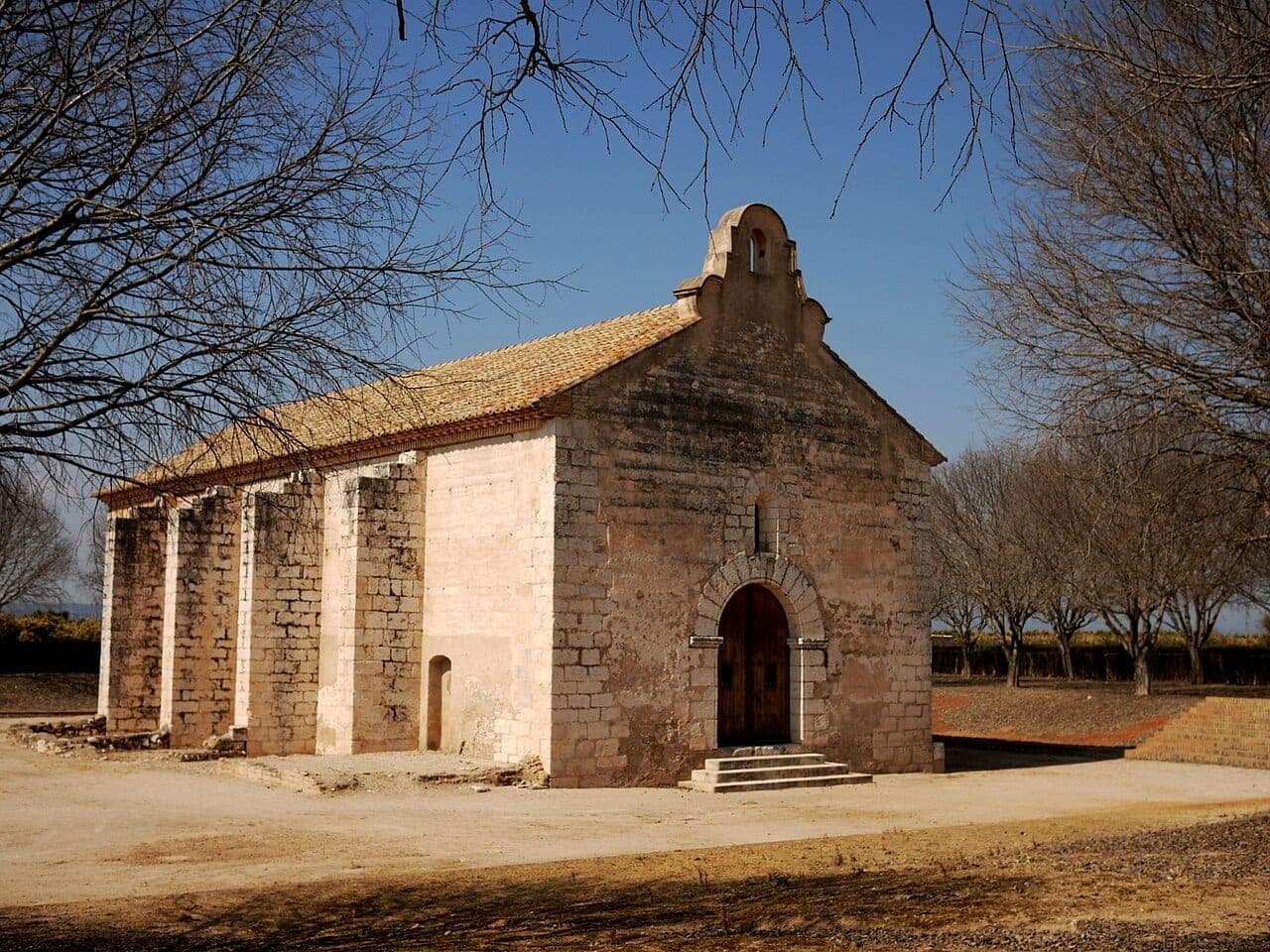 Hermitage
 of Sant Roc de Ternils
The former church of Ternils, a vanished village beside Carcaixent, is the oldest building in the municipality: Reconquest-era Gothic with a painted ceiling and a 15th-century Last Supper.
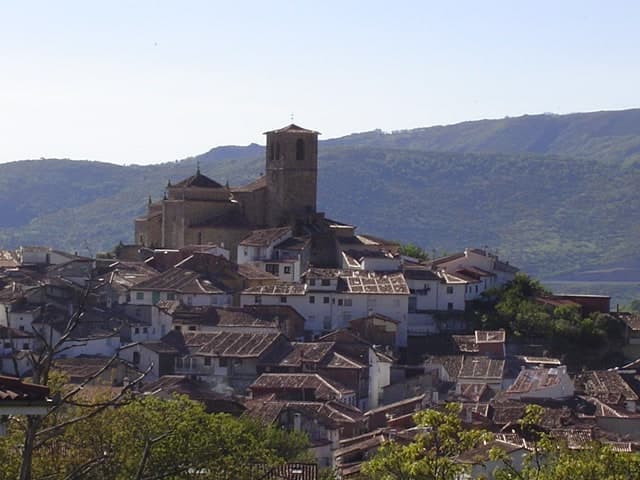 Castle
Hervás Castle
At the very top of Hervás, the foundations of a 13th-century castle now support the Church of Santa María de Aguas Vivas, with the Sierra de Gredos as a backdrop.
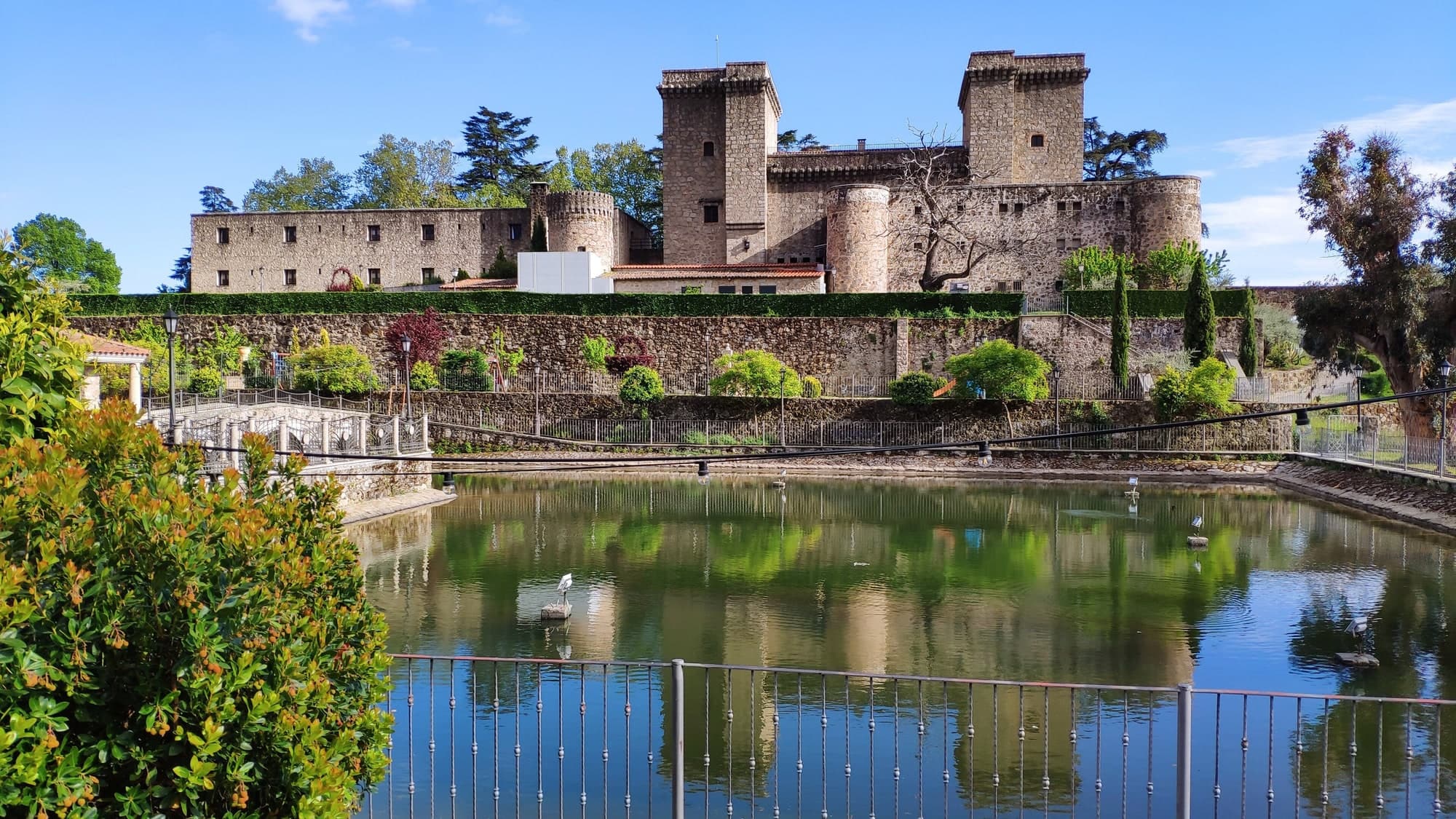 Castle
Jarandilla de la Vera Castle
A 13th-century fortress in Jarandilla de la Vera, also known as the castle-palace of the Counts of Oropesa or the Castle of Charles V: three names for a single story.
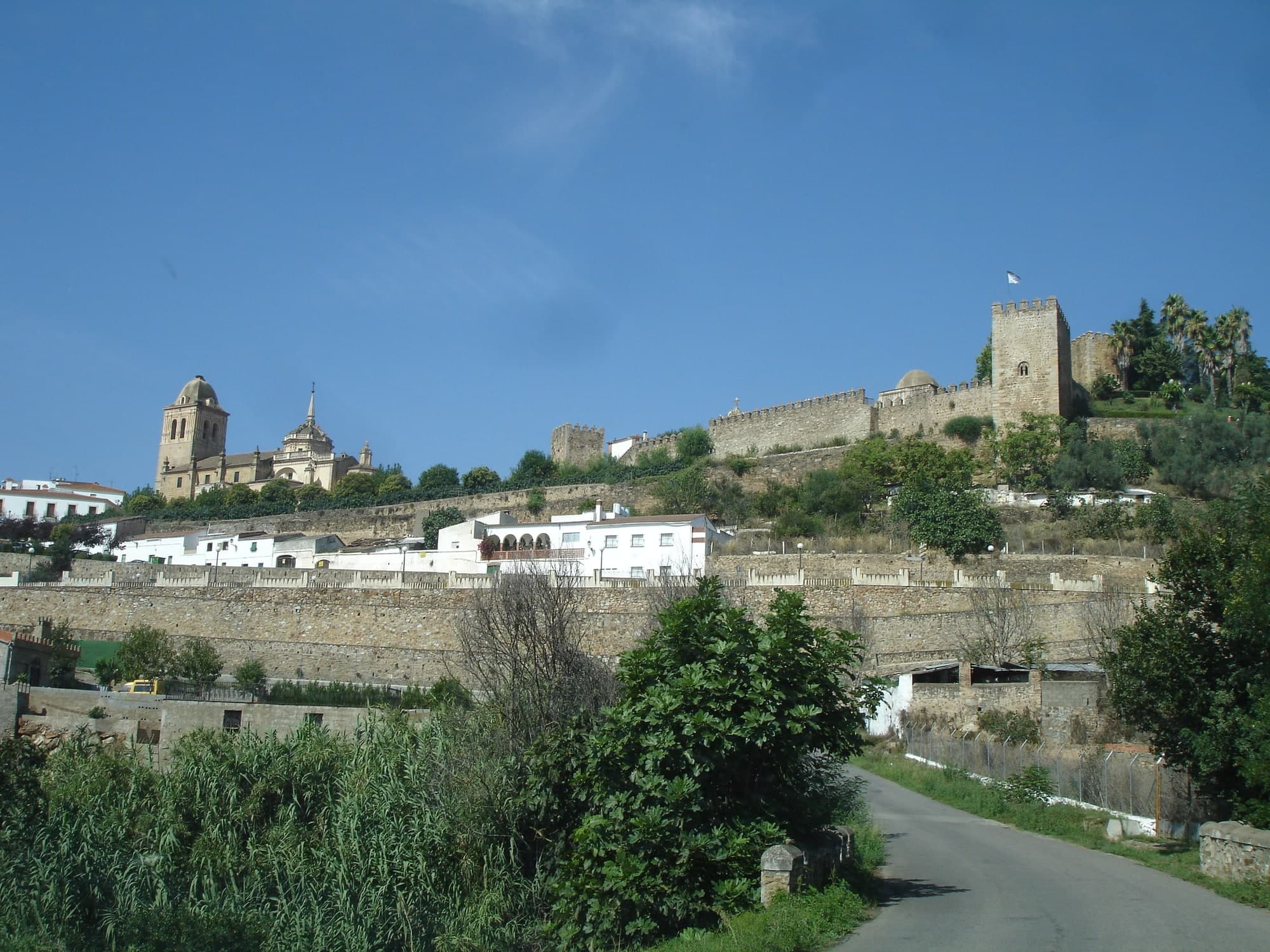 Castle
Jerez de los Caballeros Castle
A 13th-century fortress overlooking the fertile plain of the River Ardila, in a Sierra Morena town where centuries of history are layered one upon another, from dolmens to the Knights Templar.
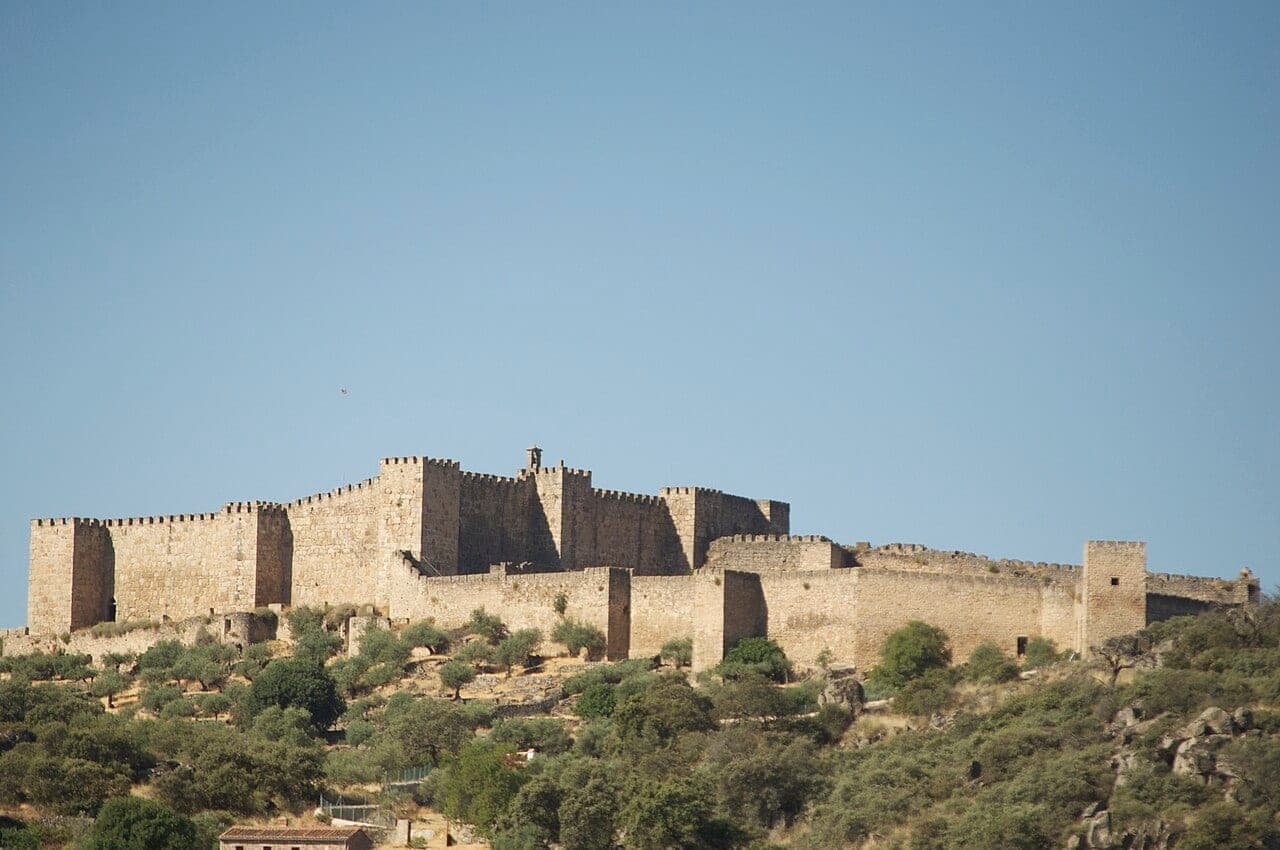 Castle
Trujillo Castle
A fortress built between the 9th and 12th centuries at the highest point of Trujillo, atop the hill known as Cabeza del Zorro, from where it overlooks the whole town in the province of Cáceres.
 Cathedral
Coria Cathedral
Gothic at heart, with Plateresque additions and a Baroque tower, Coria Cathedral holds tombs, wrought-iron screens and Mudéjar choir stalls that amply reward an unhurried visit.
 Cathedral
Badajoz Cathedral of St John the Baptist
Standing on Plaza de España, the Cathedral of St John the Baptist is the archiepiscopal seat of Mérida-Badajoz and the great religious landmark of the city centre.
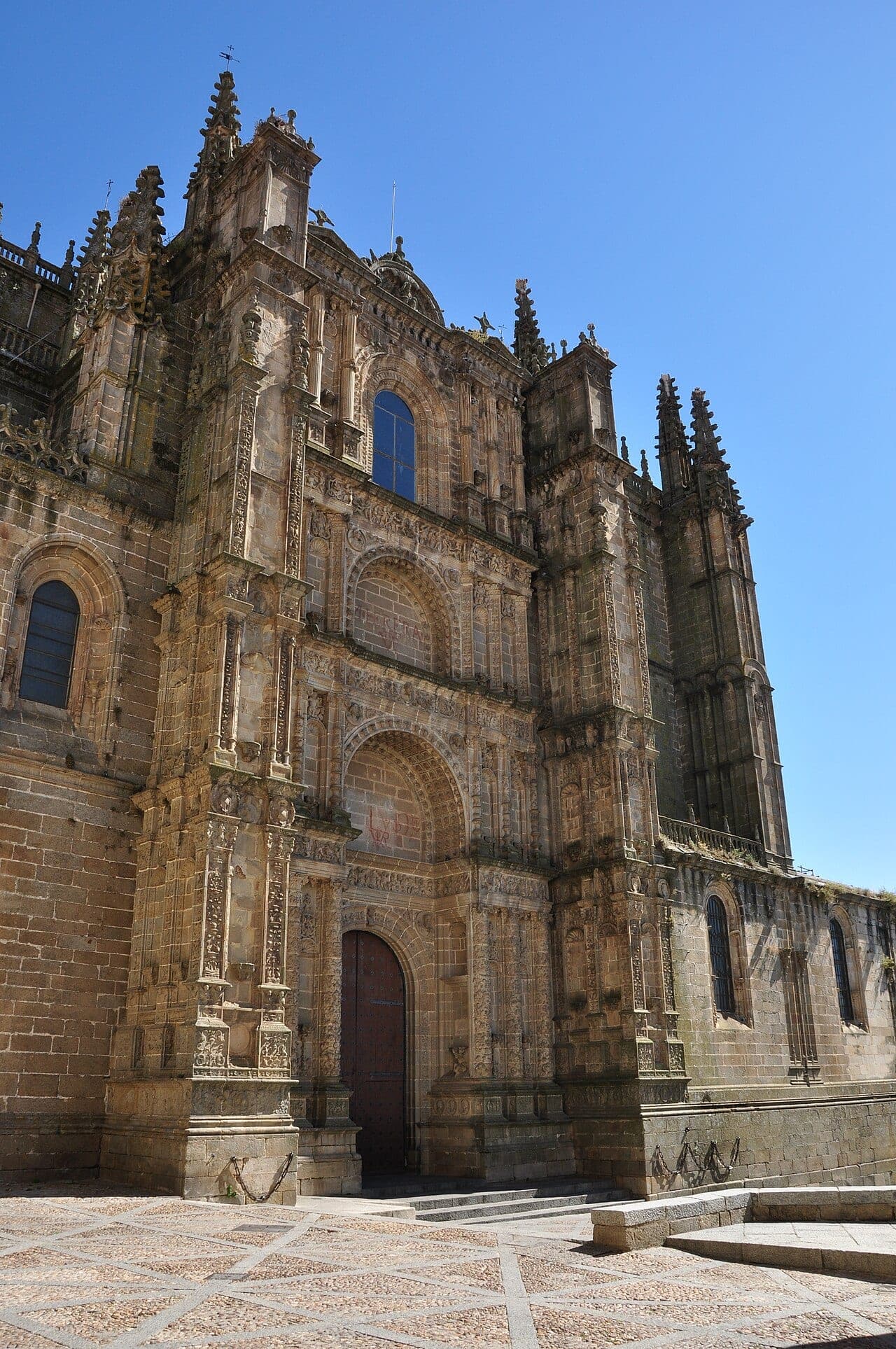 Cathedral
New Cathedral of Plasencia
The New Cathedral of Plasencia, seat of its diocese, boasts the most abundant and lavish ornamentation of any church in Extremadura: an unmissable stop in the north of the region.
 Cathedral
Co-Cathedral of Santa María, Cáceres
Cáceres' principal church, a late Gothic building with Romanesque traces and Renaissance touches, presiding over the Plaza de Santa María at the heart of the World Heritage-listed old town.
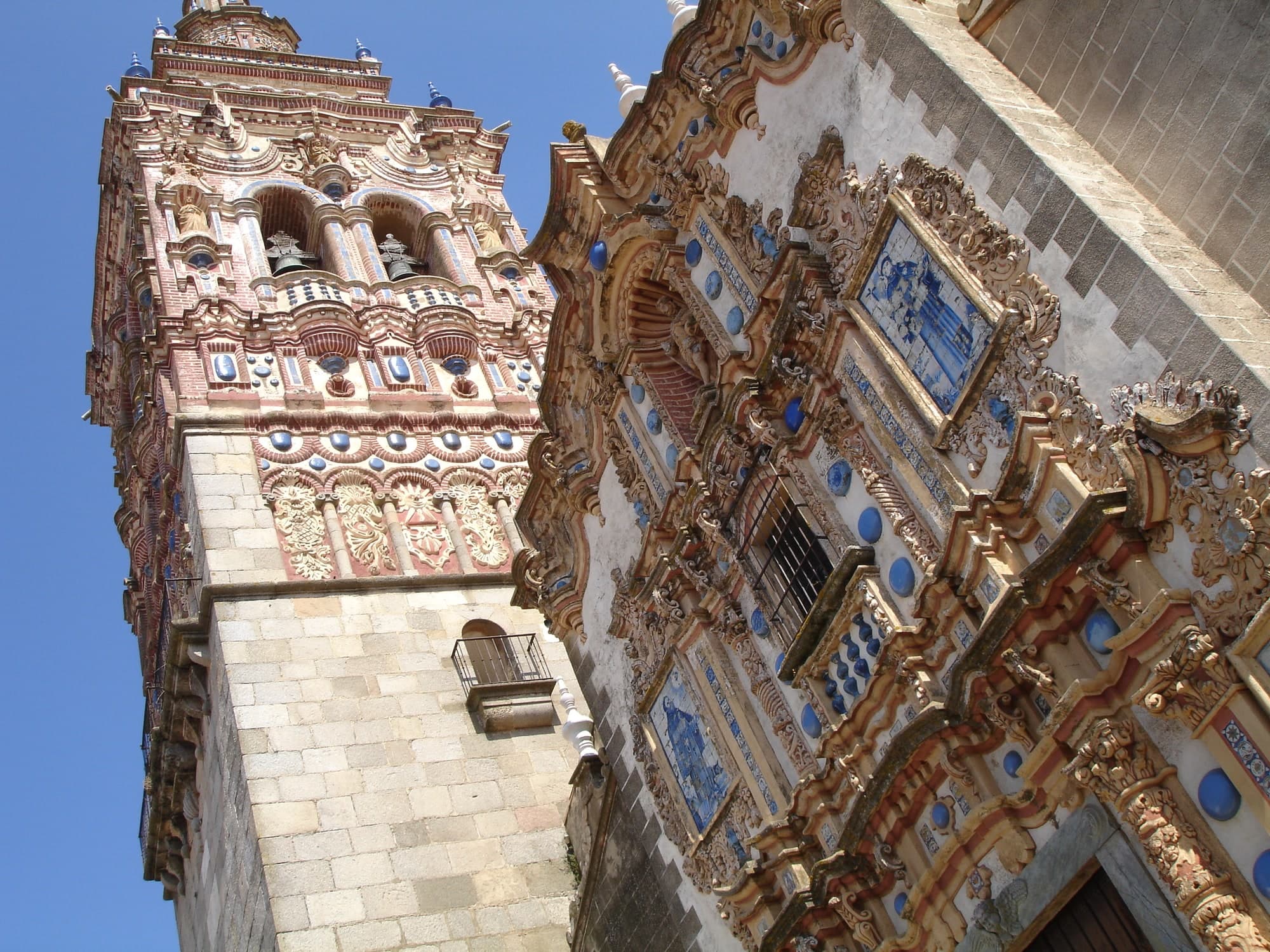 Church
 of San Bartolomé (Jerez de los Caballeros)
A Baroque church in Jerez de los Caballeros that surprises visitors with its lavish decoration and vivid colour, listed as a Bien de Interés Cultural since 2013.
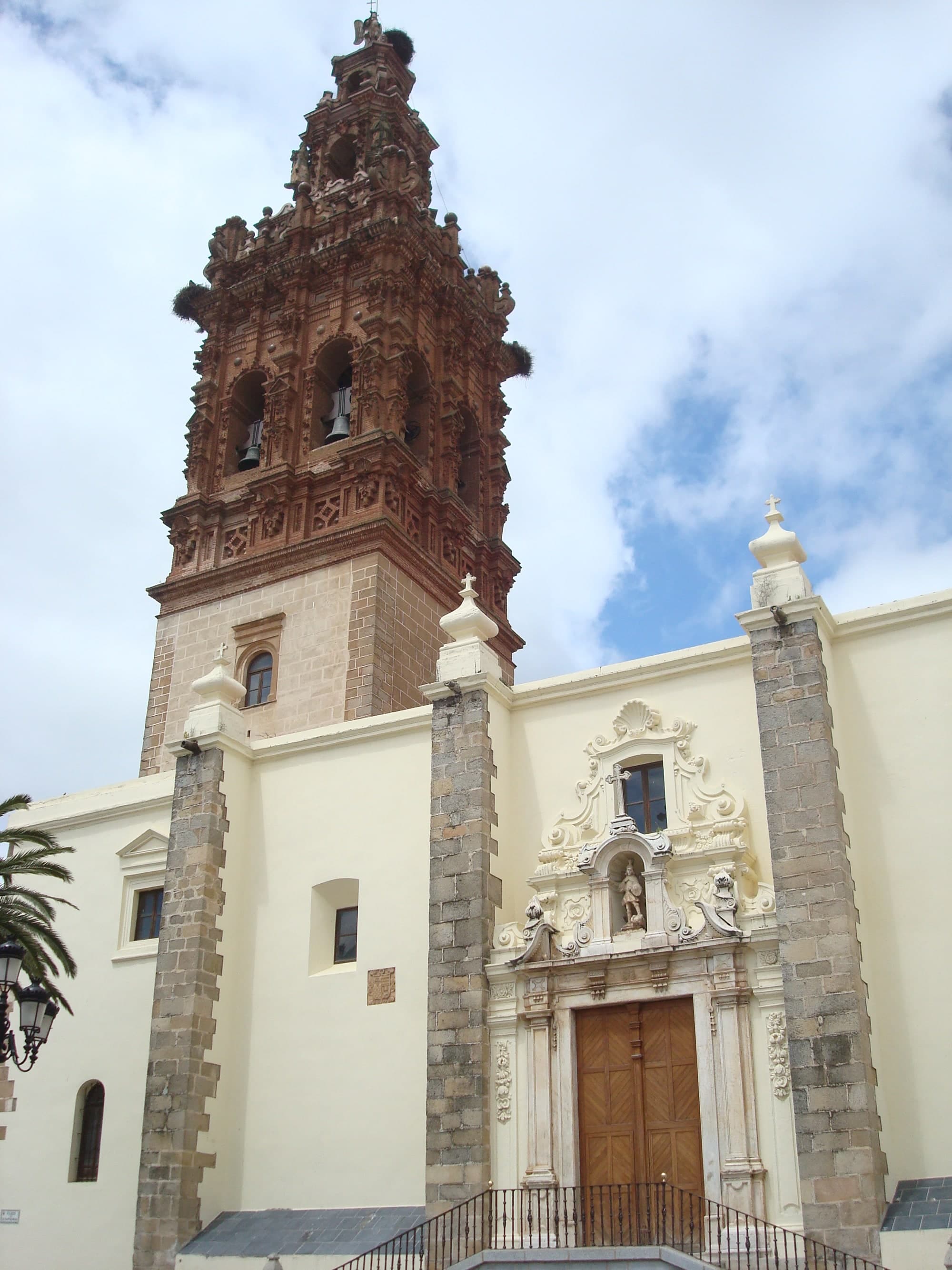 Church
 of San Miguel Arcángel (Jerez de los Caballeros)
A Baroque church right in the heart of Jerez de los Caballeros, and a natural stop for anyone exploring this town in the south of the province of Badajoz on foot.
 Church
 of San Pedro (Garrovillas de Alconétar)
A 15th-century Gothic church in Garrovillas de Alconétar, bearing witness to the medieval past of this town in the province of Cáceres and still part of its parish life.
 Church
 of Santa Catalina
A 15th-century church in Monroy that hosts Las Purificás every 2 February, one of the best-preserved Candlemas festivals in the province of Cáceres.
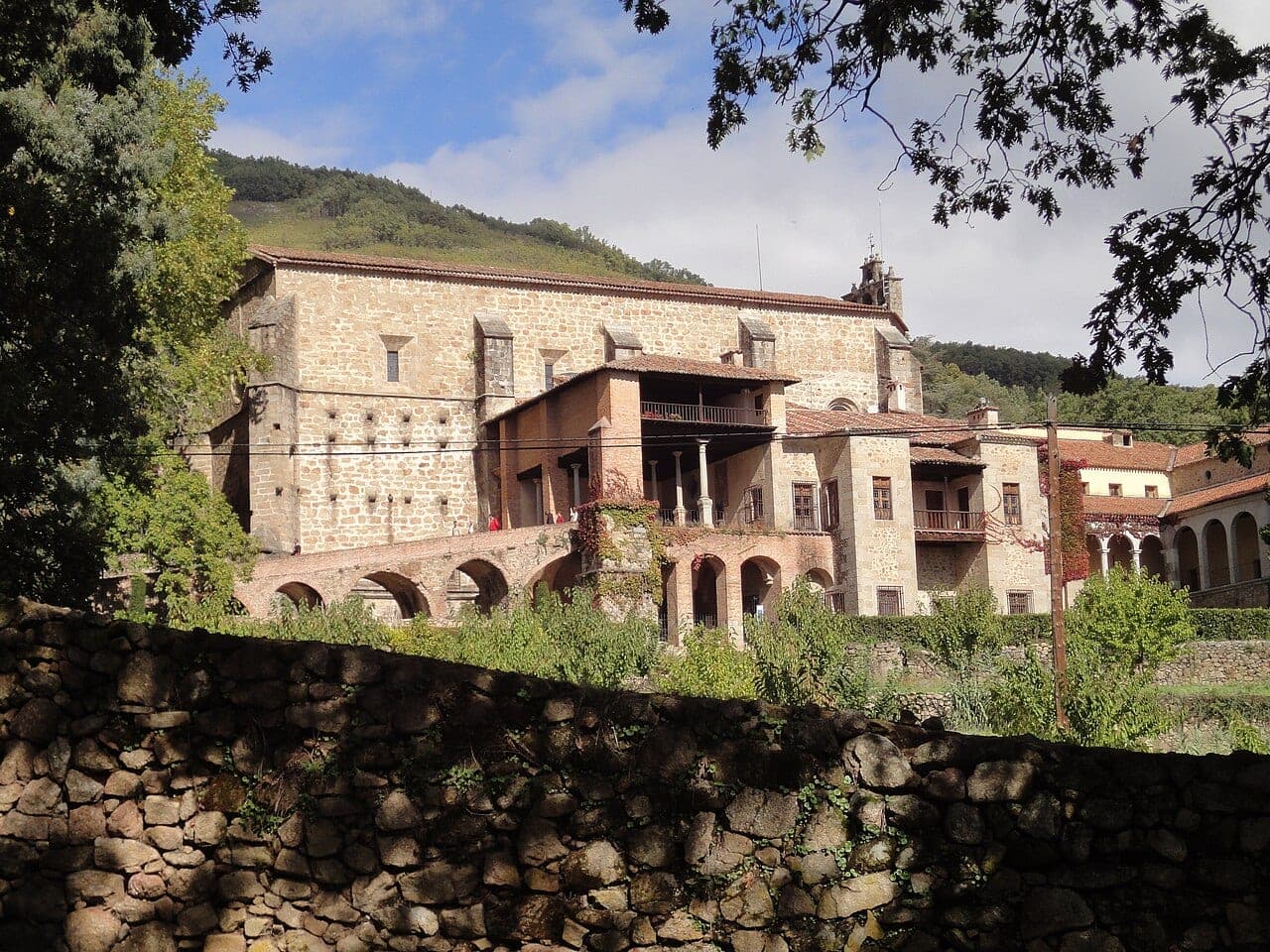 Monastery
 of Yuste
In the heart of the La Vera district, the monastery and palace residence where Charles I of Spain and V of Germany spent the last two years of his life in retirement after abdicating.
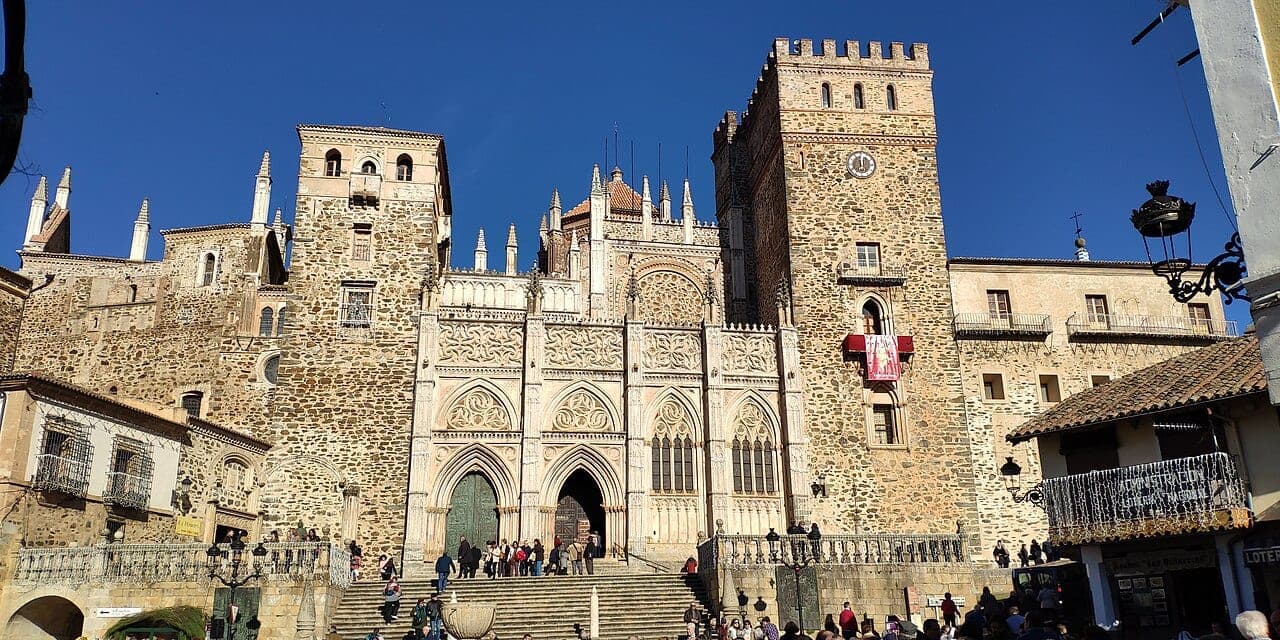 Monastery
Royal Monastery of Santa María de Guadalupe
Sanctuary of the Virgin of Guadalupe, patron saint of Extremadura, this World Heritage monastery brings together six centuries of history and art, from Gothic to Neoclassical.
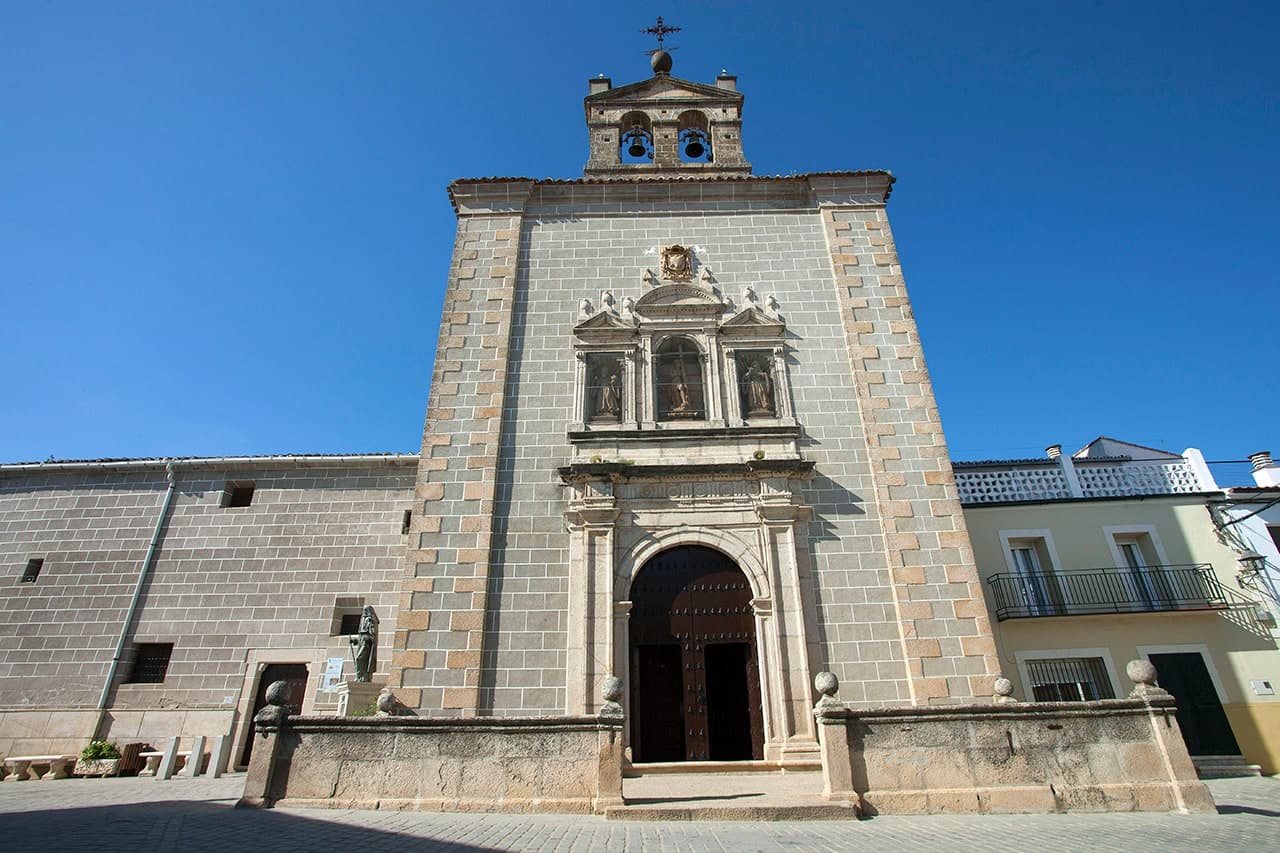 Monastery
Sanctuary of the Cristo de la Victoria
In Serradilla, a convent of Augustinian Recollect nuns houses the Cristo de la Victoria, one of the most revered images in Extremadura and a protected gem of the heritage of the province of Cáceres.
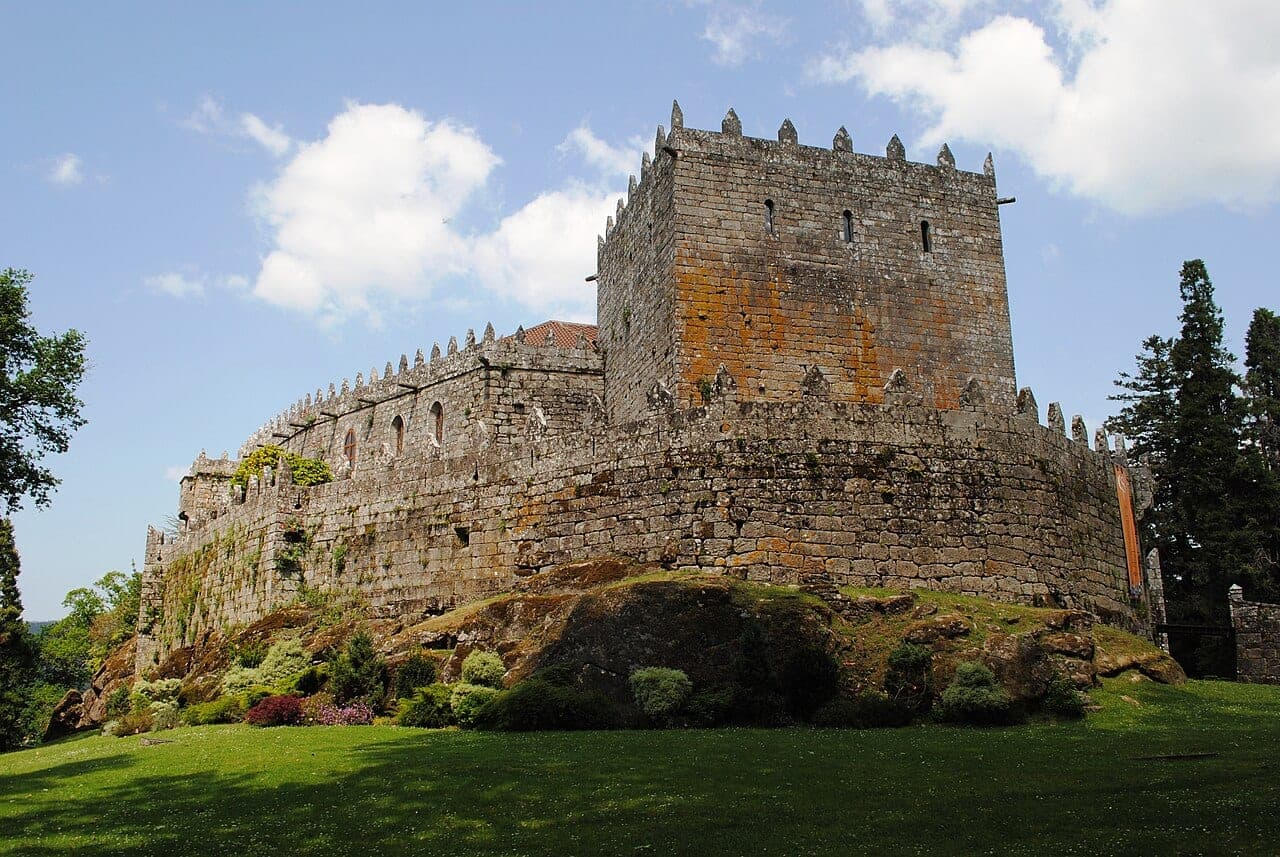 Castle
Soutomaior Castle
The medieval fortress of the Soutomaior family, transformed into a Neo-Gothic palace and museum, surrounded by a botanical garden with centuries-old trees and an award-winning camellia collection.
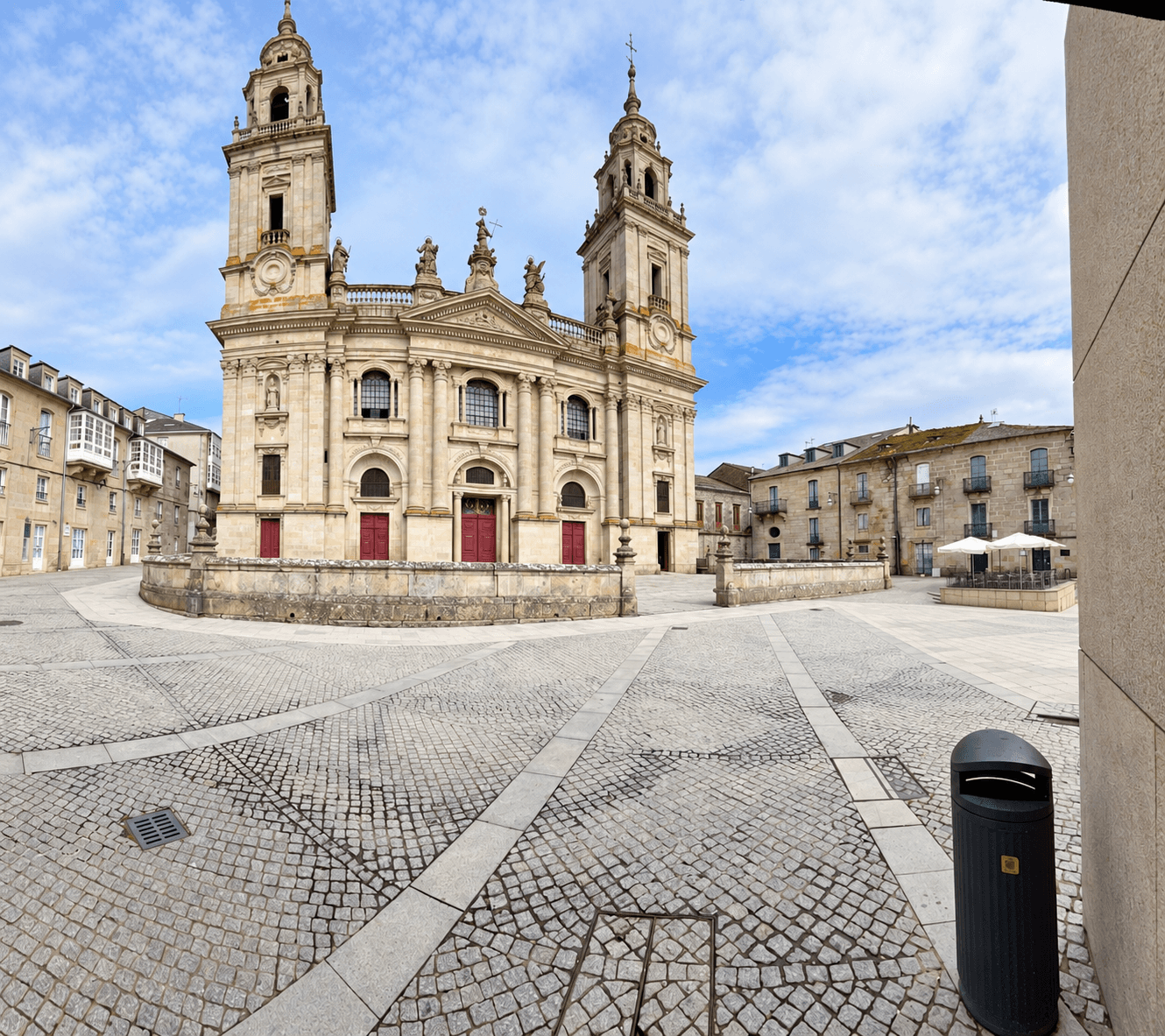 Cathedral
Lugo Cathedral
Romanesque in origin and Baroque in its best-loved corners, Lugo Cathedral holds a choir unique in Galicia and the Blessed Sacrament exposed day and night by papal privilege.
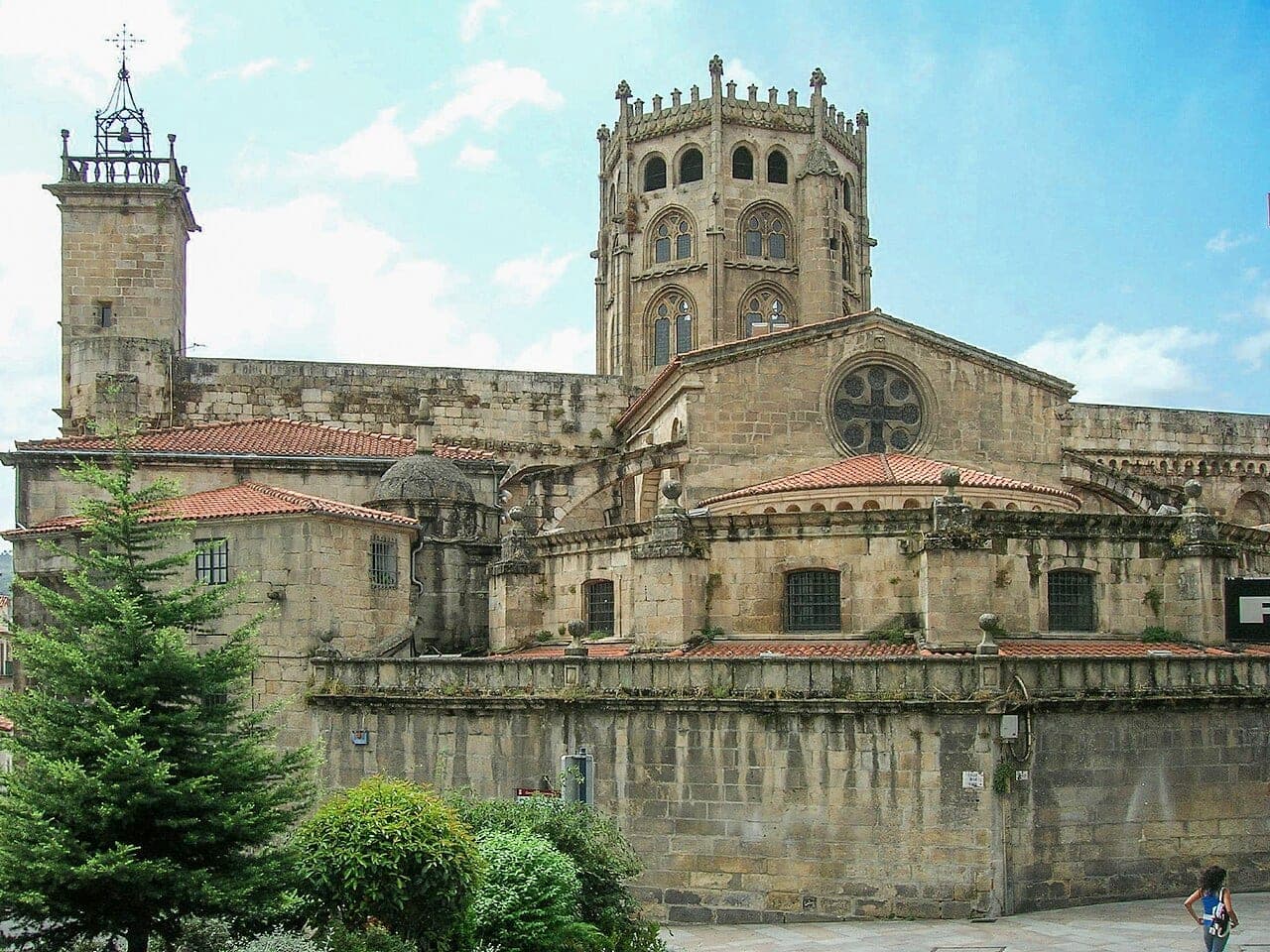 Cathedral
Ourense Cathedral
Dedicated to Saint Martin, Ourense Cathedral is one of Spain's great Romanesque churches and a masterpiece of the Galician Middle Ages, with portals that bear the legacy of Master Mateo.
 Cathedral
Santiago de Compostela Cathedral
The final destination of the Camino de Santiago and, according to tradition, the resting place of the tomb of the Apostle, Compostela's cathedral was one of the great pilgrimage destinations of medieval Europe.
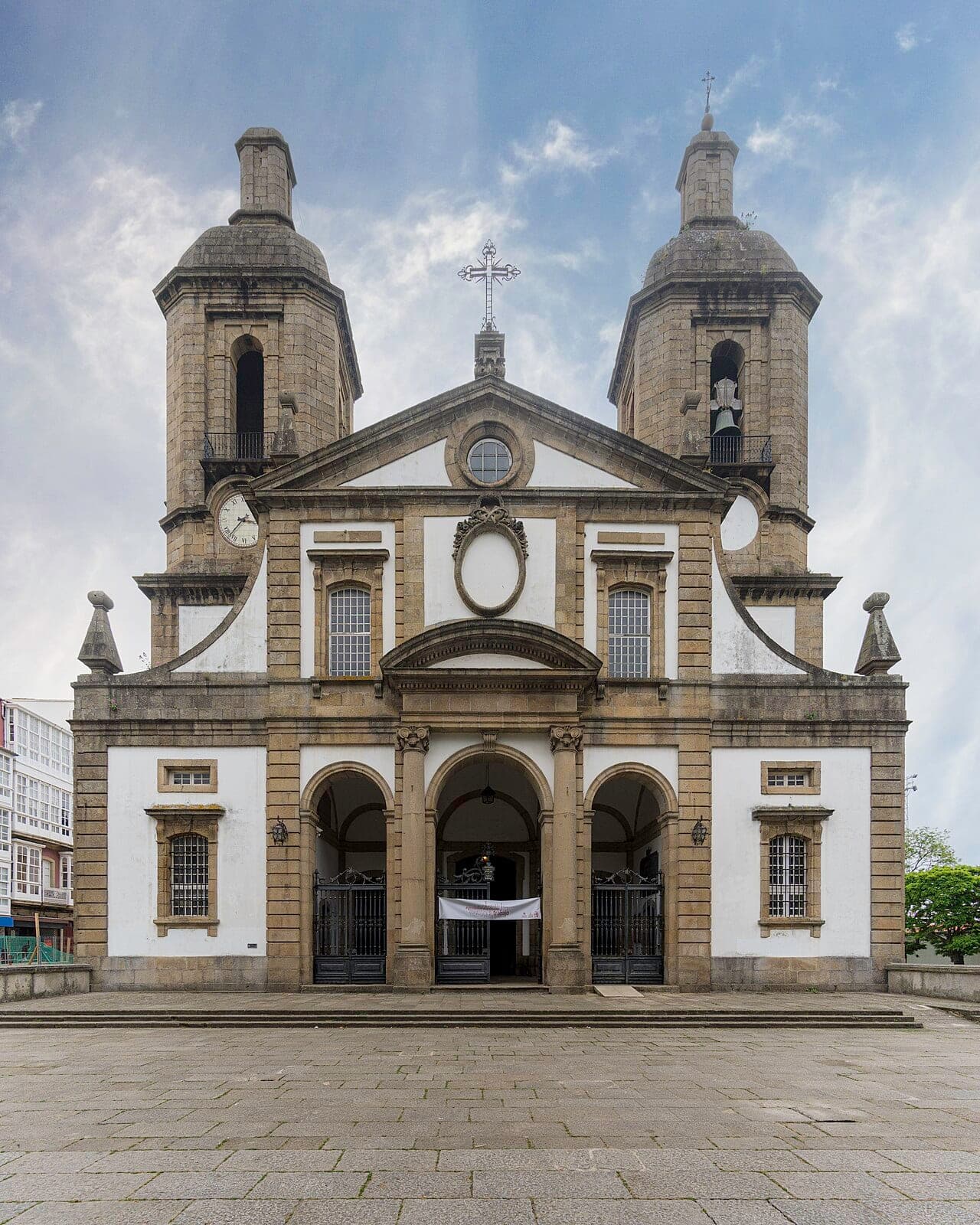 Cathedral
Ferrol Co-Cathedral
The Co-Cathedral of St Julian, dedicated to the patron saint of Ferrol, is the city's great Catholic church and has shared its rank with Mondoñedo Cathedral since 1959.
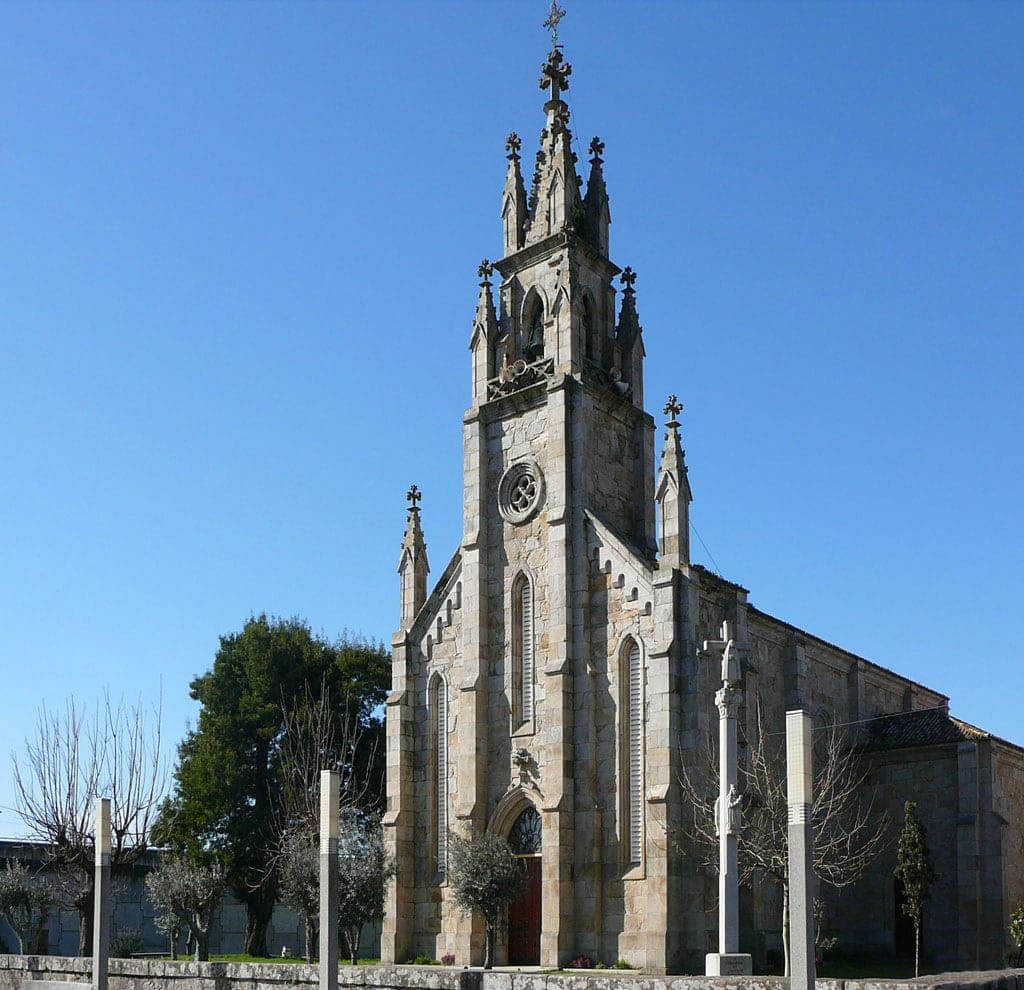 Church
 of Our Lady of Placeres
A late 19th-century Neo-Gothic church in Placeres, Lourizán, built on the site of an earlier chapel at the end of the bar of the port of Pontevedra.
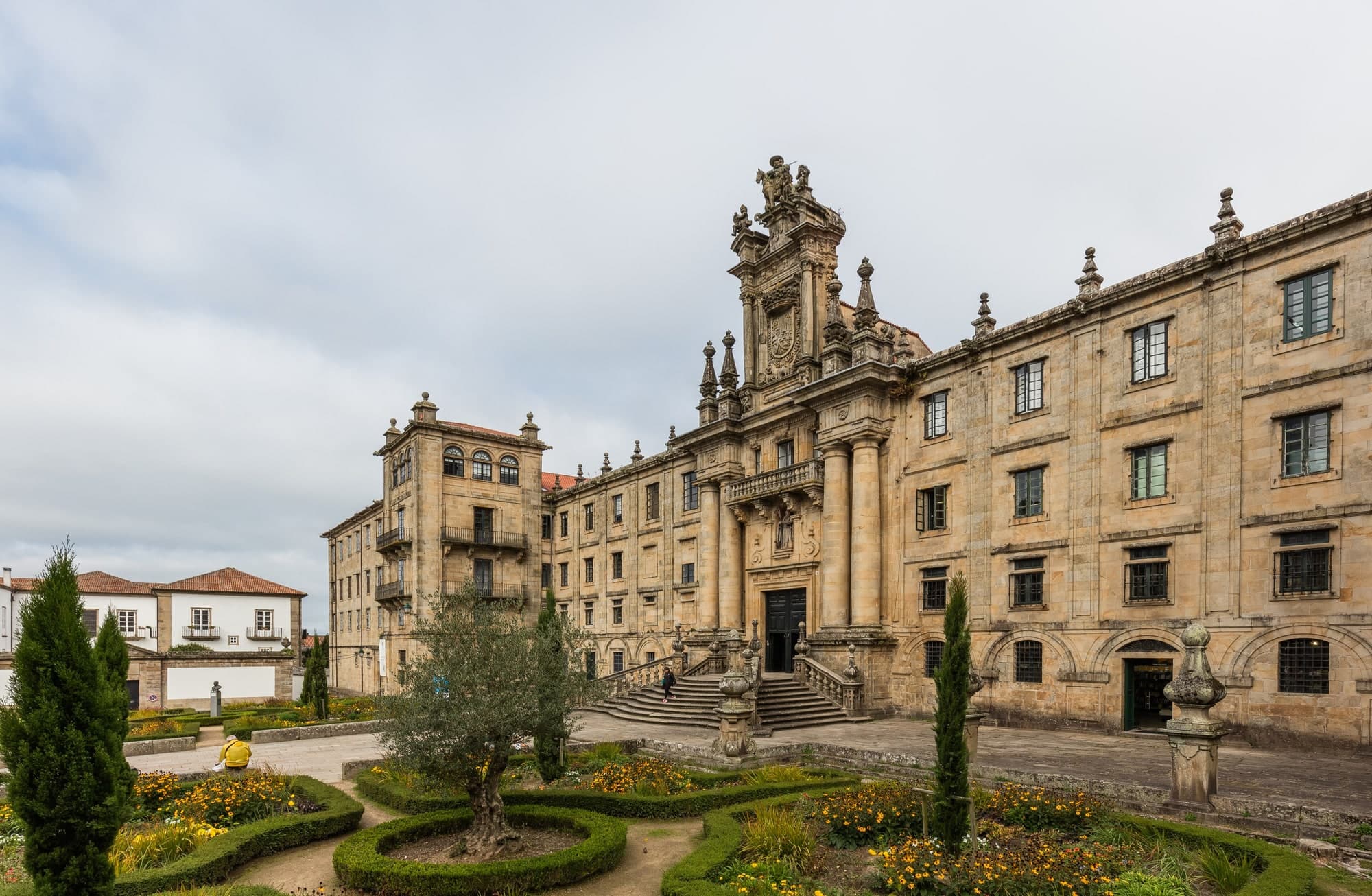 Monastery
 of San Martín Pinario
A Benedictine monastery founded in the 10th century in the heart of Santiago de Compostela, now a seminary, centre of learning and museum closely linked to the history of the Camino.
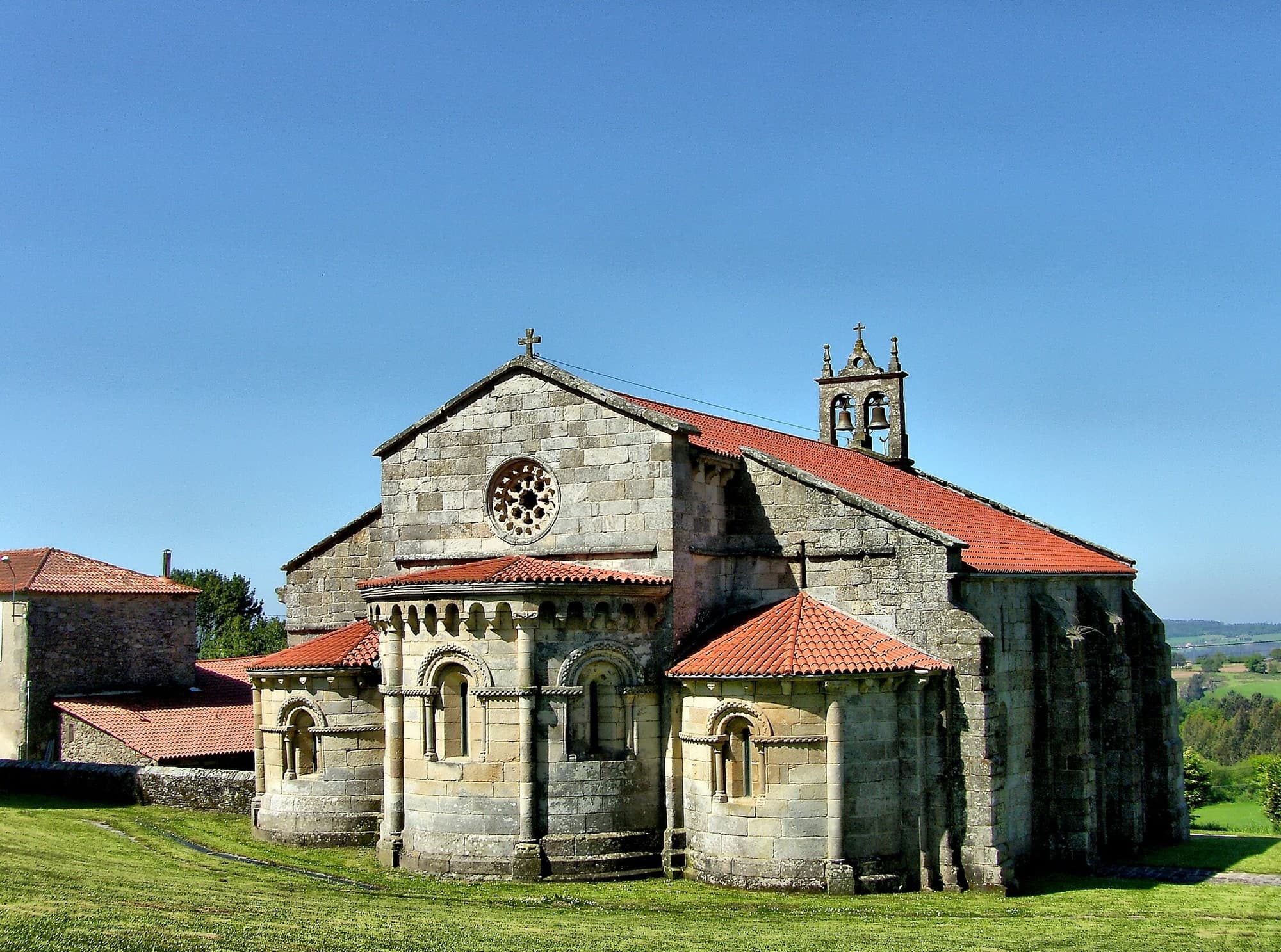 Monastery
 of Santa María de Mezonzo
In Vilasantar, the Romanesque church of Santa María de Mezonzo is the great surviving witness to a former Galician monastery, perfect for a quiet stop.
 Monastery
 of Santa María la Real de Oseira
A Cistercian monastery of royal foundation in Ourense, now Trappist, whose economic and social influence shaped the surrounding area and lands much further afield for centuries.
 Shrine
Sanctuary of Our Lady of the Boat
A Baroque sanctuary in Muxía, facing the rocks that legend identifies as the Virgin's stone boat, and the Atlantic finishing point for many pilgrims on the Camino de Santiago.
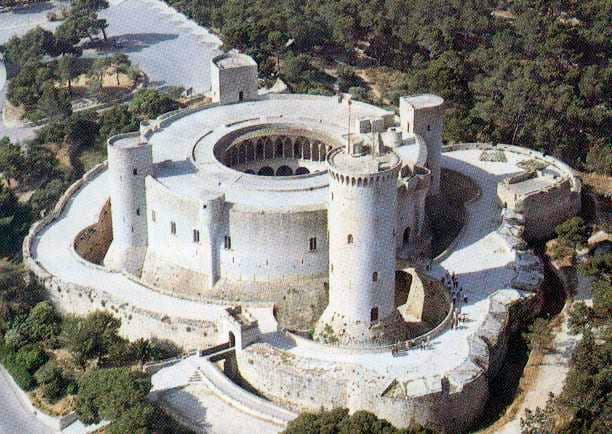 Castle
Bellver Castle
A Gothic castle with a circular floor plan, the oldest of its kind in Europe, overlooking Palma from a wooded hill with views of the bay and the Tramuntana.
 Cathedral
Palma Cathedral
La Seu, a Gothic cathedral overlooking the sea from atop Palma's city walls, is home to Europe's largest original Gothic rose window and one of the tallest naves on the continent.
 Church
 of San Felipe Neri
A Baroque church in Palma's old town, built in the late 16th century by the Trinitarians and now in the care of the Oratorians, offering a peaceful pause amid the narrow streets.
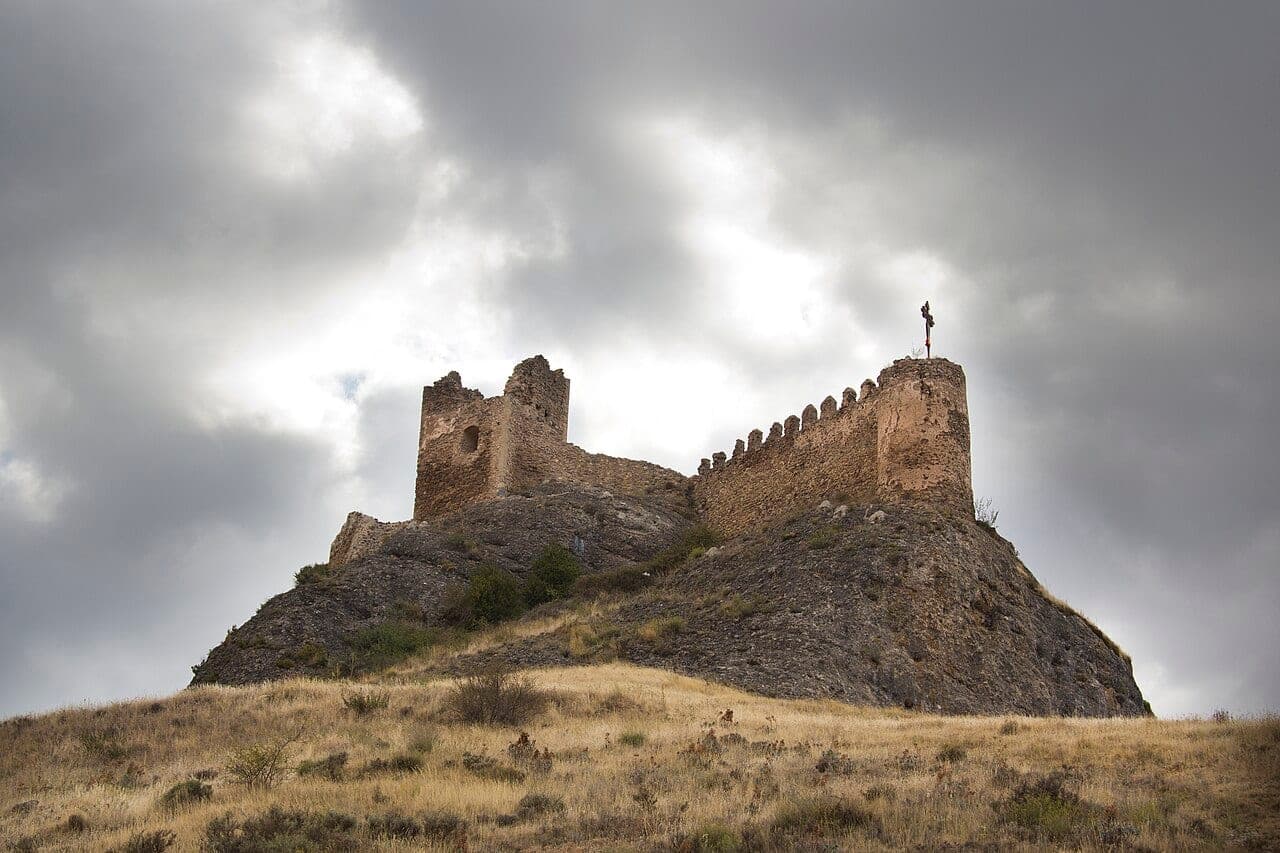 Castle
Clavijo Castle
An 11th-century fortress perched on a rocky escarpment above Clavijo, linked to the legendary battle in which, according to tradition, the Apostle St James appeared.
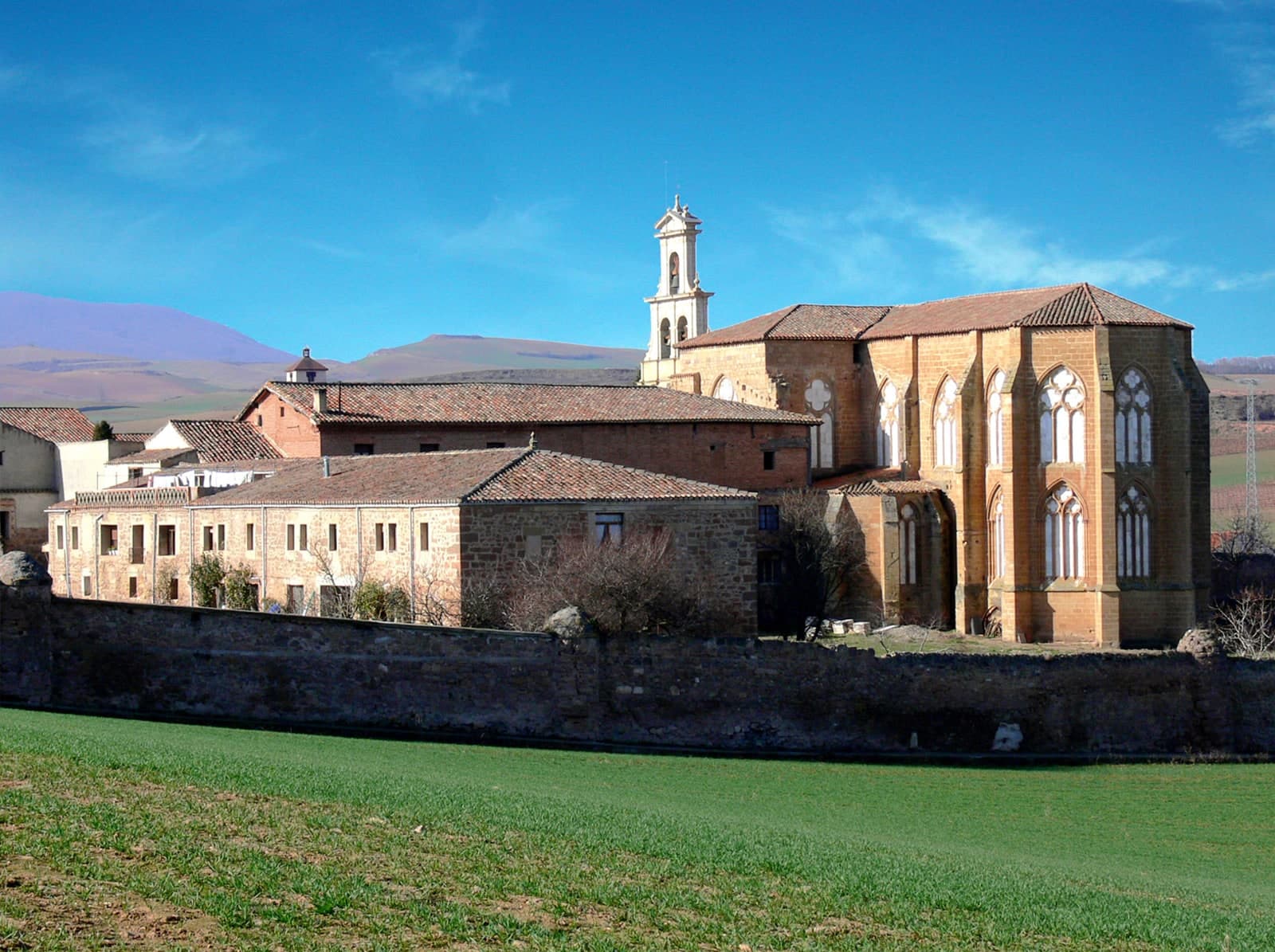 Monastery
Cañas Monastery
A Cistercian abbey in La Rioja known as the Monastery of Light, home to one of the first female Cistercian communities on the Iberian Peninsula and still inhabited by nuns.
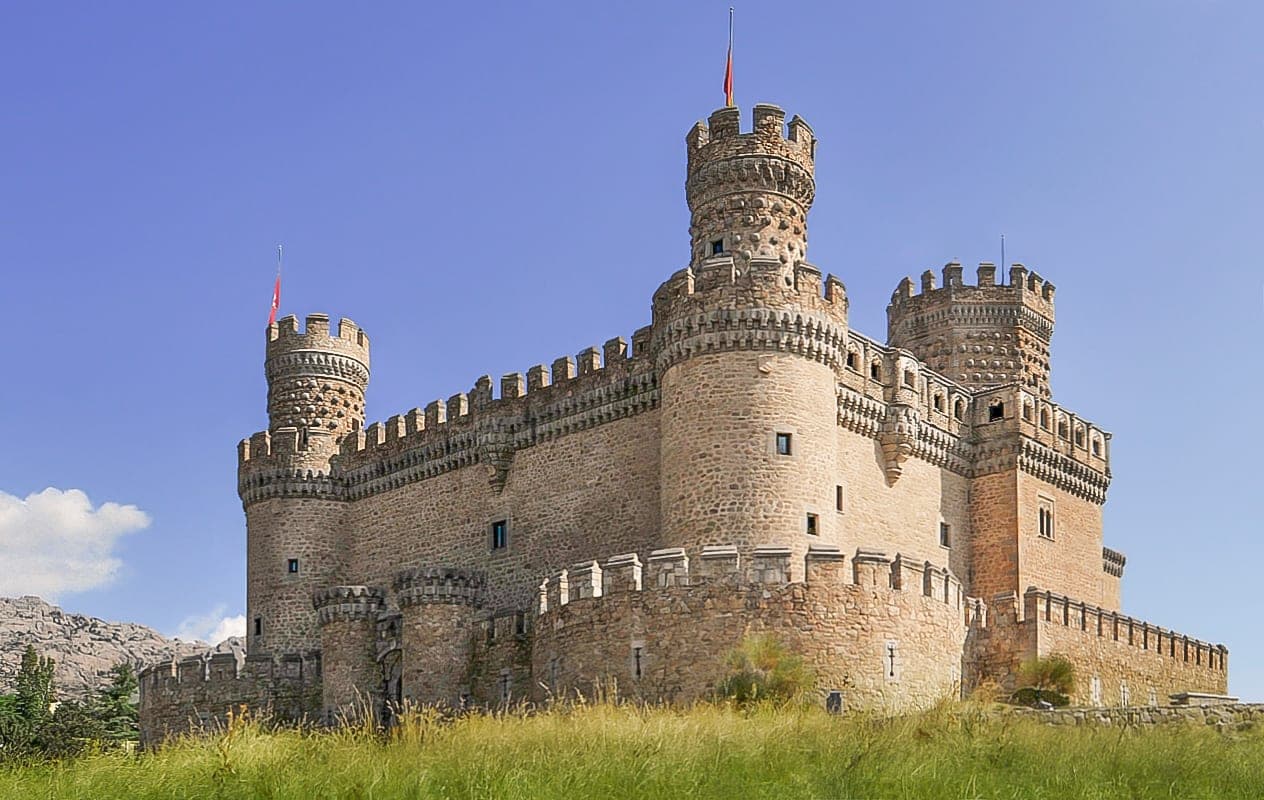 Castle
Manzanares el Real Castle
A 15th-century palace-fortress built by the Mendoza family at the foot of the Guadarrama, a Gothic gem by Juan Guas overlooking the Santillana reservoir.
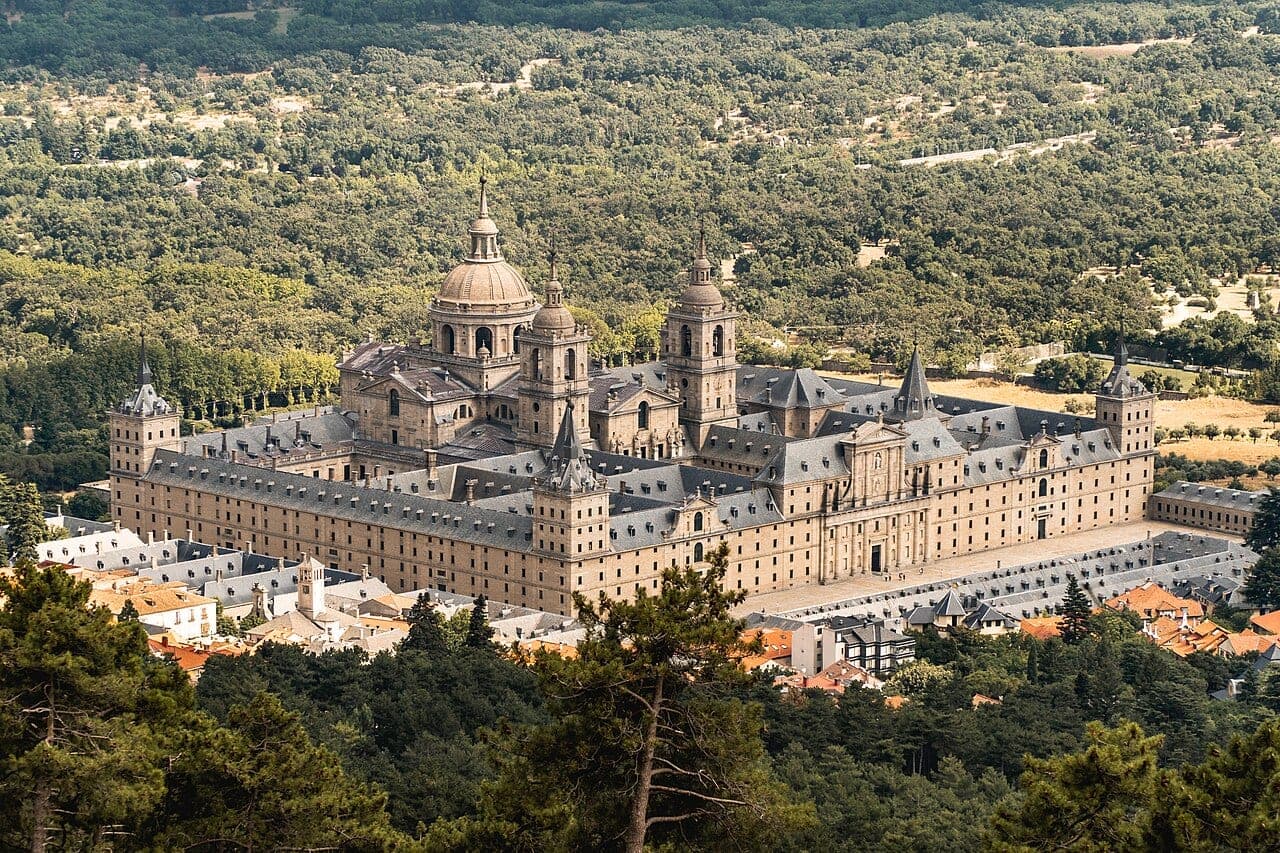 Monastery
 of El Escorial
Palace, basilica, royal pantheon, library and monastery all in one: Philip II's great Renaissance dream, dubbed the Eighth Wonder of the World, set in the heart of the Sierra de Guadarrama.
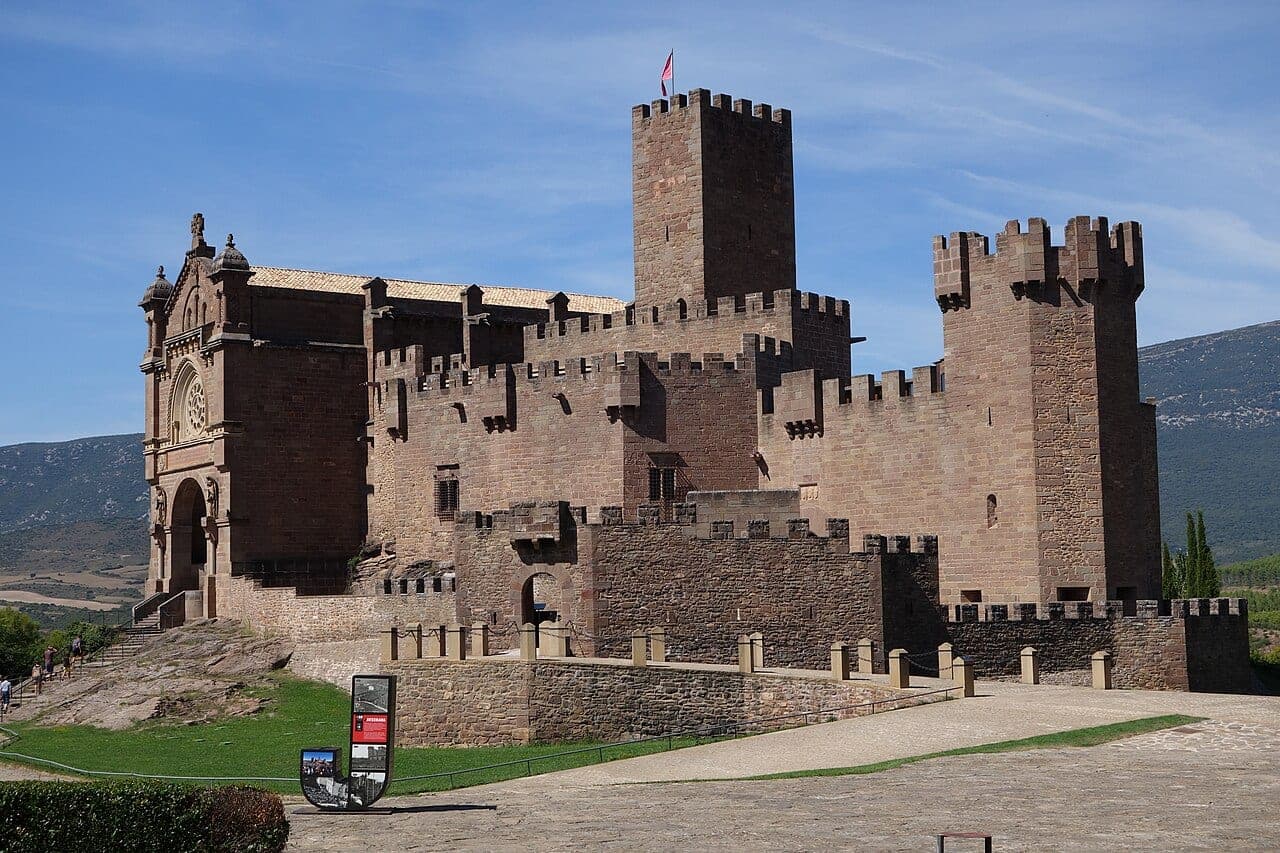 Castle
Javier Castle
Perched on a Navarrese hillock stands the castle where Saint Francis Xavier was born, a fortress with roots in the 10th century and the destination of the hugely popular Javieradas pilgrimages each March.
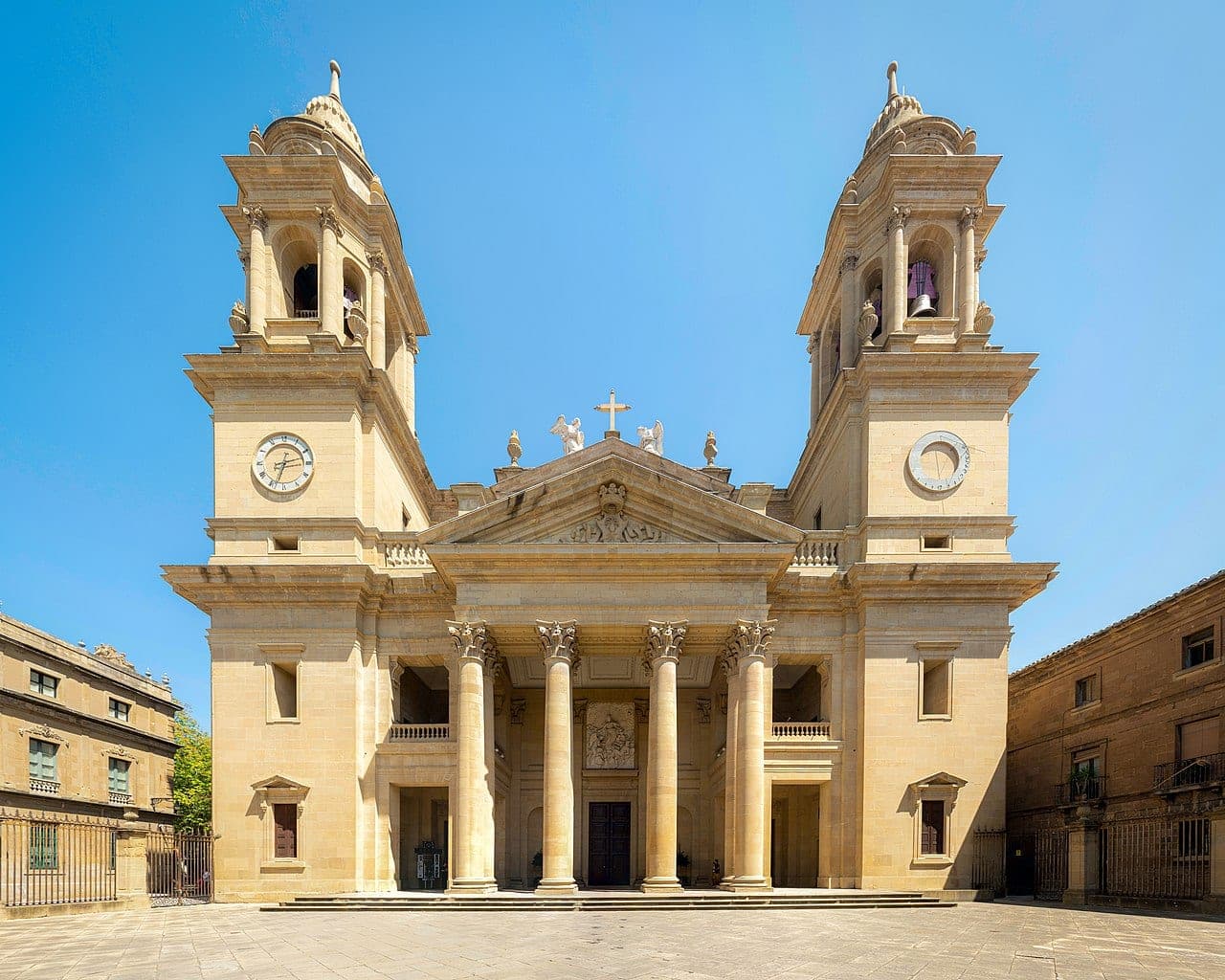 Cathedral
Pamplona Cathedral
The most complete cathedral complex in Spain, with an exceptional 14th-century Gothic cloister, a rare medieval kitchen and a restrained neoclassical façade.
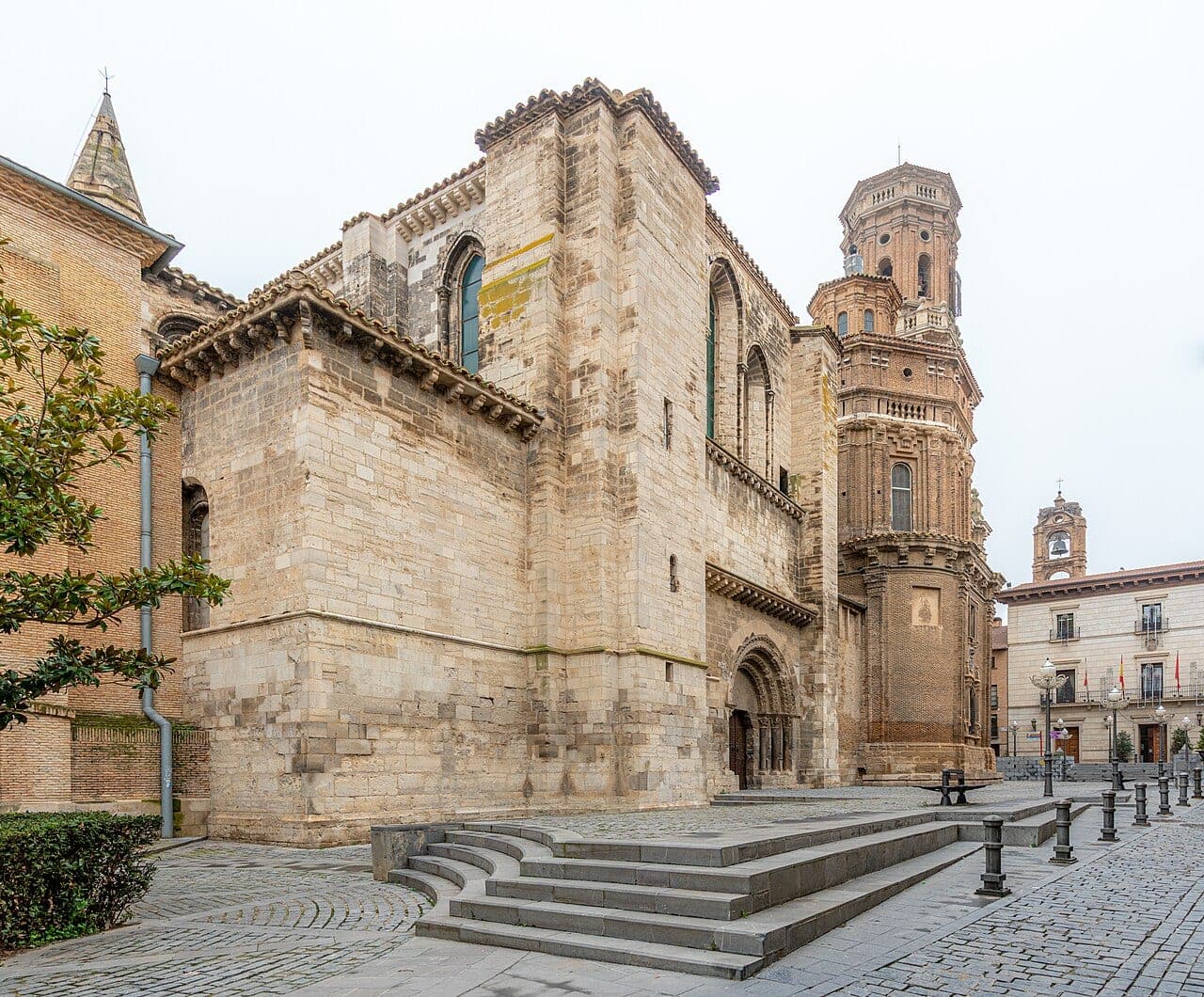 Cathedral
Tudela Cathedral of Santa María
A late Romanesque church of Cistercian inspiration built on the foundations of the Great Mosque, it stands at the heart of Tudela's old town and has been a national monument since 1884.
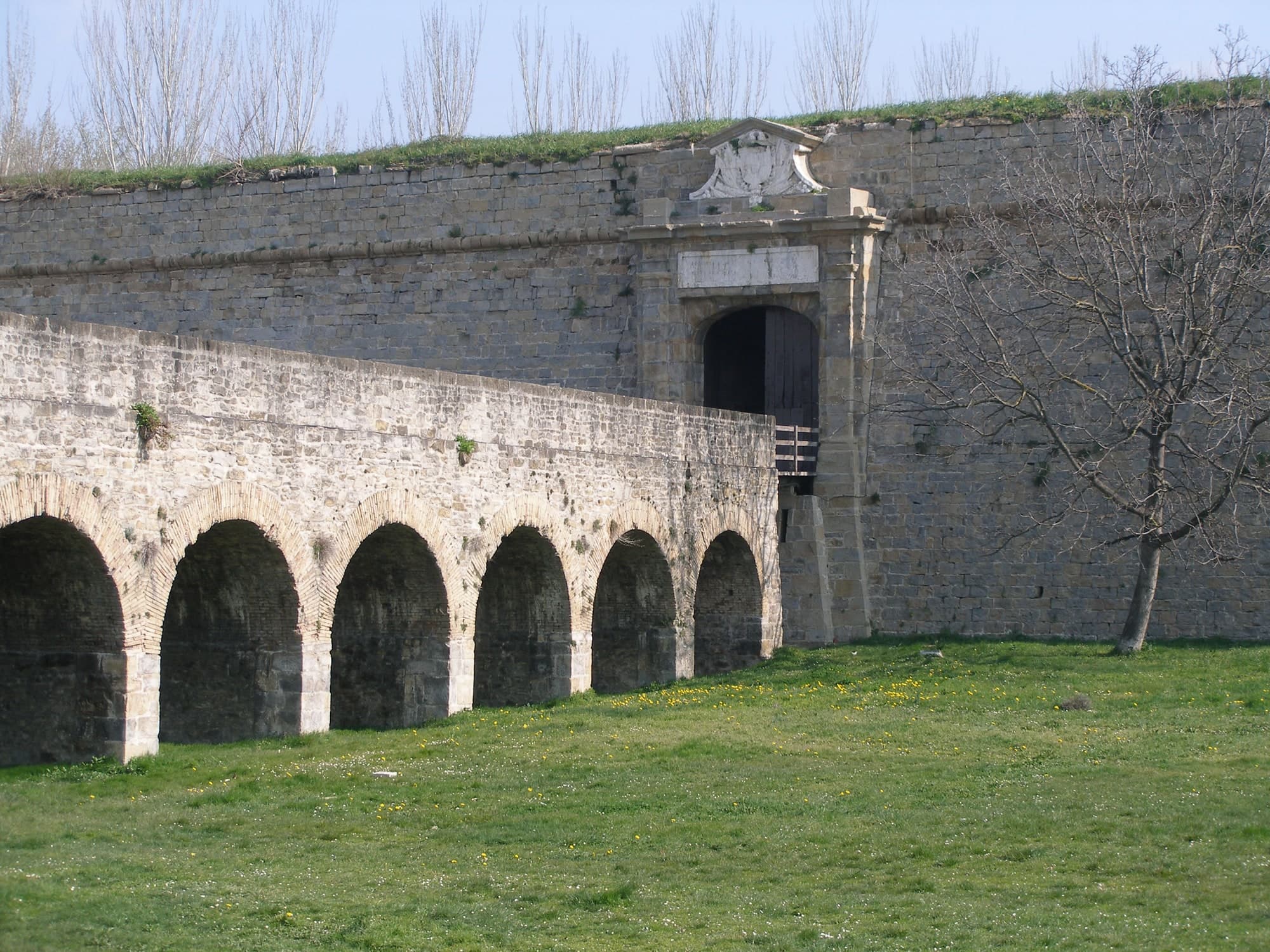 Citadel
Pamplona Citadel
A 16th- and 17th-century Renaissance fortress that is now a park and cultural venue, honoured by Europa Nostra and the jewel of Pamplona's defensive heritage.
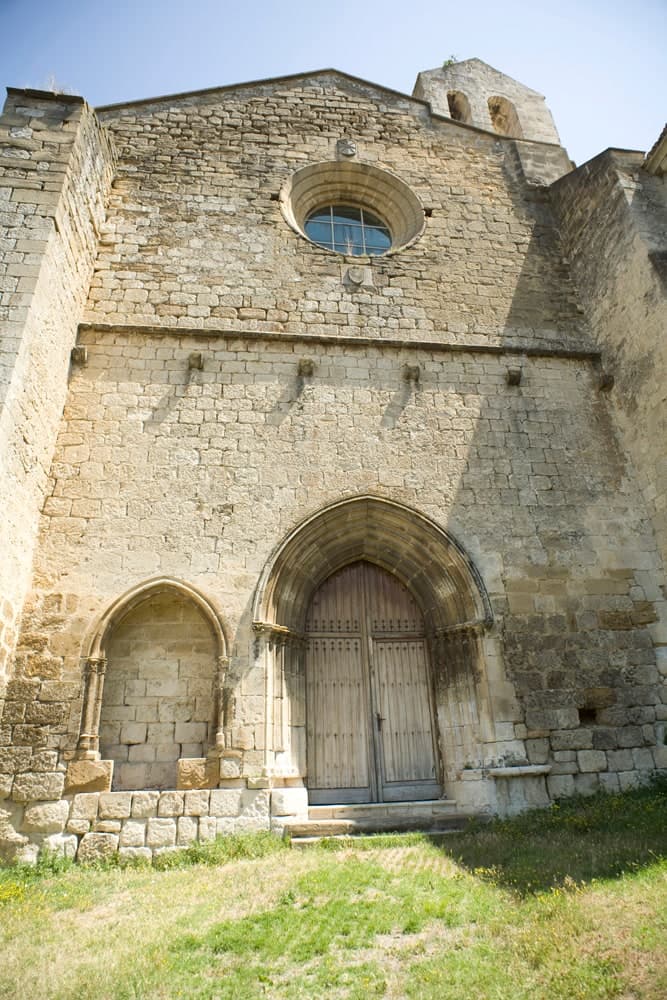 Monastery
Convent of Santo Domingo
A former convent in Estella standing on a hill beside the River Ega, in a commanding position that overlooks the whole of this Navarrese town.
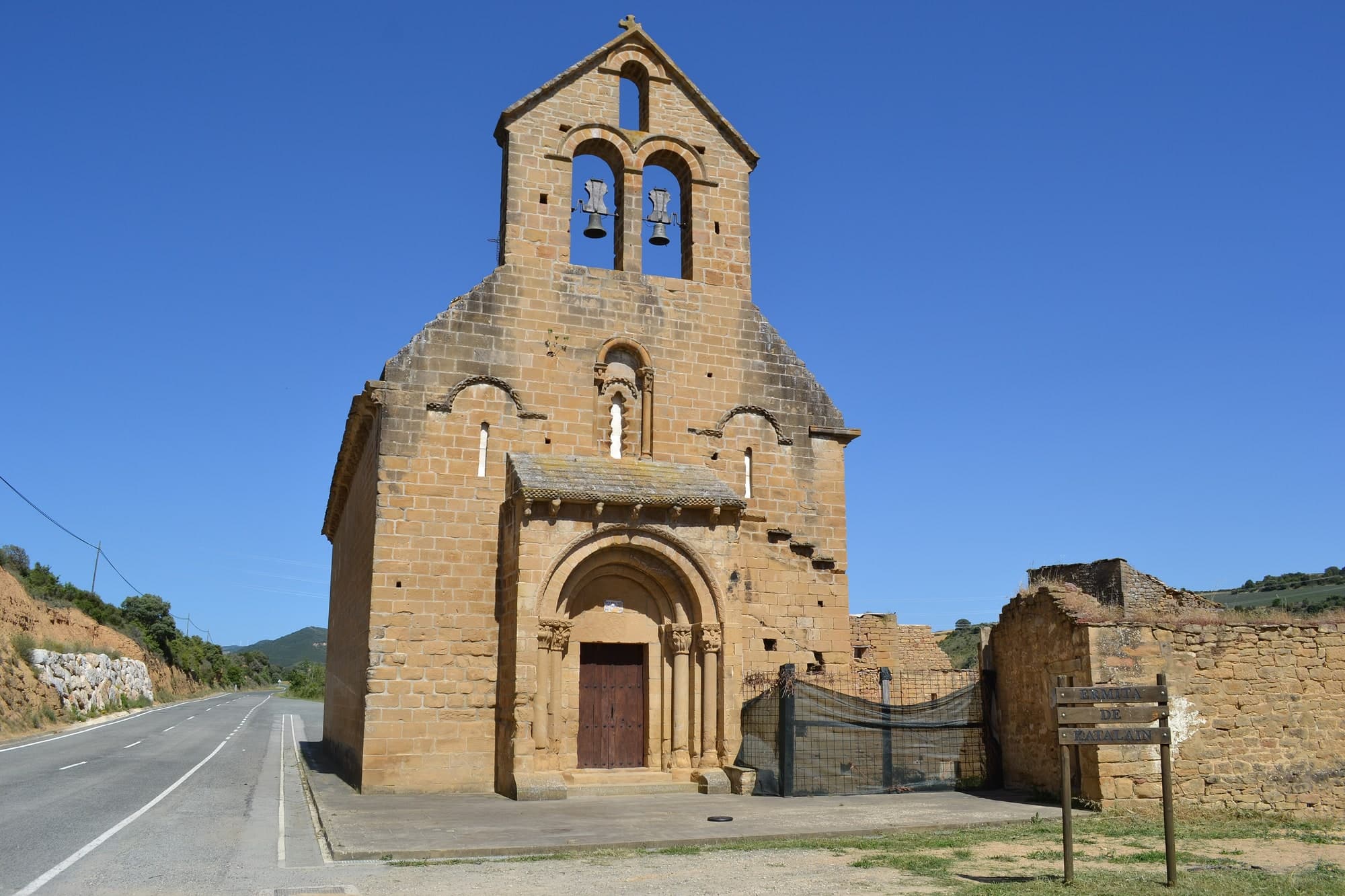 Hermitage
 of the Christ of Cataláin
Near Garínoain, this 12th-century Romanesque hermitage, which once belonged to Roncesvalles, still stands and remains in use as the last witness to an old Navarrese hamlet.
 Church
 of the Assumption (Olleta)
A mid-12th-century Romanesque church in Olleta, in the heart of the Valdorba, with a tower at its west end, a polygonal crossing tower and a deep semicircular apse.
 Church
 of San Lorenzo
Right in the heart of Pamplona's Old Town, this ancient parish church houses the 18th-century Chapel of San Fermín, the devotional heart of the city.
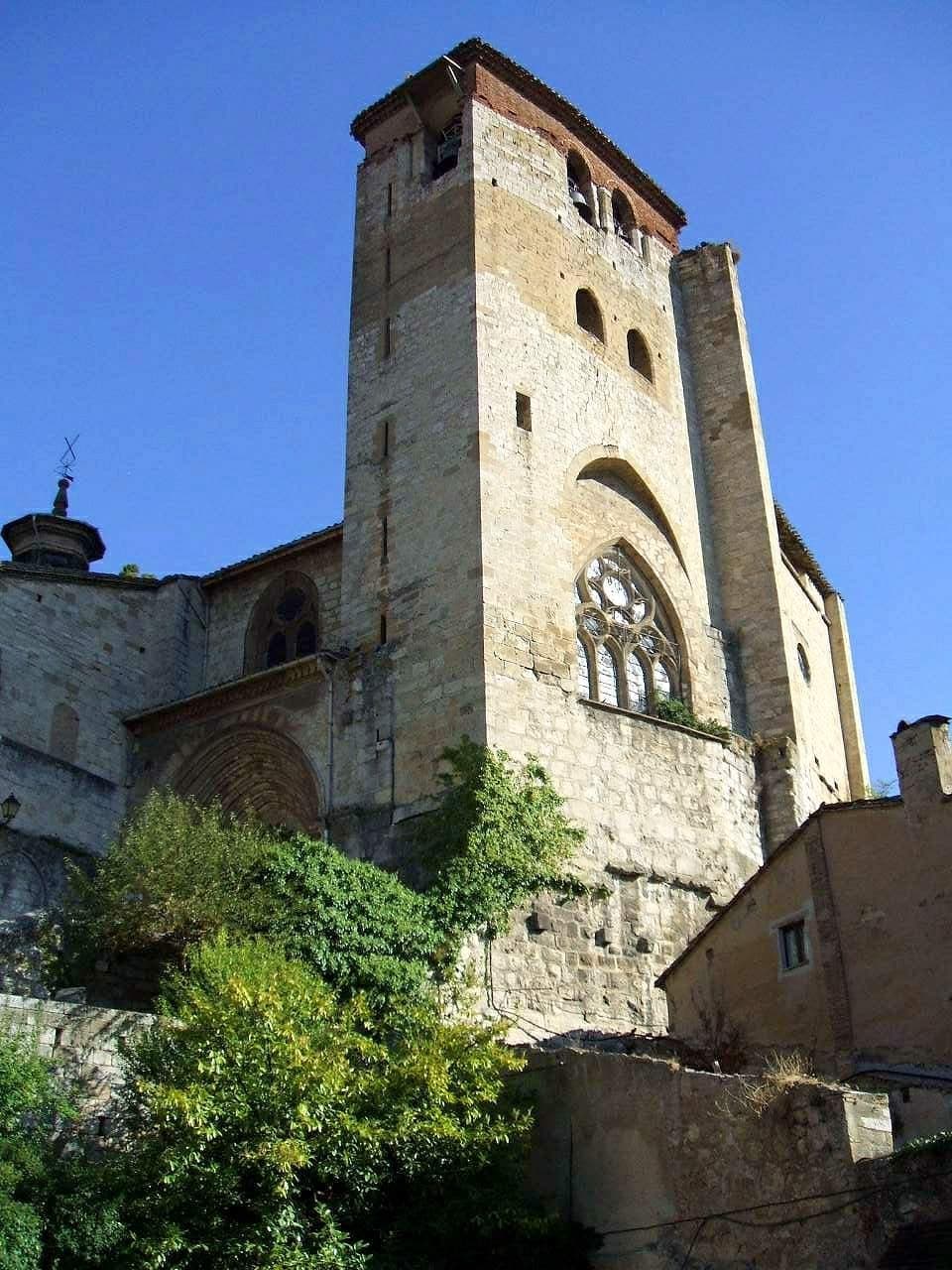 Church
 of San Pedro de la Rúa
Estella's principal church since 1256, with a Romanesque cloister dating from around 1170 whose capitals bear the artistic imprint of the Way of St James.
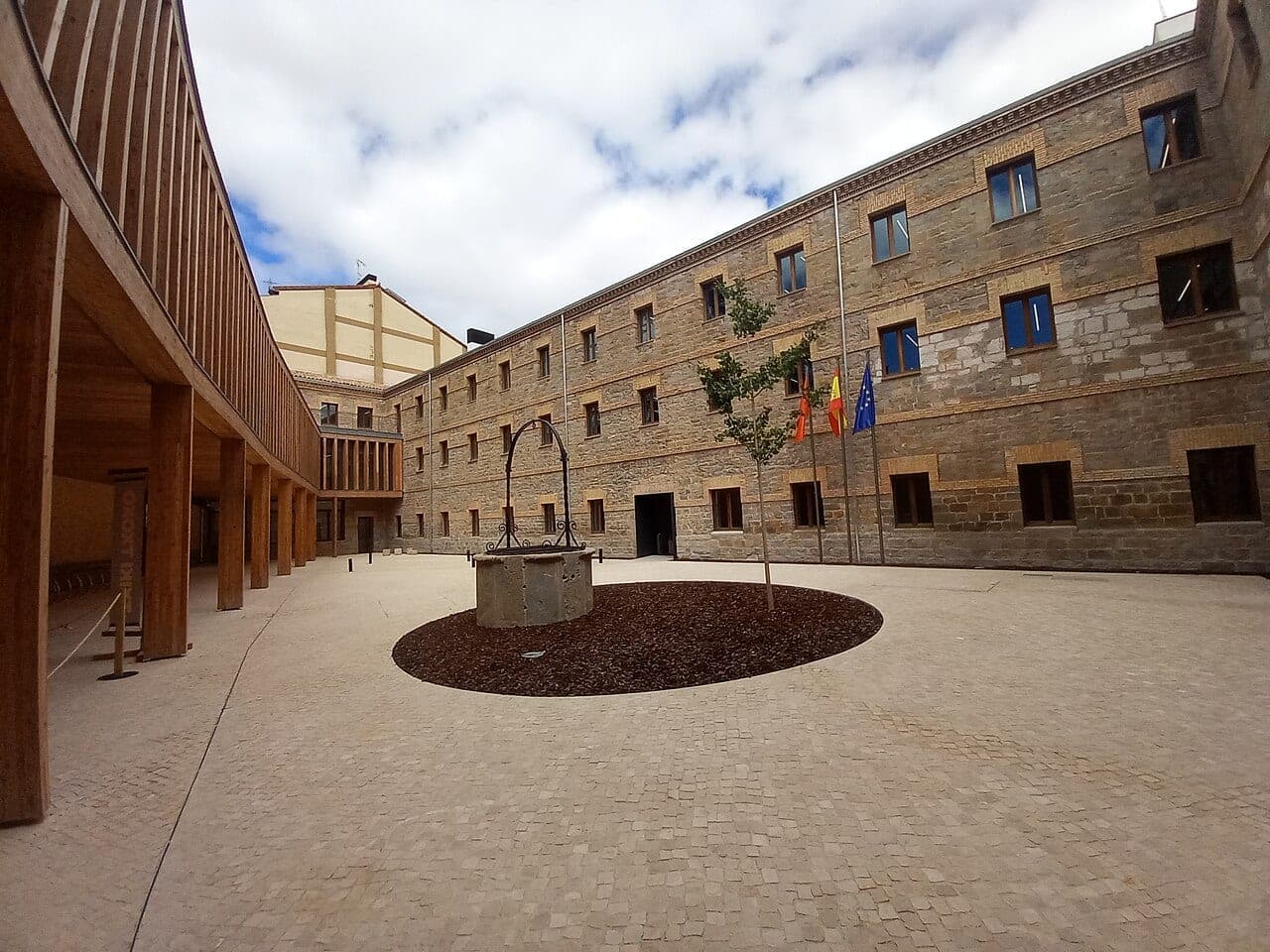 Monastery
Las Salesas, Pamplona
Former Monastery of the Visitation, built in 1902 by Florencio Ansoleaga in the heart of Pamplona's Old Town and given a new lease of life after the departure of the Salesian nuns.
 Monastery
 of Santa María la Real de la Oliva
The first Cistercian foundation in the Kingdom of Navarre, this 12th-century monastery in Carcastillo preserves one of the purest Cistercian ensembles in Spain, complete with monks and vineyards.
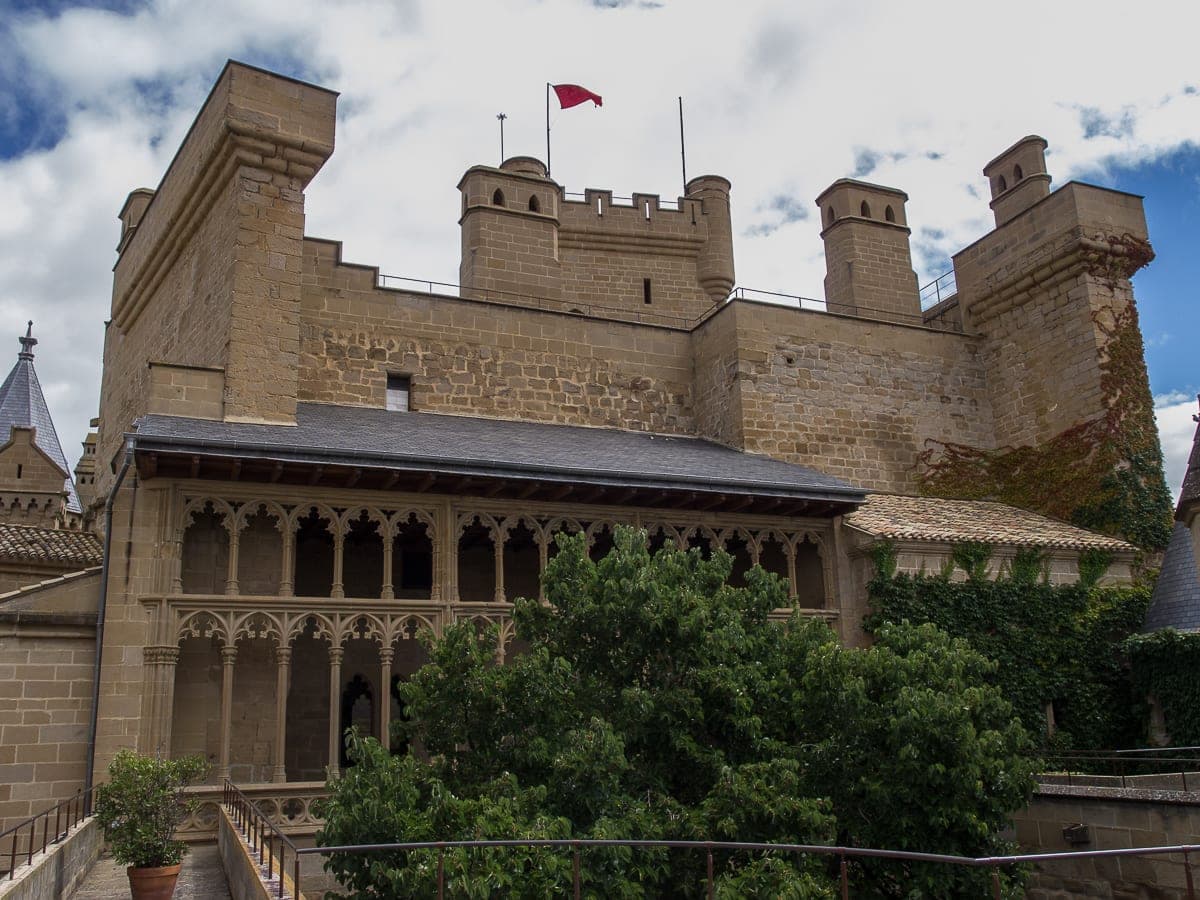 Castle
Royal Palace of Olite
The court seat of Charles III the Noble, the Royal Palace of Olite is one of the great jewels of Gothic civil architecture in Spain and in Europe.
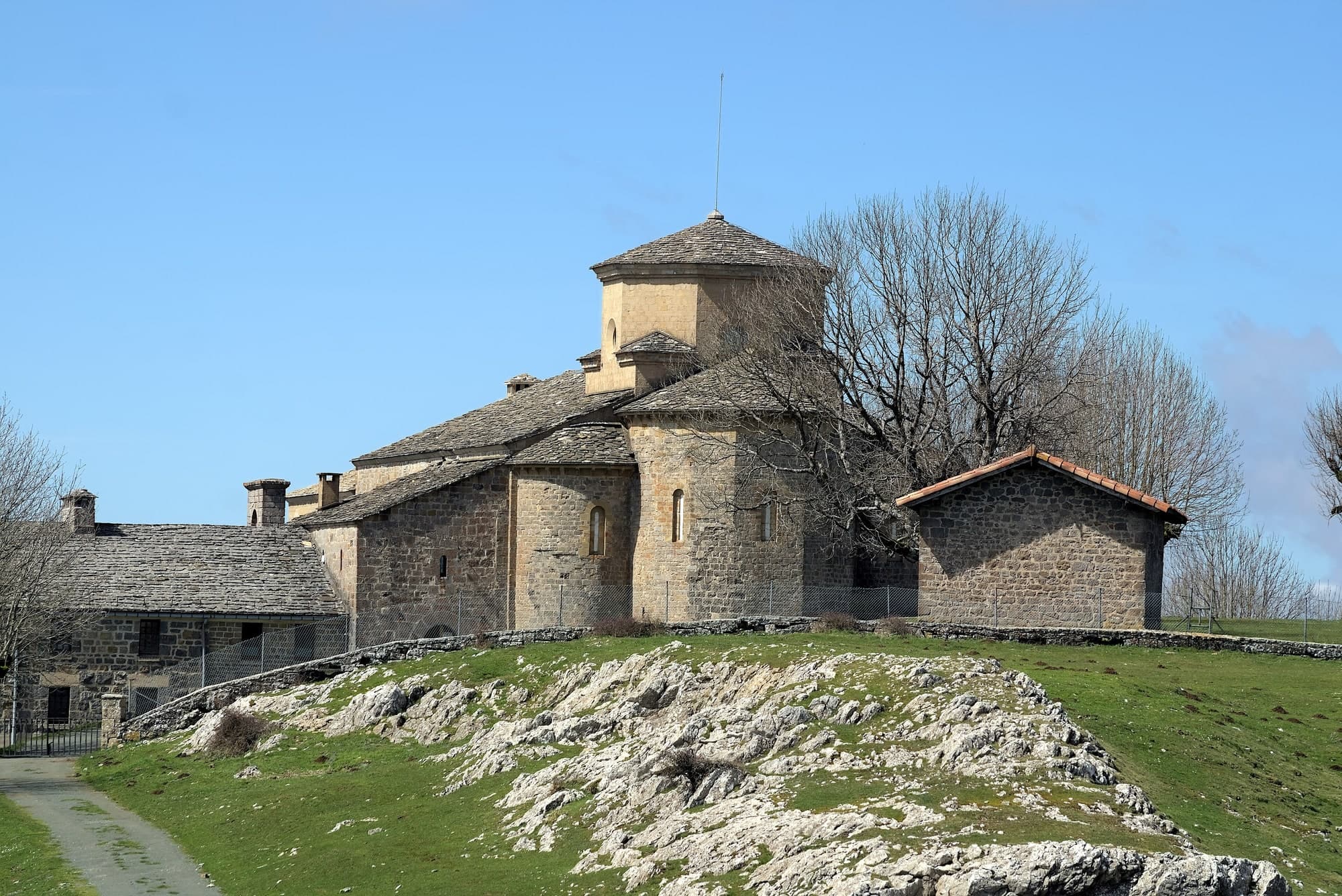 Shrine
Sanctuary of San Miguel de Aralar
High on Mount Putregain, at 1,265 metres, the Sanctuary of San Miguel de Aralar crowns a mountain range steeped in dolmens, Roman roads and centuries of devotion.
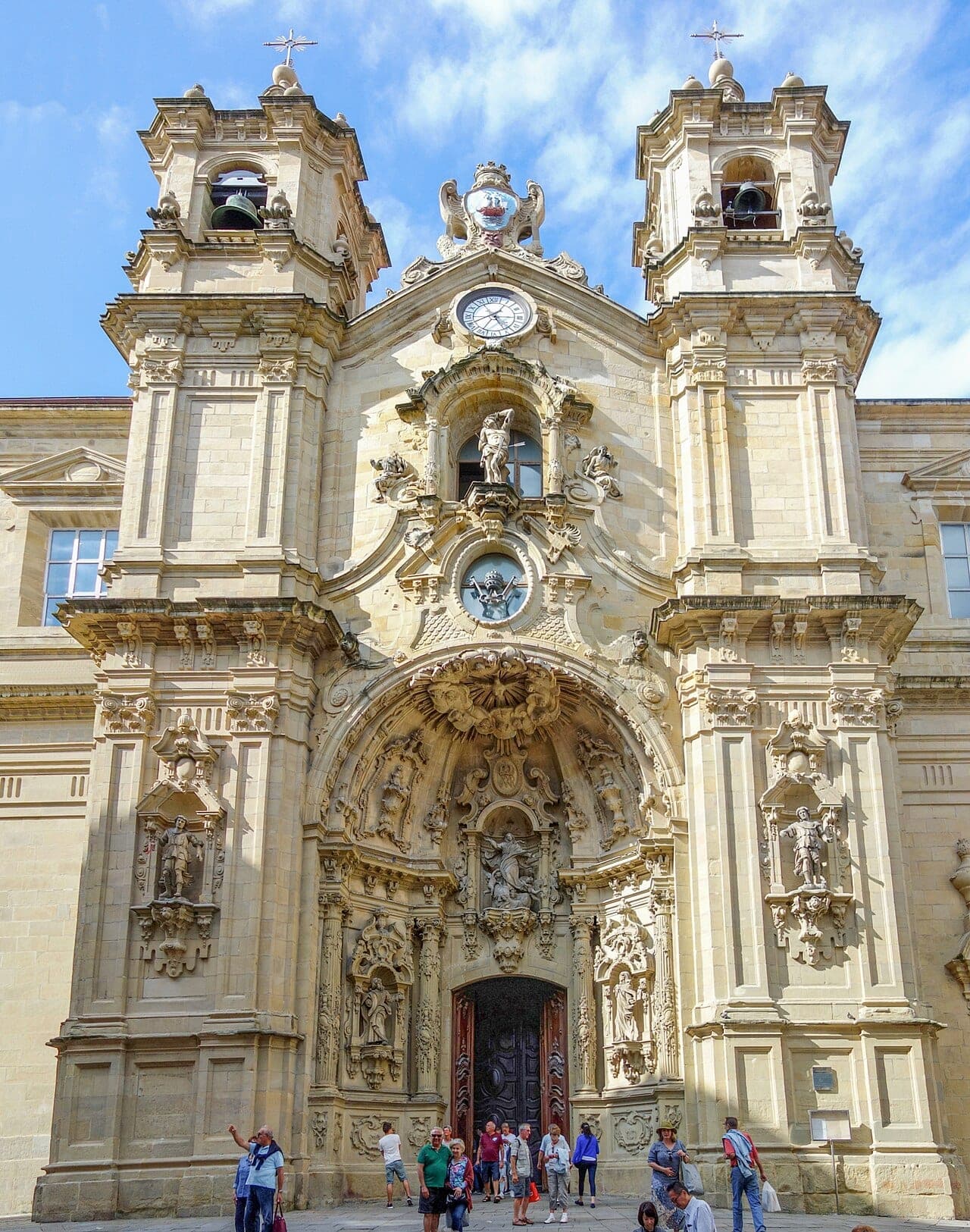 Church
Basilica of Santa María del Coro
A Baroque church completed in 1774 in San Sebastián's Old Town, with a doorway that looks like a stone altarpiece and a unique view towards the Cathedral of the Good Shepherd.
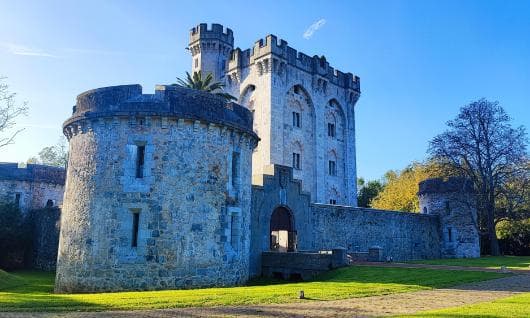 Castle
Arteaga Castle
A French-style Neo-Gothic castle in the heart of the Urdaibai estuary, built at the behest of Eugénie de Montijo for an imperial family that never came to live in it.
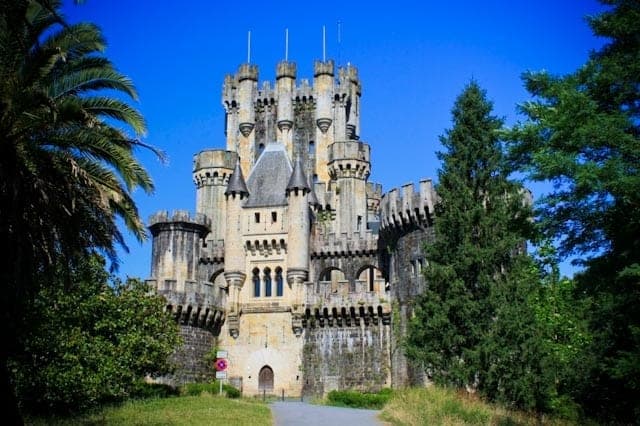 Castle
Butrón Castle
A Neo-Gothic fortress of medieval origin rising at the heart of a wooded estate in Gatica, a secluded spot that is nonetheless close to Bilbao.
 Cathedral
 of the Good Shepherd
San Sebastián's great neo-Gothic cathedral, the largest church in Gipuzkoa, whose soaring silhouette dominates the centre of the city.
 Cathedral
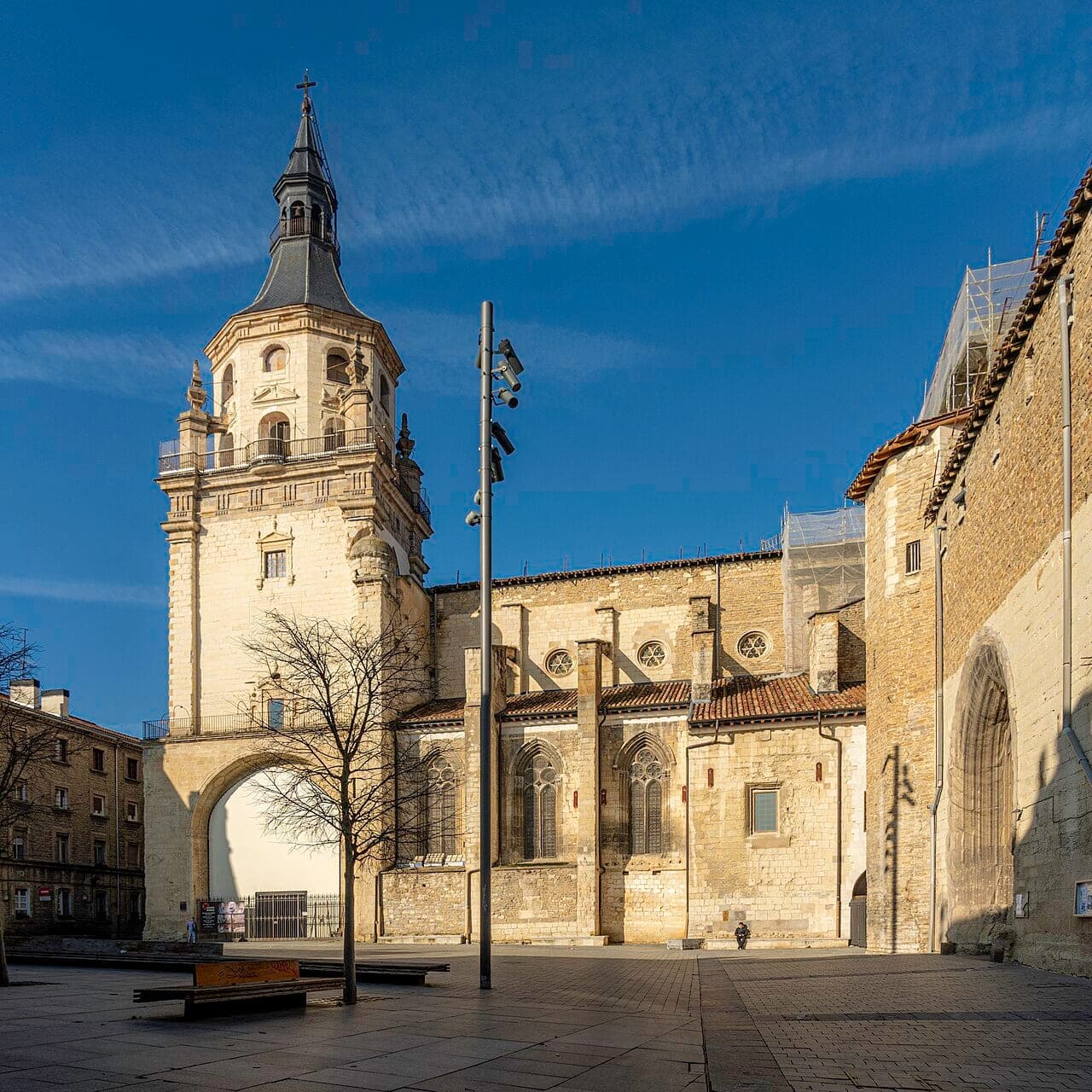
Old Cathedral of Vitoria
Vitoria's old cathedral, a Gothic church that has been a UNESCO World Heritage Site since 2015 as part of the Routes of Santiago de Compostela in Northern Spain.
 Hermitage
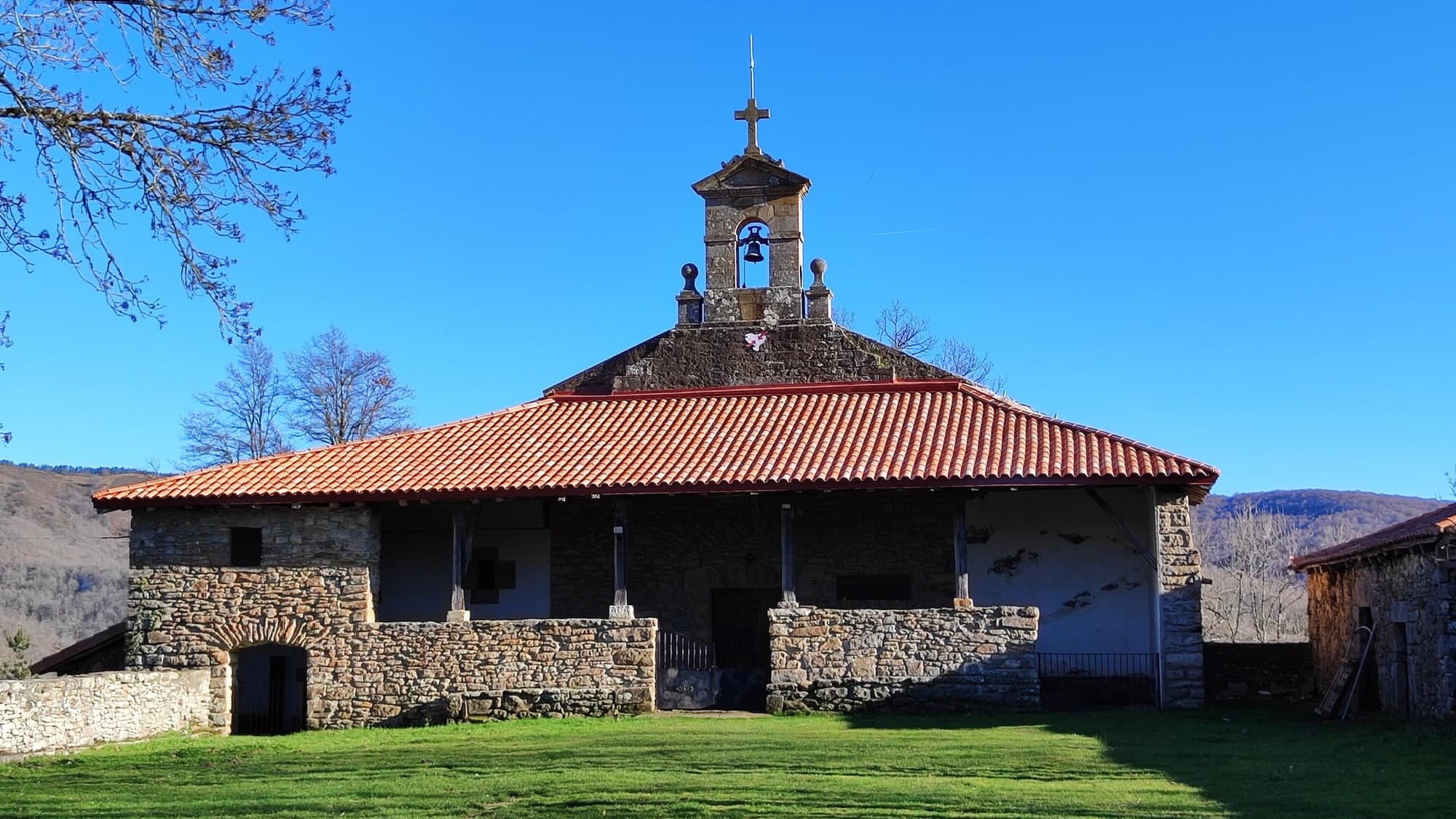
Garrastatxu Hermitage
The Sanctuary of Our Lady of Mercy in Barambio, a small church built in 1626 that invites you to explore the rural landscape of Amurrio.
 Hermitage
 of Our Lady of Elizmendi
A Romanesque hermitage on the outskirts of Contrasta, in the Arana Valley in Álava: a small destination for anyone seeking unpretentious heritage far from the busiest routes.
 Hermitage
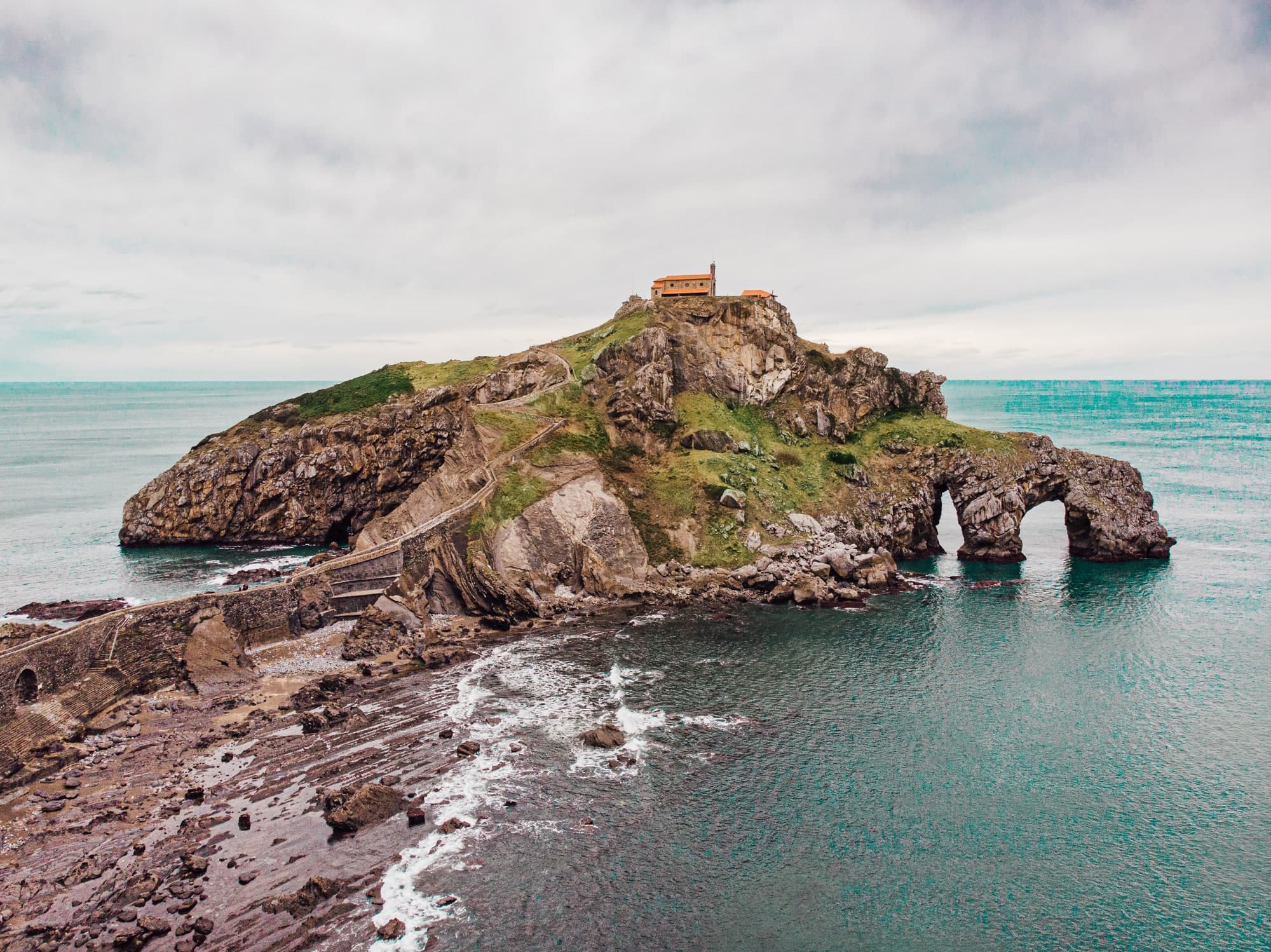
 of San Juan de Gaztelugatxe
A hermitage dedicated to St John crowns an islet battered by the Bay of Biscay, linked to the mainland by a two-arched bridge: medieval history and protected landscape just off Bermeo.
 Hermitage
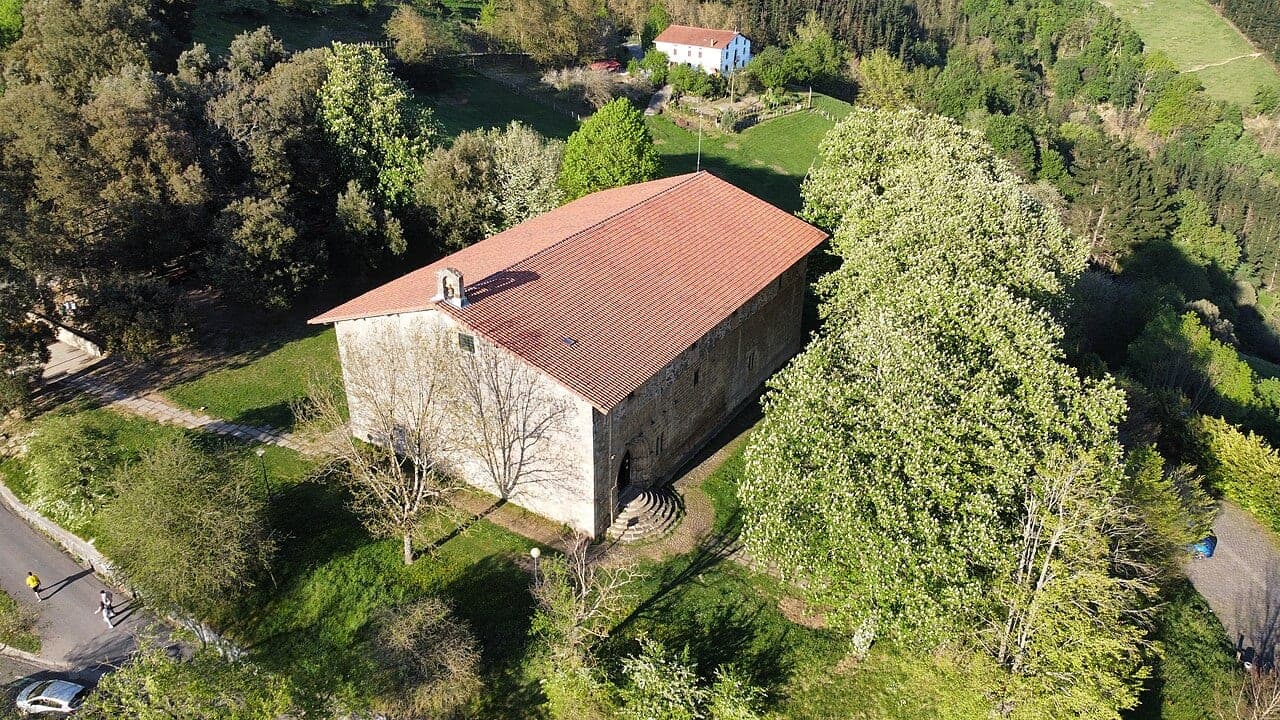
 of Santa María de la Antigua
On the slopes of Mount Beloki, above Zumárraga, this Romanesque and Gothic hermitage holds an astonishing oak structure assembled without a single nail: the cathedral of Basque hermitages.
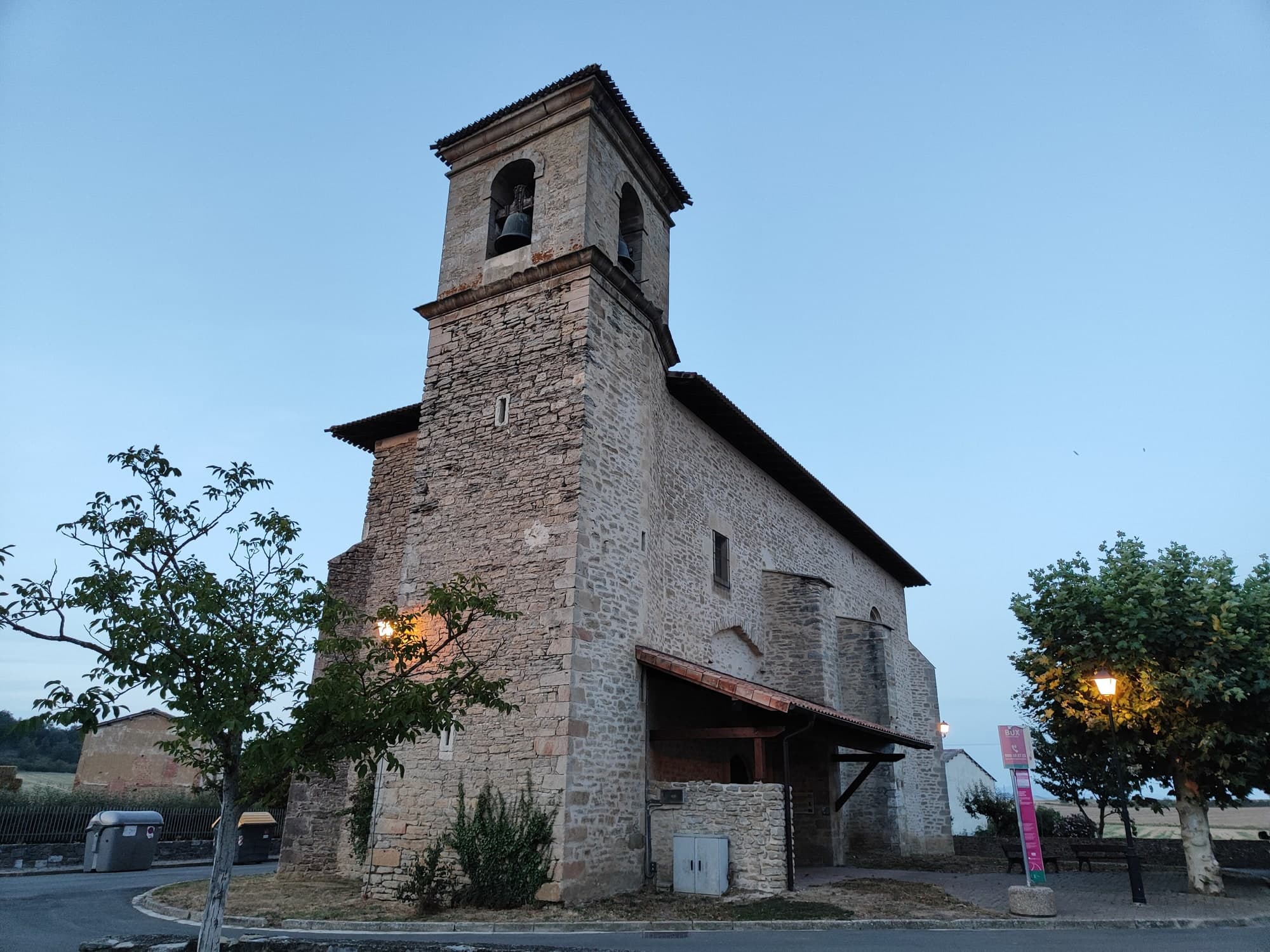 Church
 of San Andrés Apóstol
A Catholic church dedicated to Saint Andrew the Apostle in Villafranca de Estíbaliz, a small Alavese concejo within the municipality of Vitoria – ideal for a quiet stop.
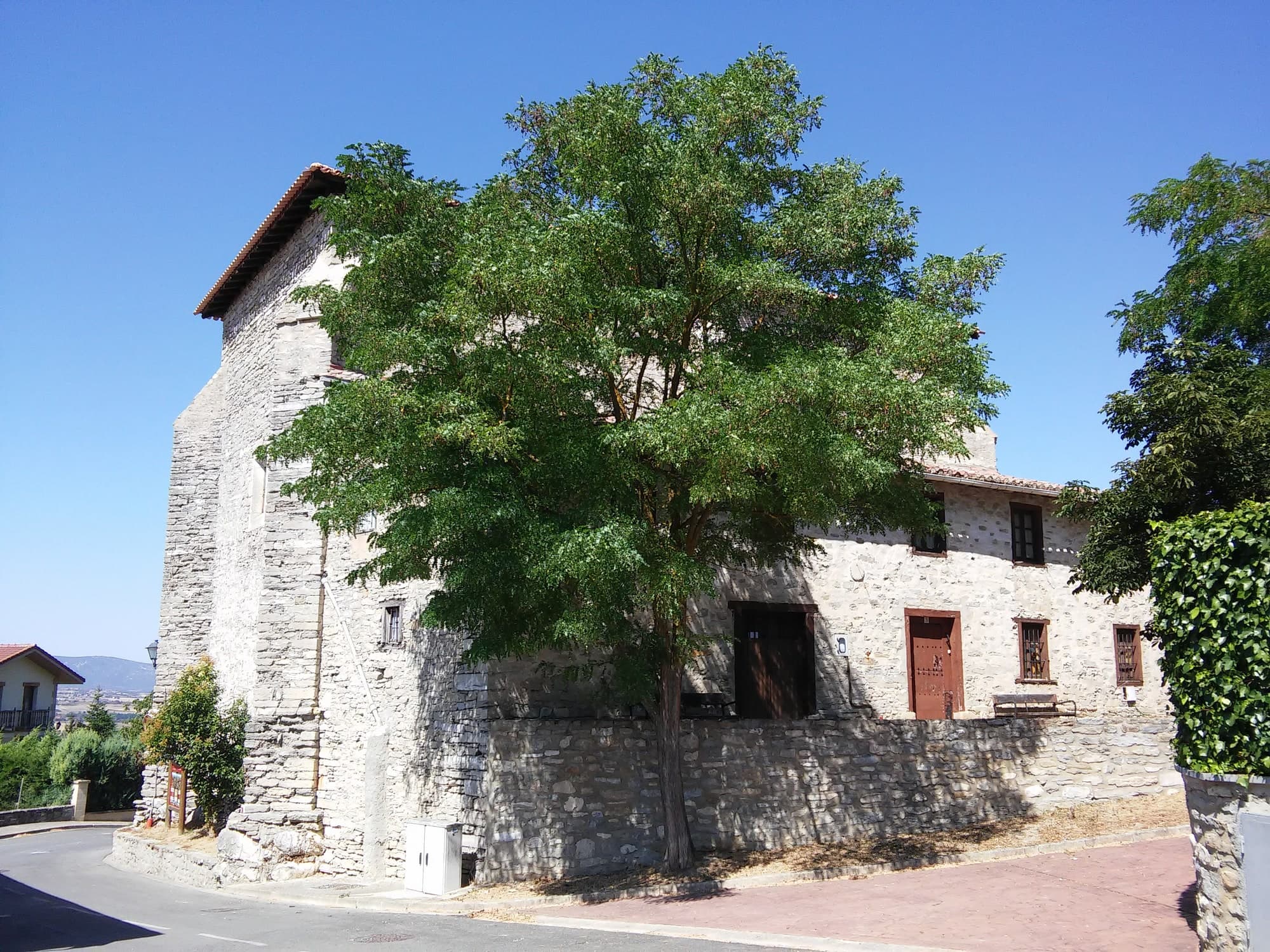 Church
 of San Esteban
A Catholic church dedicated to Saint Stephen in Subijana de Álava, a concejo within the municipality of Vitoria that invites you to discover rural Álava just a few kilometres from the capital.
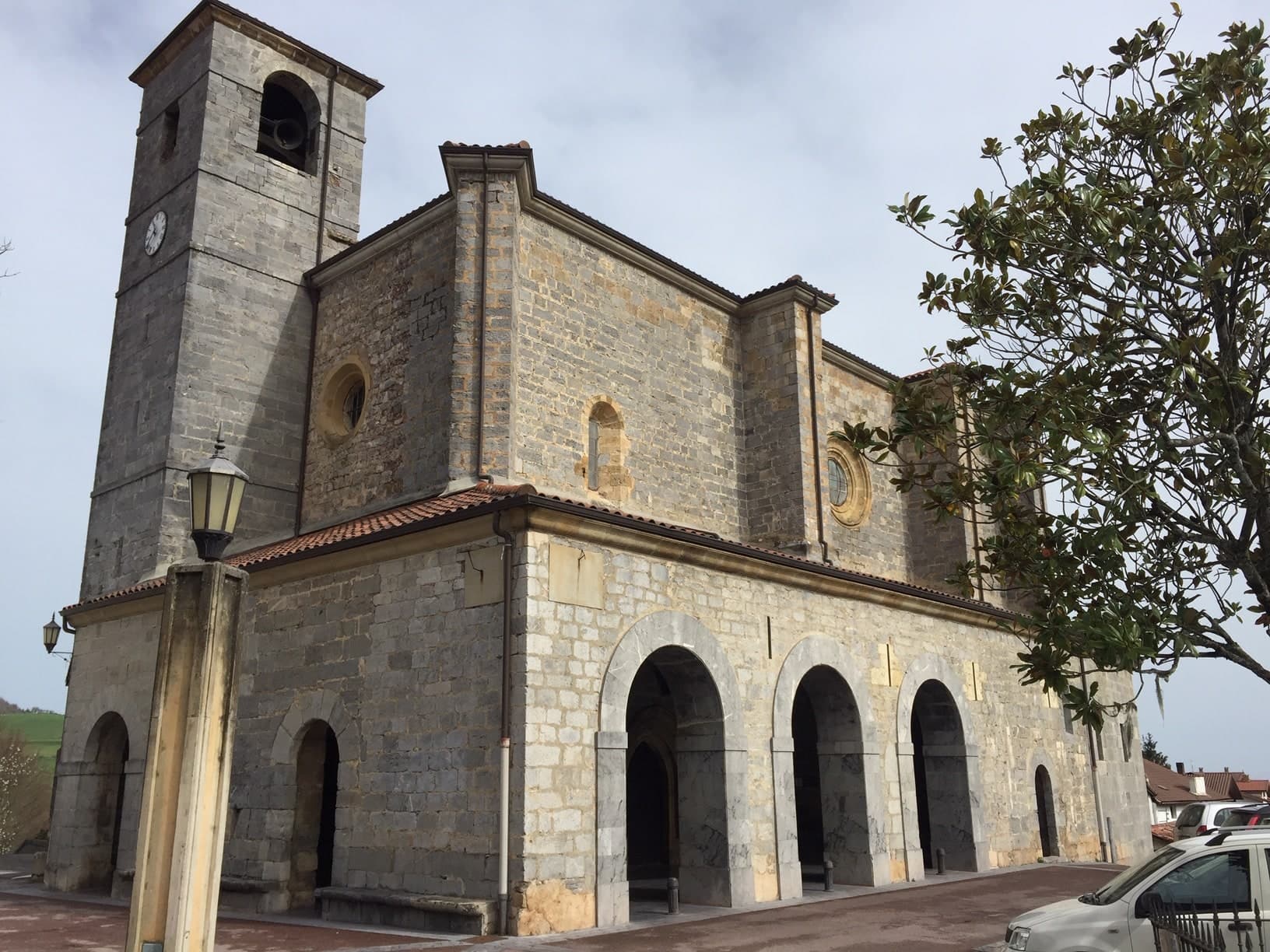 Church
 of San Martín de Tours
The Church of San Martín de Tours, in the Gipuzkoan village of Alkiza, is a peaceful stop for anyone exploring the religious heritage of the Basque Country.
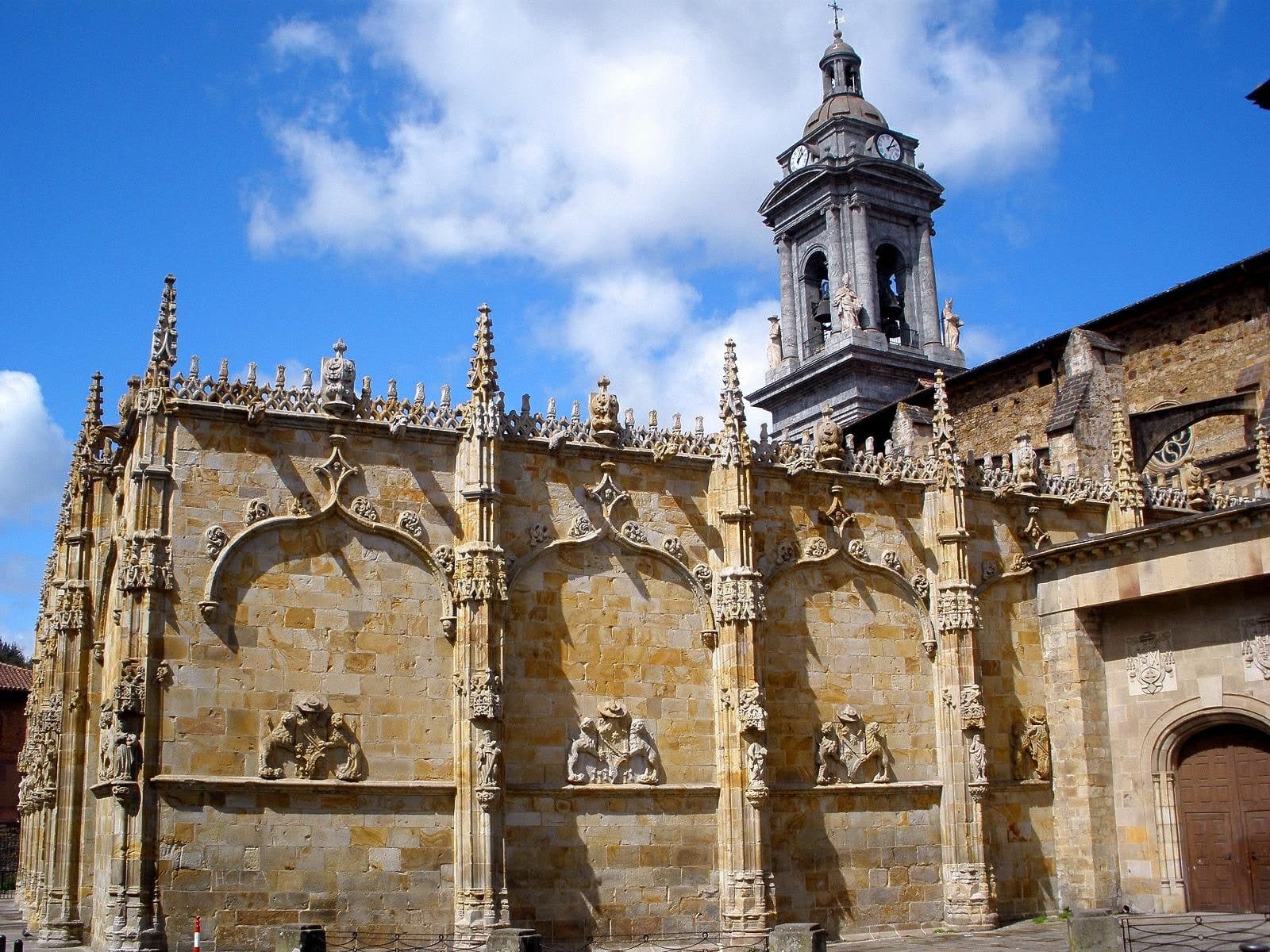 Church
 of San Miguel Arcángel
A Gothic church in Oñati that houses the Renaissance Pietà altarpiece, one of the finest in the Basque Country, and an unusual cloister with a river running through its courtyard.
 Church
 of San Pedro, Zumaia
The Church of San Pedro is one of the buildings that give Zumaia its character, a simple yet evocative stop for anyone exploring the Gipuzkoa coast.
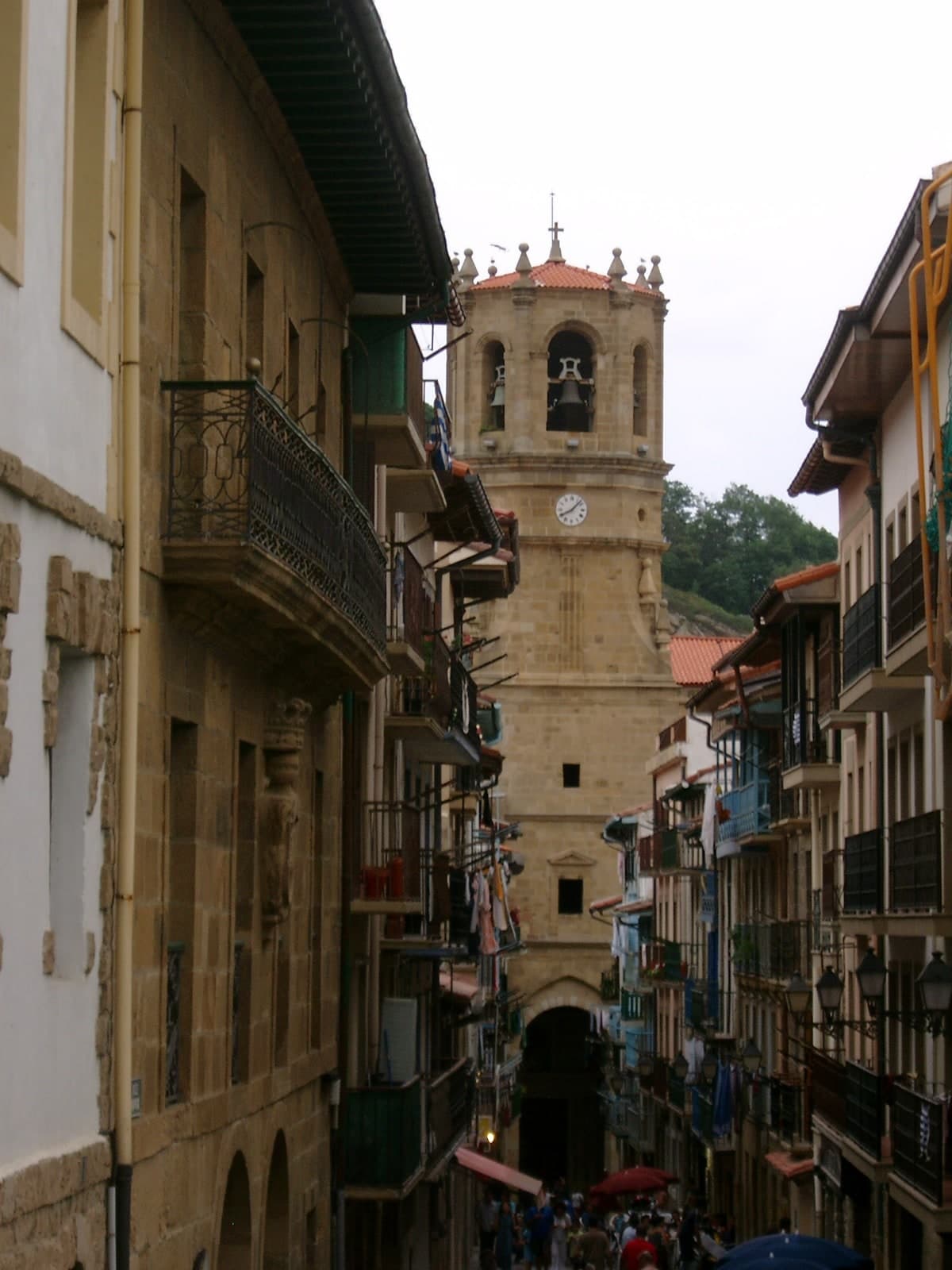 Church
 of San Salvador
A Gothic church in Getaria where the first General Assemblies of Gipuzkoa met, with floors on different levels, a splendid triforium and a passageway leading down to the harbour.
 Church
St Eulalia's Church
A church dedicated to St Eulalia in Berrosteguieta, a small concejo within the municipality of Vitoria-Gasteiz, ideal for a peaceful outing into the countryside around the capital of Álava.
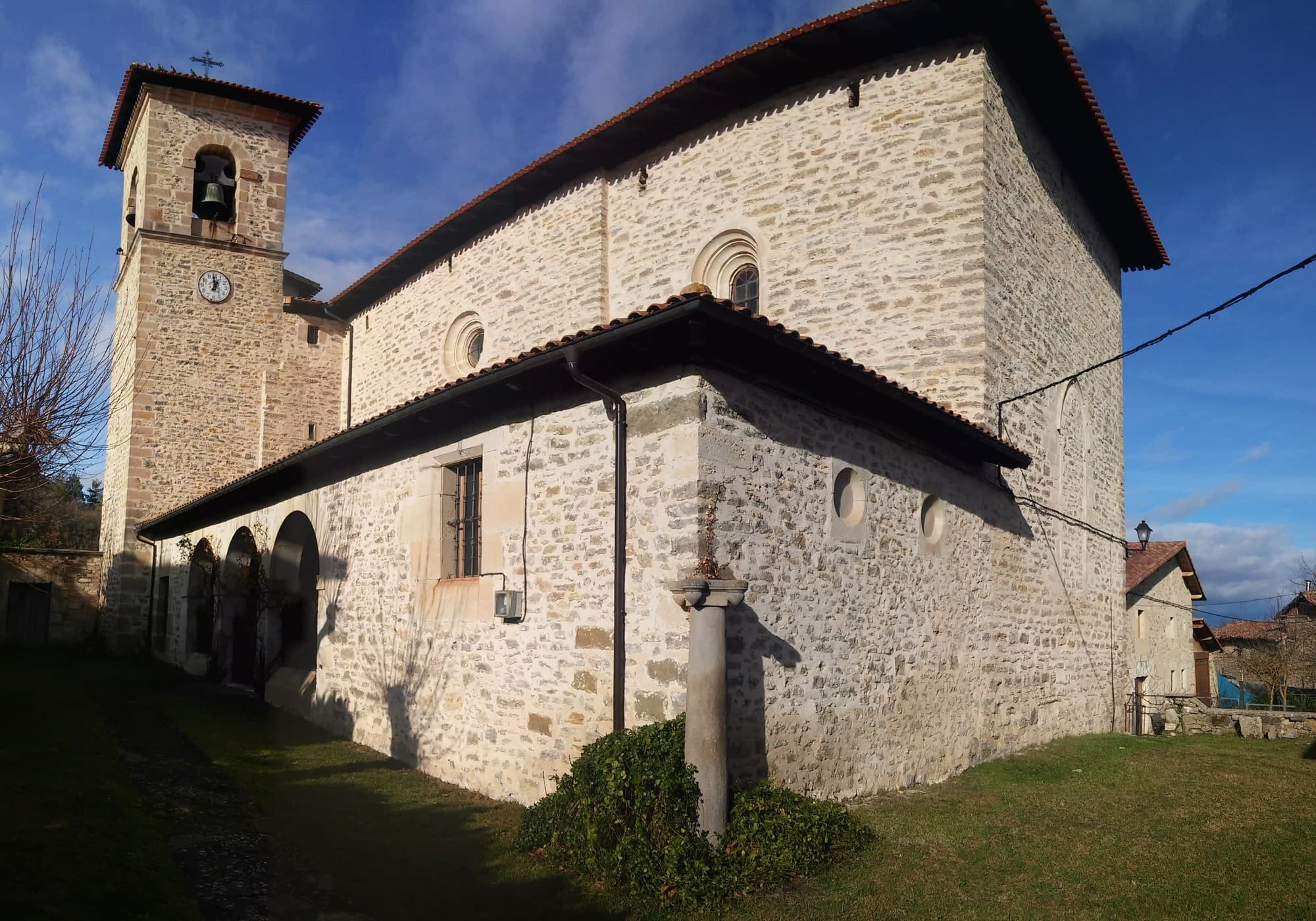 Church
 of Santa Eulalia de Mérida
A church dedicated to Saint Eulalia of Mérida in Gámiz, one of the small rural districts within the municipality of Vitoria – a good excuse to leave the city behind and head out into the Álava countryside.
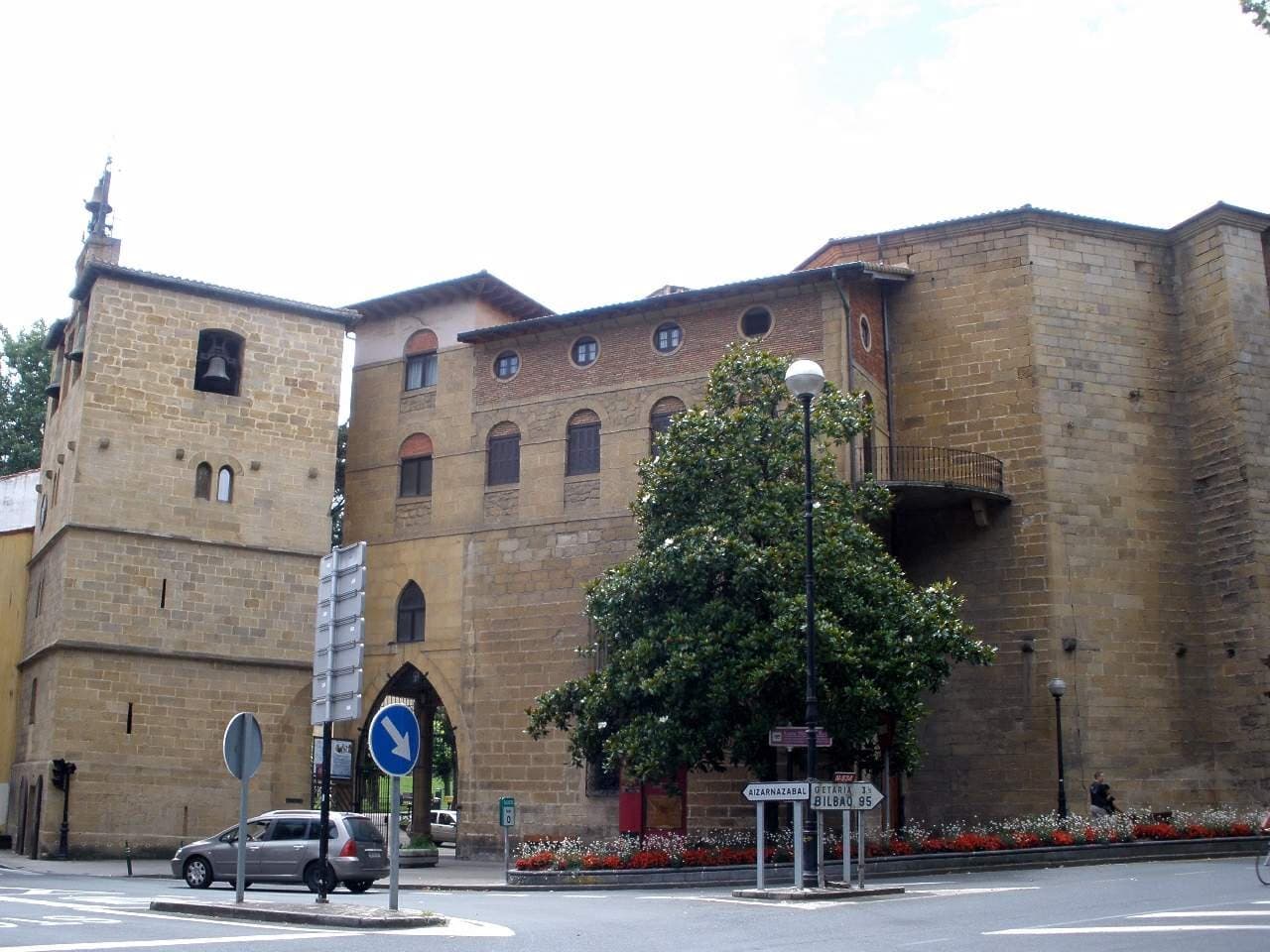 Church
 of Santa María la Real (Zarautz)
A 15th-century Gothic church at the entrance to Zarautz, with a remarkable main altarpiece and a monumental complex that holds the town's first necropolis.
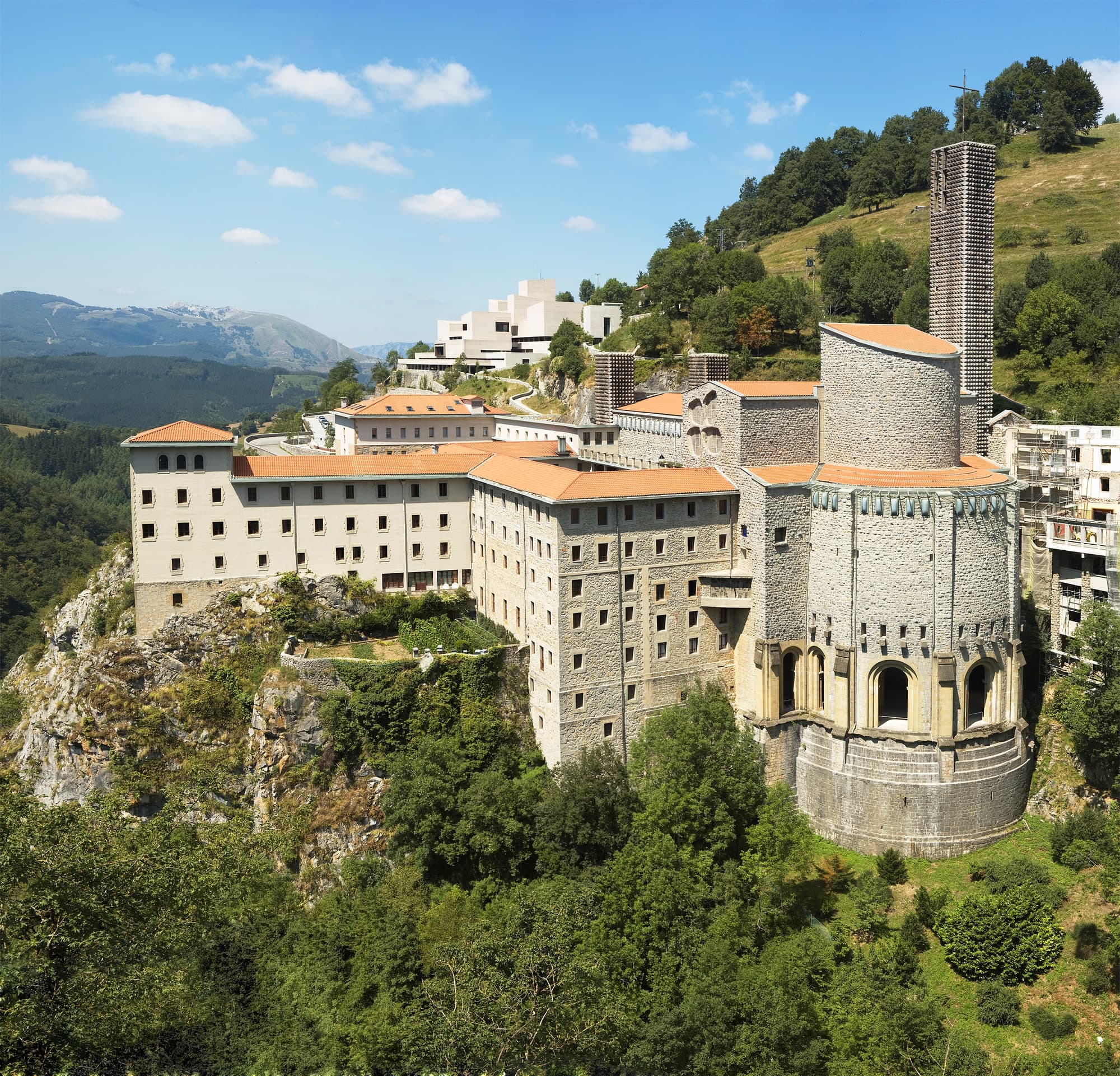 Shrine
Sanctuary of Arantzazu
A Marian sanctuary perched 750 metres up among the mountains of Oñati, with a 1950s basilica that has become a gem of modern art and a focus of faith for the whole of Gipuzkoa.
 Shrine
Sanctuary of Our Lady of Estíbaliz
A renowned Marian sanctuary in Argandoña, on the doorstep of Vitoria, declared a historic-artistic monument in 1931 and today a site of cultural interest (bien de interés cultural) in Álava.
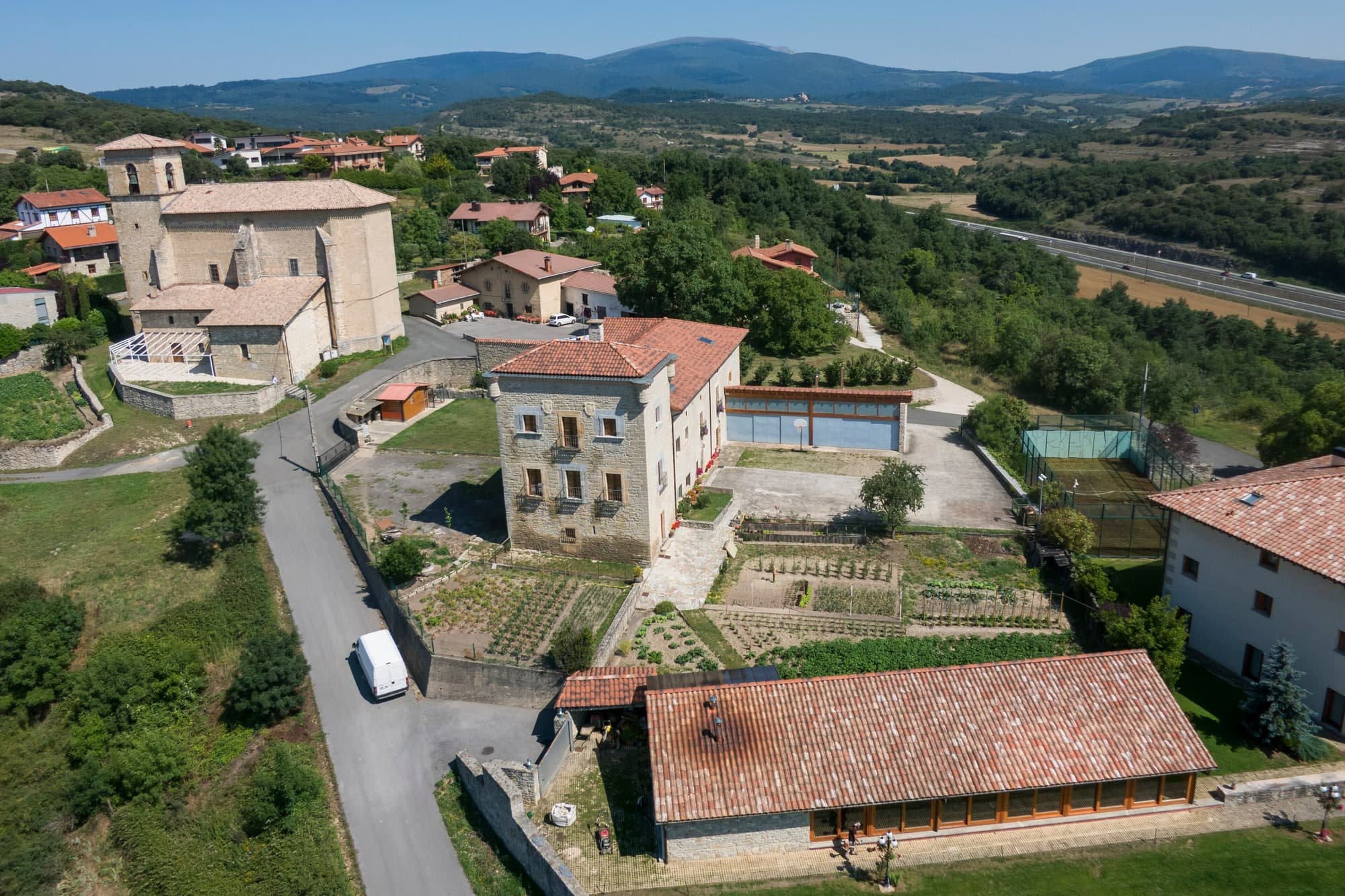 Castle
Letona Tower
In the Álava hamlet of Letona, a prestige tower from the late 16th or early 17th century which, together with the palace of the López de Letona family, speaks more of lineage than of warfare.
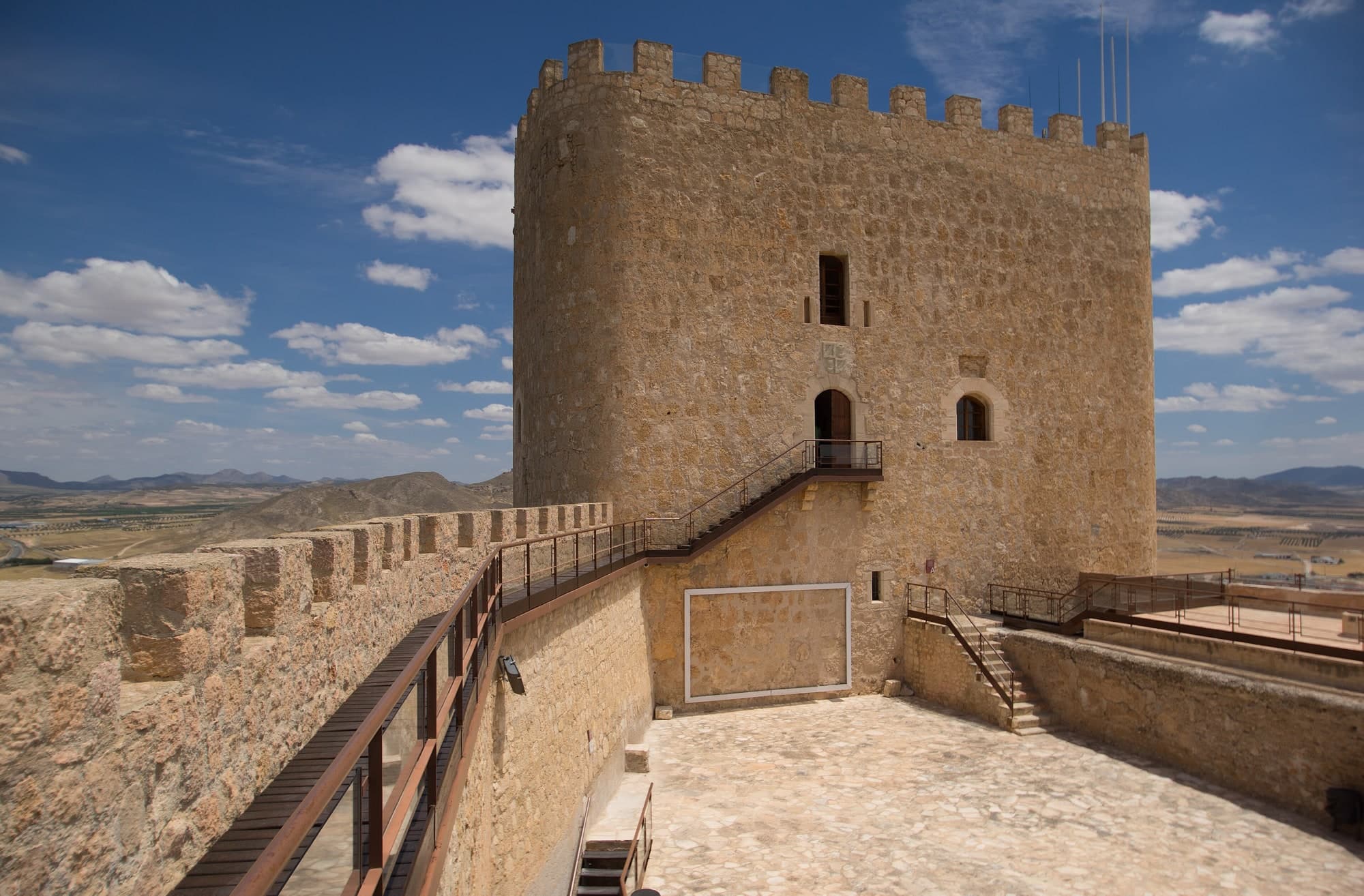 Castle
Jumilla Castle
A medieval fortress perched on a hill above Jumilla, bearing Moorish and Christian traces on a site inhabited since prehistoric times and now a symbol of the town.
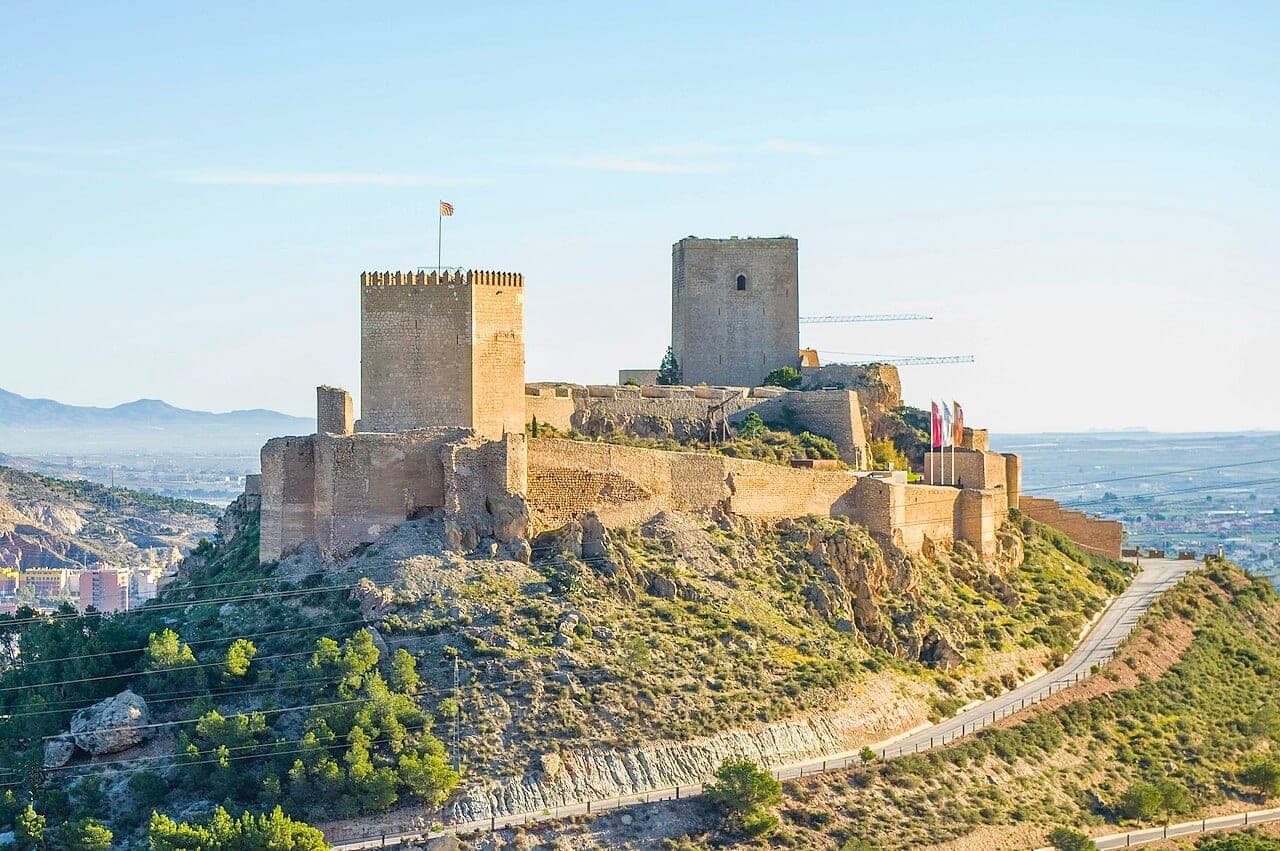 Castle
Lorca Castle
One of the largest fortresses in Spain, built between the 9th and 15th centuries and a key stronghold on the frontier with the Kingdom of Granada.