

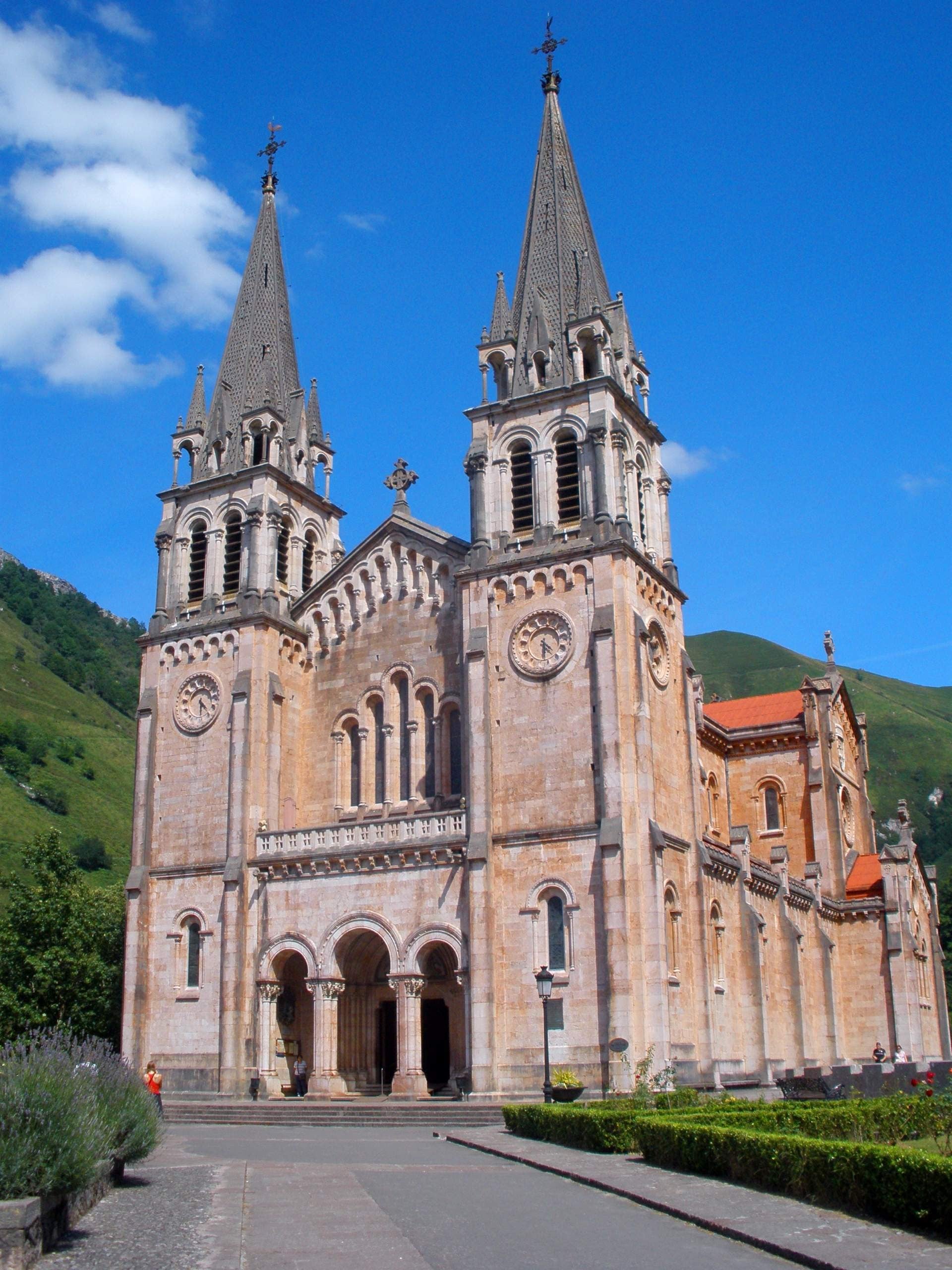
Basilica of Covadonga
Description
The first thing that strikes you on arriving at the Basilica of Santa María la Real in Covadonga is the colour of its walls. The entire building is constructed from pink limestone, a material that lends it a warm and highly distinctive hue and makes simply admiring it one of the great attractions of a visit, whether close up or from a distance.
This is a Neo-Romanesque church, in other words a building that revived the forms of medieval Romanesque art in the midst of the 19th century. It is worth noting how this inspiration from the past combines with the uniformity of the material, which gives the whole a remarkable coherence: there is no mixture of stones or periods, but rather a project conceived all at once.
The story of its construction goes a long way towards explaining this character. The idea came from Roberto Frassinelli, who devised the church, while the work itself was carried out by the architect Federico Aparici y Soriano. Construction went on for almost a quarter of a century, from 1877 to 1901, a timescale that gives some idea of the effort required to raise a building of this kind.
In the same year that the work was completed, ecclesiastical recognition followed: on 11 September 1901 it was declared a minor basilica, a title that distinguishes certain churches for their significance. Today it remains an active place of Catholic worship, so anyone who makes the journey will find not just a monument but a living space.
For the traveller, Santa María la Real offers the chance to linger over a singular example of late 19th-century architectural historicism in Asturias, and to see how the choice of a single stone can entirely define a building's personality.
Routes that include this monument
Community photos
Log in to upload your photos of this monument.
Best time to visit
From May to September, to avoid the more frequent rain of the rest of the year.
Location
Similar monuments
 Church
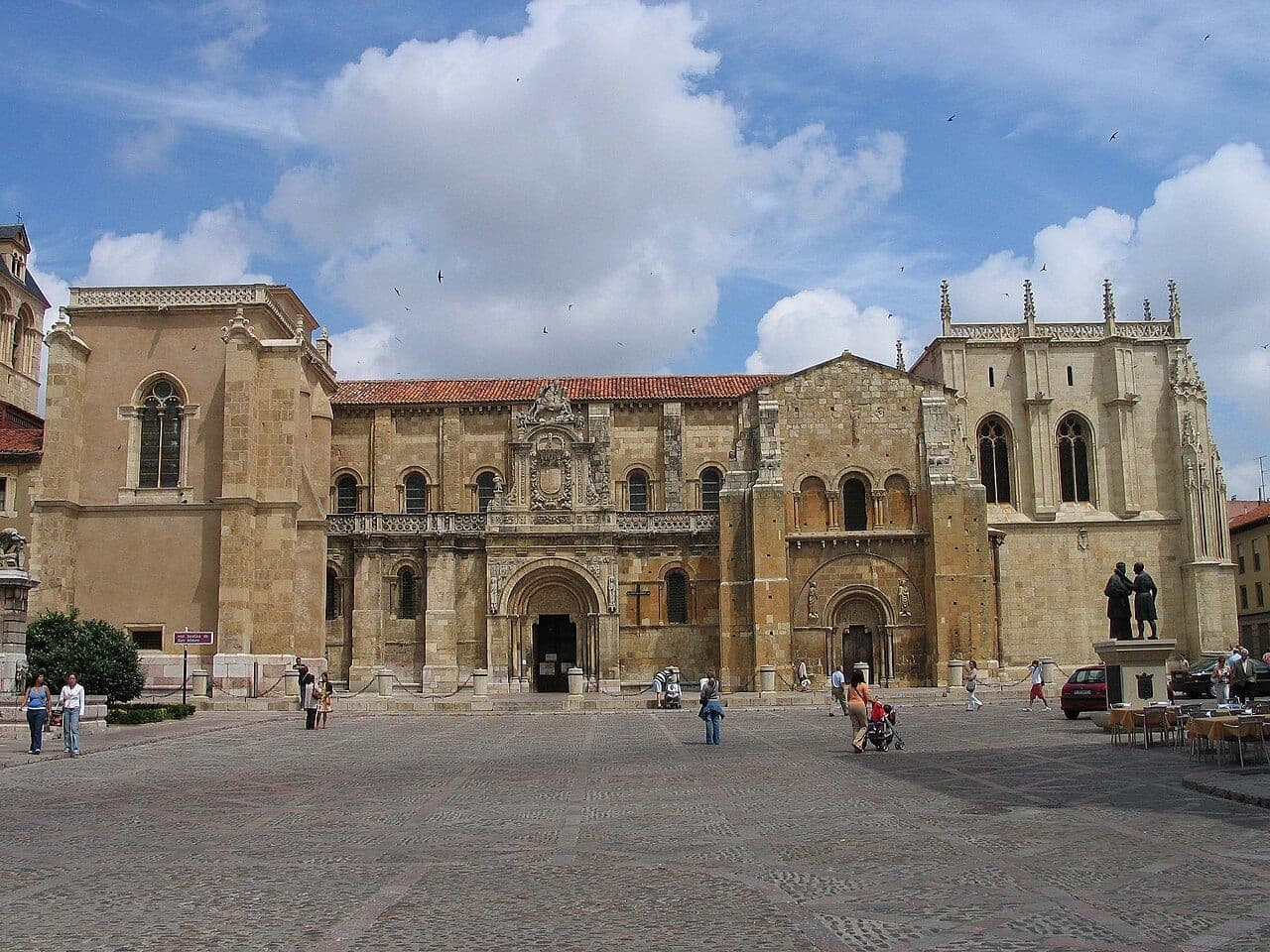
Royal Collegiate Church of San Isidoro, León
A jewel of Spanish Romanesque, San Isidoro in León houses a Royal Pantheon with original mural paintings and capitals that make it a unique piece of its era.
 Church
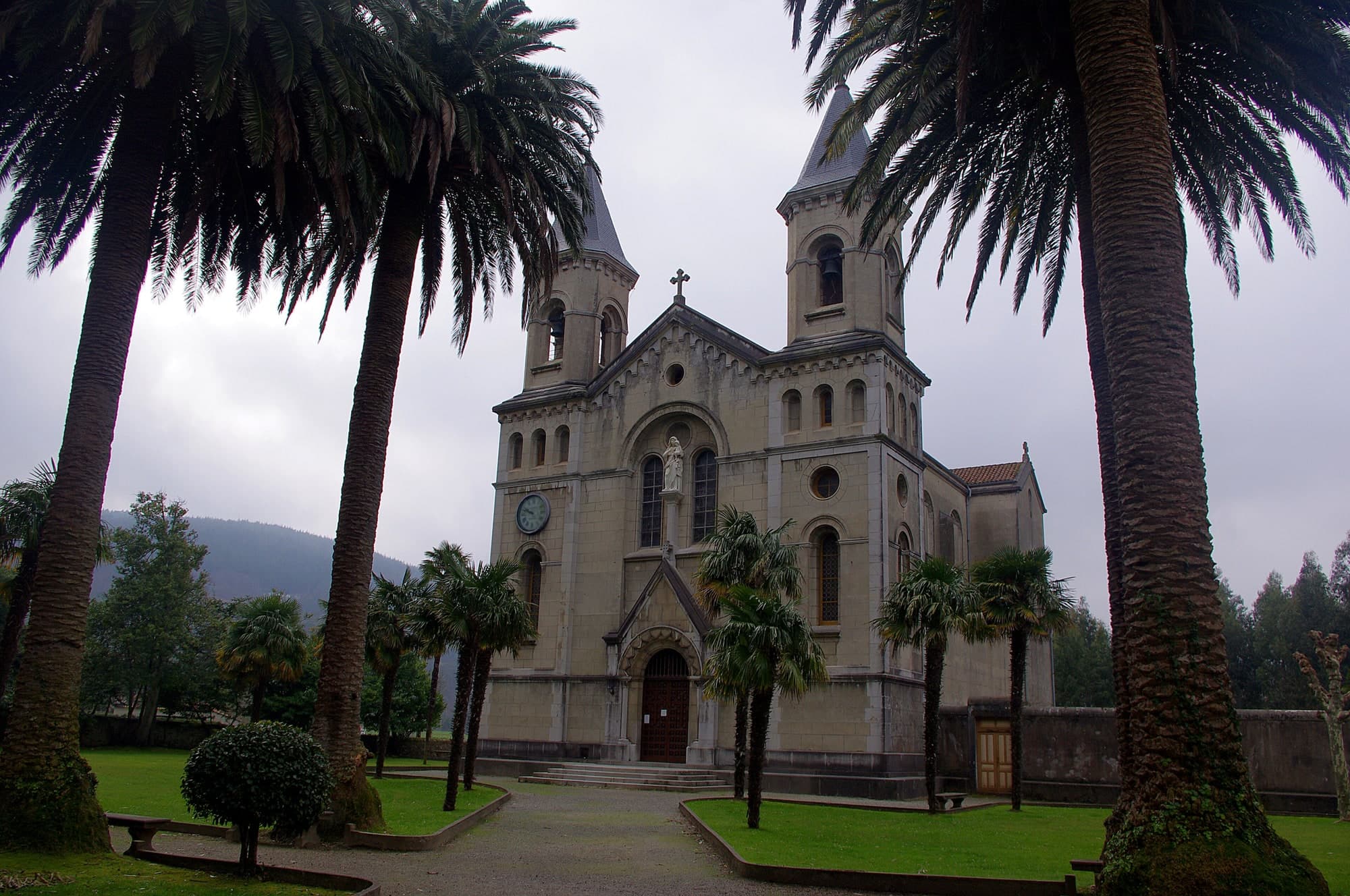
 of Jesús de Nazareno (Cudillero)
Neo-Romanesque church and pantheon commissioned by Fortunato de Selgas next to La Quinta in El Pito, inaugurated in 1914 by Infanta Isabel de Borbón.
 Church
 of Santiago Apóstol
The Church of Santiago Apóstol in Calzada de los Molinos, Palencia, is a simple, authentic stop for anyone exploring the villages of Castile at an unhurried pace.
 Church
 of Nuestra Señora de los Reyes
A medieval fortified church in Grijalba, in the province of Burgos, declared a Site of Cultural Interest (Bien de Interés Cultural) in 1983: a place built as much for prayer as for resistance.