
Lugo Cathedral
Description
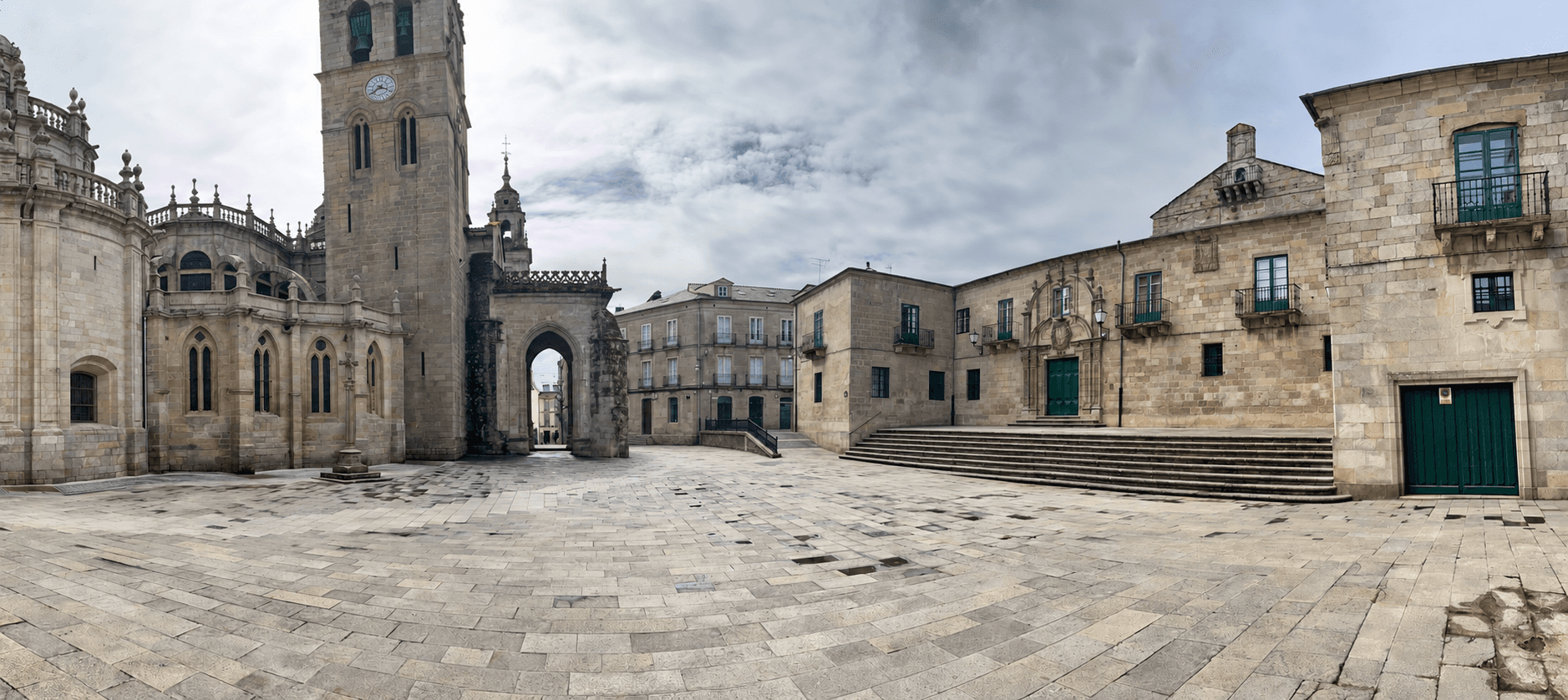
Before going in, it is worth walking round the building to the north door, the great Romanesque jewel of the ensemble. Beneath a 16th-century portico with a star vault, a seated 12th-century marble Pantocrator presides over the doorway, and from the centre hangs a curious capital-shaped pendant depicting the Last Supper, with St John asleep beside Christ. A Latin distich describes the scene, and in it the word DOMINI is abbreviated with a rounded D related to our @ sign. The pendant even made it onto postage stamps in 1969.
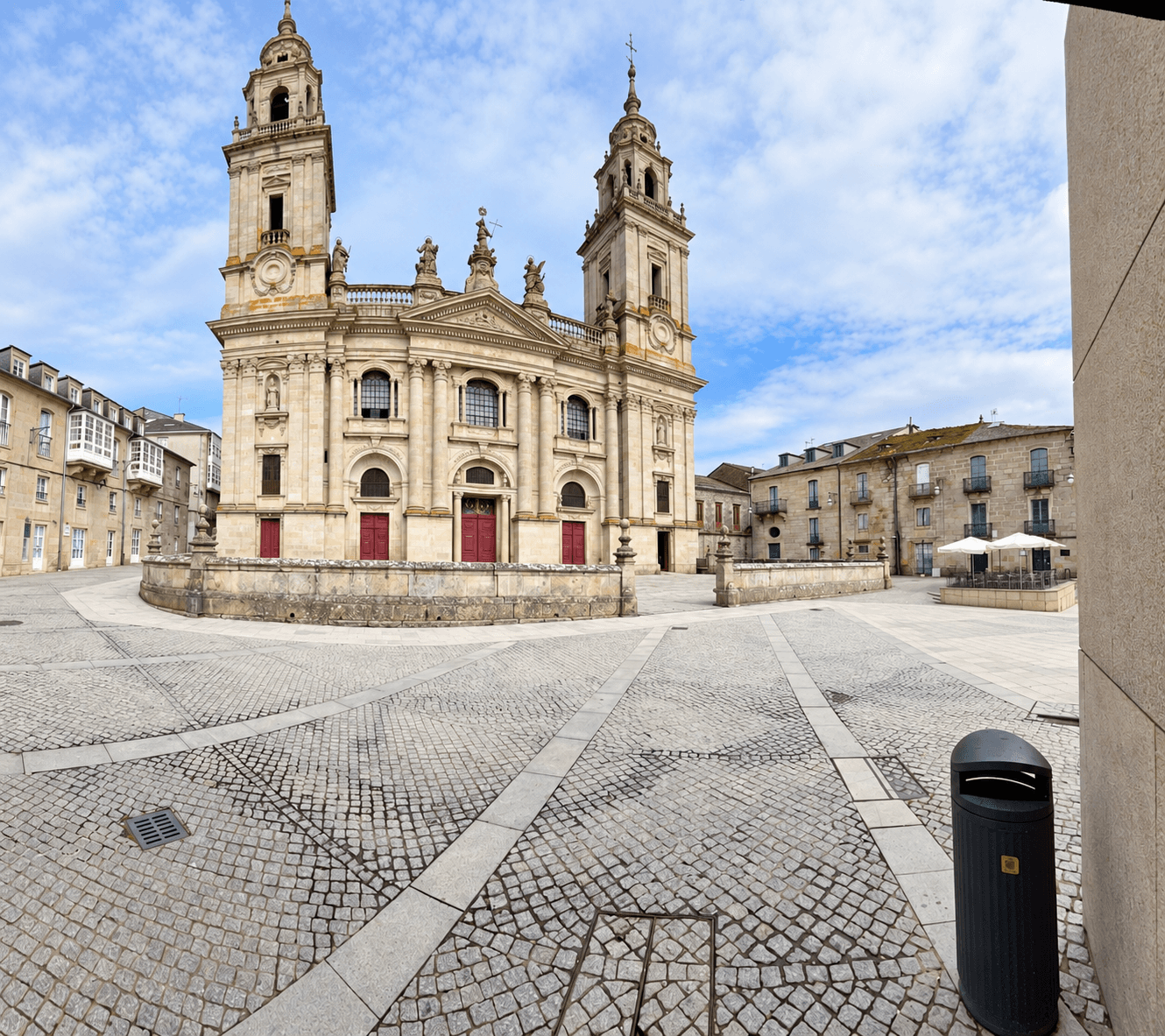
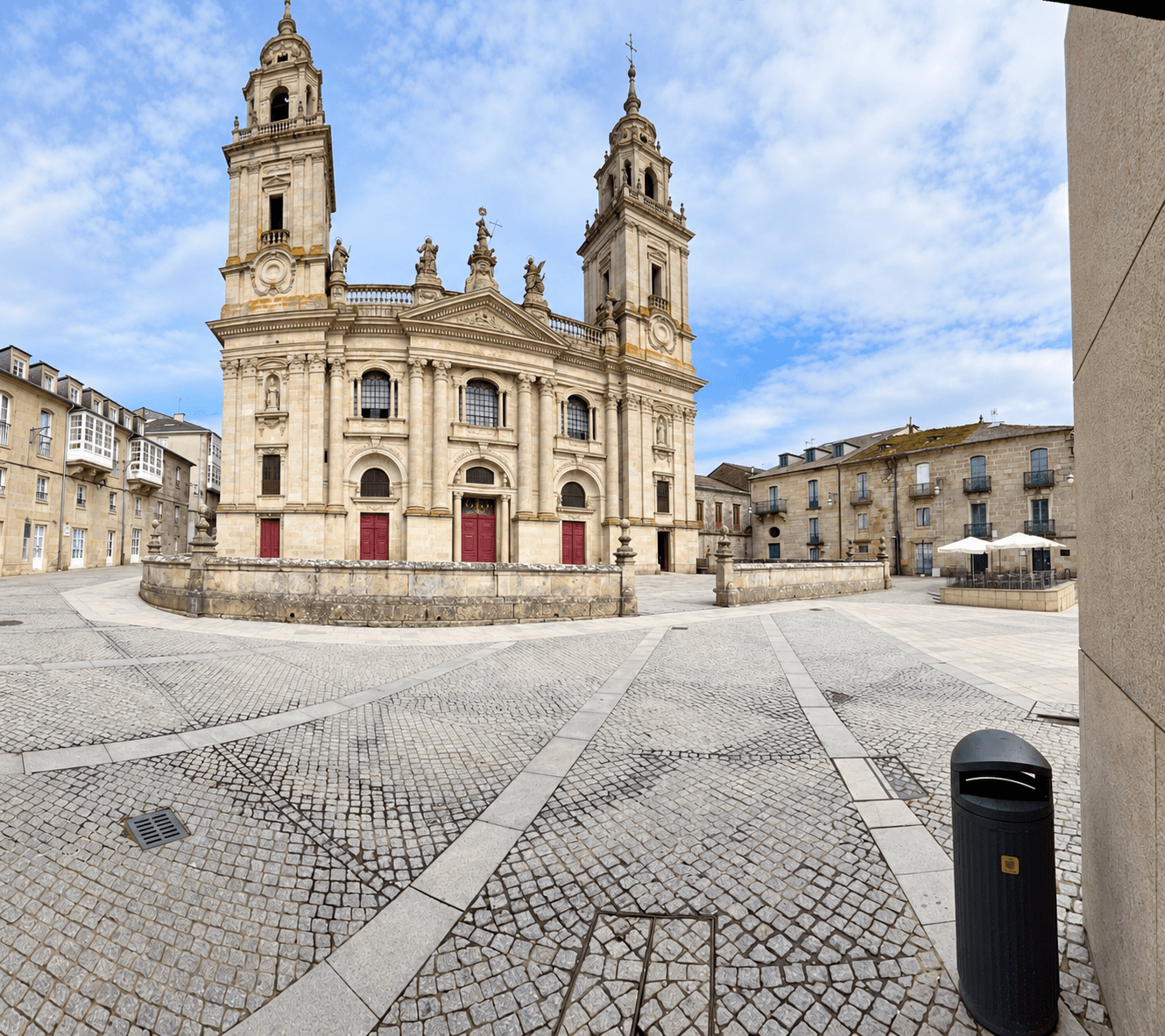
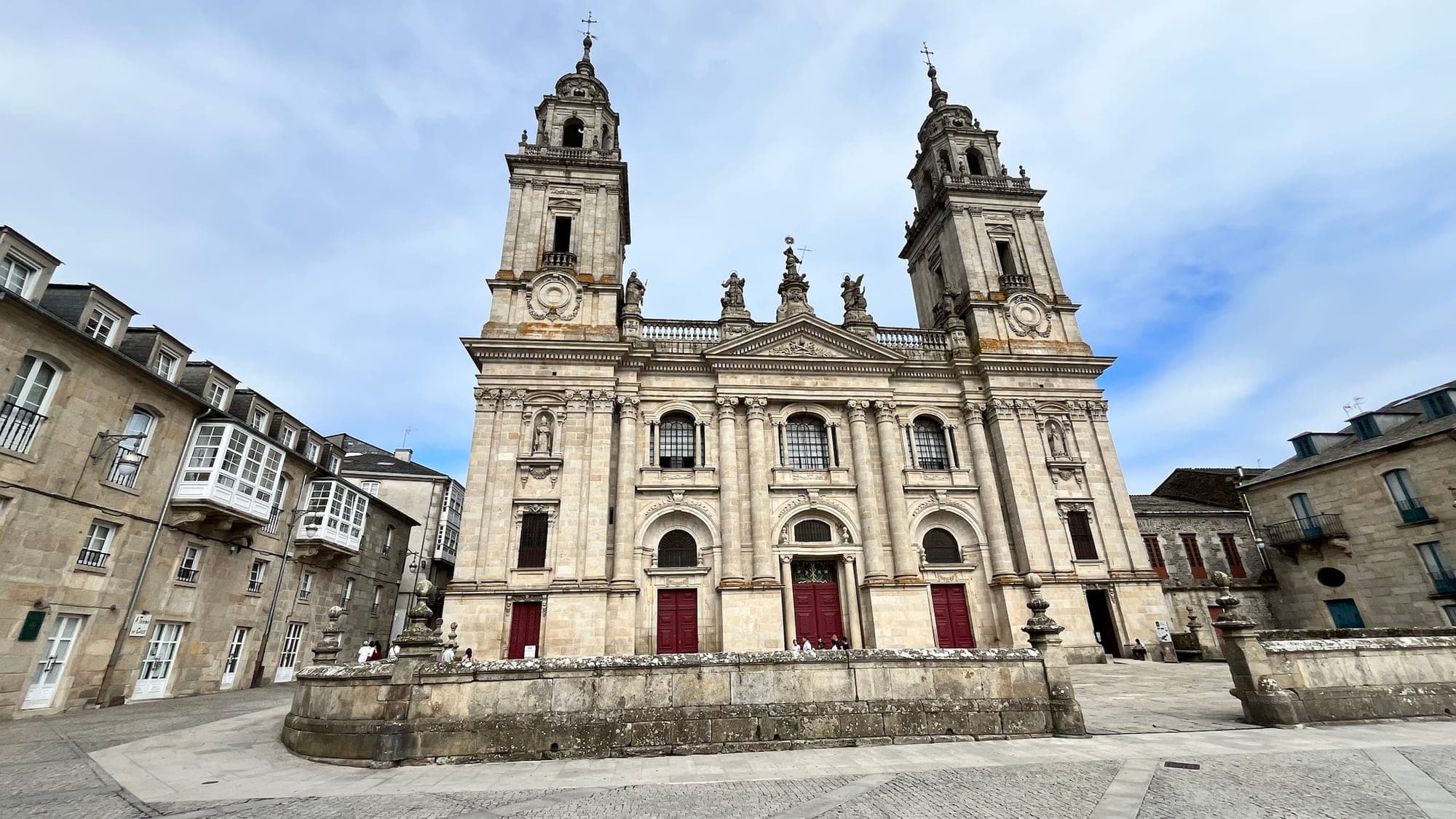
The cathedral we see today was begun in 1129 by Master Raimundo and considered finished in 1273, although the following centuries dressed it in Gothic, Renaissance, Baroque and Neoclassical garb. The main façade, designed by Julián Sánchez Bort in the late 18th century, was not completed until the 19th, with the two towers by Nemesio Cobreros. Earlier, a church built here by Bishop Odoario was so beautiful that Alfonso II took it as the model for Oviedo Cathedral.
Inside, the Latin-cross plan with three naves and an ambulatory leads to an exceptional choir: Francisco de Moure's, finished in 1624, is the only one in a Galician cathedral still standing in the central nave, with its carved figures in medallions and a profusion of naturalistic motifs. In the transept rest the fragments of Cornelis de Holanda's altarpiece, broken after the Lisbon earthquake of 1755.
At the east end opens the Baroque Chapel of the Virgen de los Ojos Grandes, designed by Fernando de Casas Novoa in 1726, with an altarpiece by Miguel de Romay that ranks among the finest Galician Baroque. Lugo's patroness, sung by Alfonso X in one of his cantigas, shares the limelight with St Froilán, the local patron saint, who has his own chapel with his statue carved by Moure.
The privilege of perpetual exposition of the Blessed Sacrament explains the chalice and host on the coats of arms of Lugo and Galicia, and why Lugo is known as the city of the Sacrament. Since 2015 the cathedral has been a World Heritage Site as part of the Routes of Santiago de Compostela.
Routes that include this monument
Community photos (2)
Log in to upload your photos of this monument.
Best time to visit
The visit is mainly indoors and can be enjoyed all year round, although summer and early autumn bring Lugo's mildest weather. The big dates are 15 August, the feast of the Virgen de los Ojos Grandes, and 5 October, St Froilán's Day.
Location
Similar monuments
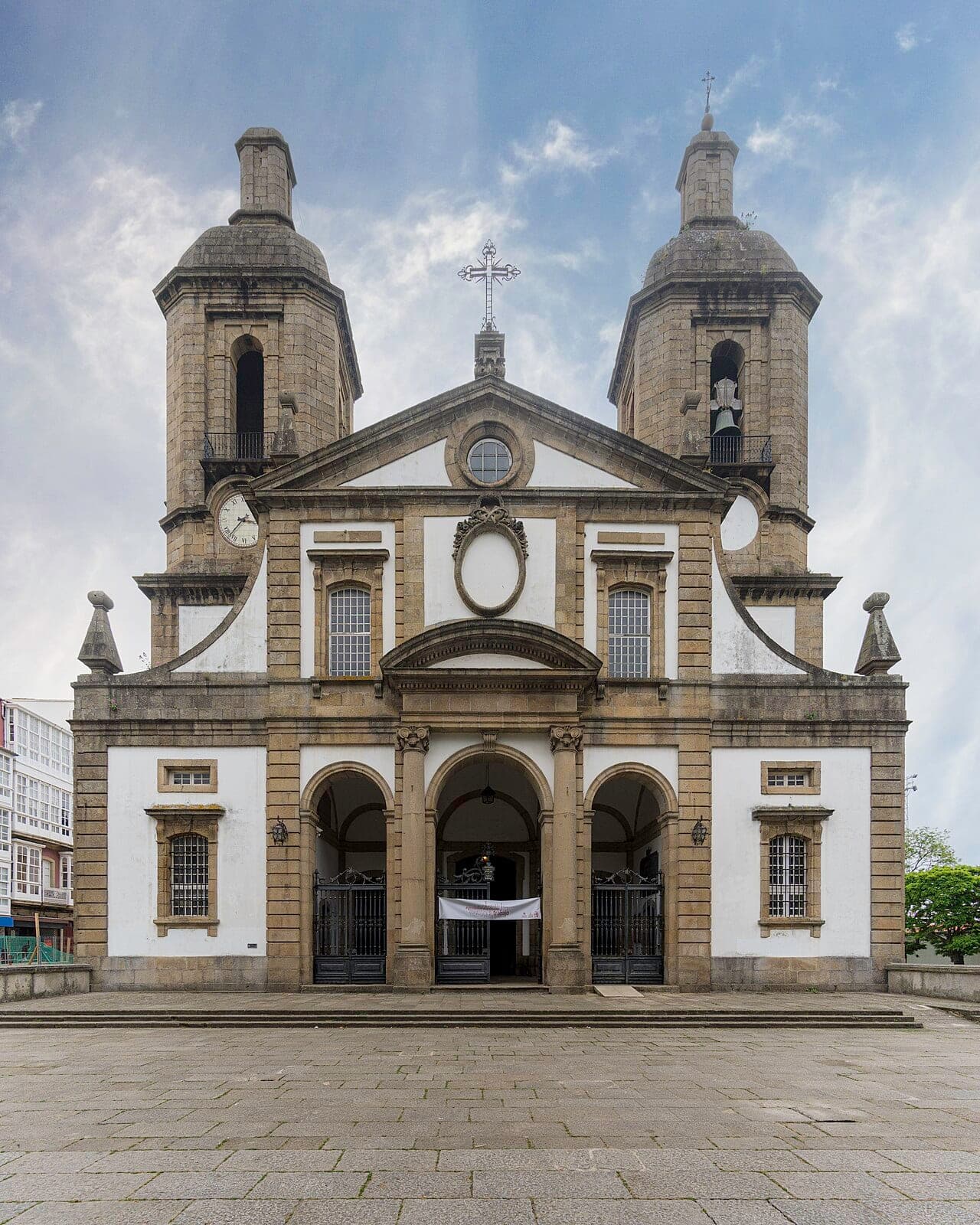 Cathedral
Ferrol Co-Cathedral
The Co-Cathedral of St Julian, dedicated to the patron saint of Ferrol, is the city's great Catholic church and has shared its rank with Mondoñedo Cathedral since 1959.
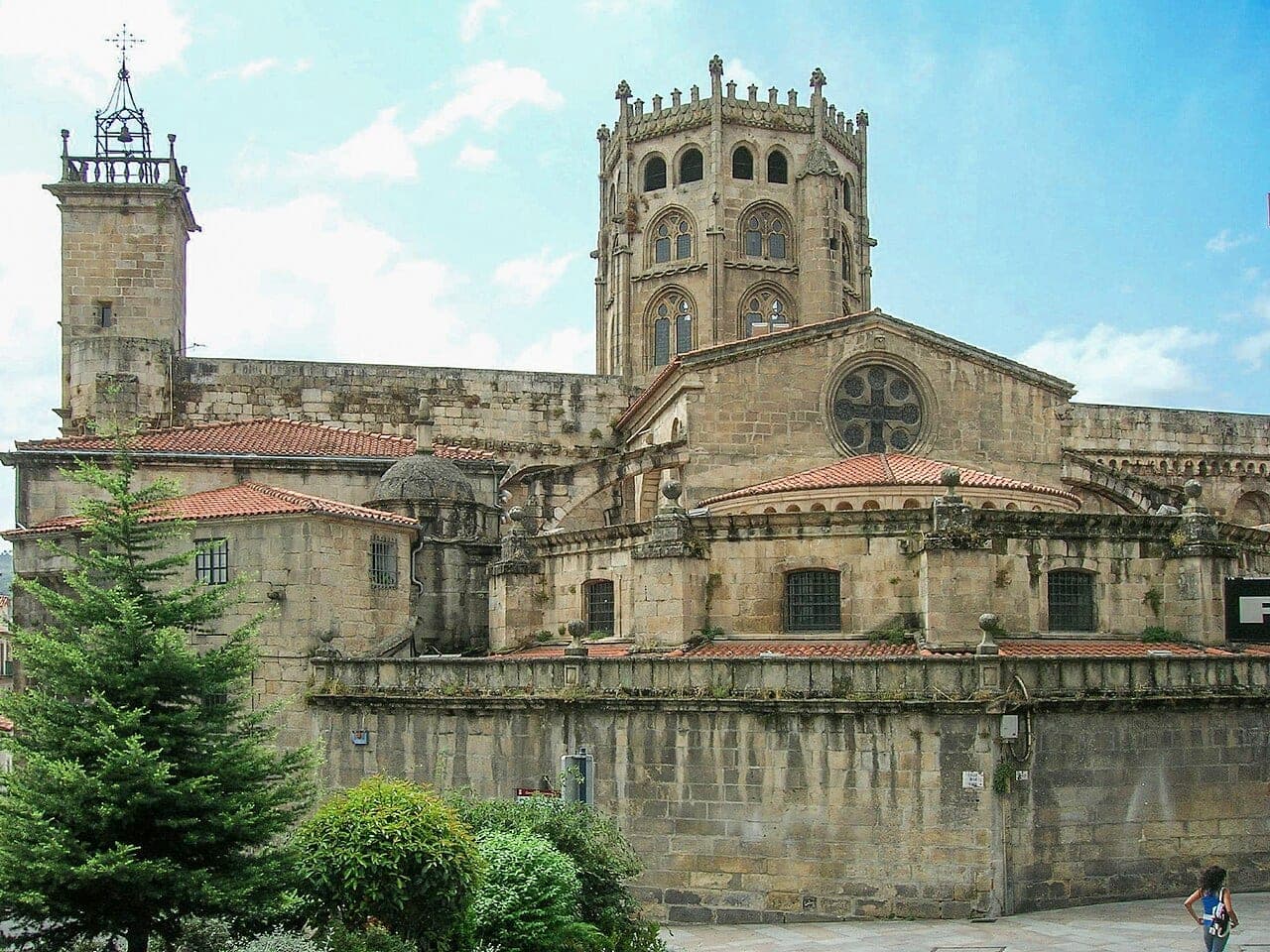 Cathedral
Ourense Cathedral
Dedicated to Saint Martin, Ourense Cathedral is one of Spain's great Romanesque churches and a masterpiece of the Galician Middle Ages, with portals that bear the legacy of Master Mateo.
 Cathedral
Santiago de Compostela Cathedral
The final destination of the Camino de Santiago and, according to tradition, the resting place of the tomb of the Apostle, Compostela's cathedral was one of the great pilgrimage destinations of medieval Europe.
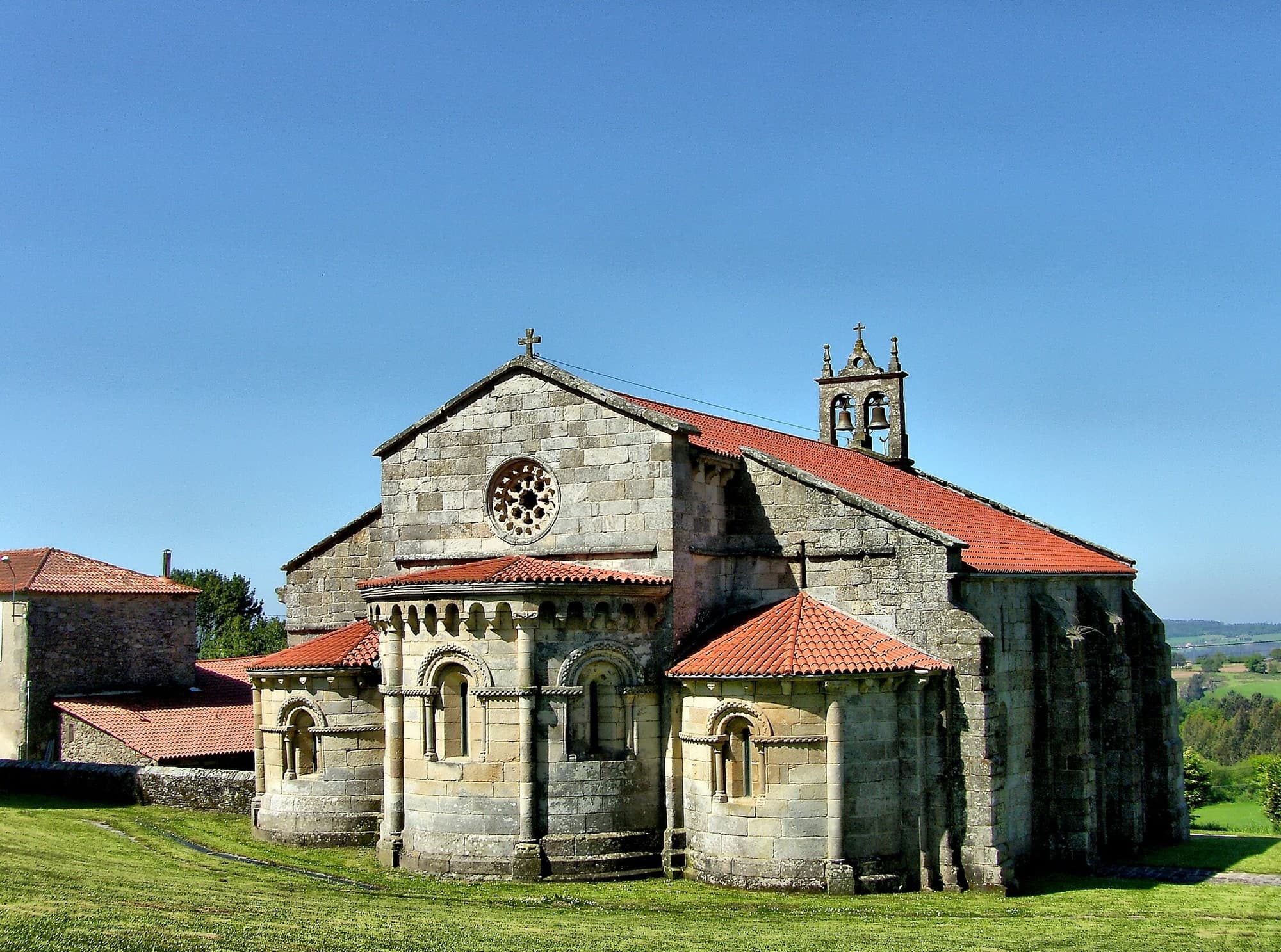 Monastery
 of Santa María de Mezonzo
In Vilasantar, the Romanesque church of Santa María de Mezonzo is the great surviving witness to a former Galician monastery, perfect for a quiet stop.