

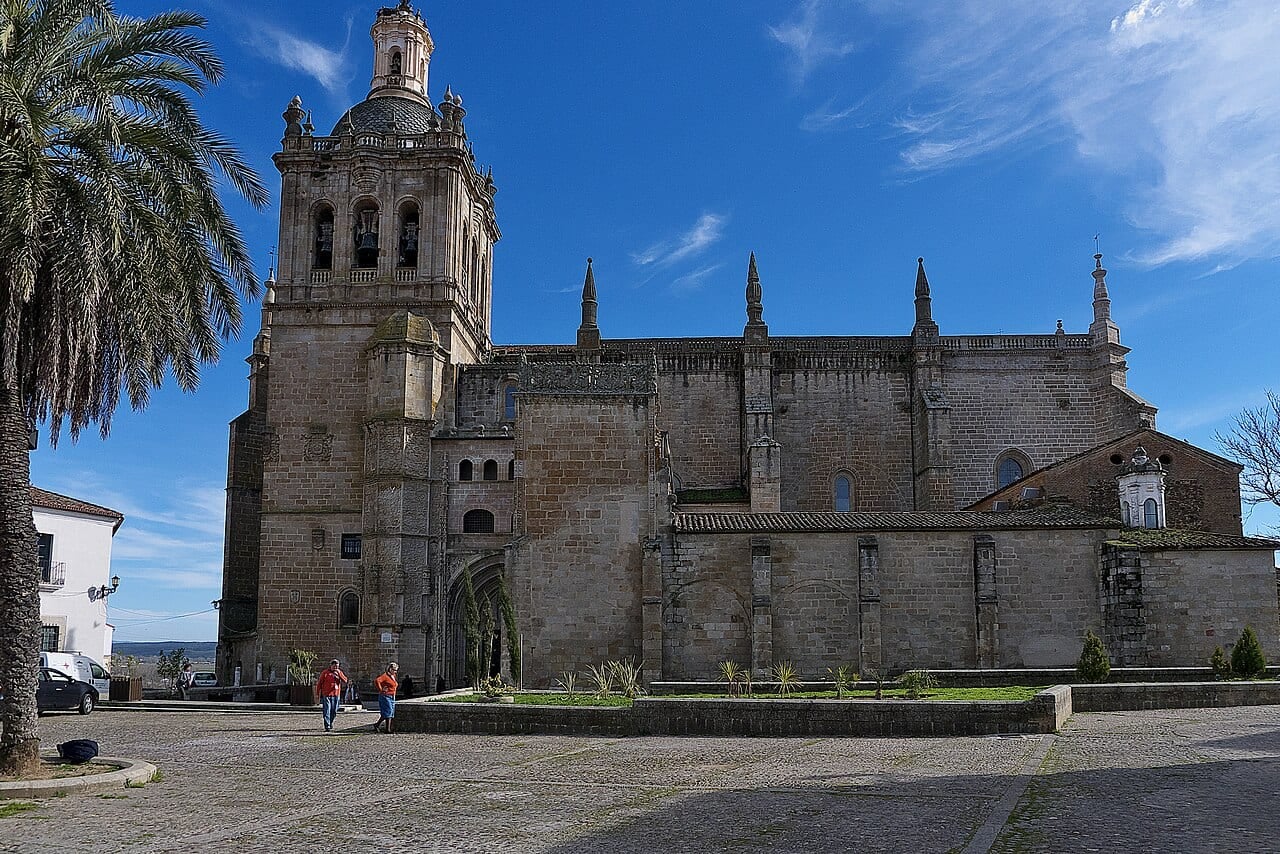
Coria Cathedral
Description
Anyone stepping inside the Cathedral of Santa María de la Asunción in Coria soon realises that its real treasure lies within. The 18th-century high altarpiece features carvings by Alejandro Carnicero, and facing it the main chapel is closed off by a screen wrought in two periods, the 16th and 18th centuries. It is also worth lingering in the choir, which preserves Mudéjar walnut stalls carved between the 15th and 16th centuries, enclosed by a 16th-century proto-Renaissance grille.
The bishops' tombs deserve a careful look. That of Pedro Ximénez de Préxamo was the work of Diego Copín de Holanda, while that of García de Galarza is by Lucas Mitata. Alongside them are the 18th-century Altarpiece of the Relics and the 17th-century Altarpiece of San Pedro de Alcántara, as well as a remarkable collection of paintings, sculpture and silverwork that rounds off the visit.
The building is the result of an exceptionally long construction. Work began in 1498 and was not considered finished until around 1748, two and a half centuries later, so its transitional Gothic sits alongside significant Plateresque additions, to designs by Pedro de Ybarra, and a Baroque bell tower designed by Manuel de Lara Churriguera, which has become the most recognisable feature of the whole complex.
Beneath its walls lies an even older history. On this very site there stood in turn the original Visigothic cathedral, the city's main mosque and a Romanesque cathedral church, the direct predecessor of the present building. Shortly after its completion, the cathedral was seriously damaged by the Lisbon earthquake of 1 November 1755, an episode that shows just how well this building has withstood the passage of time. Today it belongs to the Diocese of Coria-Cáceres.
Routes that include this monument
Community photos
Log in to upload your photos of this monument.
Best time to visit
Spring and autumn (April–June and September–October); summers are extremely hot.
Location
Similar monuments
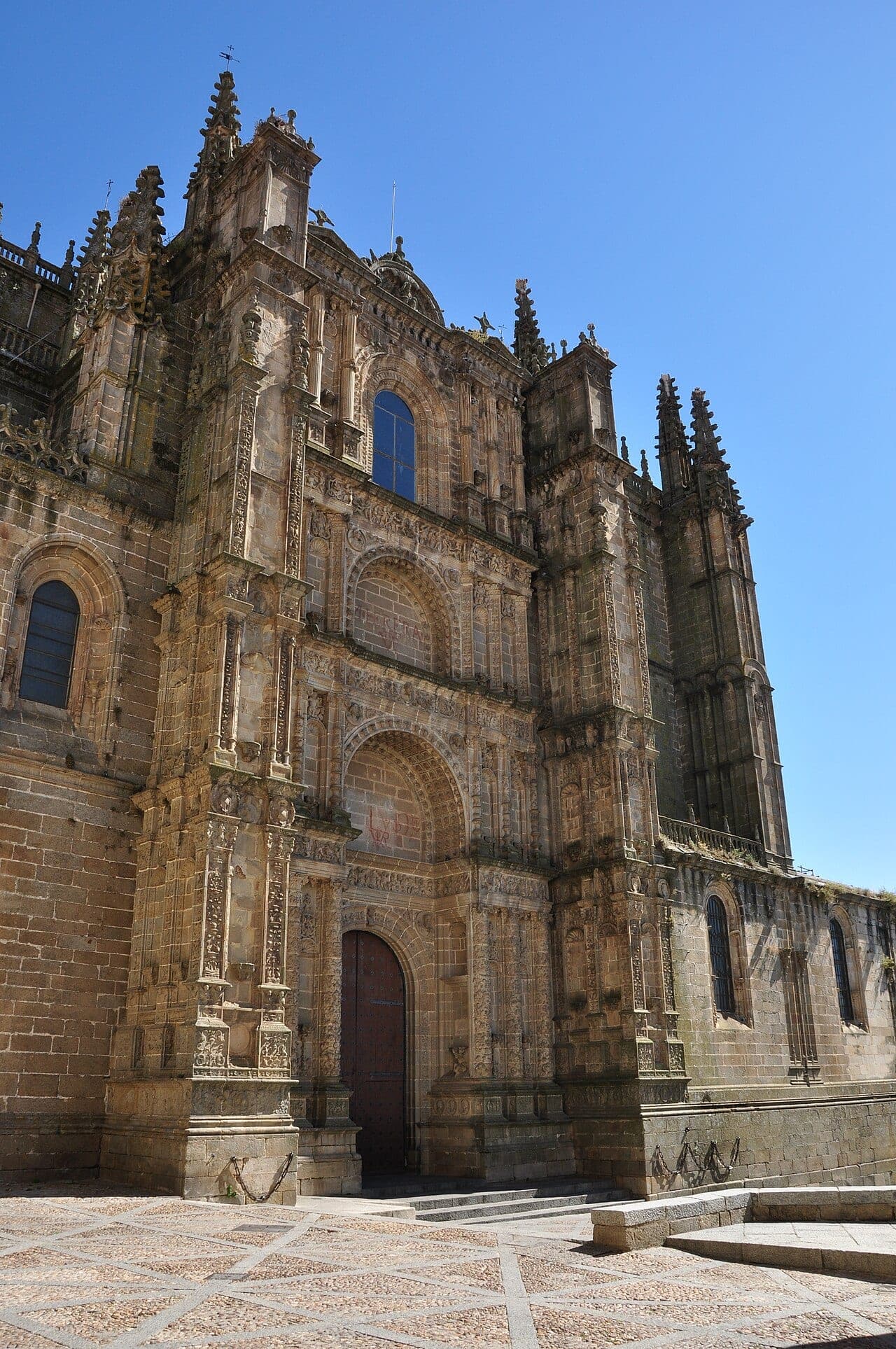 Cathedral
New Cathedral of Plasencia
The New Cathedral of Plasencia, seat of its diocese, boasts the most abundant and lavish ornamentation of any church in Extremadura: an unmissable stop in the north of the region.
 Cathedral
Co-Cathedral of Santa María, Cáceres
Cáceres' principal church, a late Gothic building with Romanesque traces and Renaissance touches, presiding over the Plaza de Santa María at the heart of the World Heritage-listed old town.
 Cathedral
Badajoz Cathedral of St John the Baptist
Standing on Plaza de España, the Cathedral of St John the Baptist is the archiepiscopal seat of Mérida-Badajoz and the great religious landmark of the city centre.
 Church
 of San Pedro (Garrovillas de Alconétar)
A 15th-century Gothic church in Garrovillas de Alconétar, bearing witness to the medieval past of this town in the province of Cáceres and still part of its parish life.