

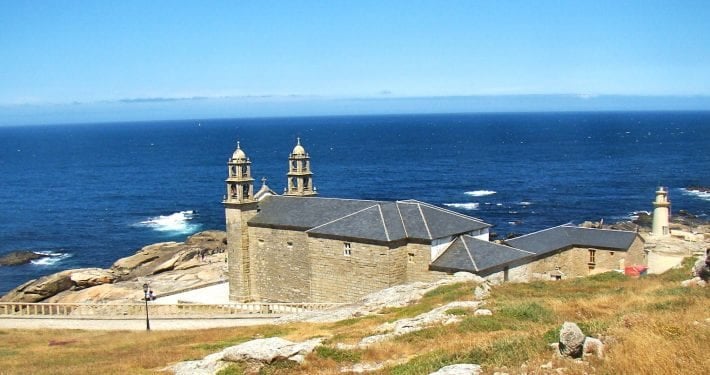
Sanctuary of Our Lady of the Boat
Description
Overlooking the Atlantic in Muxía, the Sanctuary of Our Lady of the Boat stands beside a cluster of strangely shaped rocks which, according to local tradition, are no ordinary stones. Legend has it that the Apostle James, disheartened by how little his preaching in Hispania had achieved, was praying on this very spot when a stone boat appeared at sea, bearing Mary. The Virgin encouraged him, declared his mission here complete and asked him to return to Jerusalem. The remains of that vessel are said to be the boulders that can still be seen in front of the church today.
This story explains why some pilgrims, having reached the cathedral of Santiago de Compostela, don't consider their journey over and extend the Camino by a few more stages towards the coast, either to Cape Finisterre or to this sanctuary.
The site has a long history of devotion. The first clear trace of worship is a 12th-century hermitage, and by 1544 it was already mentioned in writing. The miracles attributed to the Virgin led to new buildings from the 17th century onwards, until the present church was built between 1716 and 1719 under the patronage of the Dukes of Maceda, whose remains were eventually laid to rest in the church itself.
The complex continued to grow afterwards. In the 19th century it gained the rectory, dating from 1828, and a bell gable, from 1834, both still standing, and in the 20th century a Galician emigrant in the Americas paid for the completion of the façade with its two towers.
Its recent history is also worth telling. On 25 December 2013, during Storm Dirk, a lightning strike started a fire that destroyed the roof and the interior, although fortunately no one was hurt. For months the building stood exposed to the wind and rain, until restoration work, undertaken by the Archdiocese of Santiago, began in June 2014. Since 2017, the lost high altarpiece has been evoked by a vinyl sheet bearing its photograph.
Routes that include this monument
Community photos (2)
Log in to upload your photos of this monument.


Best time to visit
From May to September, to avoid the more frequent rain of the rest of the year.
Location
Similar monuments
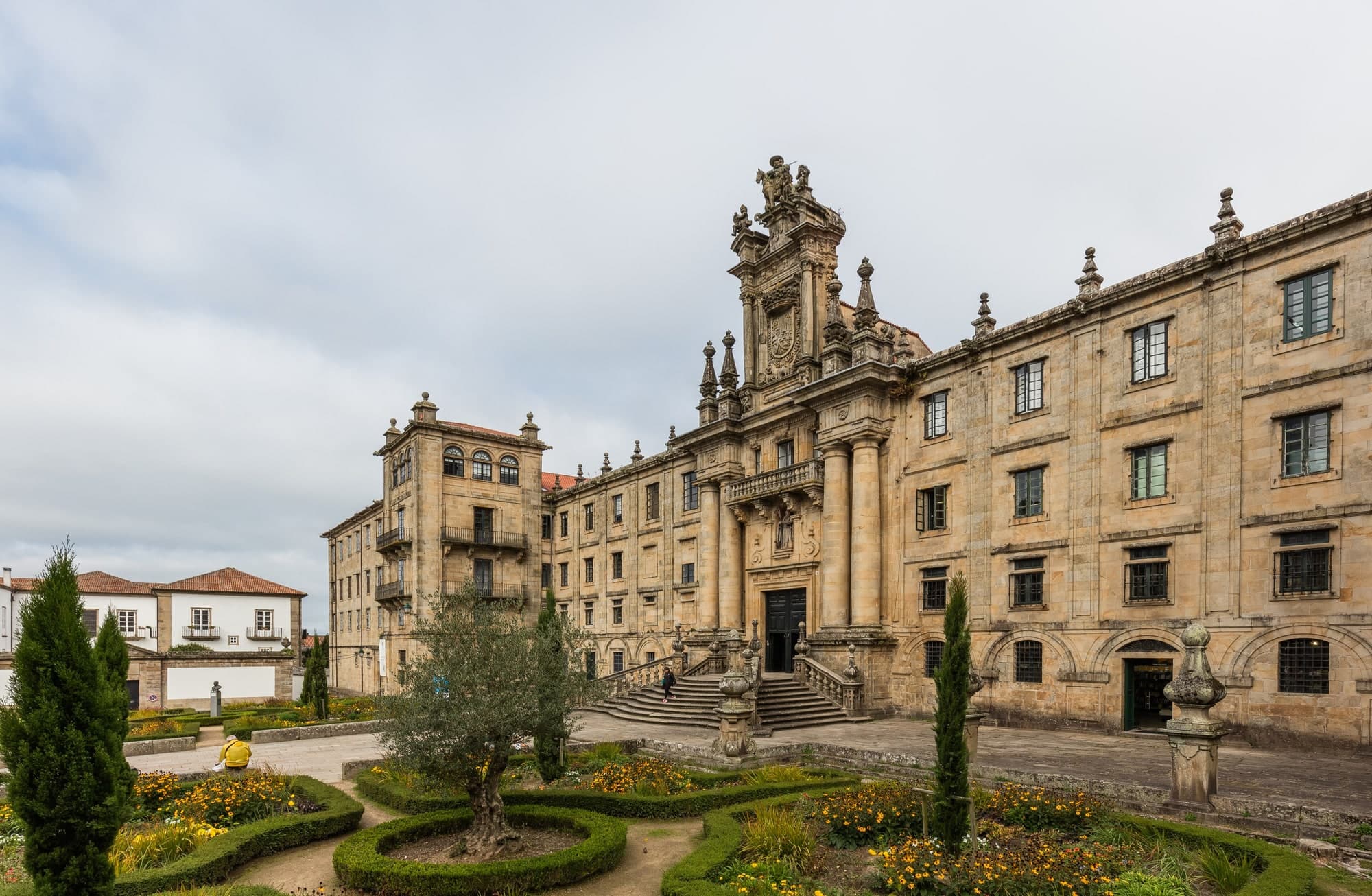 Monastery
 of San Martín Pinario
A Benedictine monastery founded in the 10th century in the heart of Santiago de Compostela, now a seminary, centre of learning and museum closely linked to the history of the Camino.
 Cathedral
Santiago de Compostela Cathedral
The final destination of the Camino de Santiago and, according to tradition, the resting place of the tomb of the Apostle, Compostela's cathedral was one of the great pilgrimage destinations of medieval Europe.
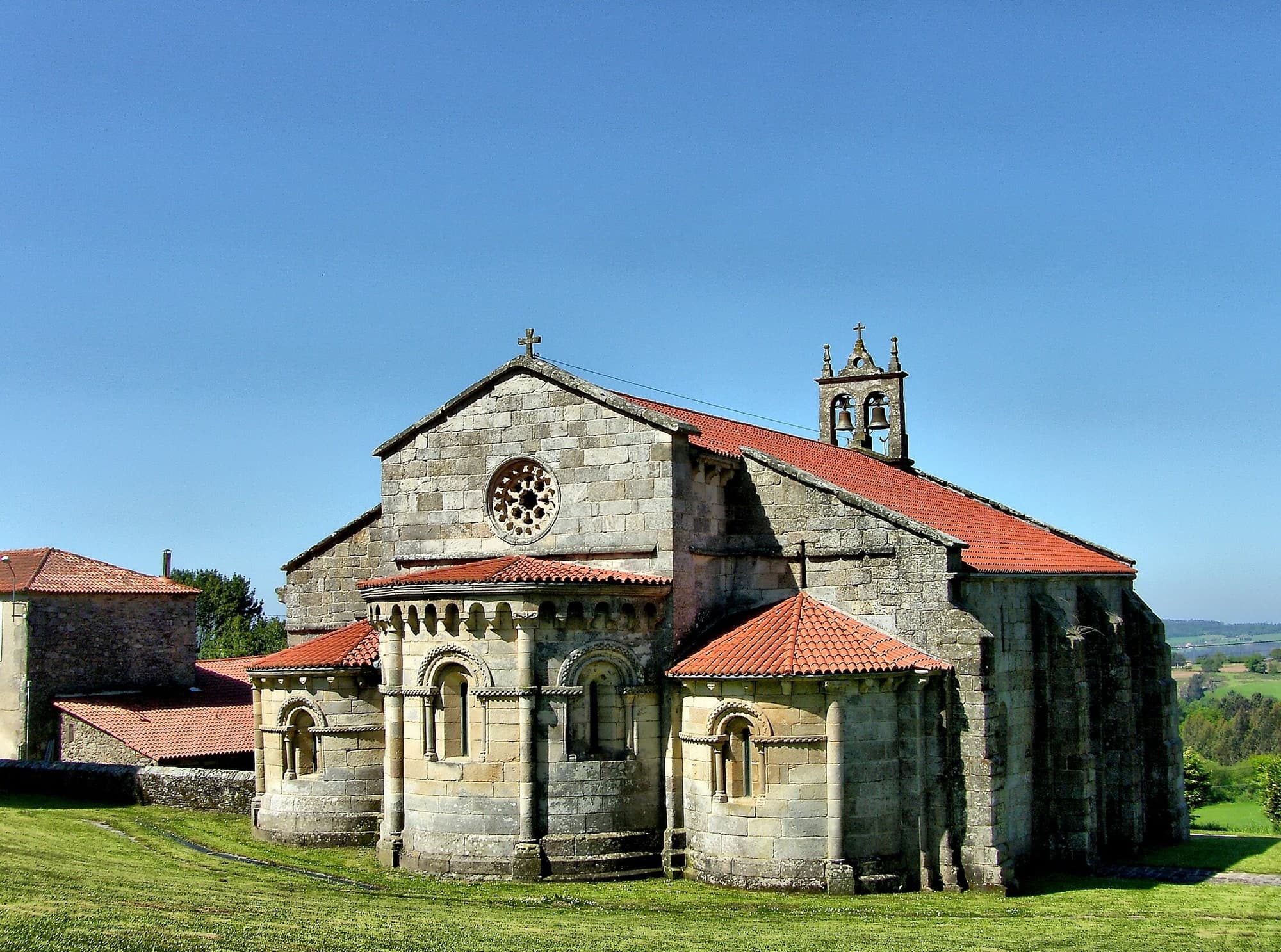 Monastery
 of Santa María de Mezonzo
In Vilasantar, the Romanesque church of Santa María de Mezonzo is the great surviving witness to a former Galician monastery, perfect for a quiet stop.
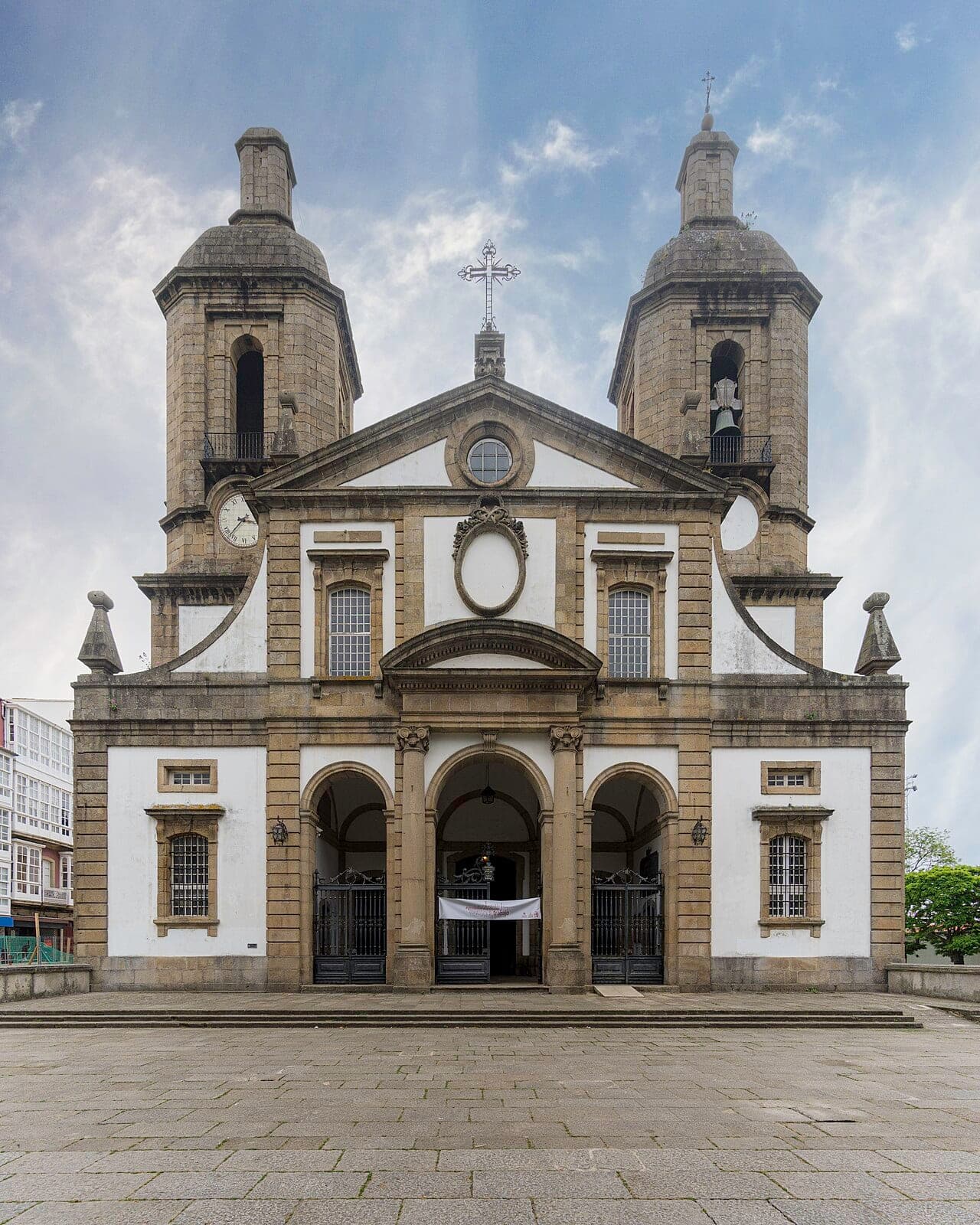 Cathedral
Ferrol Co-Cathedral
The Co-Cathedral of St Julian, dedicated to the patron saint of Ferrol, is the city's great Catholic church and has shared its rank with Mondoñedo Cathedral since 1959.