
Arteaga Castle
Description
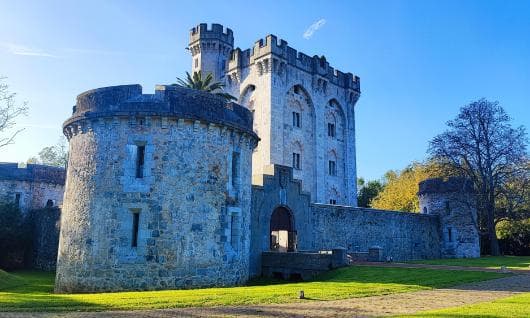
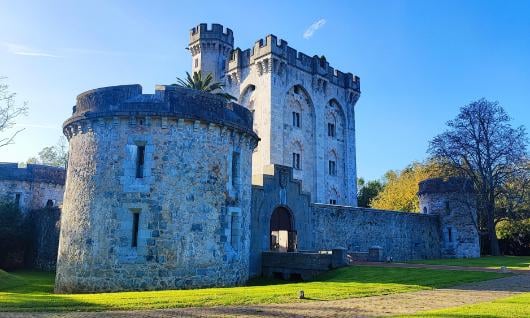
In the middle of a wooded meadow on the Urdaibai estuary, a short distance from Gernika, stands a silhouette that looks as though it has been transplanted from the Loire Valley. Arteaga Castle crowns no hilltop and guards no pass: like the French royal residences in the style of Fontainebleau, it sits on flat ground, surrounded by greenery, and its raison d'être was not defence but the prestige of an empress.
The story begins with an old tower belonging to the Arteaga lineage, documented in the mid-15th century and reduced by the 19th century to a mere farmhouse. That lineage was related to the Montijo family, and so it was that Eugénie de Montijo, wife of Napoleon III, drove its transformation after the Juntas of Biscay honoured her son as a 'native Biscayan'. The emperors sent their own architects, who raised the new building on the foundations of the medieval tower. The irony is that the imperial family never lived here; when Eugénie, by then dethroned, wished to settle in Spain, she was taken in by the Alba family in Madrid and Seville, most likely because Arteaga was far from everything and lacked the necessary comforts.
The result is a Neo-Gothic keep, a child of Romantic taste, which revives the full repertoire of medieval castles: battlements, machicolations, gargoyles in the shape of animals and pointed arches. The main tower, rectangular in plan and faced with bush-hammered grey and red marble ashlar, features two towering pointed arches framing the windows on each façade, a large coat of arms on the main façade and a projecting crenellated parapet with small turrets. Attached to one corner is an octagonal tower housing the elliptical staircase that rises through every floor.
Inside, a marble staircase leads to a richly decorated entrance hall and two reception rooms dominated by monumental Gothic fireplaces of marble and oak. The second floor, reserved for the emperors, retains a small oratory with stained-glass windows. The whole complex is enclosed by a walled precinct with four cylindrical towers and a single Gothic gateway. Today the property has been brought back to life as a hotel.
Routes that include this monument
Community photos
Log in to upload your photos of this monument.
Best time to visit
From May to September, to avoid the more frequent rain of the rest of the year.
Location
Similar monuments
 Castle
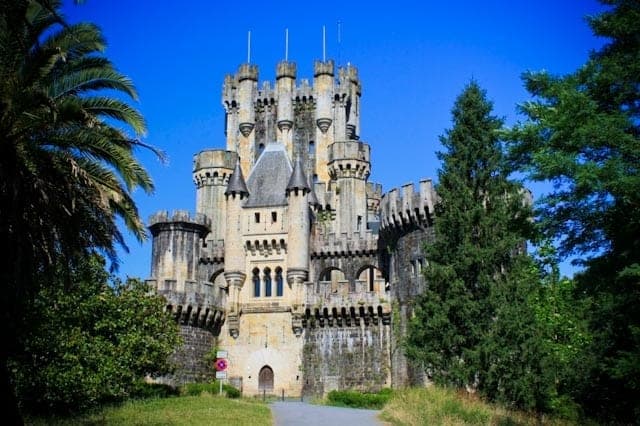
Butrón Castle
A Neo-Gothic fortress of medieval origin rising at the heart of a wooded estate in Gatica, a secluded spot that is nonetheless close to Bilbao.
 Castle
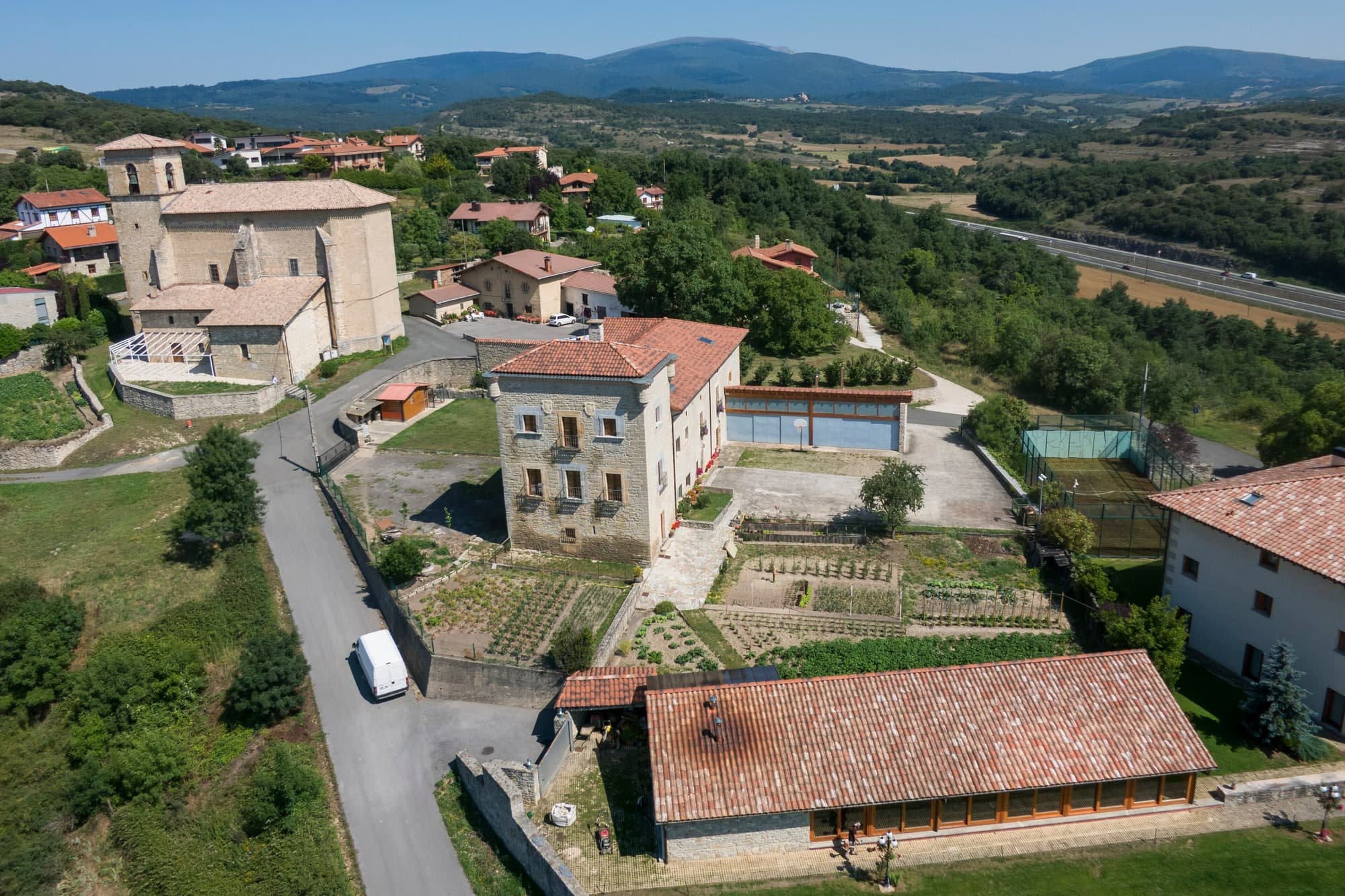
Letona Tower
In the Álava hamlet of Letona, a prestige tower from the late 16th or early 17th century which, together with the palace of the López de Letona family, speaks more of lineage than of warfare.
 Castle
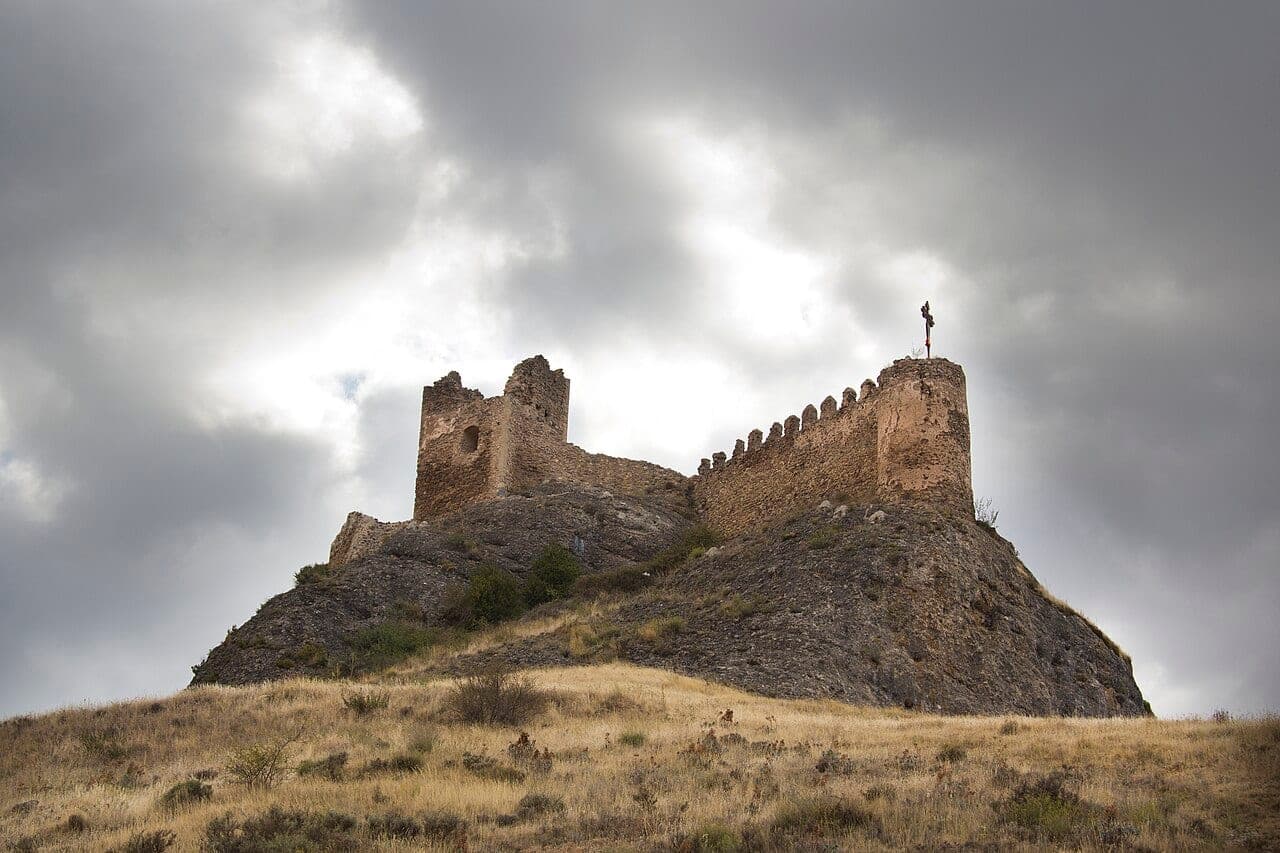
Clavijo Castle
An 11th-century fortress perched on a rocky escarpment above Clavijo, linked to the legendary battle in which, according to tradition, the Apostle St James appeared.
 Castle
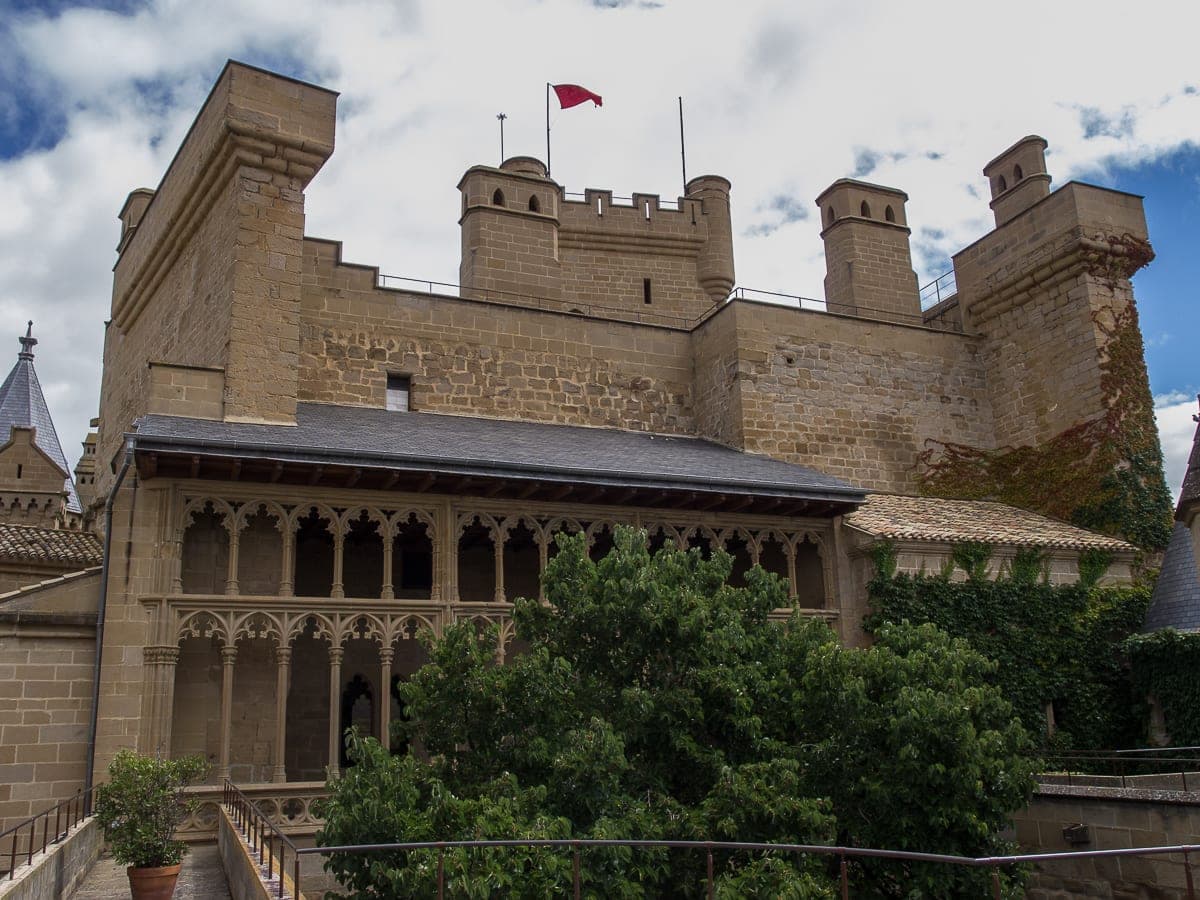
Royal Palace of Olite
The court seat of Charles III the Noble, the Royal Palace of Olite is one of the great jewels of Gothic civil architecture in Spain and in Europe.