A route through the towns of Galicia: traditions and heritage
A route through Galicia's towns: Betanzos, Tui, Oseira and Soutomaior, with cathedrals, monasteries and traditional festivals for a complete getaway.
In this article
Galicia is best understood slowly, stopping in towns where history is still on show and traditions set the calendar. This route takes you from north to south through some of the region's most characterful places: medieval towns built on hilltops, monasteries tucked away among the hills, cathedrals that look like fortresses and festivals that fill the streets every year. It isn't a route to rush, but one for linking short stages and giving each place its due.
Betanzos, the town of the Knights
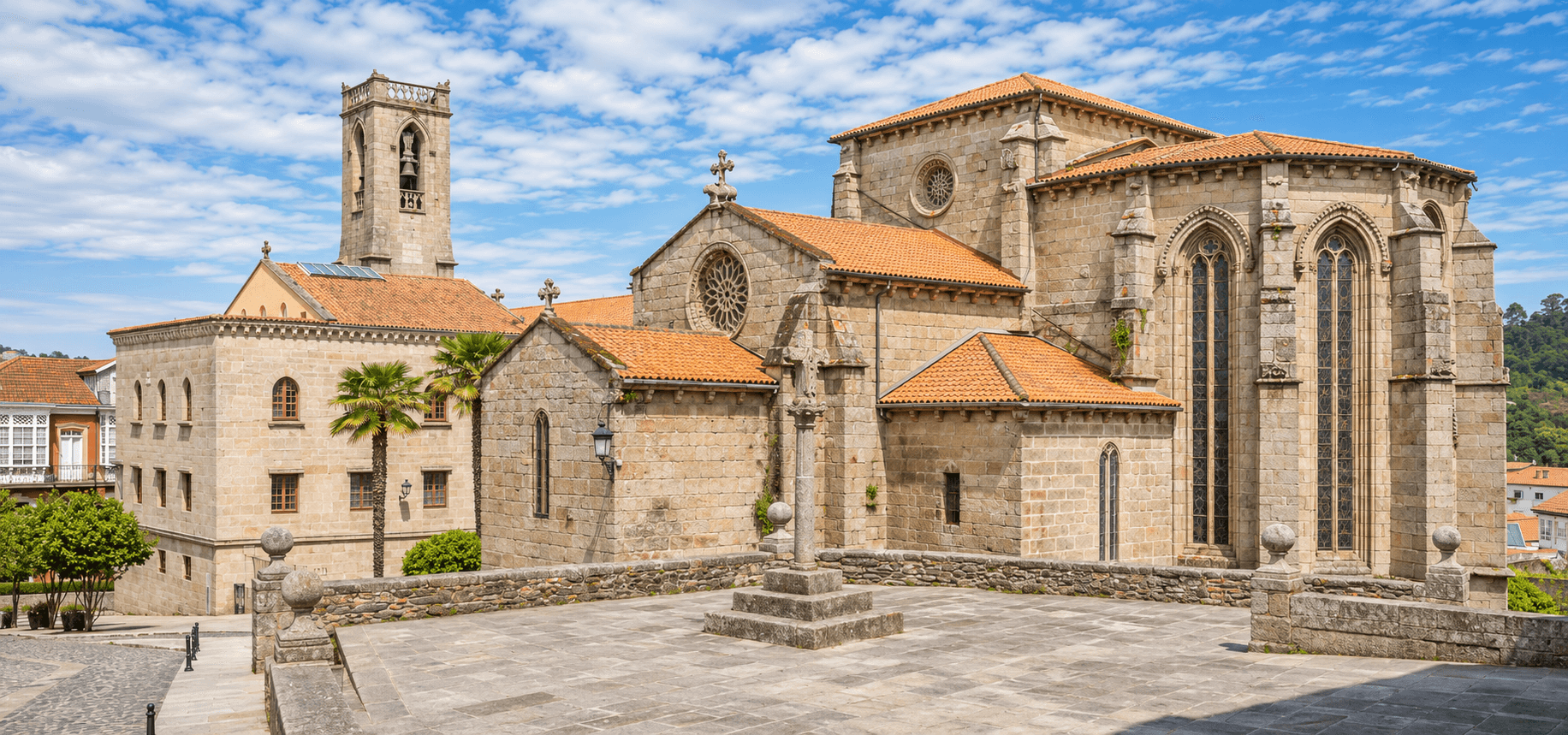
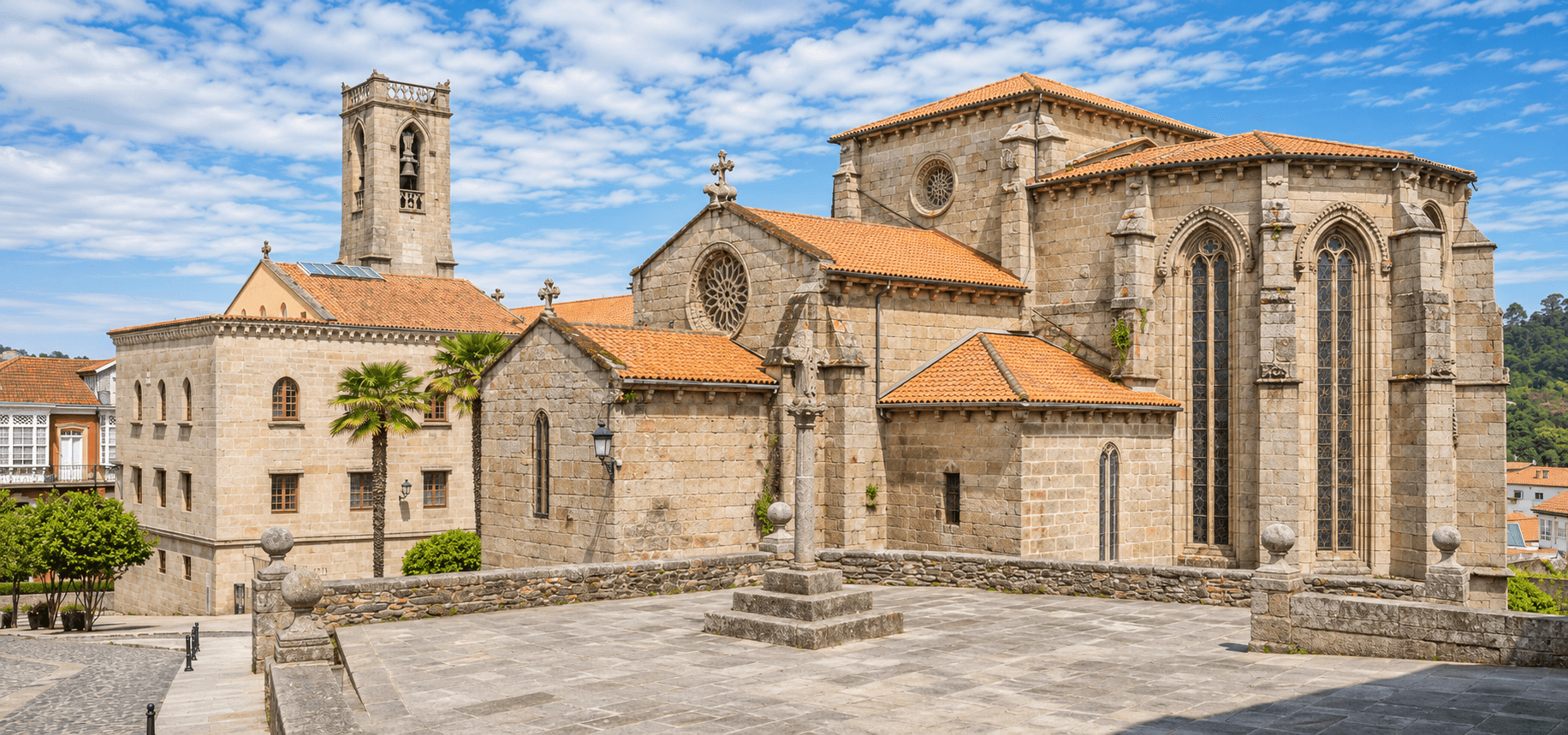
We begin in the Rías Altas, in Betanzos. The town sits on a hill surrounded by water: the Mandeo and Mendo rivers wrap around its centre and meet at its foot to form the estuary that bears its name. Climbing its streets means exploring an old town declared a historic-artistic site, where the great Gothic monuments are a reminder that Betanzos, also known as Betanzos de los Caballeros, carried far more weight than its size for centuries.
Much of that legacy is down to the House of Andrade and, above all, to Fernán Pérez de Andrade, known as O Bo, 'the Good'. His support for Henry II of Trastámara in the war against his half-brother Peter I earned him important lordships in the area, and his mark can be seen in the town's heritage. Among the churches worth seeking out is the Church of Santa María do Azougue, one of the Gothic landmarks of the historic quarter.
Betanzos is also a good place to start getting to grips with traditional Galicia: a market town of steep streets and squares where life is still lived on foot. It's well worth wandering aimlessly, heading down to the riverbanks to see how the water has shaped the town.
Lugo: walls, cathedral and San Froilán
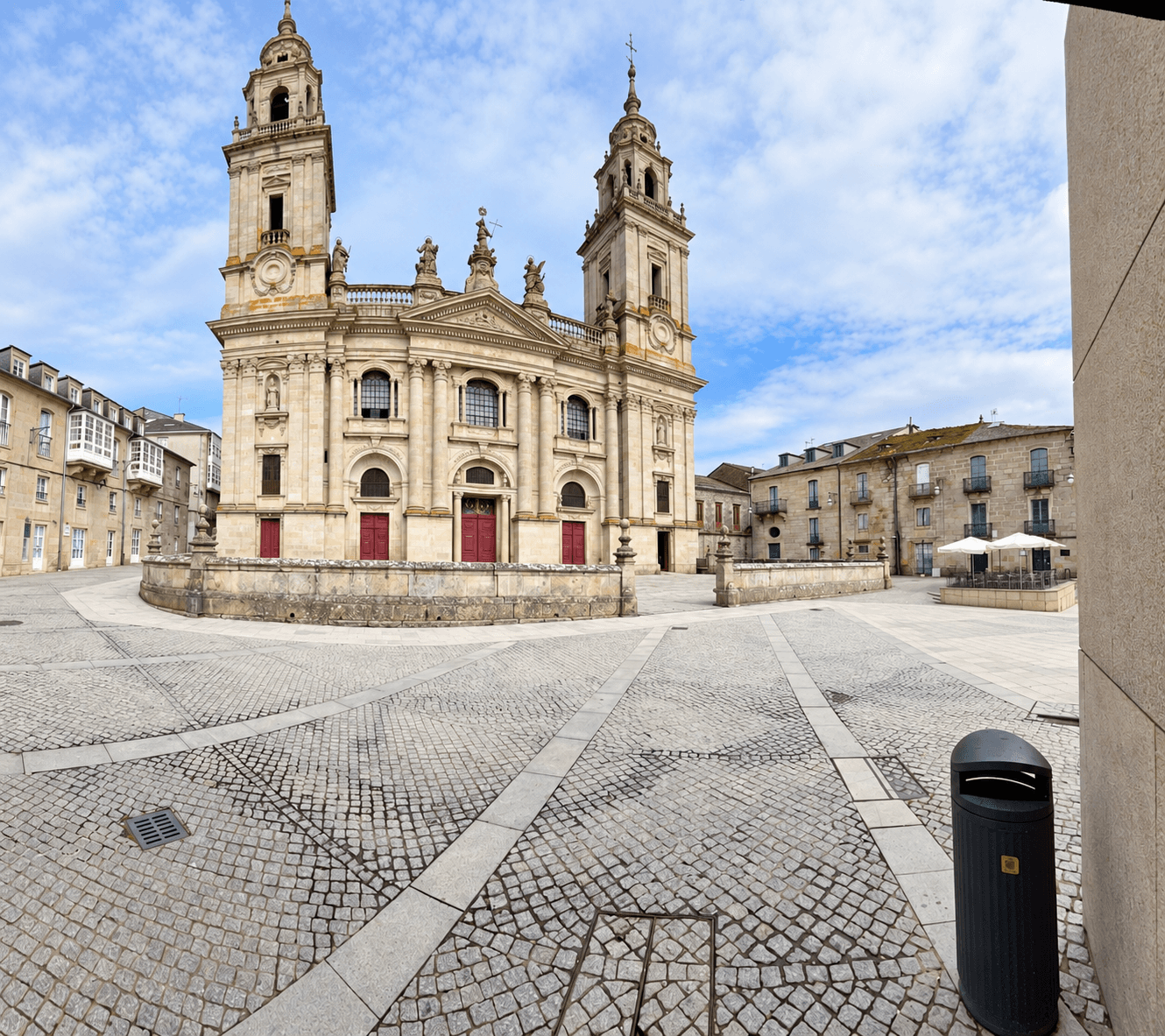
From the Rías Altas, the route heads inland to Lugo, whose Lugo Cathedral is an essential stop. Before going in, walk round the building to the north door, the great Romanesque jewel of the complex. Beneath a 16th-century porch with a star vault, a seated marble Christ in Majesty from the 12th century presides over the portal, and from its centre hangs a curious capital-shaped pendant depicting the Last Supper, with St John asleep beside Christ. A Latin couplet describes the scene, in which the word DOMINI is abbreviated with a rounded D related to our @ sign. The pendant even made it onto a postage stamp in 1969.
The cathedral was begun in 1129 under Master Raimundo and declared finished in 1273, although the following centuries continued to transform it. If it's tradition you're after, note two dates: 15 August, the feast of the Virgen de los Ojos Grandes, and 5 October, San Froilán's day, the high points of Lugo's calendar.
Oseira: the village born of a monastery
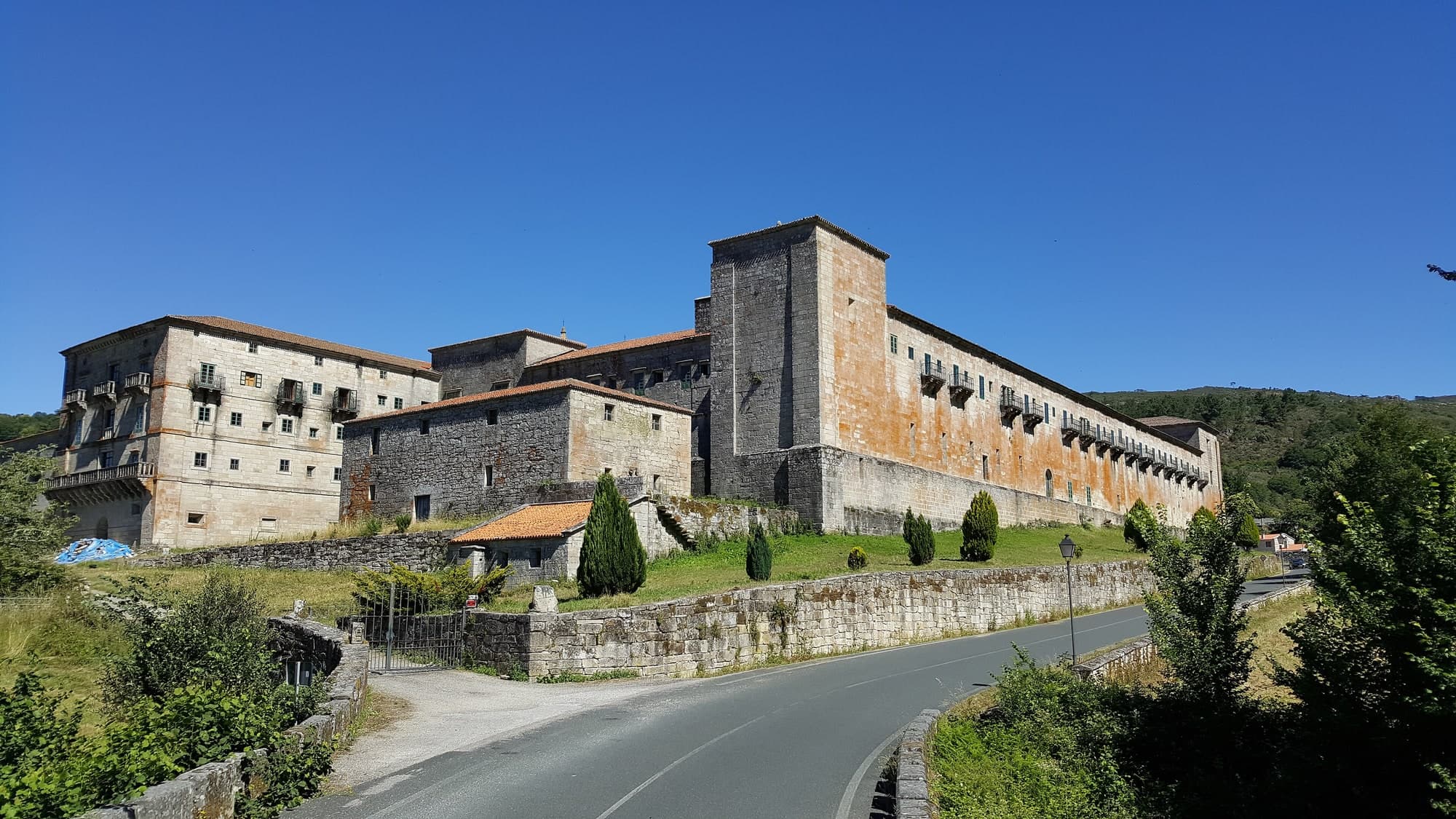
Heading south into the province of Ourense, we reach Oseira, a parish and locality in the municipality of San Cristovo de Cea. Those who come here usually have a very clear destination in mind: the Monastery of Santa María la Real de Oseira, which stands within the parish boundaries and gives it much of its identity. The place's very official name, Santa María a Real de Oseira, binds village and monastery together in the place name itself.
It's worth bearing this dual nature in mind when planning your visit: rather than a conventional town, Oseira is a parish territory in which the monastic complex is the great point of reference. This is rural Galicia of scattered hamlets, where traditional life was organised for centuries around the parish and the monastery.
Ourense and its Cathedral of San Martín
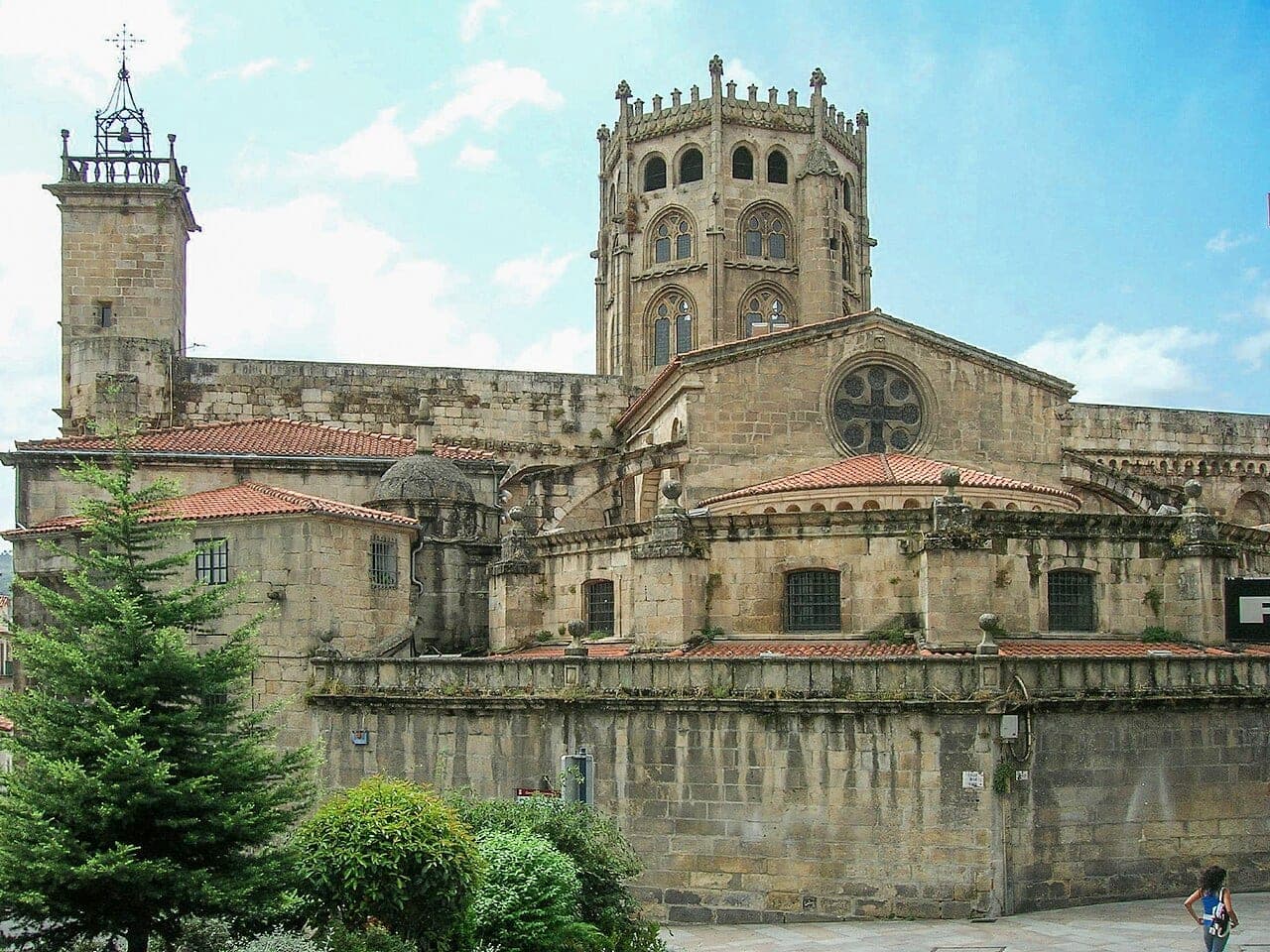
Close by lies the city of Ourense, with another must-see stop: Ourense Cathedral, one of the crowning buildings of the Middle Ages in Galicia. Built between the second half of the 12th century and the first half of the 13th, with its high altar consecrated in 1188, it is dedicated to St Martin. Its portals show the influence of the Compostela school of Master Mateo, the same sculptural tradition that shines in Santiago, while the architecture looks in some respects to the Cistercian world. That dual influence gives it a very distinctive character.
Soutomaior: camellias and medieval lineages
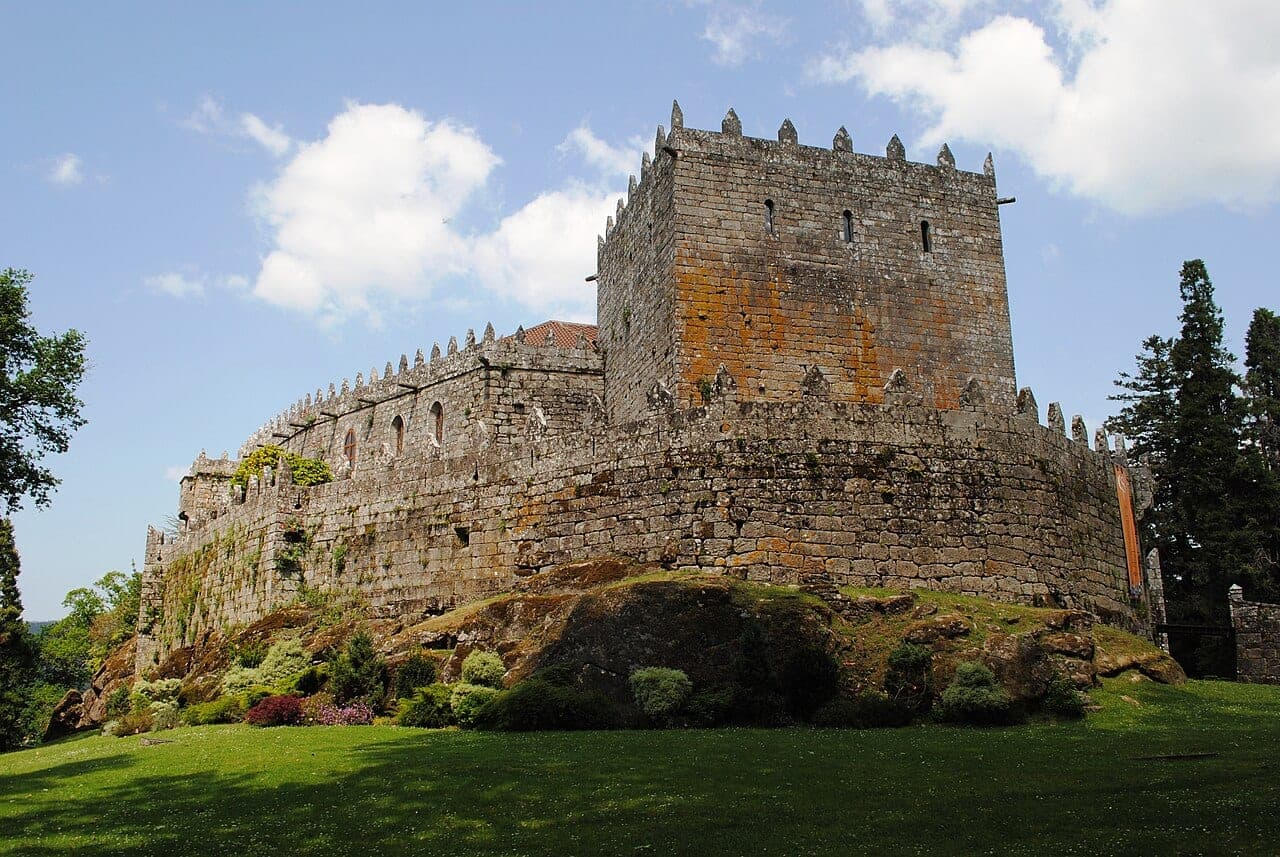
From Ourense we head down towards the Rías Baixas. Midway between Pontevedra and Vigo stands Soutomaior Castle, set in a 29-hectare estate that alone justifies the visit. Its botanical garden brings together 175 different tree species, some more than eight hundred years old, and a collection of 300 camellias of 22 varieties that earned it the title of International Camellia Garden of Excellence in 2012, awarded by the International Camellia Society. The camellia, incidentally, is one of the flowers most closely tied to the landscape of Galicia's pazos (manor houses) and gardens.
The fortress, built in the 12th century, was the cradle and seat of power of the Soutomaior family, one of the most influential lineages of medieval Galicia. Its most famous resident was Pedro Madruga, who in the 15th century strengthened its defences and adapted the walls to the new ways of warfare.
Tui, the frontier on the Miño
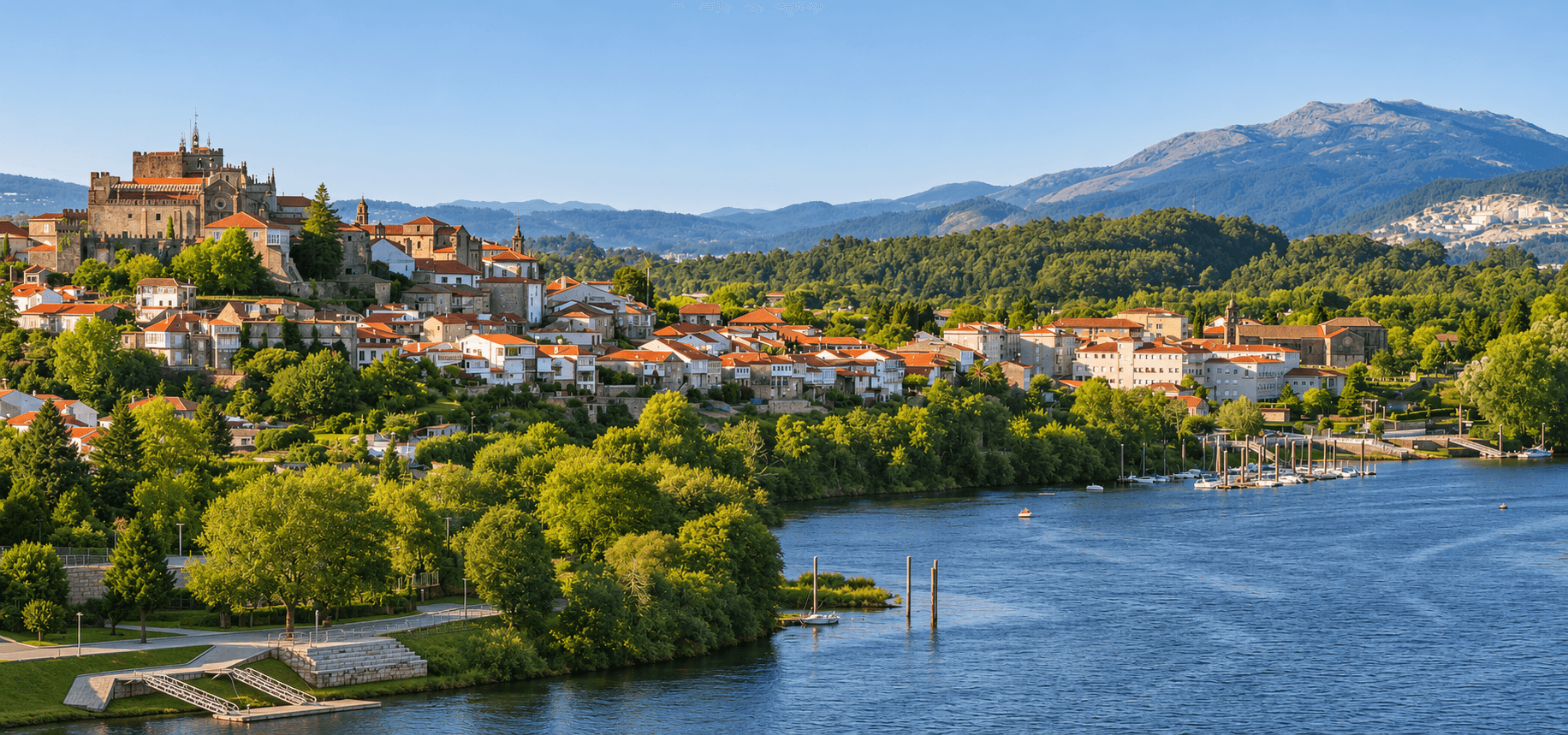
We finish in Tui, which looks out over the Miño and, across the river, to Valença in Portugal, with which it has formed a 'eurocity' since 2012. The two are linked by, among others, the venerable international bridge designed by the La Rioja-born engineer Pelayo Mancebo, which has been part of the landscape on both banks for more than a century. Tui was the capital of one of the seven provinces of the old Kingdom of Galicia and is still an episcopal see.
The main draw is the Cathedral of Santa María (Tui), set at the very top, on the hill once occupied by the ancient hillfort of Tude. It looks more like a castle than a church: crenellated towers, wall walks and passageways. Work began in 1120 and continued until 1180, resulting in a fully Romanesque building that later centuries went on to enrich. Nearby, the Diocesan Museum rounds off the visit.
Route summary
- Betanzos: Gothic old town and the Andrade legacy.
- Lugo: Romanesque cathedral and the San Froilán festivities.
- Oseira: rural parish and the monastery of Santa María la Real.
- Ourense: Cathedral of San Martín and the mark of Master Mateo.
- Soutomaior: medieval castle and camellia garden.
- Tui: fortress cathedral and the border with Portugal.
Tips for planning your trip
The easiest way to do the route is by car, spread over several days, because the distances between stages, while manageable, stretch out on minor roads. For most of these stops, the listings in our catalogue recommend travelling between May and September, when rain is less frequent; even so, always pack a waterproof and comfortable shoes with good grip, as the cobbled streets of Betanzos and Tui get slippery in the damp.
If you want to experience the traditions up close, time your trip to coincide with a festival, such as those in August or October in Lugo, and arrive early on those dates. And save some time for what isn't in any guidebook: a chat at a market, a stroll by the river or an afternoon watching the light fall over the Miño.
The route in this article
8 stops · 307 km by car. See them on the map and plan the trip in a couple of steps.
Guides by style
Places in this article
 Village
Betanzos
Once the capital of one of the seven provinces of the Kingdom of Galicia, Betanzos de los Caballeros keeps a historic quarter dotted with Gothic monuments high on its hilltop.
 Village
Tui
An episcopal city overlooking the Miño, facing Portugal, with a fortress-like cathedral, Baroque and Gothic convents and Monte Aloia, full of hillfort mysteries.
 Village
Osera
A parish in San Cristóbal de Cea, in the province of Ourense, home to the Monastery of Santa María la Real – the main reason to make the trip to this corner of Galicia.
 Cathedral
 of Santa María (Tui)
Romanesque in origin and later reworked in the Gothic style, Tui Cathedral crowns the highest hill in the town, overlooking the River Miño and the border with Portugal.
 Monastery
 of Santa María la Real de Oseira
A Cistercian monastery of royal foundation in Ourense, now Trappist, whose economic and social influence shaped the surrounding area and lands much further afield for centuries.
 Castle
Soutomaior Castle
The medieval fortress of the Soutomaior family, transformed into a Neo-Gothic palace and museum, surrounded by a botanical garden with centuries-old trees and an award-winning camellia collection.
 Cathedral
Lugo Cathedral
Romanesque in origin and Baroque in its best-loved corners, Lugo Cathedral holds a choir unique in Galicia and the Blessed Sacrament exposed day and night by papal privilege.
 Cathedral
Ourense Cathedral
Dedicated to Saint Martin, Ourense Cathedral is one of Spain's great Romanesque churches and a masterpiece of the Galician Middle Ages, with portals that bear the legacy of Master Mateo.
Article written with the help of artificial intelligence based on Wikipedia (CC BY-SA 4.0) and our catalogue, and reviewed by the El Trotamundos Curioso team.