
Gaudí in Spain: what to see, from Barcelona to León and Comillas
Gaudí in Spain: Sagrada Família, Casa Batlló, La Pedrera, Park Güell, Casa Vicens, Colònia Güell, Casa Botines and El Capricho in Comillas.
In this article
Antoni Gaudí is probably the most recognisable Spanish architect in the world. One glimpse of a twisted chimney, an undulating bench covered in trencadís or a façade that seems to move is enough to know whose work it is. Born in Reus in 1852 and died in Barcelona in 1926, he left most of his legacy in the Catalan capital, but he also designed buildings outside Catalonia that are worth a trip in their own right. This route brings together the essentials for planning a Gaudí getaway, starting in Barcelona and ending in the north of the Peninsula.
Barcelona, Gaudí's city
If there is one place to focus your visit, it is Barcelona. This is where you will find his most famous works, several of them UNESCO World Heritage Sites, and where you can trace his evolution from his early commissions, still influenced by Orientalism and historicism, to the maturity of a language all his own, inspired by nature.
Casa Vicens, the starting point
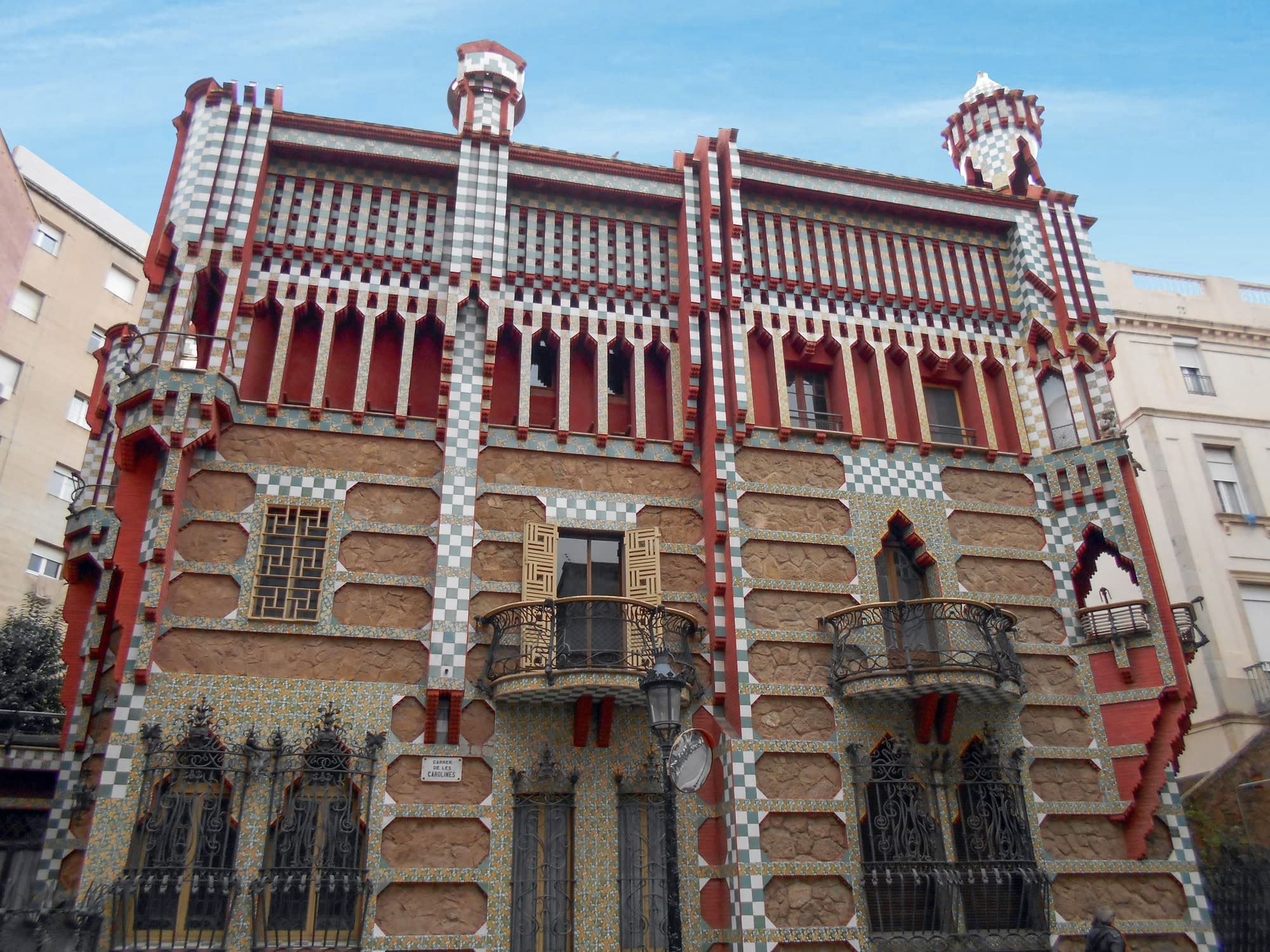
It makes sense to start at the beginning. Casa Vicens, in the Gràcia neighbourhood, was the first major house Gaudí designed, in the early 1880s. It is a summer residence with a Mudéjar and oriental feel, featuring colourful tiles, brick and wrought iron. Seeing it first helps you understand where his style began: his love of ceramics, colour and craftsmanship is already here, even though the forms are still straight.
Park Güell, a garden for strolling
Park Güell began as a garden city project promoted by Eusebi Güell, Gaudí's great patron, and ended up becoming a park. It is one of the most enjoyable visits in the city: the grand staircase with the famous trencadís dragon, the hypostyle hall with its columns and the large square with its serpentine bench, from which you can look out over Barcelona all the way to the sea. As it is on high ground and in the open air, it is a good plan for first thing in the morning, before the heat sets in and the groups arrive.
Casa Batlló and La Pedrera, Passeig de Gràcia
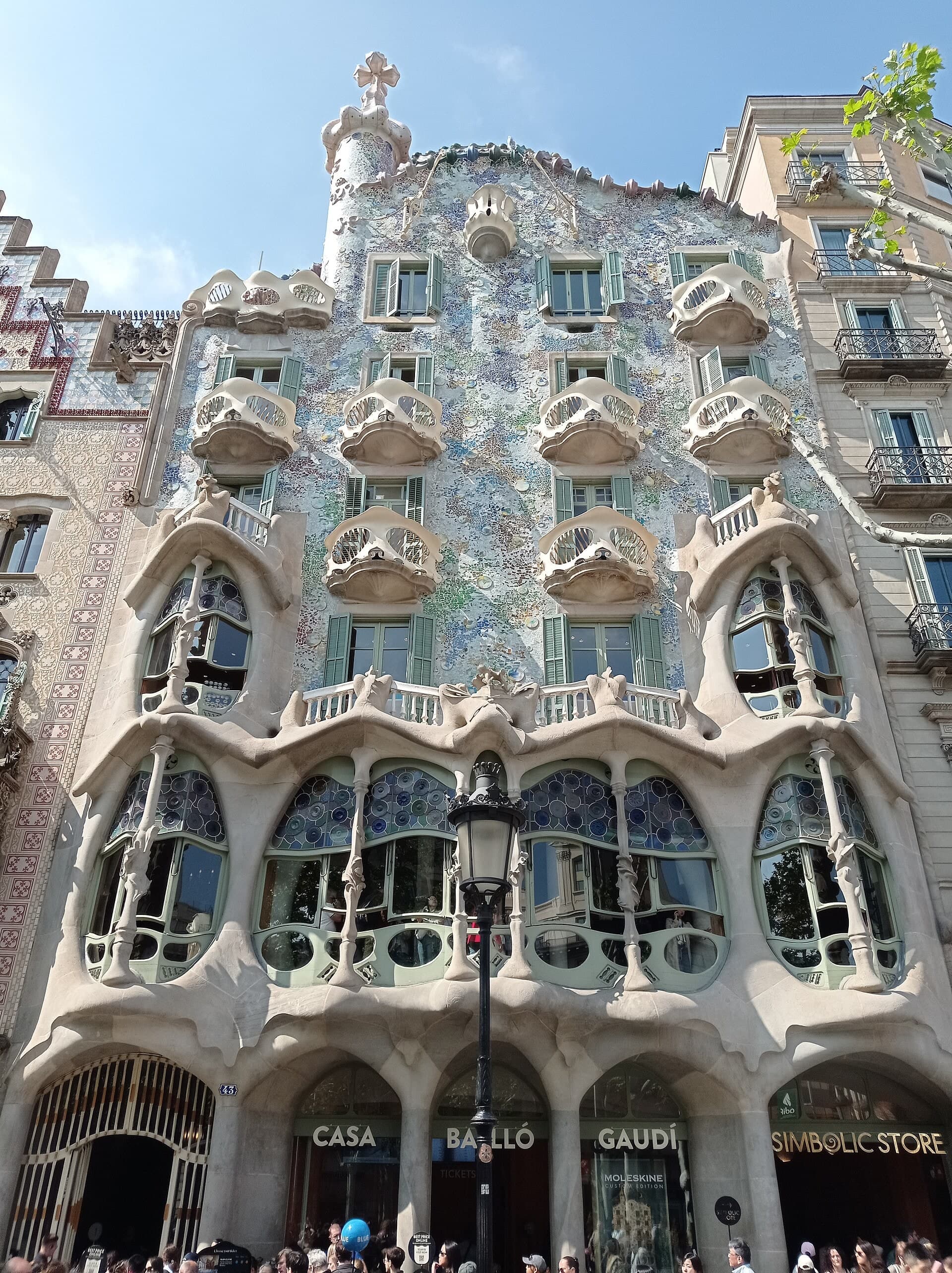
Just a few blocks apart on Passeig de Gràcia stand two of his most celebrated houses. Casa Batlló was a remodelling of an existing building that Gaudí transformed completely: the ceramic and glass façade, the mask-shaped balconies and the roof reminiscent of a dragon's back have inspired all sorts of interpretations, from the legend of Sant Jordi to the seabed.
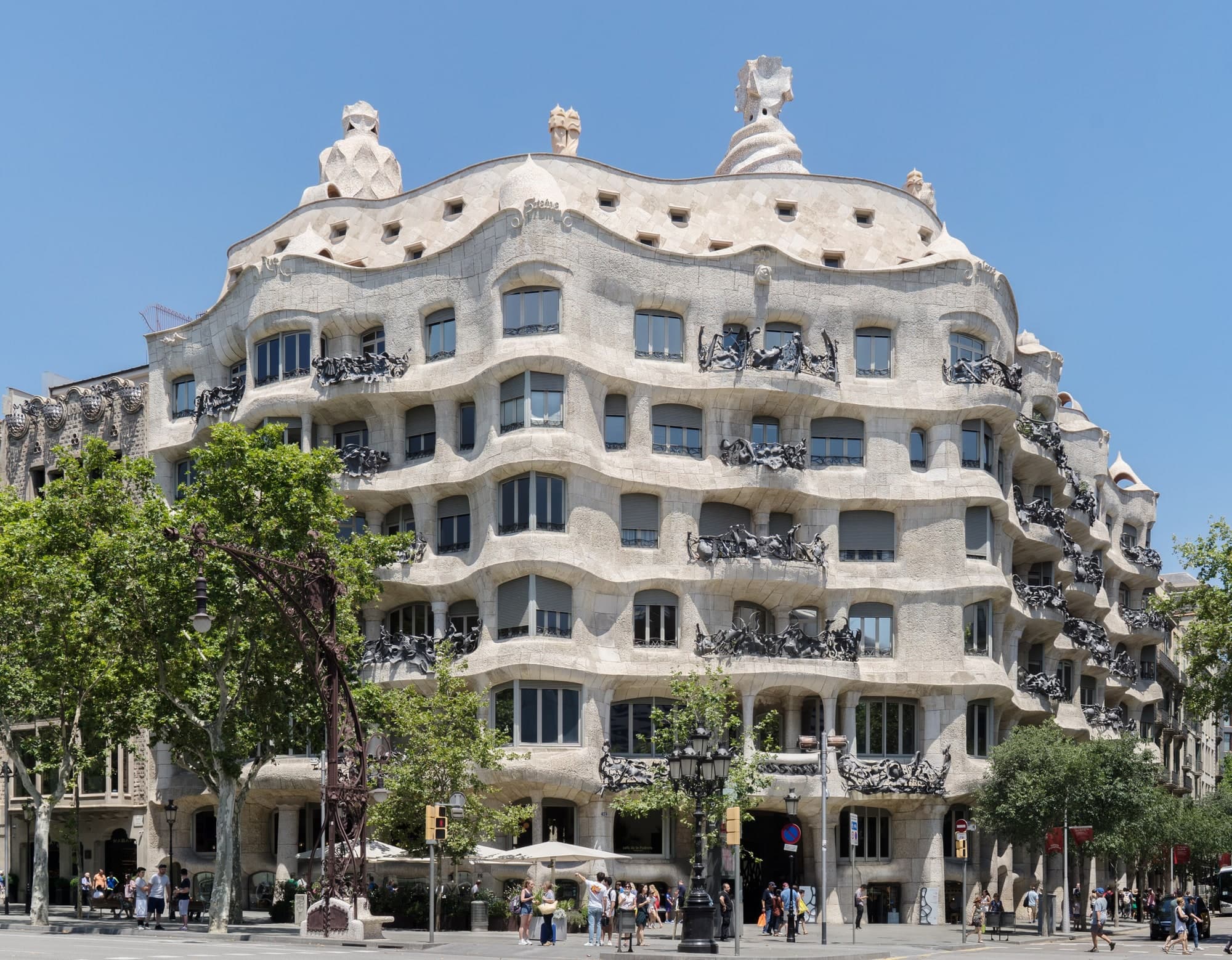
Very close by, La Pedrera, the popular name for Casa Milà, is a huge mass of undulating stone with barely a straight line in sight. Its roof terrace, where the chimneys and stairwell exits have been turned into sculptures, is one of the most photographed spots in the city. Visiting both on the same day is easy and lets you compare two very different ways of conceiving the bourgeois home.
Sagrada Família, a life's work
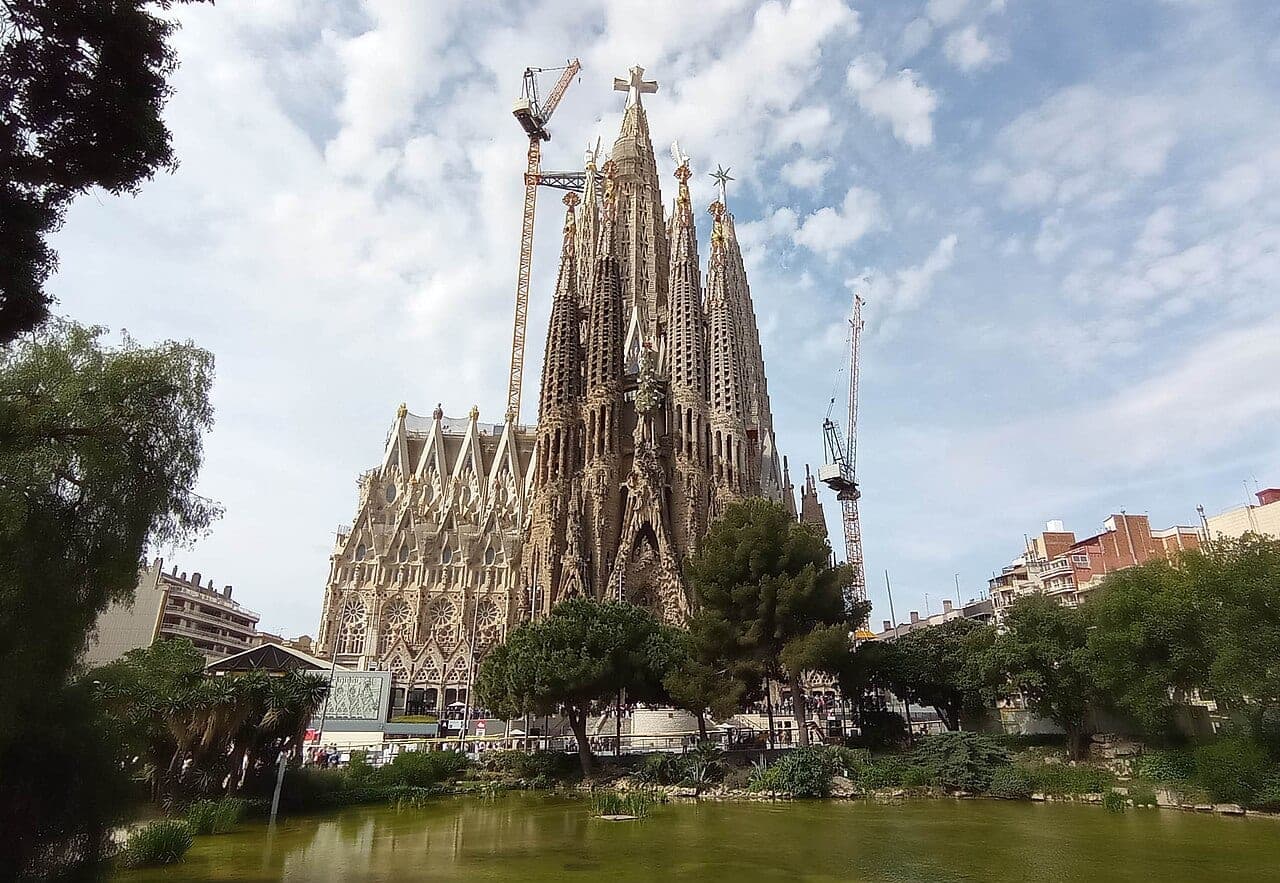
No Gaudí route is complete without the Sagrada Família. Gaudí took charge of the church shortly after work began and devoted the rest of his life to it, especially his final years. It is still under construction more than a century later, and that is precisely part of its appeal. Take time over the façades, laden with symbolism, and go inside to see the interior, where the columns branch out like a stone forest and the light from the stained-glass windows bathes the space in colour depending on the time of day. It is the most sought-after visit in the city, so it is best to plan it well in advance.
Colònia Güell, Gaudí's laboratory
On the outskirts of Barcelona, in Santa Coloma de Cervelló, lies Colònia Güell, a textile workers' colony also promoted by Eusebi Güell. Gaudí designed a church for it, of which only the crypt was ever built. Even so, it is a key piece: here he tested structural solutions, such as inclined arches and columns, which he would later apply to the Sagrada Família. It is a quieter visit than those in the centre and highly recommended for anyone wanting to go beyond the icons.
Gaudí outside Catalonia
One of the great attractions of this theme is that it lets you travel through other regions. Gaudí built little outside Catalonia, which is why each of these works is something of a rarity.
El Capricho de Gaudí, in Comillas
On the Cantabrian coast awaits El Capricho de Gaudí, whose official name is Villa Quijano. It was commissioned by Máximo Díaz de Quijano, an indiano (a Spaniard who had made his fortune in the Americas) who wanted to build his residence here. Gaudí designed it and the work was carried out between 1883 and 1885 under the direction of Cristóbal Cascante, an assistant to the architect from Reus, making it one of the few works he did not personally supervise on site. The result is a surprise amid the Cantabrian landscape: a building clad in ceramic tiles, with mitred arches, exposed-brick corbels and finials in the form of small temples or domes. It is contemporary with Casa Vicens, and comparing the two is highly revealing.
Round off your visit to Comillas with the neighbouring Sobrellano Palace, another symbol of the splendour the town enjoyed in the late 19th century. For the north, the best time to go is from May to September, when rain is less frequent.
Casa Botines, in León
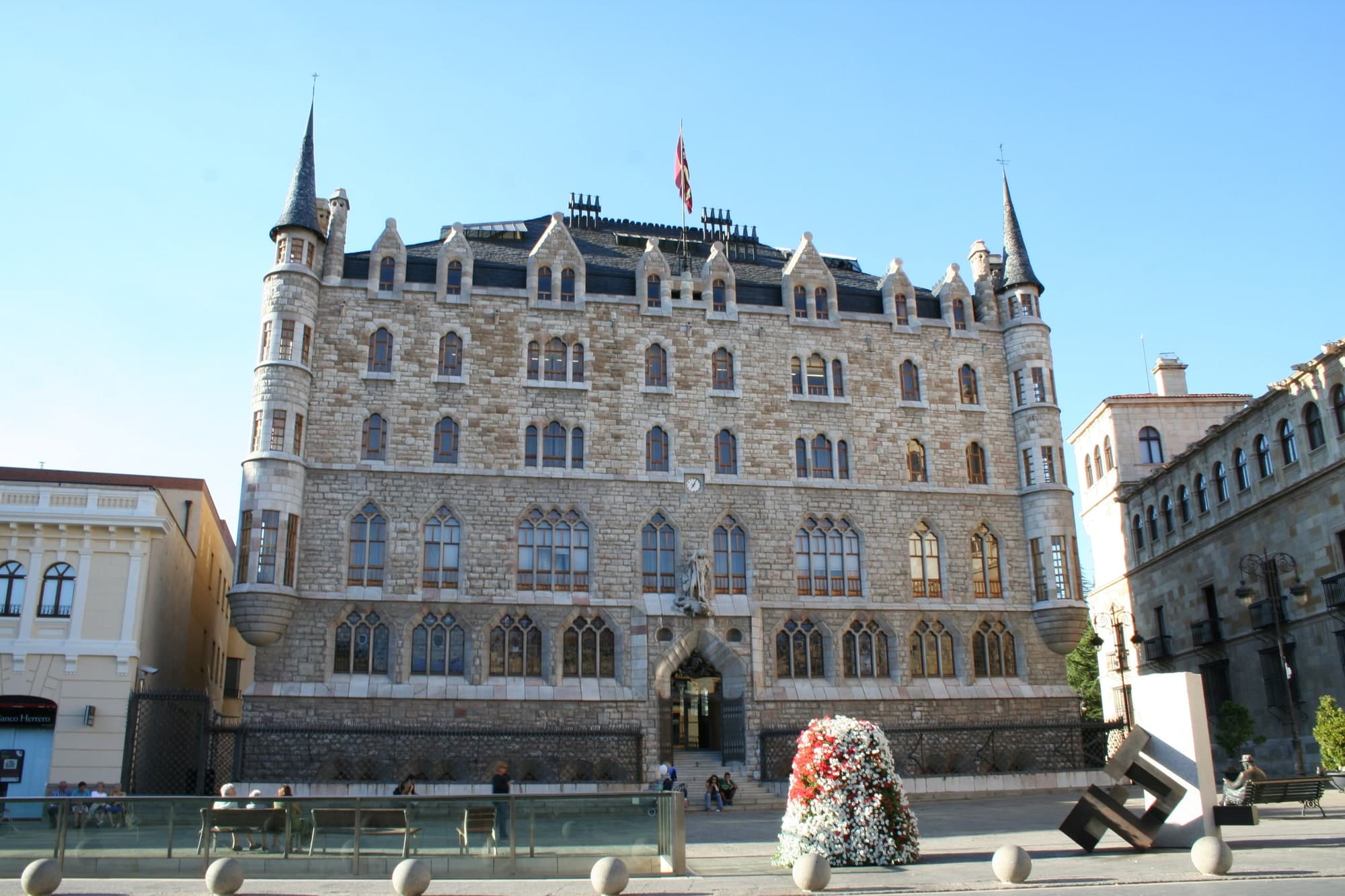
Right in the centre of León, Casa Botines shows a more restrained side of the architect. It is a Neo-Gothic-style building with corner turrets, designed to combine commercial use and flats. Above the door stands a sculpture of Saint George and the dragon. Its proximity to León Cathedral and the Episcopal Palace means you can link medieval Gothic with Gaudí's reinterpretation of the style centuries later in a single stroll.
How to plan the route
For a Gaudí-focused break in Barcelona, it is sensible to allow at least two or three days:
- Day 1: Casa Vicens in the morning, followed by Park Güell (both in the upper part of the city).
- Day 2: Casa Batlló and La Pedrera on Passeig de Gràcia, and the Sagrada Família in the afternoon.
- Day 3: an excursion to Colònia Güell.
The works in the north fit better into separate trips: Comillas on a route along the Cantabrian coast, alongside villages such as Santillana del Mar or San Vicente de la Barquera, and León on a getaway through Castile and León.
Some general tips: many of these sites are in high demand, so booking ahead and arriving early will save you queuing, especially on public holidays and in summer. Wear comfortable shoes, as Park Güell has steep slopes and the roof terraces involve climbing up and down stairs. And don't stop at the façades: with Gaudí, the interior details, the light and the materials matter just as much as the silhouette.
The route in this article
8 stops · 933 km by car. See them on the map and plan the trip in a couple of steps.
Guides by style
Places in this article
 Church
Sagrada Família
Gaudí's unfinished masterpiece, a stone forest of a temple under construction since 1882 that is now the tallest church in the world and the crowning jewel of Catalan Modernisme.
 Landmark building
Casa Batlló
La obra en la que Gaudí, en plena madurez, transformó un edificio corriente del paseo de Gracia en un despliegue de formas orgánicas inspiradas en la naturaleza.
 Landmark building
La Pedrera
La Casa Milà, apodada La Pedrera, es la obra de Gaudí en plena madurez: un edificio modernista del paseo de Gracia donde la arquitectura imita las formas libres de la naturaleza.
 Landmark building
Park Güell
Gaudí dreamt up a garden city for Barcelona's bourgeoisie here; its commercial failure left us one of his most imaginative parks, with Barcelona spread out at its feet.
 Landmark building
Casa Vicens
La primera gran obra de Gaudí, en el barrio de Gracia: una casa orientalista de azulejos y ladrillo que anunció el modernismo y hoy es Patrimonio de la Humanidad.
 Landmark building
Colònia Güell
A Modernista workers' colony beside the Llobregat river, where Gaudí tested out in his unfinished crypt the ideas that would later shape the Sagrada Família.
 Landmark building
El Capricho de Gaudí
En Comillas, la Villa Quijano o El Capricho es una de las pocas obras de Gaudí fuera de Cataluña, un juego de azulejos y aires orientales que hoy puede visitarse como museo.
 Landmark building
Casa Botines
Un Gaudí neogótico en pleno centro de León: la Casa Botines, antiguo almacén y vivienda convertida hoy en museo, es una de las tres obras del arquitecto fuera de Cataluña.
Article written with the help of artificial intelligence based on Wikipedia (CC BY-SA 4.0) and our catalogue, and reviewed by the El Trotamundos Curioso team.