A Cantabrian Coast Route: Seafaring Towns from the Basque Country to Asturias
From Gaztelugatxe to Cudillero: seafaring towns, Gothic churches, seaside castles and tips for planning your Cantabrian coast trip.
In this article
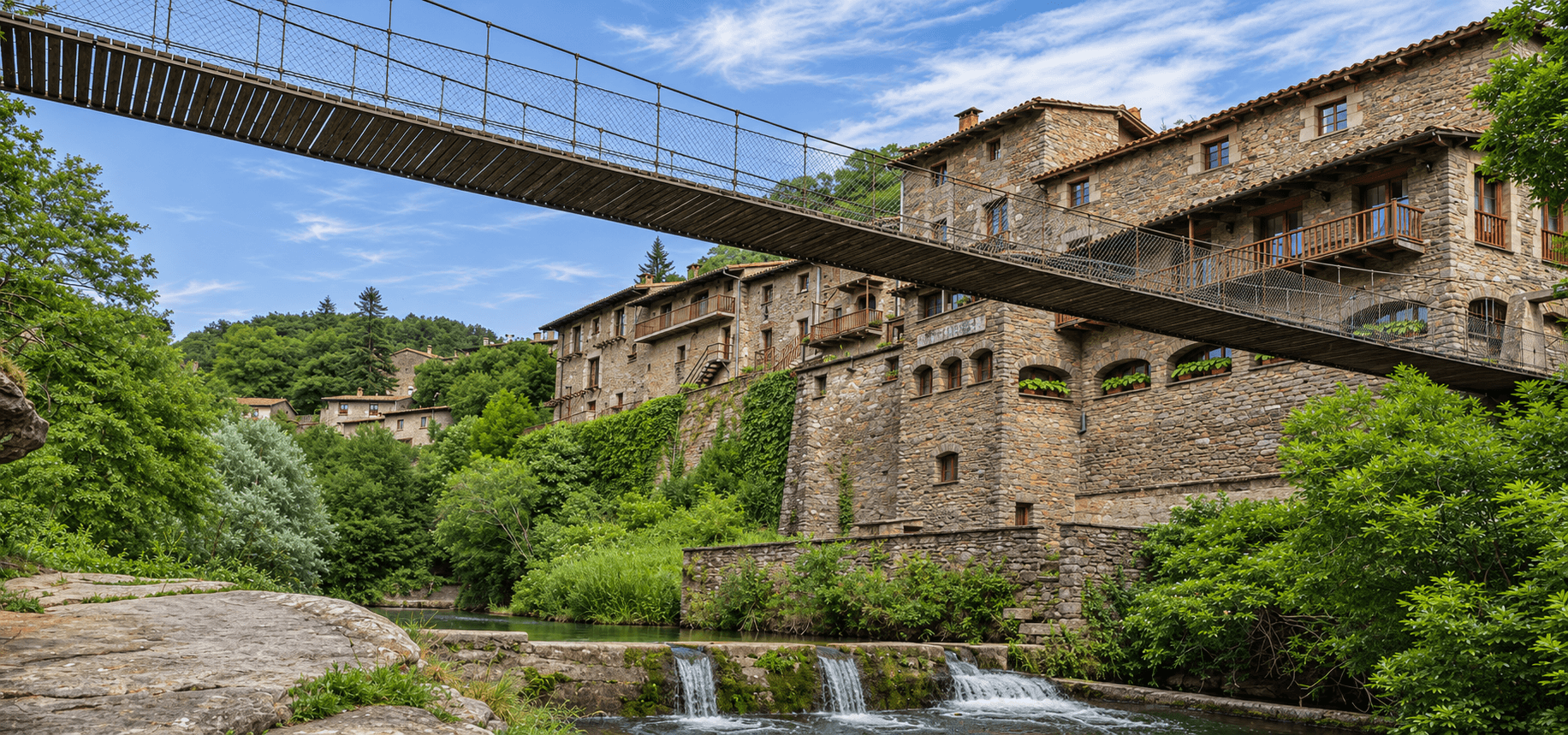
Some coastlines are made for rushing along; others ask you to stop at every bend. The Cantabrian coast belongs firmly to the latter. Among cliffs, fishing harbours and towns that have always lived facing the sea, this route links the Basque Country, Cantabria and Asturias along a common thread: churches and fortresses built in places as exposed as they are spectacular, and villages that still keep their age-old seafaring pulse.
We suggest travelling from east to west, by car and at an unhurried pace, with stops that can be lengthened or shortened depending on how many days you have.
Stage one: the Basque coast, from Getaria to Gaztelugatxe
The route can begin in Gipuzkoa, in Getaria, a seafaring town overlooking the sea and a natural starting point for getting to grips with this coastline. From here, the road heads towards Bizkaia, linking fishing villages whose houses huddle around their harbours.
Once on the Bizkaia coast, Lekeitio and tiny Ea are well worth a stop: two of those places where the harbour is still the heart of daily life. A little further west lies Mundaka, at the mouth of the estuary, and close by is Bermeo, with its Church of Santa Eufemia.
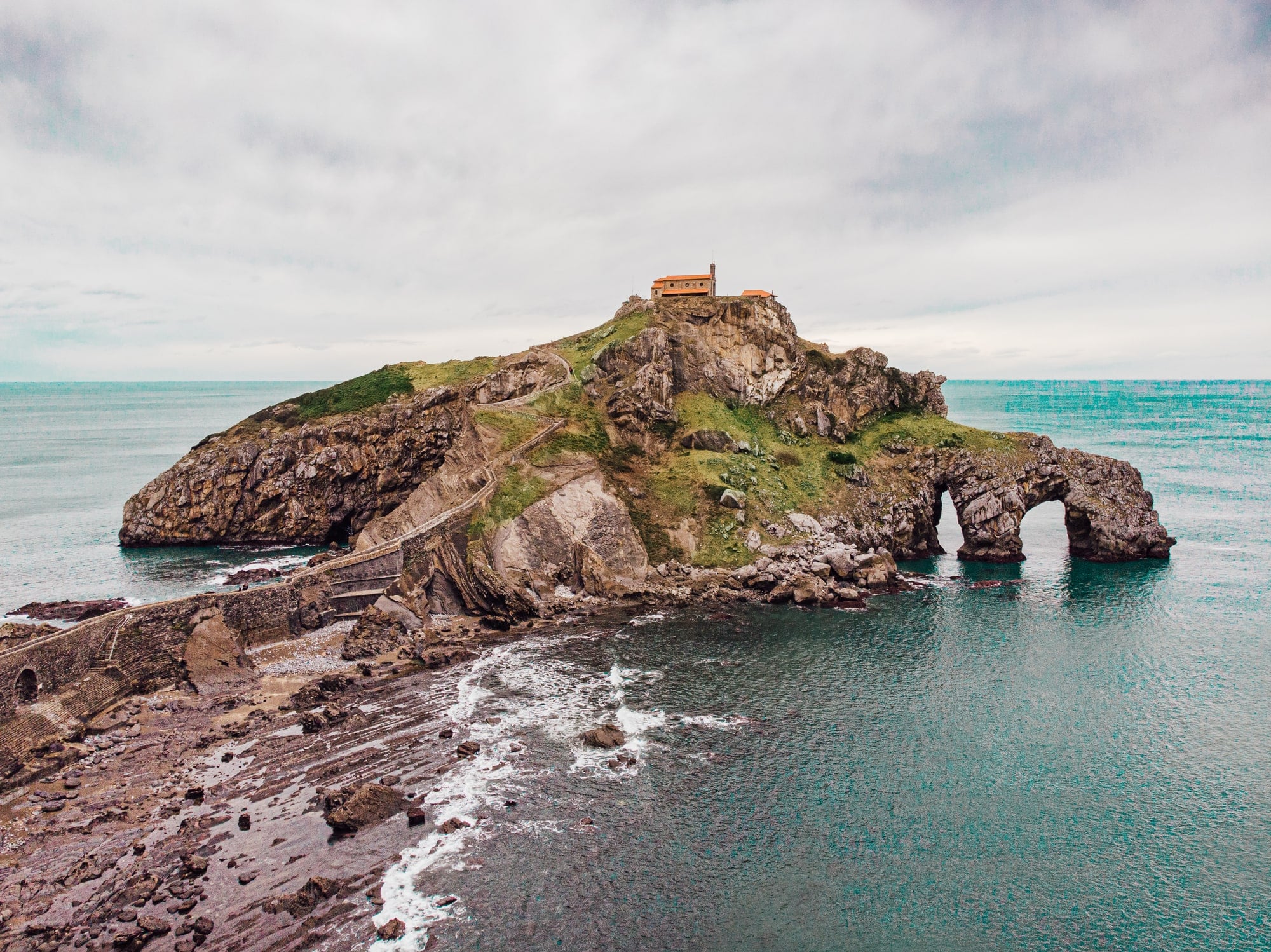
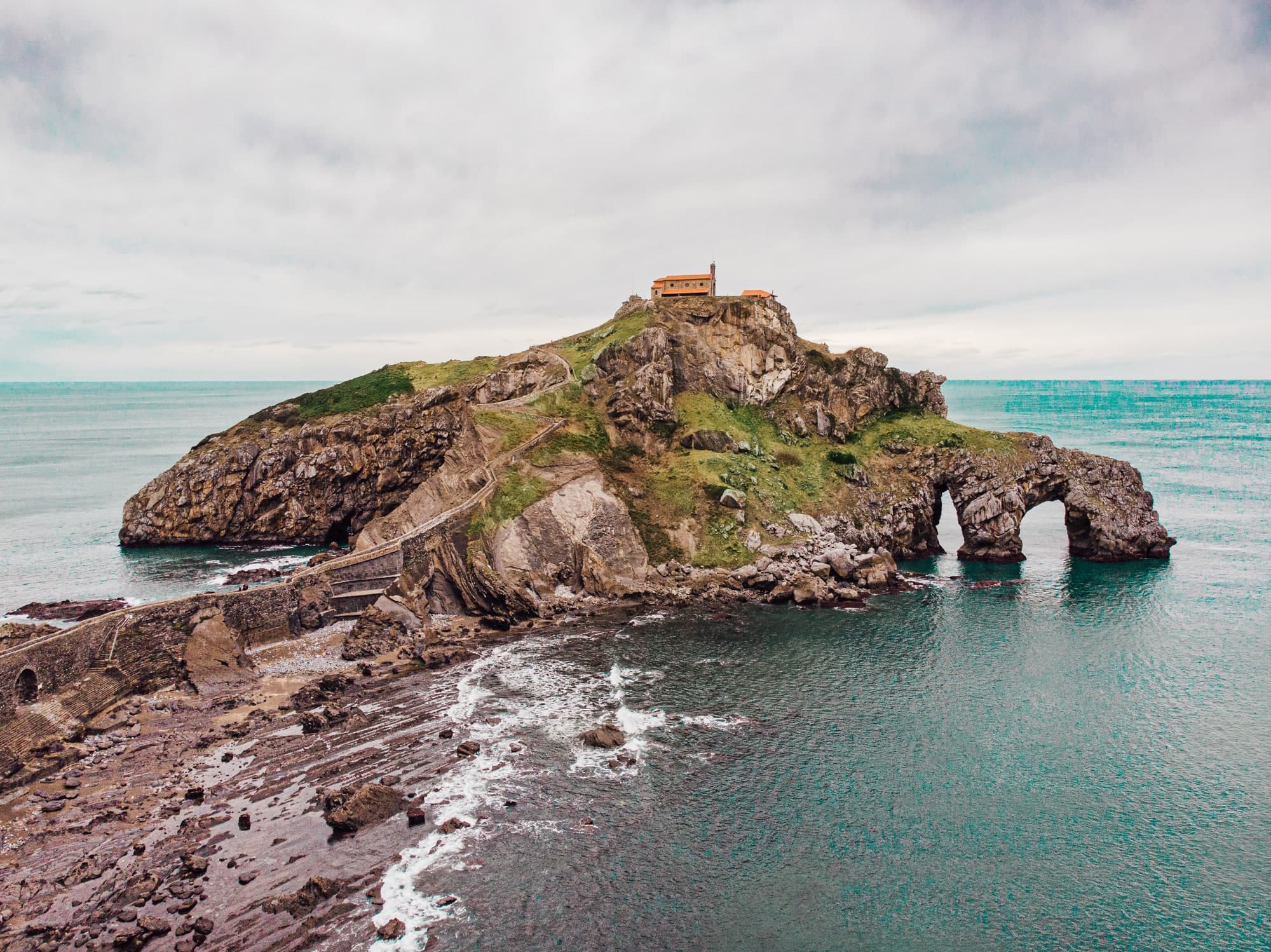
But the highlight of this stage comes just off Bermeo: the Hermitage of San Juan de Gaztelugatxe. Few views on the Bizkaia coast are as instantly recognisable. A rocky islet rises from the sea, joined to the mainland by a two-arched bridge; at the very top stands the hermitage, the goal of a walk on which landscape and history go hand in hand.
The sanctuary has its roots in the Early Middle Ages. It is dated to the 10th century, although some finds even point to the 9th, placing it among the longest-standing religious sites in the area. And it's worth looking at it through a historian's eyes: the hermitage wasn't built on virgin ground, but on a site previously occupied by a castle. That dual role as fortress and sanctuary neatly sums up what this coast was for centuries.
The climb takes some legwork: bring comfortable shoes, water and patience if you're going in high season, when access can get very crowded. Arriving early helps.
If you have time to spare in Bizkaia, Butrón Castle lies just a short way inland and makes a fine counterpoint to so much seascape.
Stage two: Castro-Urdiales, the gateway to Cantabria
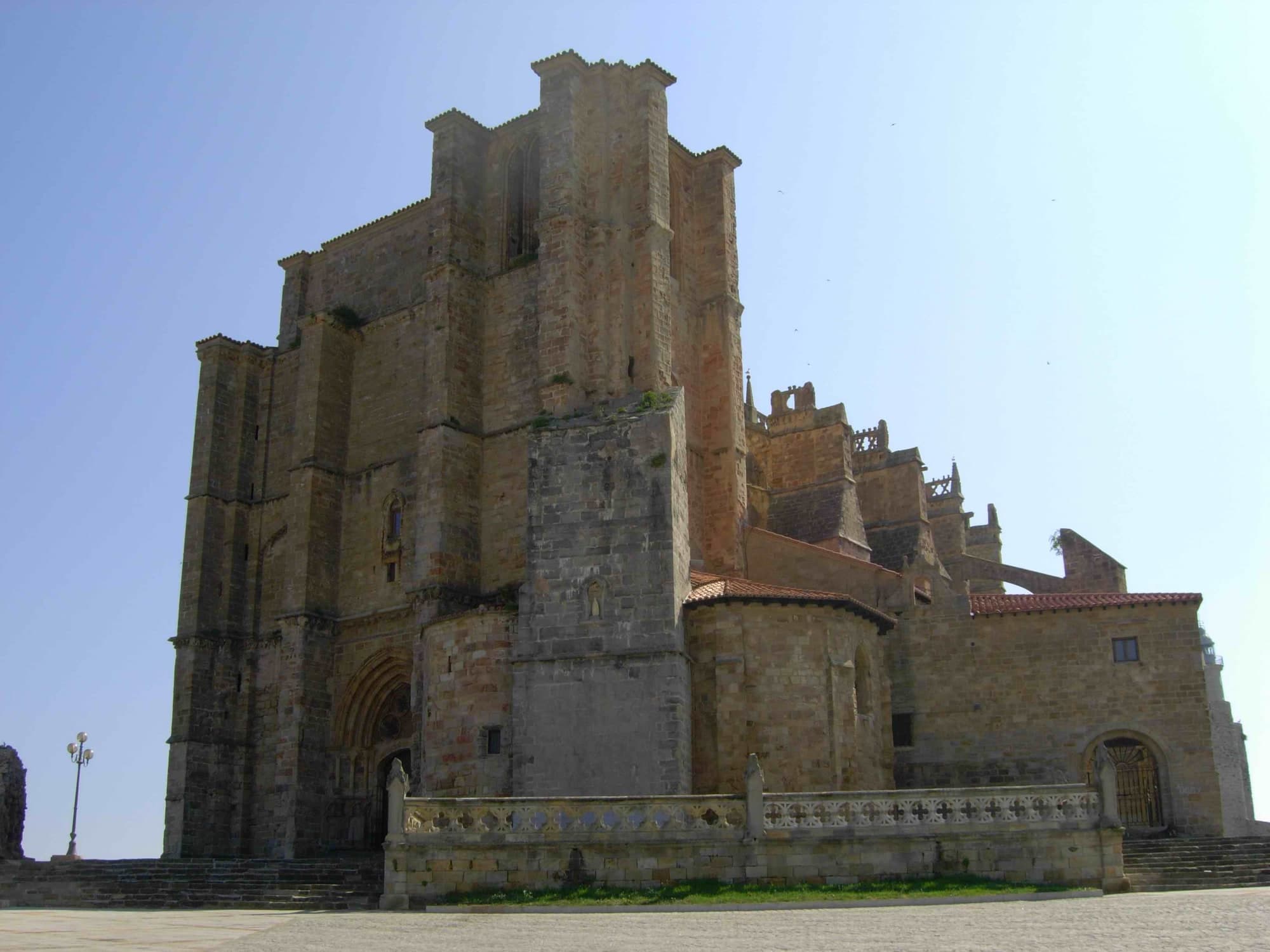
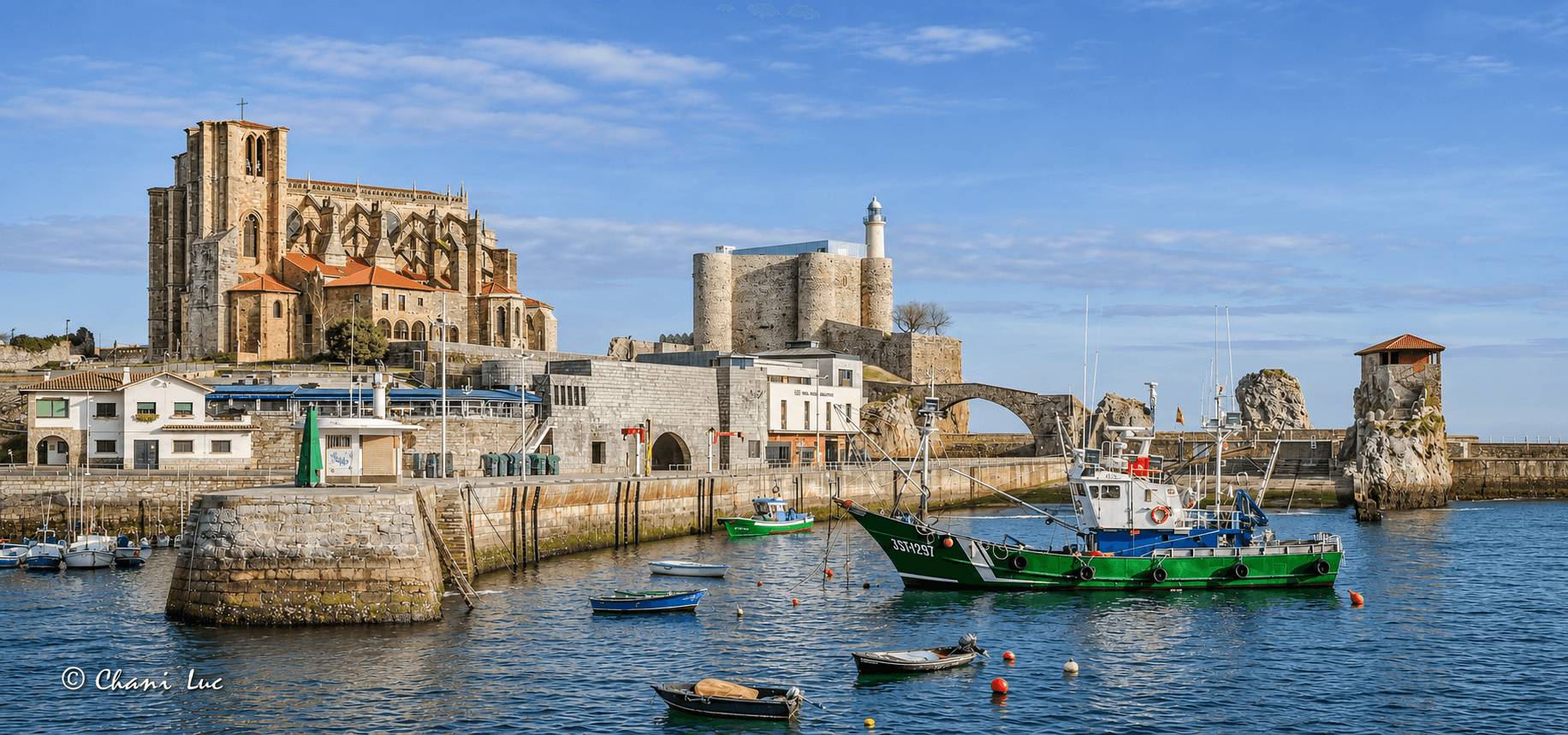
Crossing into Cantabria, the first major stop is Castro-Urdiales, home to one of the most powerful images of the whole route. The Church of Santa María de la Asunción (Castro-Urdiales) rises looking straight out over the Cantabrian Sea, with the castle-lighthouse as its neighbour and the fishing harbour at its feet. Few churches enjoy such a commanding setting.
It is a Gothic building whose construction stretched from the 13th to the 15th century. More than two hundred years of works that speak of the ambition of the project and the determination of a community set on endowing itself with a great church in such an exposed and visible spot. Seeing the church also means strolling through the most characteristic corner of the town, and from there it's easy to understand how local life has always revolved around the sea.
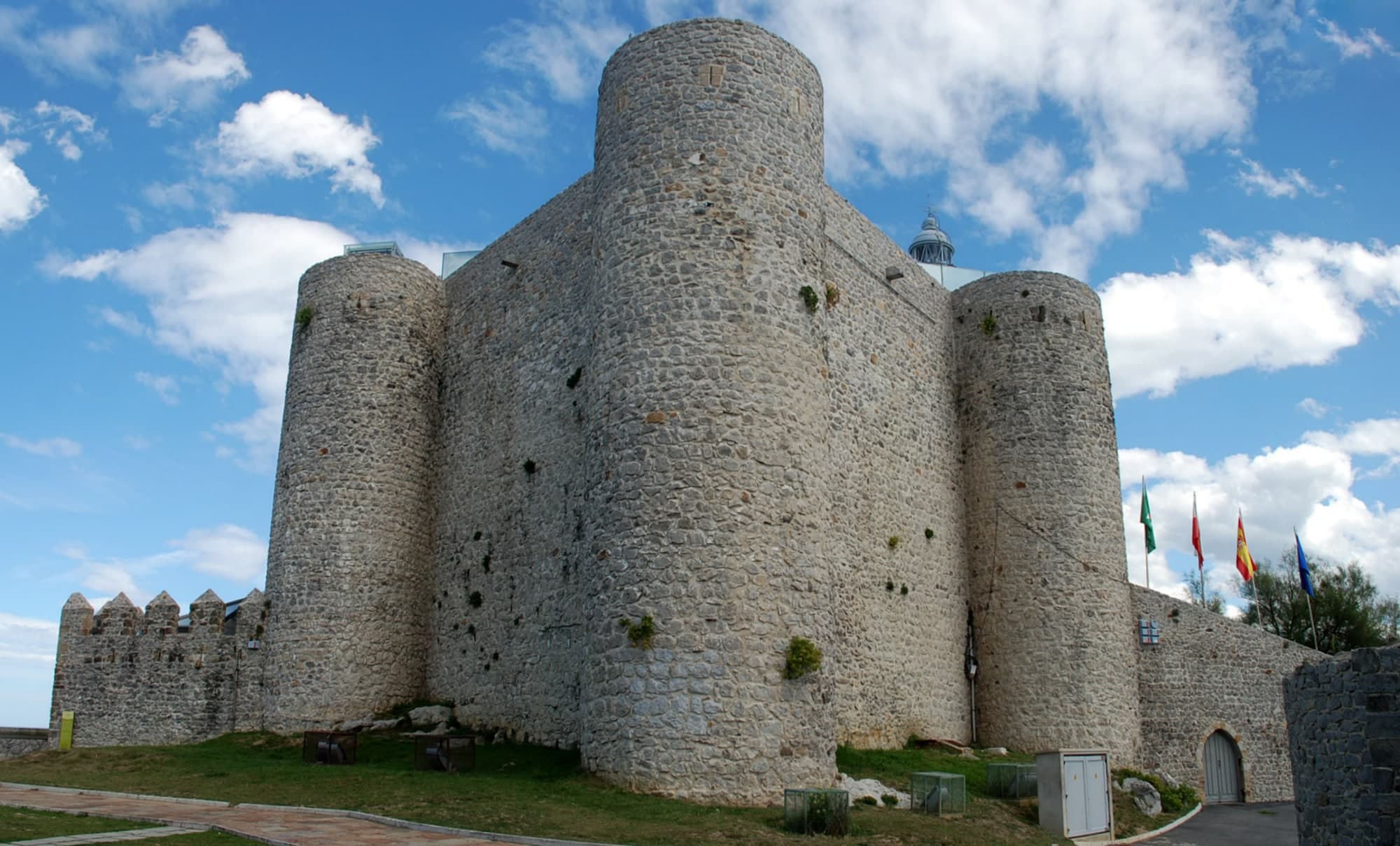
Beside it, Santa Ana Castle (Castro-Urdiales) completes the ensemble. Set aside time to wander the harbour and nearby streets without watching the clock.
Stage three: Santillana del Mar and San Vicente de la Barquera
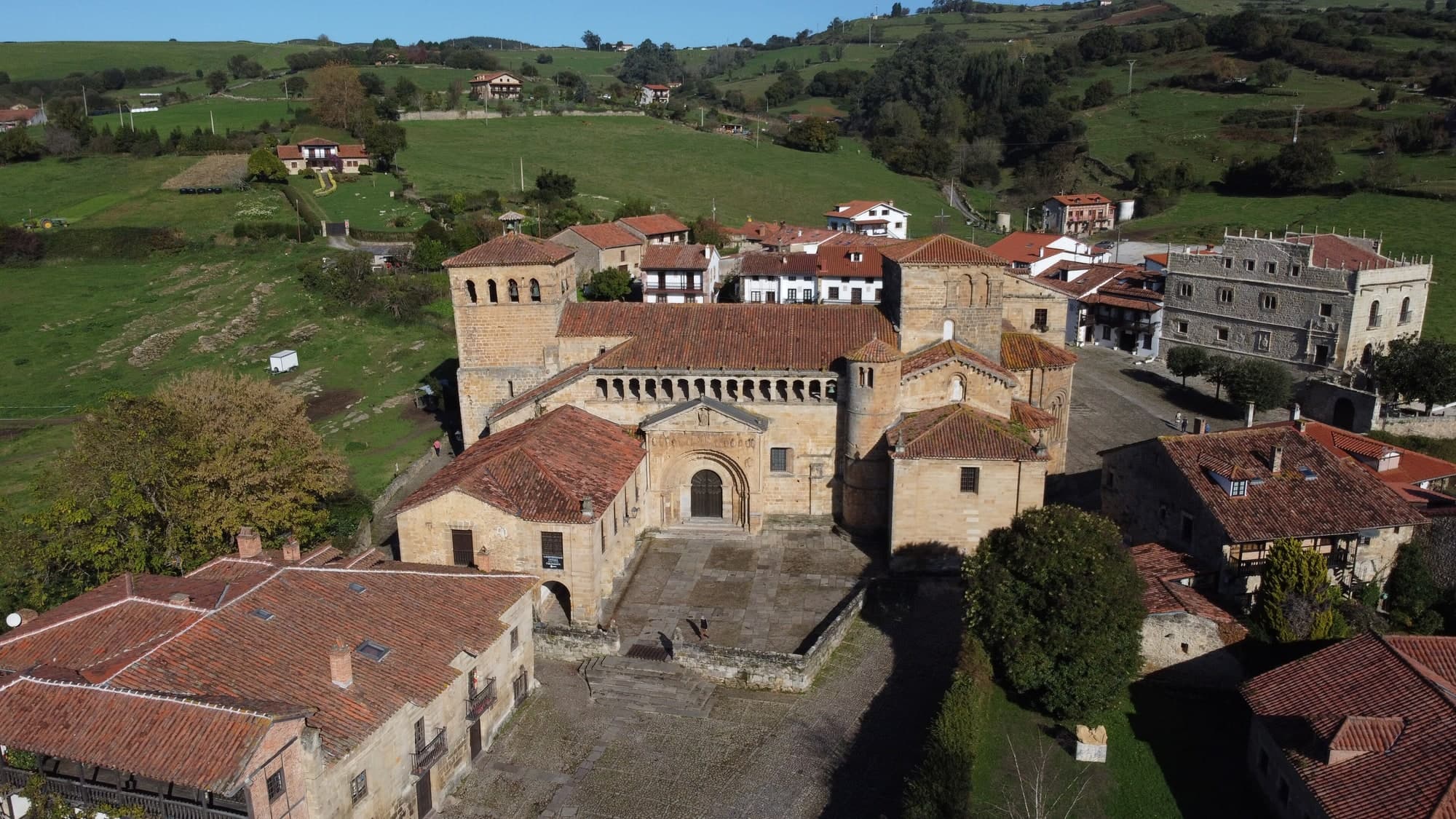
Heading west, the route strays slightly from the coastline to reach Santillana del Mar, one of the best-known medieval towns in northern Spain. Its great landmark is the Collegiate Church of Santillana del Mar, a jewel of Cantabrian Romanesque and reason enough to devote a leisurely morning to it. Strolling its cobbled streets is an essential part of the visit.
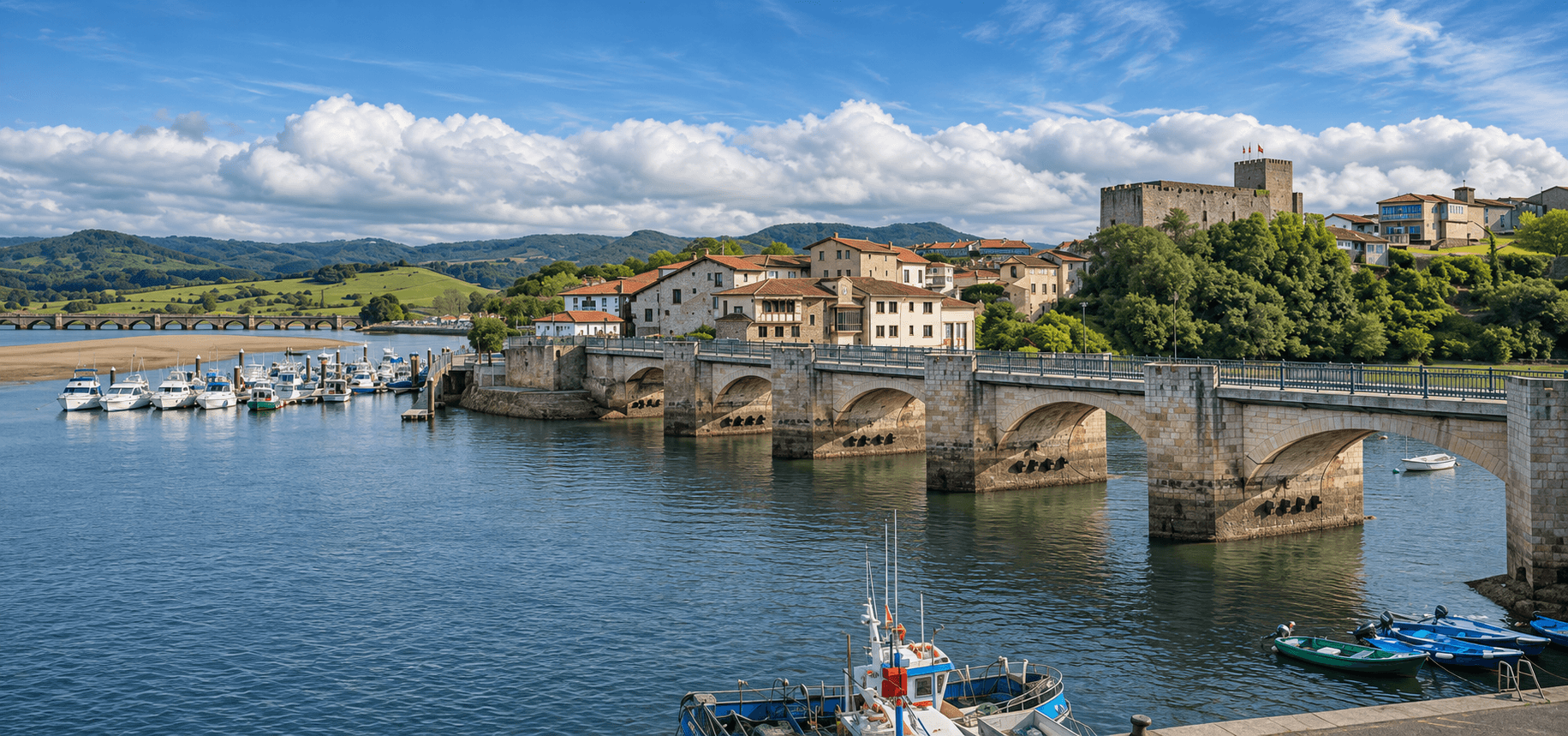
Back on the coast, San Vicente de la Barquera offers another of those unforgettable silhouettes: the town perched above the estuary, with San Vicente de la Barquera Castle and the Church of Santa María de los Ángeles (San Vicente de la Barquera) dominating the scene from on high. It's a good place to spend the night before entering Asturias, and on clear days the inland mountains peek out in the distance.
If a mountain detour tempts you, from here you can head up to Potes, in the heart of Liébana, swapping sea salt for the Picos de Europa for a day.
Stage four: Asturias, from Cangas de Onís to Cudillero
Once in Asturias, the route allows for one last inland detour to visit Cangas de Onís and, very close by, the Basilica of Covadonga, one of the most symbolically charged sanctuaries in the history of the Iberian Peninsula, set amid beautiful mountain scenery.
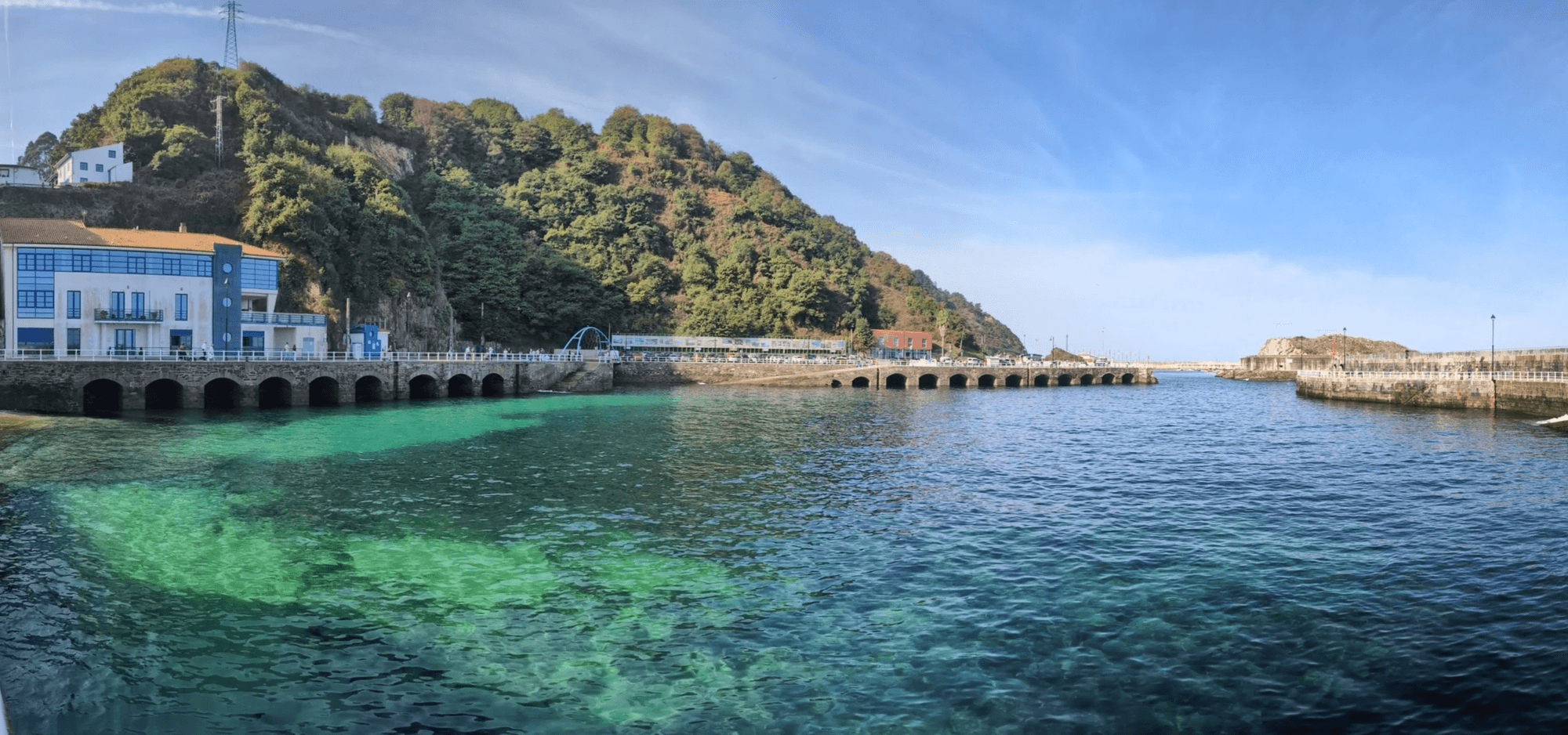
The grand finale returns to the sea: Cudillero, with its colourful houses stacked like an amphitheatre above the harbour, is one of the most photographed fishing villages on the Cantabrian coast. Here you'll find the Church of Jesús de Nazareno (Cudillero), and the best thing to do is climb its steep lanes to take in the village from above.
Summary of stops
- Getaria, Lekeitio, Ea and Mundaka: seafaring towns on the Basque coast.
- Hermitage of San Juan de Gaztelugatxe: islet, two-arched bridge and medieval sanctuary.
- Castro-Urdiales: Gothic church and castle-lighthouse above the harbour.
- Santillana del Mar: Romanesque collegiate church and medieval old town.
- San Vicente de la Barquera: castle and church above the estuary.
- Cangas de Onís and Covadonga: inland detour.
- Cudillero: journey's end in an amphitheatre of houses above the sea.
Tips for planning the route
The best time to go is from May to September, when rain is less frequent than the rest of the year. Even so, the weather on the Cantabrian coast changes quickly: always pack a waterproof and a warm layer, even in summer.
To really enjoy the trip, allow at least four or five days; with a week you'll be able to add the inland detours without feeling rushed. In July and August, especially at weekends and on public holidays, it pays to get an early start at the most popular spots, such as Gaztelugatxe or Cudillero.
And one final tip: don't turn the route into a checklist. The best of the Cantabrian coast happens between stops, at an unexpected viewpoint or on a stroll around the harbour as evening falls.
Places in this article
 Hermitage
 of San Juan de Gaztelugatxe
A hermitage dedicated to St John crowns an islet battered by the Bay of Biscay, linked to the mainland by a two-arched bridge: medieval history and protected landscape just off Bermeo.
 Church
 of Santa María de la Asunción (Castro-Urdiales)
A Gothic church built between the 13th and 15th centuries overlooking the Cantabrian Sea, beside the castle-lighthouse and harbour of Castro-Urdiales, and a highlight of the Northern Way.
 Village
Castro Urdiales
A Cantabrian fishing town where a Gothic church, a castle-turned-lighthouse and the Puebla Vieja look out to sea above the remains of Roman Flaviobriga.
 Castle
Santa Ana Castle (Castro-Urdiales)
A pentagonal fortress on a headland in Castro-Urdiales, converted into a lighthouse in 1853 and regarded as one of the best-preserved castles in northern Spain.
 Church
Collegiate Church of Santillana del Mar
The Collegiate Church of Santa Juliana, a jewel of Cantabrian Romanesque and a stop on the coastal Way of St James, is so central to the town that it even gave Santillana del Mar its name.
 Village
San Vicente de la Barquera
A seafaring town within Oyambre Natural Park, the last of the Four Towns of the Coast to be granted a charter by Alfonso VIII, with centuries of history bound up with the sea.
 Village
Cudillero
Asturian fishing town that grew up around its harbour in the 13th century, with centuries of fishing history, pre-Roman hillforts and the opulent 19th-century Quinta de Selgas palace.
 Church
Basilica of Covadonga
A Neo-Romanesque church of pink limestone in Covadonga, built between 1877 and 1901 and raised to the rank of minor basilica in the same year it was completed.
Article written with the help of artificial intelligence based on Wikipedia (CC BY-SA 4.0) and our catalogue, and reviewed by the El Trotamundos Curioso team.