

Colònia Güell
Description
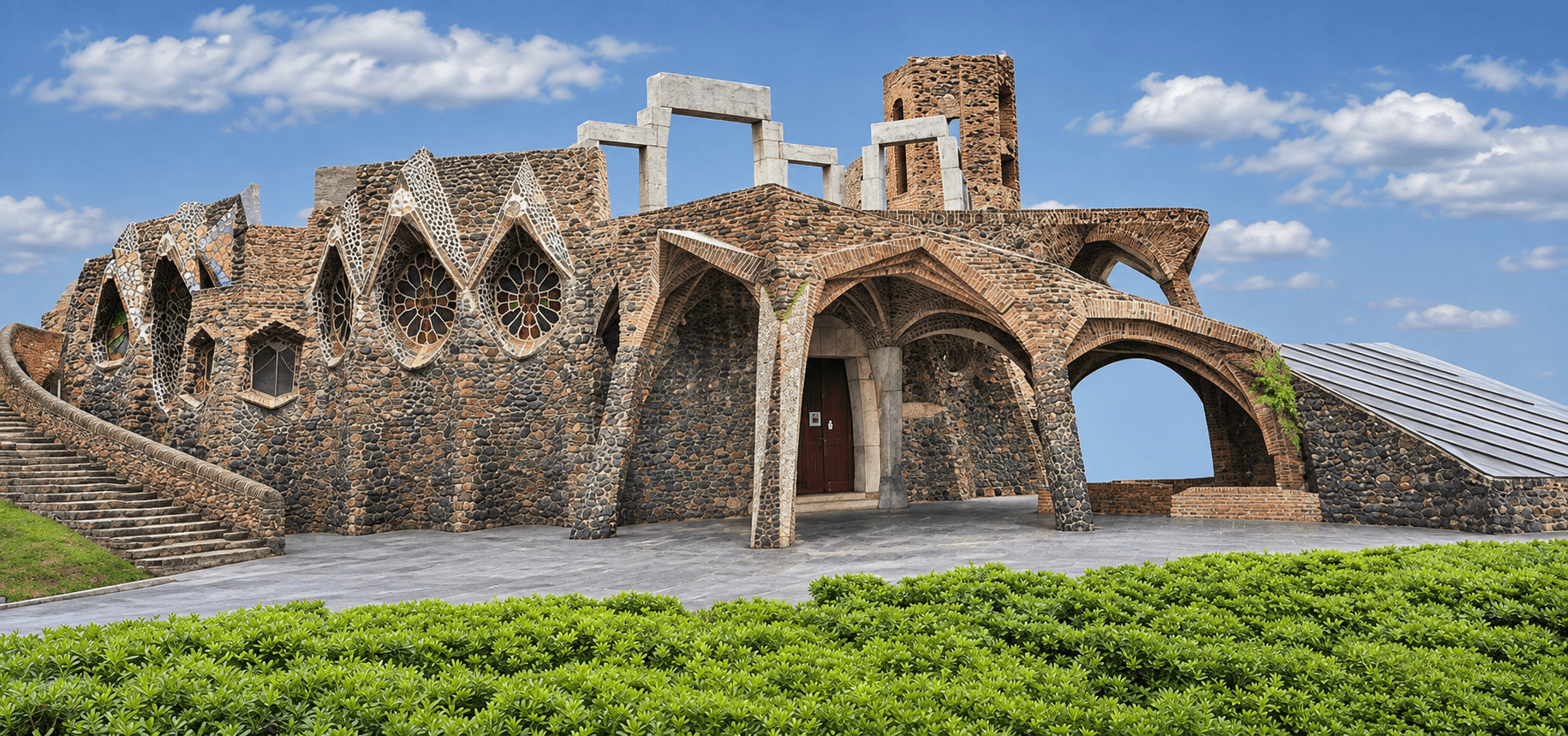
Few places offer such a close look into Antoni Gaudí's creative laboratory as the crypt of the Colònia Güell, in Santa Coloma de Cervelló. It is the only part ever built of a church that was never finished: after Count Güell died in 1918, his children abandoned the project. Even so, this space brings together almost all of the architect's innovations for the first time, from catenary arches to walls shaped as hyperbolic paraboloids, in a flowing nave that seems to merge with its surroundings and laid the groundwork for the Sagrada Família.
It's well worth taking your time inside and looking closely at the details: the pews with kneelers designed by Gaudí himself, the light streaming through windows decorated on the outside with mosaics of religious symbolism, and a surprising mix of materials, from basalt and limestone to overfired brick, foundry slag, ceramics and glass.
The crypt is merely the heart of a much larger complex. Eusebi Güell began building the colony in 1890 on his Can Soler de la Torre estate, moving his textile factory there from Sants to escape the social unrest of the city. Alongside the factory and the workers' houses there were schools, a cooperative, an inn, a theatre and a hospital, reflecting a drive for social improvement that was unusual among Catalan industrial colonies.
Strolling through its streets is like browsing a catalogue of Modernisme applied to civic and industrial architecture. Francesc Berenguer designed the Cooperative, the School, the Sant Lluís Cultural Centre and the Parish House, with balanced façades, exposed brick and wrought iron; Joan Rubió was responsible for houses such as Ca l'Ordal and Ca l'Espinal, where brick takes centre stage and Gothic touches, oriel windows and corner overhangs make an appearance.
The factory closed in 1973 and its restored buildings now house offices, but the colony retains its character as a small, self-contained community. Declared a Site of Cultural Interest in 1991, it is easily reached on the FGC trains from Barcelona's Plaça d'Espanya, getting off at Colònia Güell station.
Routes that include this monument
Community photos
Log in to upload your photos of this place.
Best time to visit
It can be enjoyed all year round, though spring and autumn are ideal for combining a visit to the crypt with a stroll around the colony without the humid summer heat of the Baix Llobregat.
Location
Similar monuments
 Landmark building
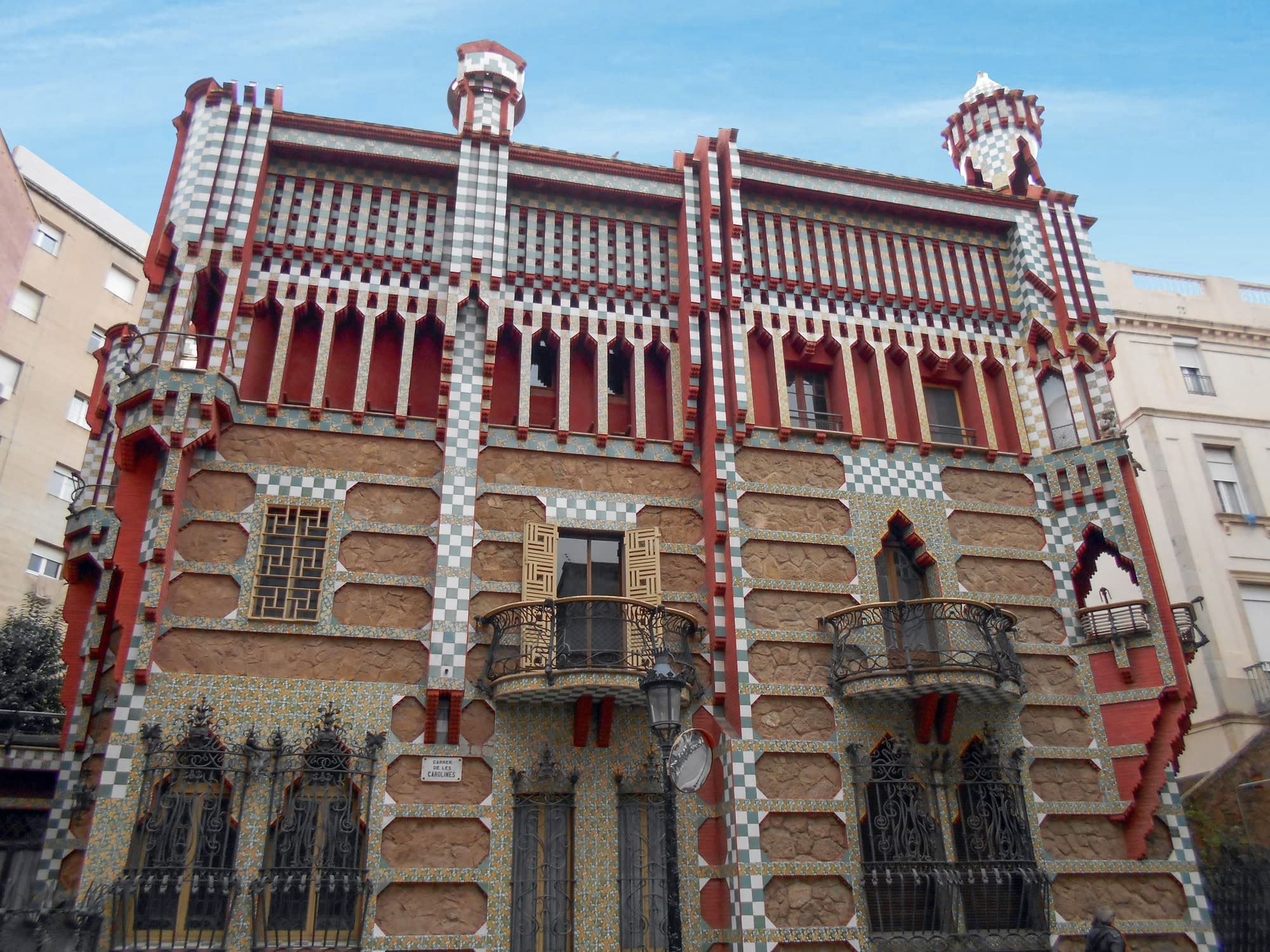
Casa Vicens
La primera gran obra de Gaudí, en el barrio de Gracia: una casa orientalista de azulejos y ladrillo que anunció el modernismo y hoy es Patrimonio de la Humanidad.
 Landmark building
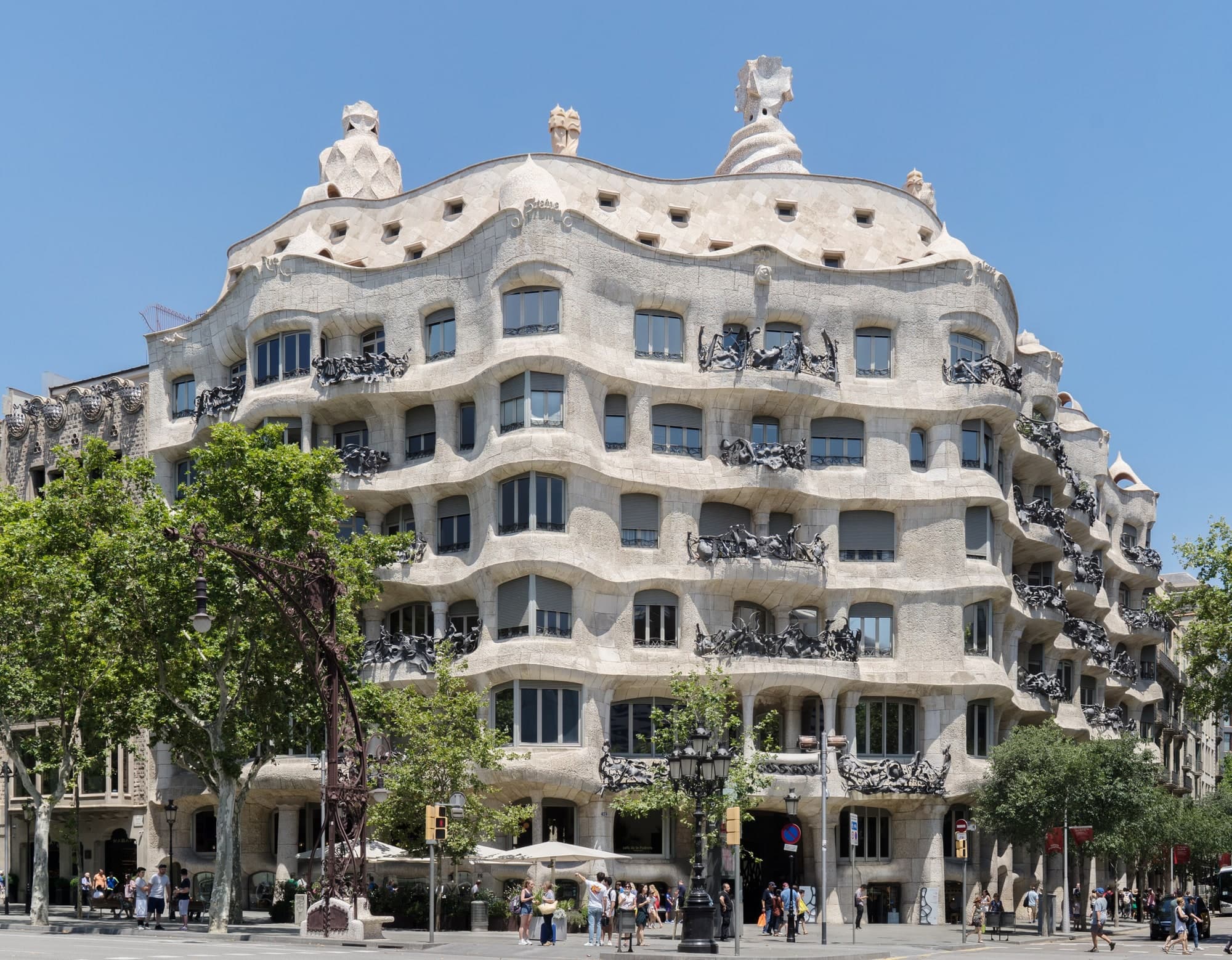
La Pedrera
La Casa Milà, apodada La Pedrera, es la obra de Gaudí en plena madurez: un edificio modernista del paseo de Gracia donde la arquitectura imita las formas libres de la naturaleza.
 Landmark building
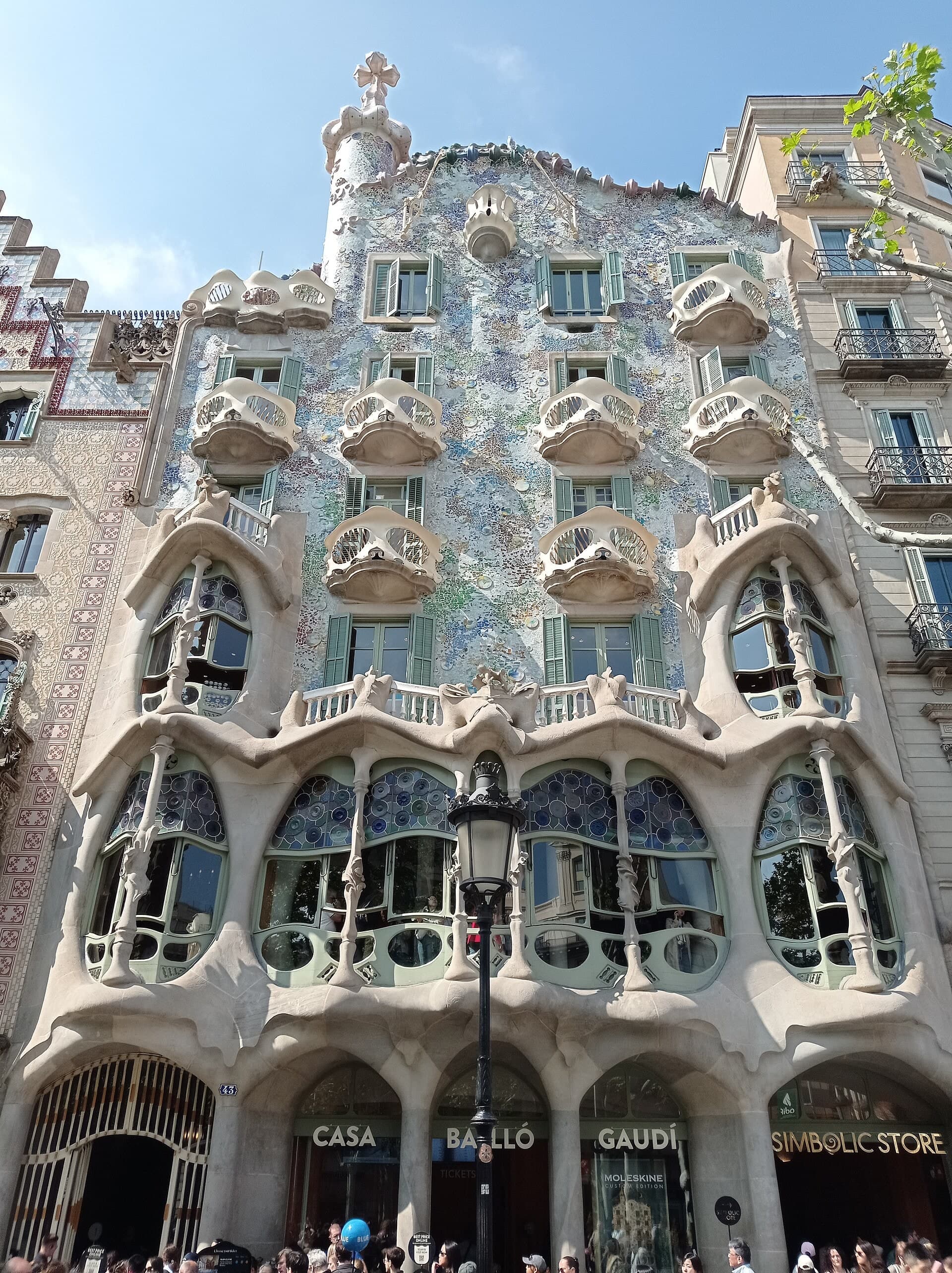
Casa Batlló
La obra en la que Gaudí, en plena madurez, transformó un edificio corriente del paseo de Gracia en un despliegue de formas orgánicas inspiradas en la naturaleza.
 Landmark building
Park Güell
Gaudí dreamt up a garden city for Barcelona's bourgeoisie here; its commercial failure left us one of his most imaginative parks, with Barcelona spread out at its feet.