


Park Güell
Description
On the southern slope of Carmel Hill, the former 'Bald Mountain', Antoni Gaudí unleashed his full genius between 1900 and 1914, commissioned by his friend and patron Eusebi Güell. What we now explore as a public park, opened as such in 1926, was meant to be a luxury housing estate in the style of the English garden cities – hence the original spelling, Park Güell – with some sixty homes spread across triangular plots where the garden took up five-sixths of the land.
The project failed: the people of Barcelona at the time found the area too remote and preferred the grand buildings of the Eixample and Passeig de Gràcia. Only two plots were sold. One is Casa Trias; the other is the show house built by Francesc Berenguer, where Gaudí himself lived from 1906 to 1925 and which is now the Gaudí House Museum. Work on the communal areas came to a halt with the outbreak of the First World War.
Yet those very communal areas are the real gift. The entrance pavilions, the grand staircase, the viaducts, the hypostyle hall (1908-1909) and the Greek theatre with its undulating bench (1907-1913) belong to the architect's naturalist period, when he perfected a language inspired by organic forms and ruled geometry that would culminate in the Sagrada Família. Working alongside him were collaborators such as Josep Maria Jujol, Joan Bergós and Joan Rubió.
It pays to take your time, because the park is steeped in symbolism. The staircase alludes to political Catalanism, the Calvary monument – originally conceived as a chapel – to the Catholic faith, and it is said that Güell and Gaudí drew inspiration from the Temple of Apollo at Delphi. During construction, caves were even discovered containing fossils of rhinoceros, deer and tortoise. Declared a Site of Cultural Interest, it has been a UNESCO World Heritage Site since 1984 as part of the Works of Antoni Gaudí.
Routes that include this monument
Community photos
Log in to upload your photos of this place.
Best time to visit
Spring and autumn are ideal: the visit is almost entirely outdoors, on a sunny hillside, and you avoid the summer heat and crowds. First thing in the morning, the light over Barcelona and the mosaics is especially lovely.
Location
Similar monuments
 Landmark building
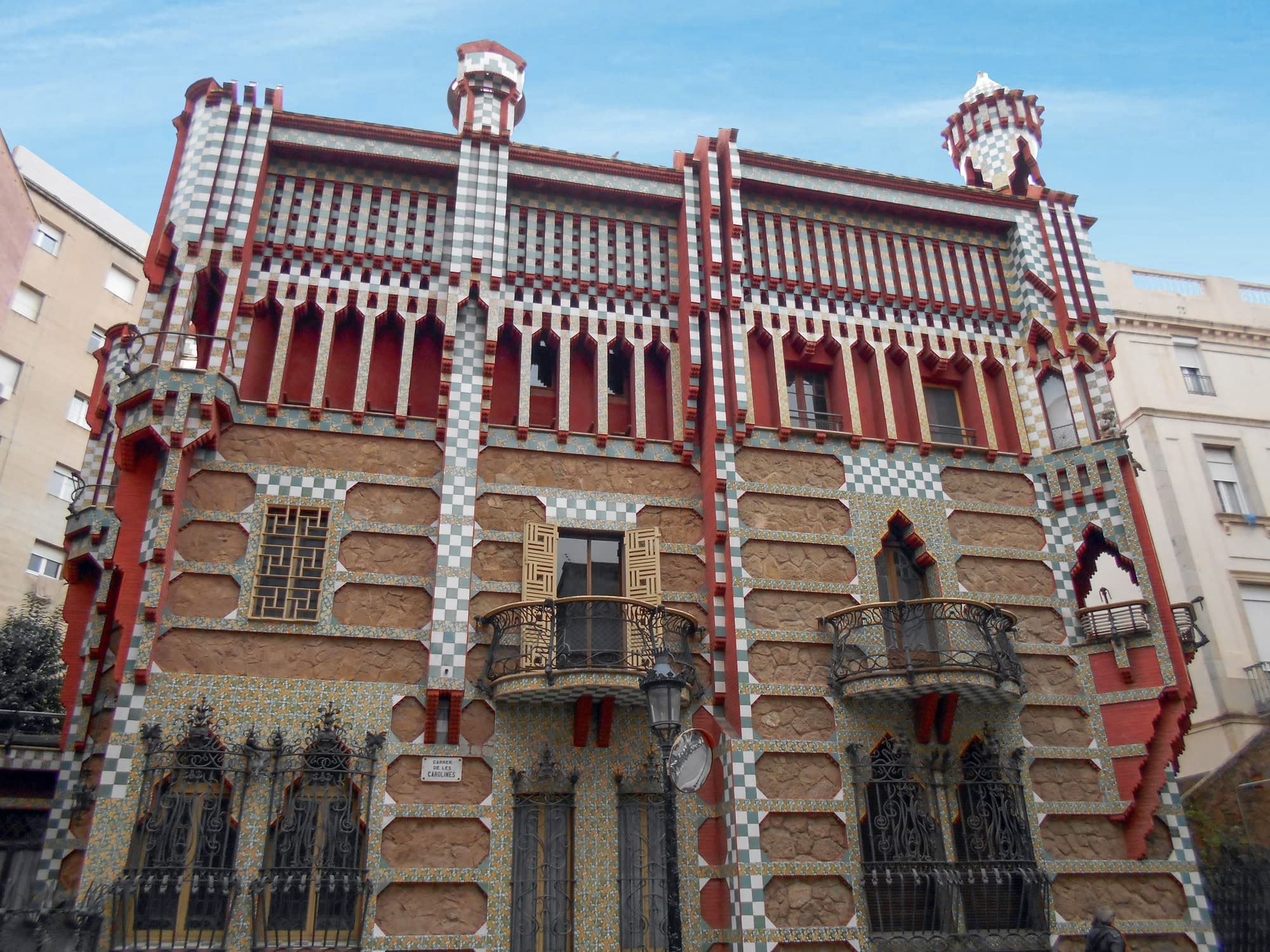
Casa Vicens
La primera gran obra de Gaudí, en el barrio de Gracia: una casa orientalista de azulejos y ladrillo que anunció el modernismo y hoy es Patrimonio de la Humanidad.
 Landmark building
Hospital de Sant Pau
Obra cumbre de Domènech i Montaner, el recinto modernista de Sant Pau es uno de los grandes conjuntos del modernismo catalán y Patrimonio de la Humanidad desde 1997.
 Landmark building
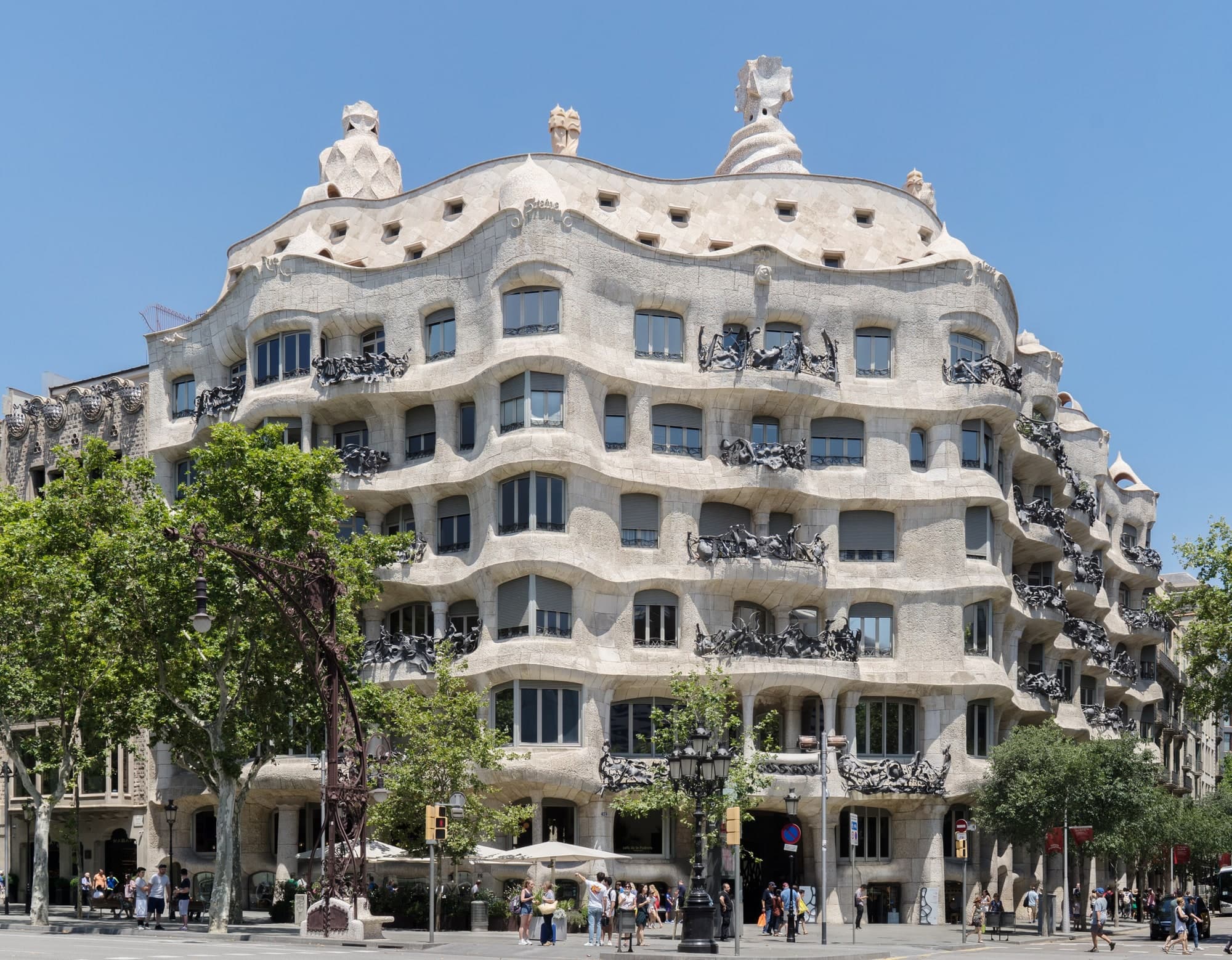
La Pedrera
La Casa Milà, apodada La Pedrera, es la obra de Gaudí en plena madurez: un edificio modernista del paseo de Gracia donde la arquitectura imita las formas libres de la naturaleza.
 Landmark building
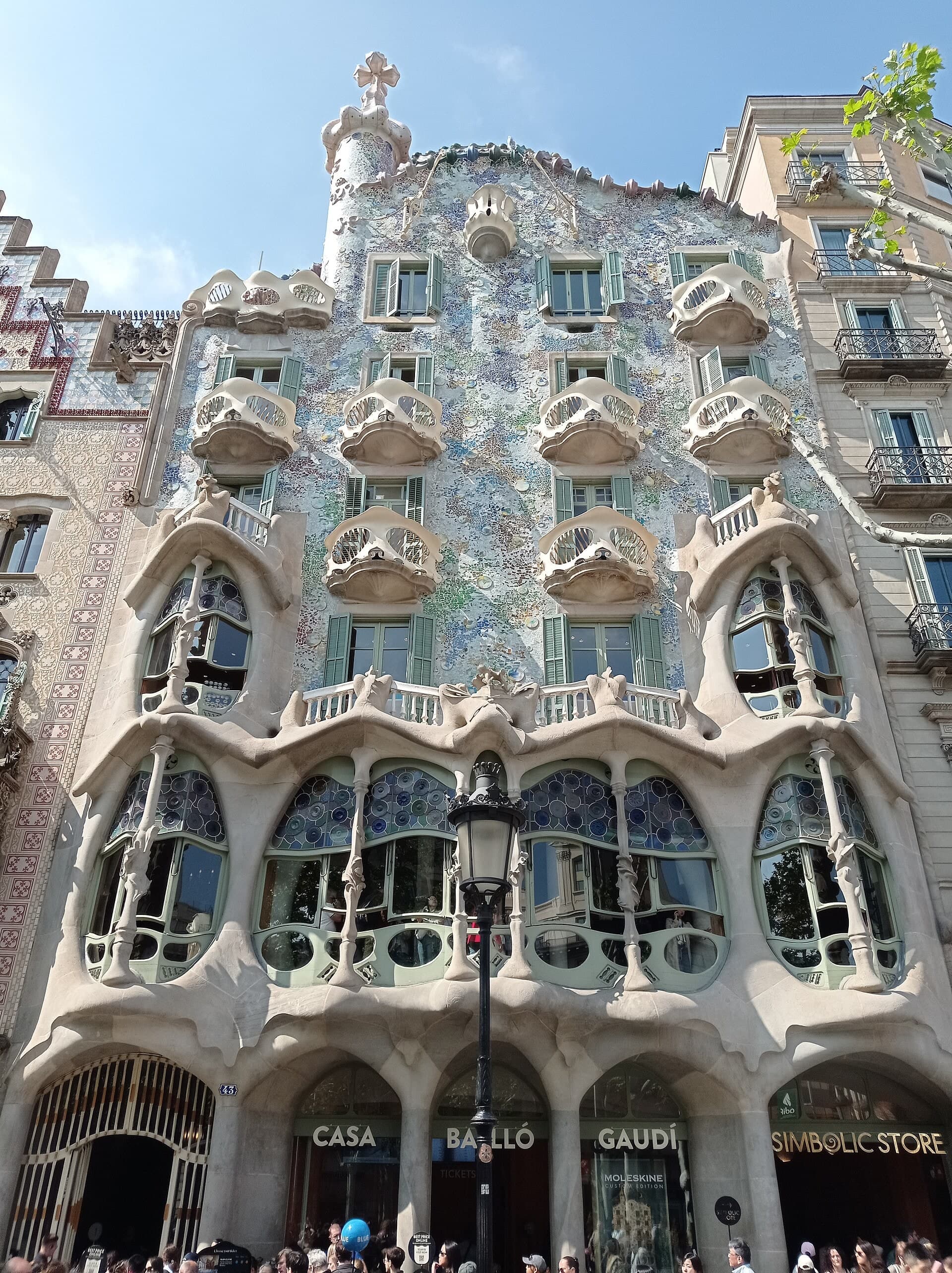
Casa Batlló
La obra en la que Gaudí, en plena madurez, transformó un edificio corriente del paseo de Gracia en un despliegue de formas orgánicas inspiradas en la naturaleza.