The white villages of Andalusia: whitewash, walls and Andalusi heritage
From Vejer to Níjar and Almodóvar del Río: a journey through Andalusia's whitewashed villages, where Andalusi history peeks out on every corner.
In this article
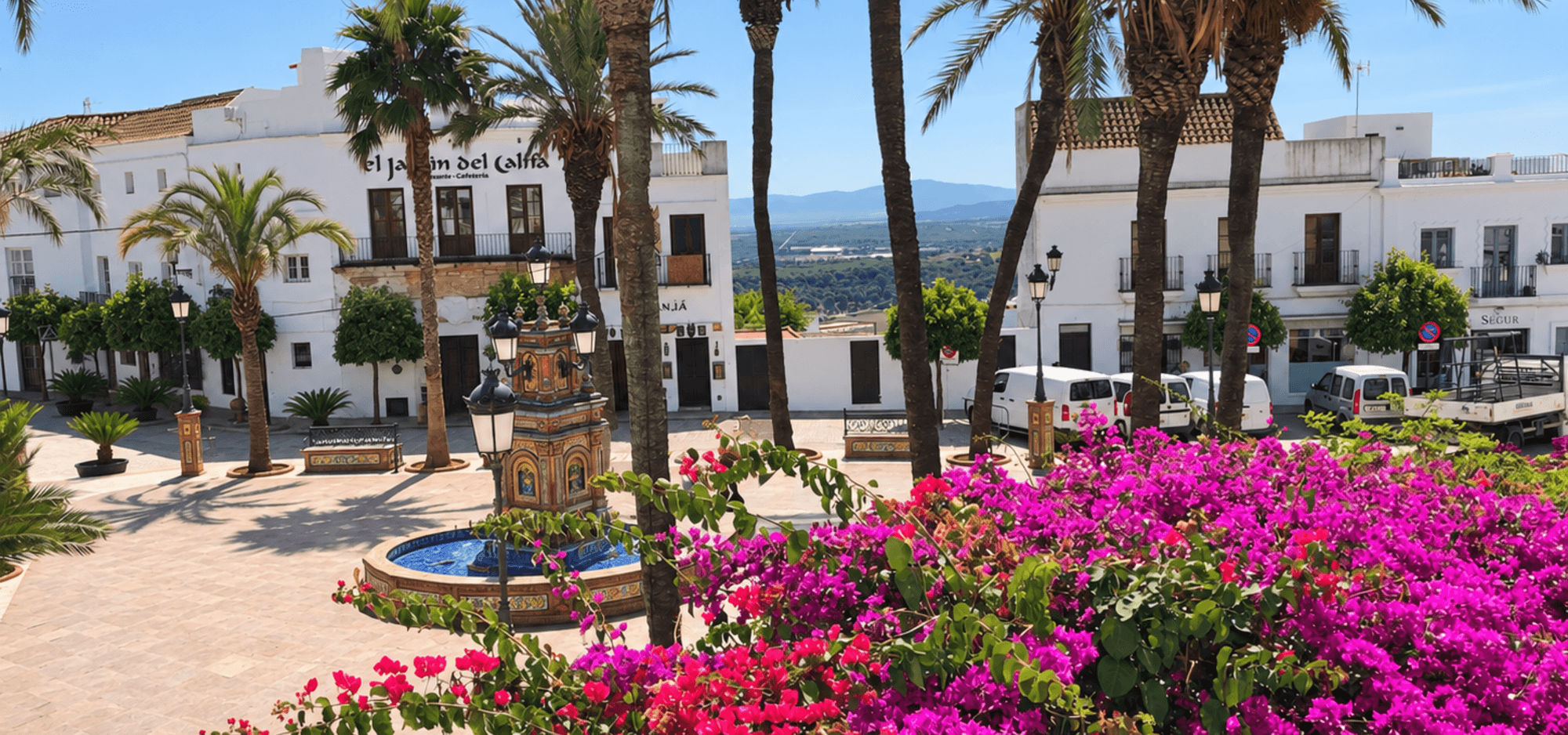
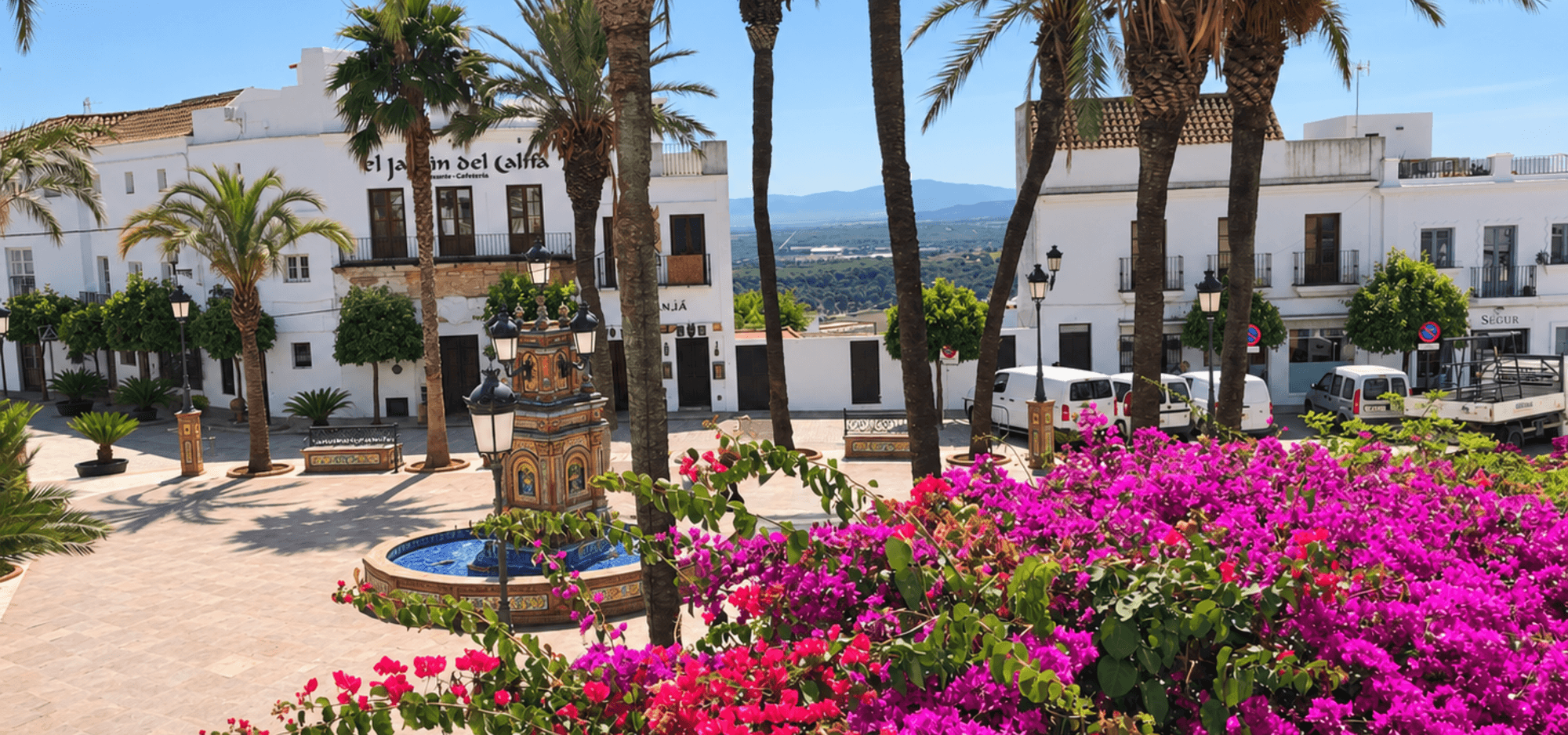
There is one image that almost everyone associates with southern Spain: a cluster of whitewashed houses climbing up a hillside, crowned by a tower or a castle, against a deep blue sky. The white villages of Andalusia are much more than a postcard. They are the result of centuries of history, of a climate that demands protection from the sun, and of a way of seeing the street as an extension of the home.
The term "white villages" is mostly associated with the mountains of Cádiz and Málaga, but the white of whitewash stretches across much of Andalusia. In this article we suggest three very different stops, all in our catalogue, to understand this whitewashed Andalusia from different angles: the Atlantic, the volcanic desert and the fertile Guadalquivir valley.
Why white
Lime whitewash has traditionally been used in the south for very practical reasons. It reflects light and helps keep homes cool during the hot months, and it also has disinfectant properties, something particularly valued in times of epidemics. Whitewashing the façades every so often was just another household chore, almost a ritual, and from that custom comes the luminous look that so captivates travellers today.
Add to this the layout of many of these villages: narrow, winding streets, adapted to the terrain, which provide shade and block the wind. In many cases this urban layout has its roots in the Andalusi period, when settlements were organised around a hilltop fortress.
Vejer de la Frontera, white overlooking the Atlantic
If there is one village that sums up the idea of an Andalusian white village, it is Vejer. It appears from afar atop a hill some 200 metres high, overlooking the River Barbate and just 8 kilometres from the Atlantic. Its historic centre, still surrounded by walls, was declared a historic-artistic site in 1976, and since 2014 it has been listed among the Most Beautiful Villages in Spain. You only need to start wandering its streets to see why.
Much of its charm comes from its long Andalusi period. After the Battle of Guadalete in 711, when the troops of Tariq ibn Ziyad defeated King Roderic, the town was renamed Bashir and remained under Muslim rule for five and a half centuries. That legacy can be seen in the layout of its streets, which rise, fall and twist in search of shade.
At the top stands Vejer de la Frontera Castle, a medieval fortress that reminds visitors that this place once had a defensive role that can barely be sensed today among the white façades. Visiting it helps you shift from being a mere stroller to someone trying to understand why a village was organised around walls designed to protect it.
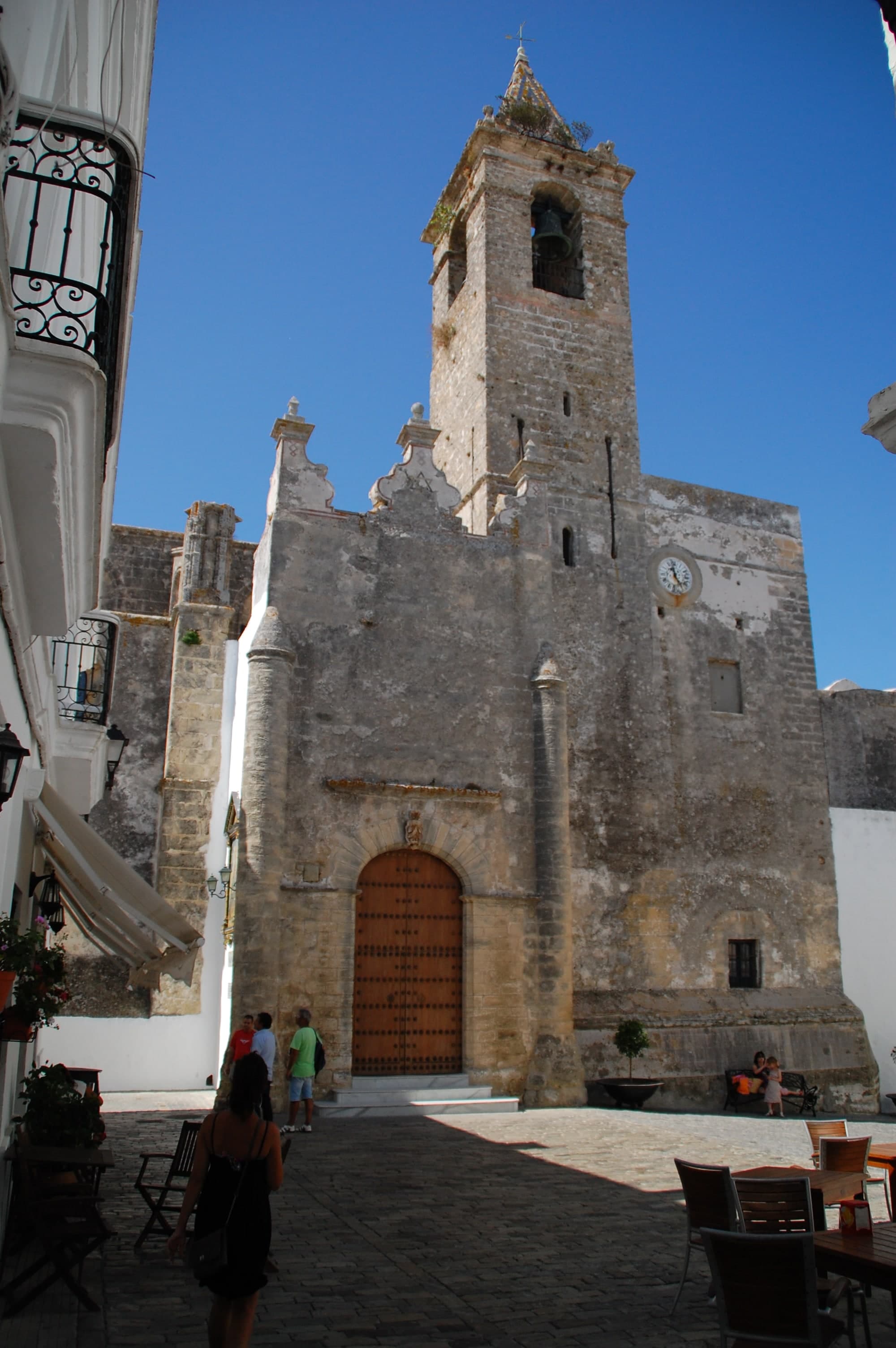
Nearby, the Church of the Divine Saviour (Vejer de la Frontera) is another must-see in the historic quarter, which preserves several important churches.
Our recommendations for Vejer:
- Enter on foot and forget about the car in the old town.
- Walk around the perimeter of the walls to get a sense of the whole.
- Climb up to the castle and give yourself time to wander aimlessly.
- Finish at a viewpoint at sunset, when the whitewash takes on golden hues.
Níjar, white among volcanoes
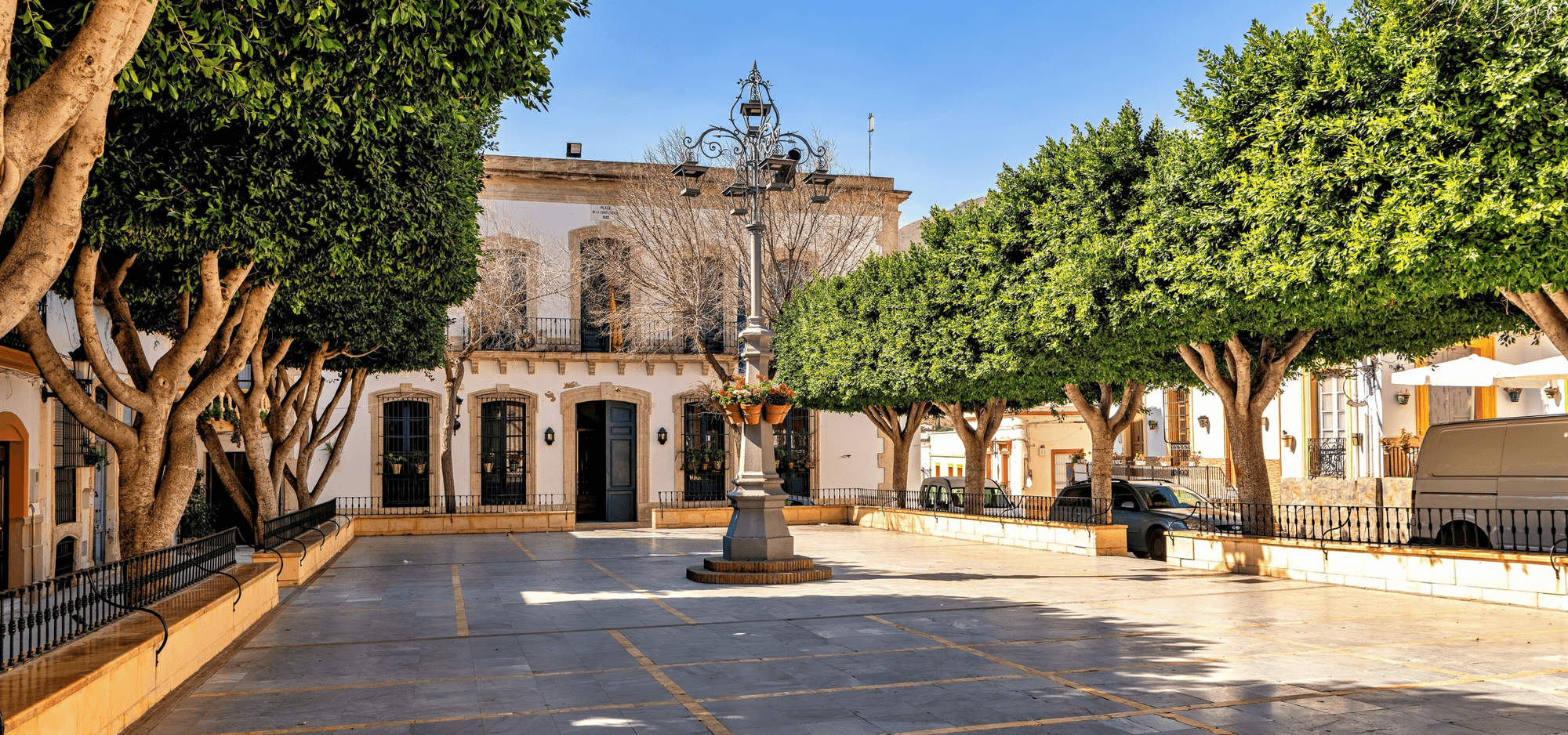
At the other end of Andalusia, Níjar offers a very different take on the white village. It is the main town of a huge municipality, the largest in the province of Almería, which looks out over the Mediterranean and comprises almost forty settlements, including San José, San Isidro de Níjar and Campohermoso. Its historic centre has been listed among the Most Beautiful Villages in Spain since 2019.
What makes Níjar special is its setting. Much of its territory is protected within the Cabo de Gata-Níjar Natural Park, recognised by UNESCO as a Geopark in 1999. Here, the volcanic land explains almost everything: as far back as Roman times, volcanic stone quarries, alum mines and salt pans were worked here. The contrast between the whitewashed houses and the ochre, reddish and black tones of the landscape is unforgettable.
The historic centre is the ideal starting point for discovering one of the most remarkable landscapes in the south of the Peninsula. If you have time, combine a stroll around the village with a trip to the natural park's coastline.
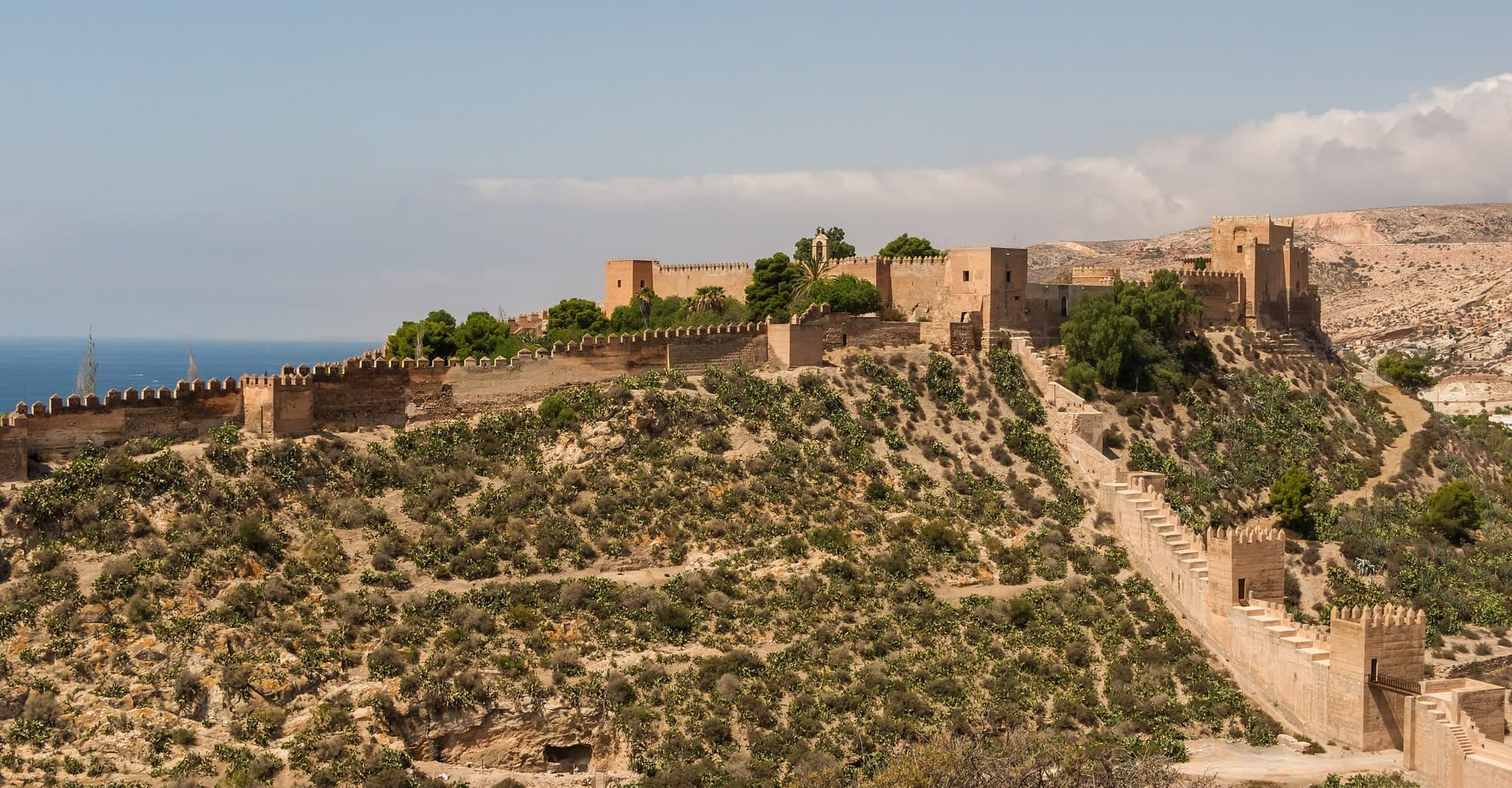
And if you want to round off your trip with a generous dose of Andalusi history, the provincial capital is close at hand: the Alcazaba and Walls of San Cristóbal Hill in Almería is the second-largest Arab alcazaba on the Peninsula in terms of its Muslim-era enclosure.
Almodóvar del Río, white at the foot of a castle
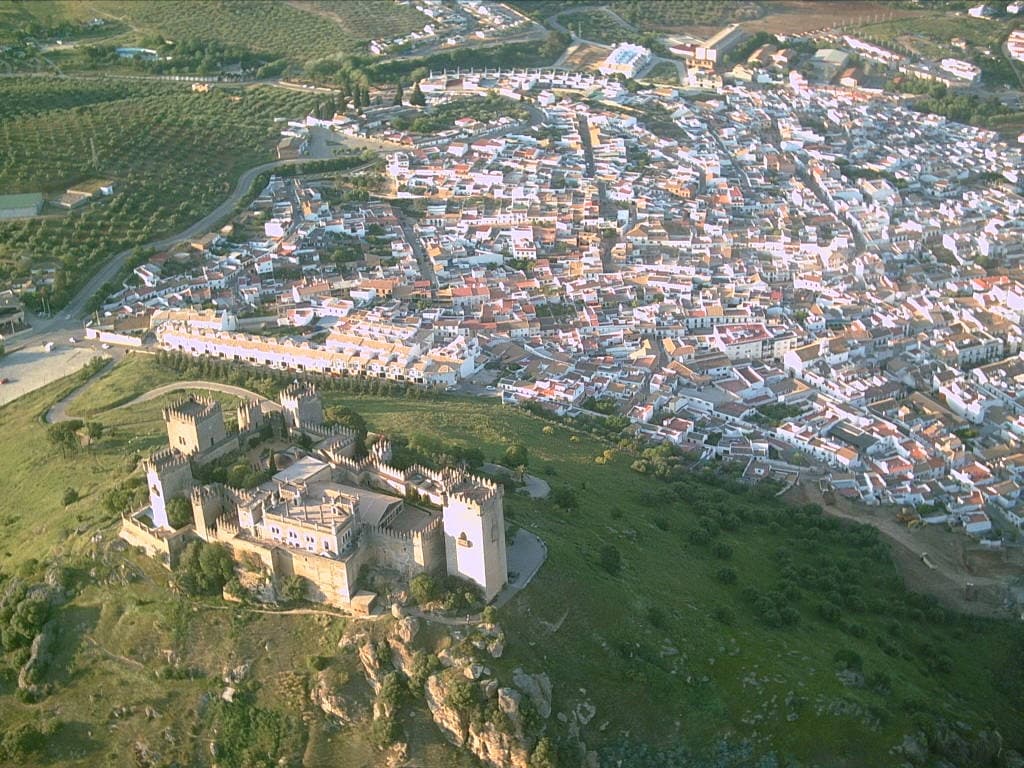
Our third stop takes us to the province of Córdoba, in the heart of the Middle Guadalquivir Valley. Almodóvar del Río is the perfect example of a white village nestled under the protection of a fortress. Its star feature is Castle Hill, a rise that has drawn settlers for millennia: Chalcolithic remains were found in a small cave on its slopes, and traces of the Late Orientalising Bronze Age and Iberian culture have been discovered on its summit.
From that Iberian world comes a highly evocative piece: a stone frieze dating from the 4th to 3rd centuries BC, depicting a hunt in which several horsemen pursue a deer, followed by a cart drawn by donkeys.
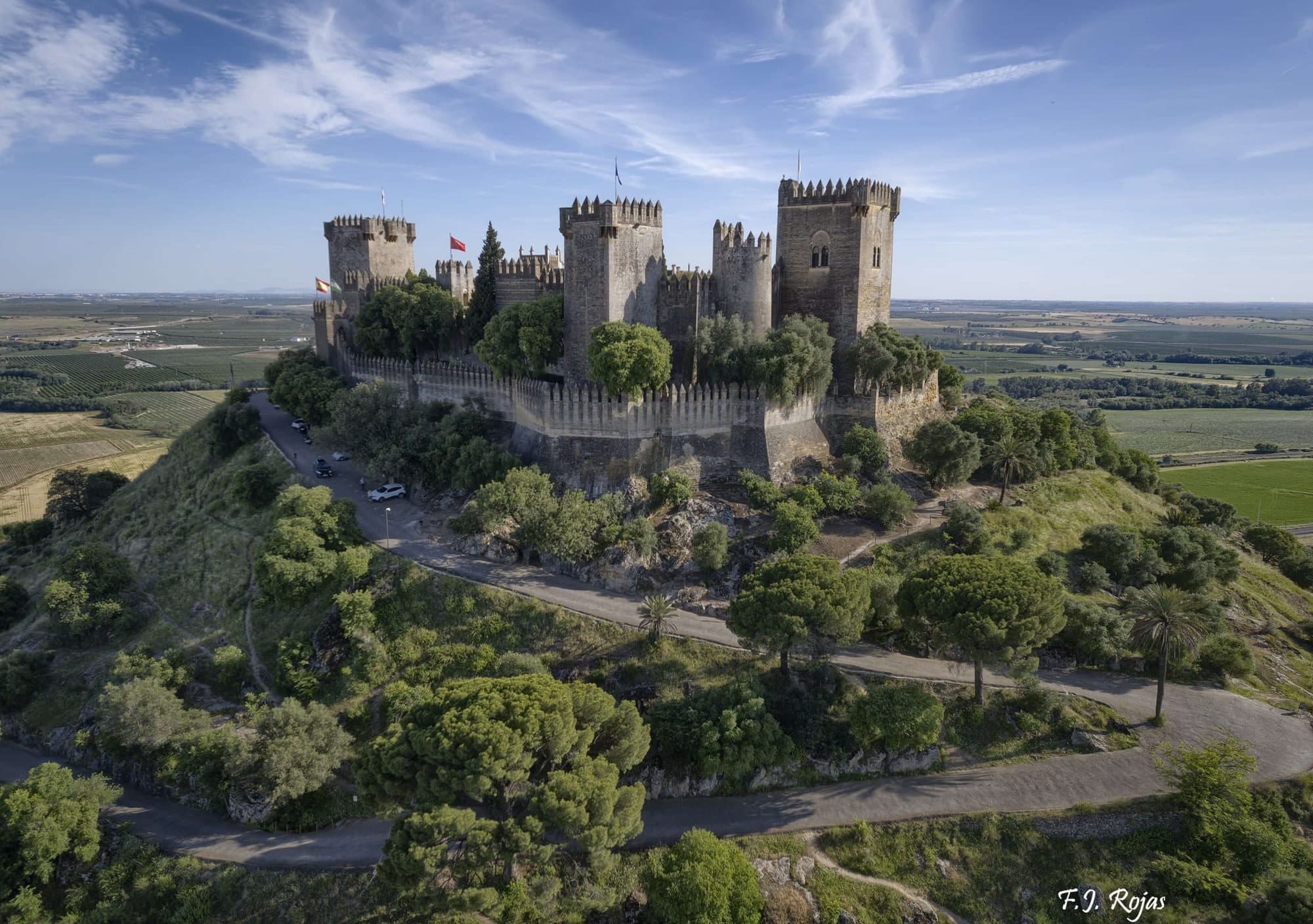
But what you see from afar is Almodóvar del Río Castle, also known as the Castillo de la Floresta, which crowns the hill known as El Redondo. A Roman fort once stood on the hill, although the current building is of Arab origin and dates from 760, in the early days of al-Andalus. It is one of the most recognisable Andalusi fortresses in the province, and its silhouette of towers and walls above the white village is pure Andalusia.
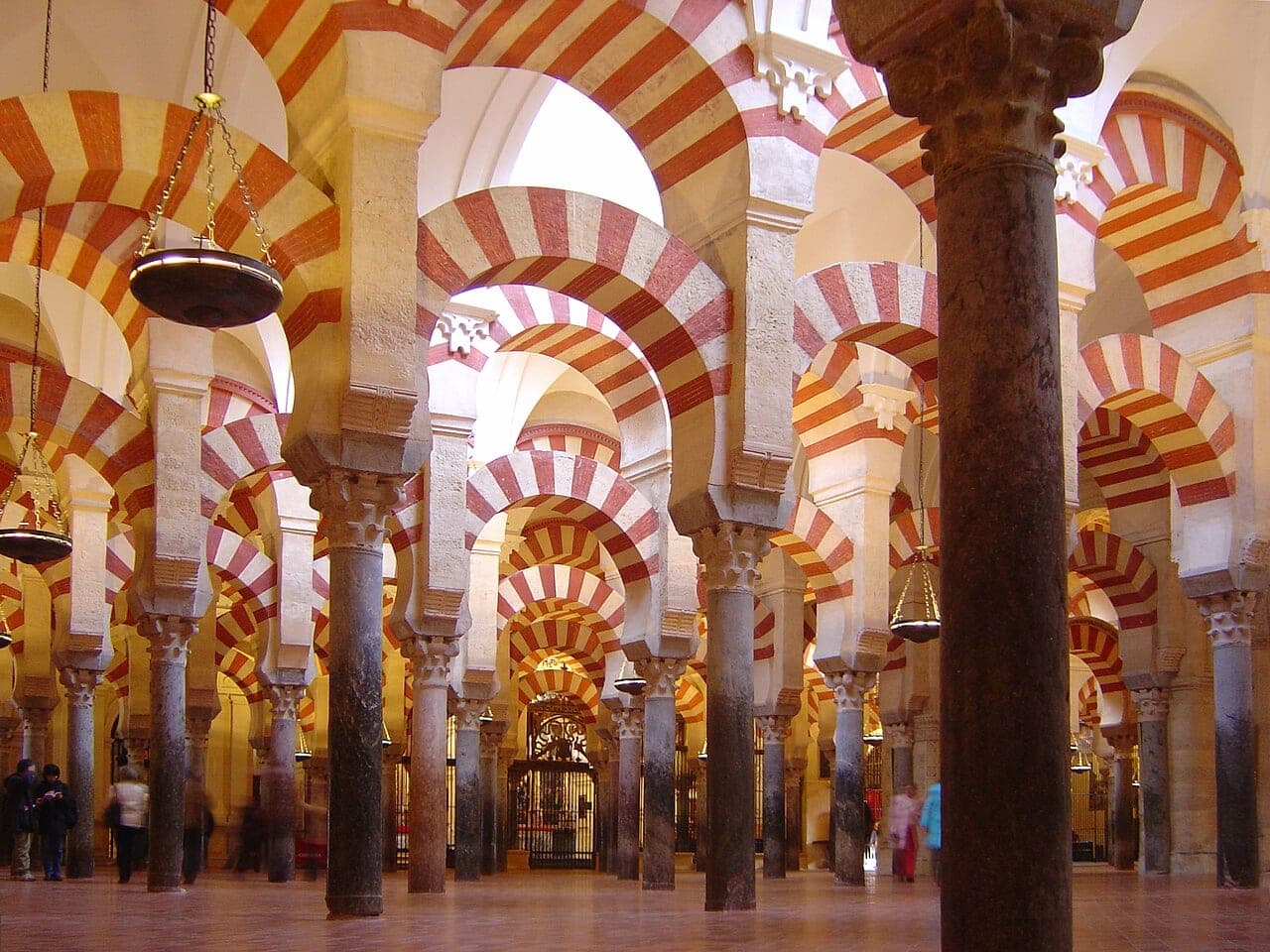
From here, Córdoba is not far, and it is well worth combining your visit with the Mosque-Cathedral of Córdoba and the Alcázar of the Christian Monarchs, two monuments that help you understand the Andalusi past that can be felt in so many villages in the region.
Tips for planning your route
Exploring the white villages is, above all, about walking. A few ideas to help you make the most of them:
- Choose the right time of year. Autumn, winter and spring are ideal. In July and August the heat can be extreme, and climbing steep streets at midday is not a good idea.
- Comfortable footwear. Steep cobbled streets are part of the charm, but they are hard on the feet.
- Get up early or wait until the afternoon. The light first thing and late in the day is the best for seeing the whitewash and for photography, and you will also avoid the crowds on bank holidays and long weekends.
- Don't just stay in the centre. Seek out the viewpoints and the outskirts: often the best view of a white village is from outside it.
- Always climb up to the castle. In almost all of them, the fortress explains the village's origins.
A journey through layers
The beauty of the white villages is that, beneath the whitewash, lie layer upon layer of history: Iberians, Romans, Andalusis and Castilians all left their mark on the same hill. Vejer, Níjar and Almodóvar del Río are three very different gateways to this luminous Andalusia. Choose yours, or better still, link them together over several short breaks.
Places in this article
 Village
Vejer
A whitewashed village perched on a hill beside the River Barbate, with town walls, a castle of Andalusi origin and a historic quarter that holds centuries of frontier history.
 Castle
Vejer de la Frontera Castle
A medieval fortress in Vejer de la Frontera, in the province of Cádiz: an essential stop for understanding the past of one of the province's best-known towns.
 Village
Níjar
A village with a beautiful historic centre in Almería's largest municipality, gateway to the Cabo de Gata-Níjar Natural Park and to ten millennia of history.
 Village
Almodóvar del Río
A village in the Middle Guadalquivir Valley set on a hill inhabited since prehistoric times, which was an Iberian oppidum and a thriving olive oil centre in the Roman era.
 Castle
Almodóvar del Río Castle
An Andalusi fortress dating from 760, perched on the hill of El Redondo, with imposing towers and a careful early 20th-century restoration that keeps it standing.
 Church
 of the Divino Salvador (Vejer de la Frontera)
At the very top of Vejer, within its walled precinct, this Mudéjar church built over a former mosque reveals two churches from different periods fused into one.
 Castle
Alcazaba and Walls of San Cristóbal Hill
Almost a thousand years of history on a hilltop in Almería: one of the largest and best-preserved Moorish alcazabas on the peninsula, joined to a ring of walls and a Christian castle.
 Cathedral
Mosque-Cathedral of Córdoba
Congregational mosque, Christian cathedral and UNESCO World Heritage Site: the great monument of Caliphal art, where twelve centuries of history coexist under a single roof.
Article written with the help of artificial intelligence based on Wikipedia (CC BY-SA 4.0) and our catalogue, and reviewed by the El Trotamundos Curioso team.