From Gaztelugatxe to Subijana de Álava: a road trip through the Basque Country between the sea and the concejos
86.6 km by car from the islet of Gaztelugatxe to the rural churches of Vitoria, via Butrón Castle and Letona Tower.
In this article
Some routes are worth driving for a single monument; others are worth it for the contrast. This one belongs to the second category: it sets off facing the Cantabrian Sea, at one of the most photographed spots on the Biscay coast, and ends in the calm of the concejos surrounding Vitoria, where the churches are still the heart of each village. It covers 86.6 kilometres by car through the Basque Country, with six stops and a journey that runs from the open sea to the most rural corners of Álava, taking in castles, manorial towers and understated sanctuaries along the way.
The route at a glance
- Hermitage of San Juan de Gaztelugatxe (Biscay), starting point.
- Butrón Castle (Gatica, Biscay), 13.4 km away.
- Garrastatxu Hermitage (Barambio, Amurrio, Álava), 36.9 km away.
- Letona Tower (Letona, Cigoitia, Álava), 17.1 km away.
- Church of Santa Eulalia (Berrosteguieta, Vitoria), 13.6 km away.
- Church of San Esteban (Subijana de Álava, Vitoria), 5.6 km away.
The longest stretch is the one from Butrón to Garrastatxu, when the route leaves the Biscay coast behind and heads into northern Álava. From there on, the distances shrink and the pace invites you to slow down.
Gaztelugatxe: an islet with the soul of a fortress
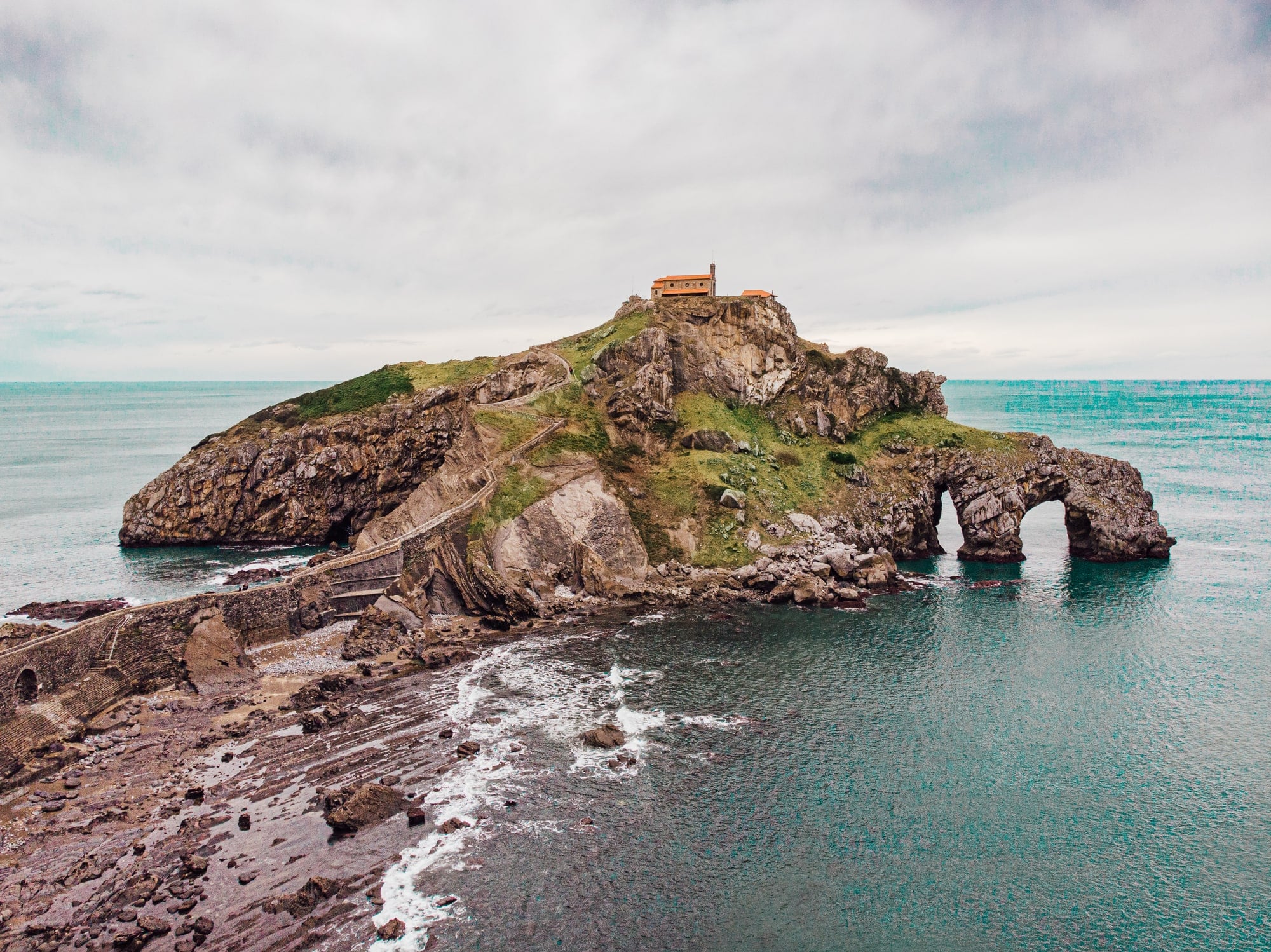
Few views on the Biscay coast are as instantly recognisable: a rocky islet rising from the sea off Bermeo, linked to the mainland by a two-arched bridge, with the hermitage of San Juan crowning its summit. Getting there is part of the experience, as the walk blends landscape and history at every step.
The sanctuary has its roots in the early Middle Ages. It is dated to the 10th century, although some finds point as far back as the 9th, placing it among the oldest religious sites in the area. But the story has a twist: the hermitage stands where a castle linked to the Kingdom of Navarre once rose. That fortress had its finest hour when Castilian troops laid siege to it without managing to take it. One look at the islet, surrounded by water and reachable only by a narrow passage, is enough to understand why. That defensive past goes a long way towards explaining the name of the place.
The surroundings deserve as much attention as the building. Together with the neighbouring island of Aketxe, Gaztelugatxe forms a protected biotope stretching from Bakio to Cape Matxitxako, within the municipality of Bermeo, overlooking the Bay of Biscay. This is rugged, wild coastline, the Cantabrian Sea at its purest. Wear comfortable shoes and allow plenty of time: this is the stop best enjoyed at a leisurely pace, and it's wise to arrive early, especially on public holidays.
Butrón Castle: a fairy tale among the trees
Just 13.4 km away awaits one of the most surprising sights in the Biscay landscape. Butrón Castle, Butroeko gaztelua in Basque, doesn't loom from the top of a hill: it appears almost hidden in the middle of a wooded estate, its towers and battlements peeping out through the greenery as if straight out of a fairy tale.
What you see today is a Neo-Gothic fortress, but its origins go back to the Middle Ages. That dual nature is its great appeal: beneath the romantic, theatrical appearance beats the memory of a medieval building. Listed as Historic Heritage, it lies within the municipality of Gatica, in a quiet, secluded spot, though not as far from Bilbao as it seems. Nearby are towns such as Sopelana, Urdúliz, Plencia, Munguía, Maruri and Lauquíniz.
Garrastatxu Hermitage: devotion in northern Álava
After the longest drive of the day, the route changes province and mood. In the concejo of Barambio, within the municipality of Amurrio, stands the Garrastatxu Hermitage, also known as the Sanctuary Hermitage of Our Lady of Piety of Garrastatxu.
It dates back to 1626, in the heart of the 17th century: almost four centuries of devotion to Our Lady of Piety, a dedication closely tied to popular religious tradition. It is not a building of grand monumental ambitions, but a small-scale church that for generations has served as a spiritual focal point for Barambio and the surrounding area. Its charm lies precisely in that serenity of a rural sanctuary, and in the details that reveal themselves only to the attentive eye.
Letona Tower: stone for showing off
In Letona, a small concejo in the Álava municipality of Cigoitia, stands a building that plays tricks on you. Letona Tower, also known as the Hurtado de Mendoza Tower, looks like a fortress, but it was built more to impress than to protect: its job was to make clear which family name deserved respect.
It was built in the late 16th or early 17th century, when towers had already lost their military role and noble families were raising them as manorial residences, symbols of prestige and lineage. That is why some defensive features can still be seen, more a nod to tradition than a real necessity. The tower forms an ensemble with the palace of the López de Letona family, and seeing them together helps you understand how Álava's minor rural nobility lived at the turn of those two centuries. A perfect stop for anyone who enjoys reading history in stone.
The concejos of Vitoria: Santa Eulalia and San Esteban
The end of the route reveals a little-known side of Álava's capital. The municipality of Vitoria isn't just the city: it also includes numerous concejos, a long-standing form of local organisation in Álava that groups villages which, without being municipalities in their own right, retain their identity and community life. In almost all of them, the church is the building that gives the village its focus.
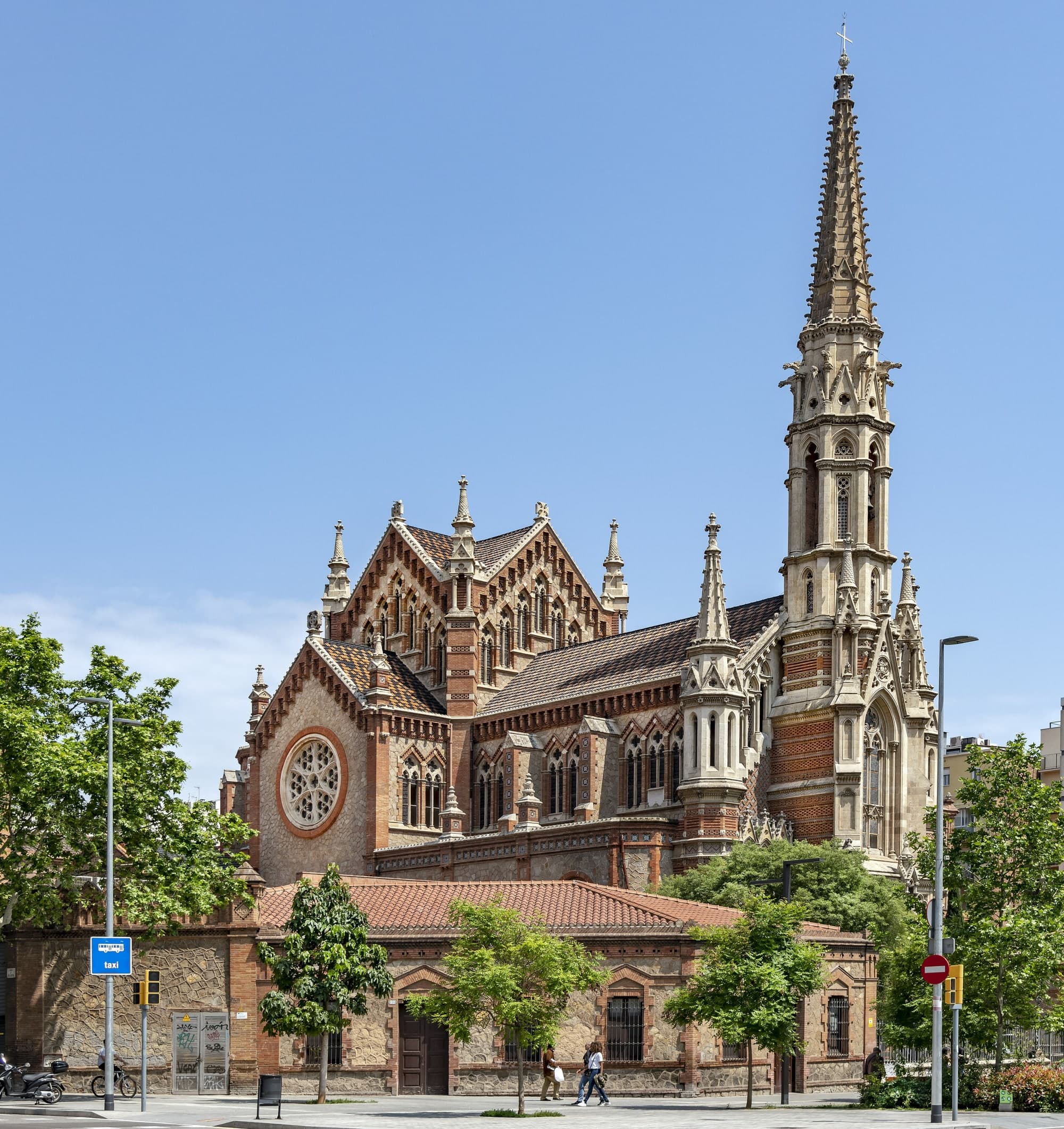
In Berrosteguieta, a stone's throw from Vitoria but far from its hustle and bustle, stands the Church of Santa Eulalia. Information about the church is scarce, so the visit has something of a personal discovery about it: take your time looking at it, notice how it blends into the village and, if you get the chance, ask the locals, who are usually the best source.
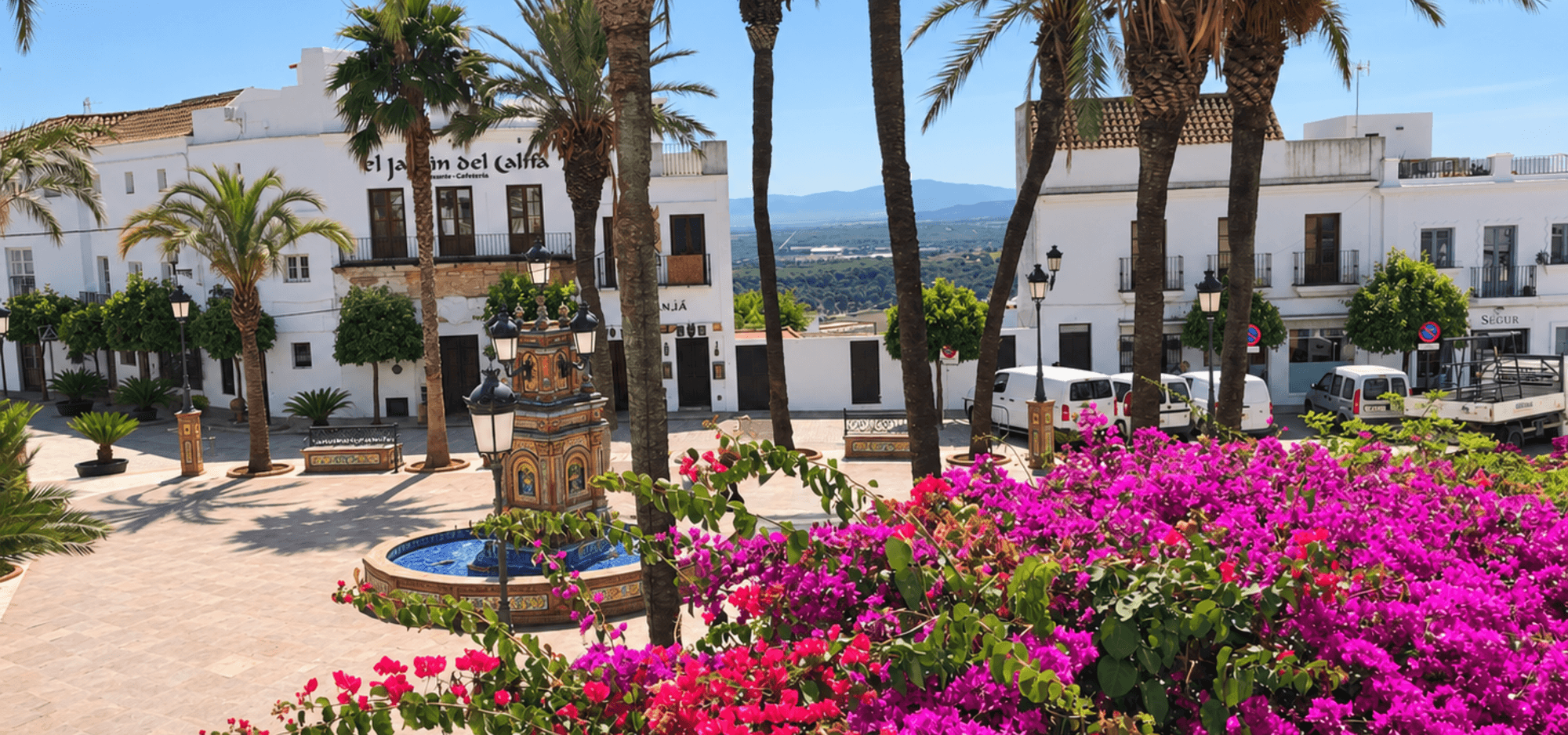
Just 5.6 km away, the Church of San Esteban is the Catholic church of Subijana de Álava. Its dedication to Saint Stephen, by tradition the first Christian martyr, is common to many parishes, and here it gives its name to the building around which the village is arranged. Rather than a standalone monument, it is best understood as part of the landscape and life of the concejo. A gentle stroll through the village is the best possible way to round off the day.
Tips for planning the trip
- When to go: the best time for all the stops is from May to September, when rain is less frequent. In high summer, try to do Gaztelugatxe first thing and avoid the middle of the day for the walking sections.
- Dividing your time: spend the morning on the Biscay coast, where the longer visits are, and save the afternoon for Álava, with shorter stops and short drives.
- Rural churches: many are still in use, so access to the interior may depend on service times and the local community. Check beforehand if you want to see inside.
- What to pack: comfortable shoes, an extra layer in case the weather turns by the sea, and a willingness to take things slowly.
From the islet that held out against Castile to the churches that anchor Álava's concejos, this route sums up the variety of Basque heritage in a single day: spectacular at times, understated more often than not, and always with a story to tell.
Article written with the help of artificial intelligence based on Wikipedia (CC BY-SA 4.0) and our catalogue, and reviewed by the El Trotamundos Curioso team.