
Almodóvar del Río
History and heritage
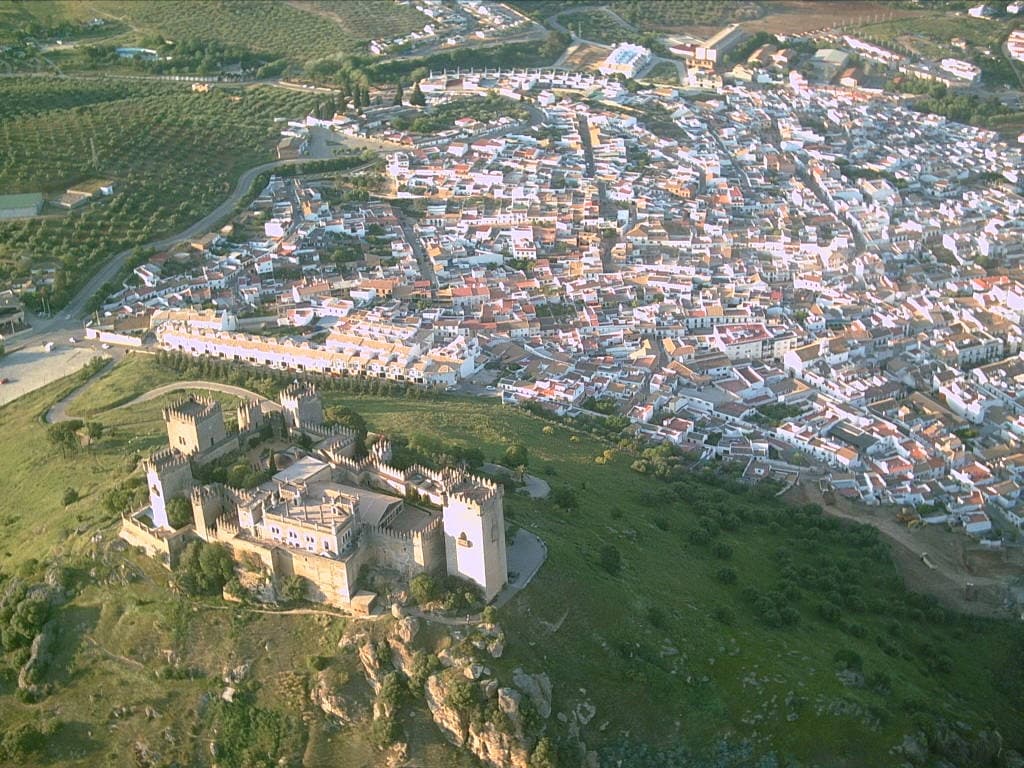
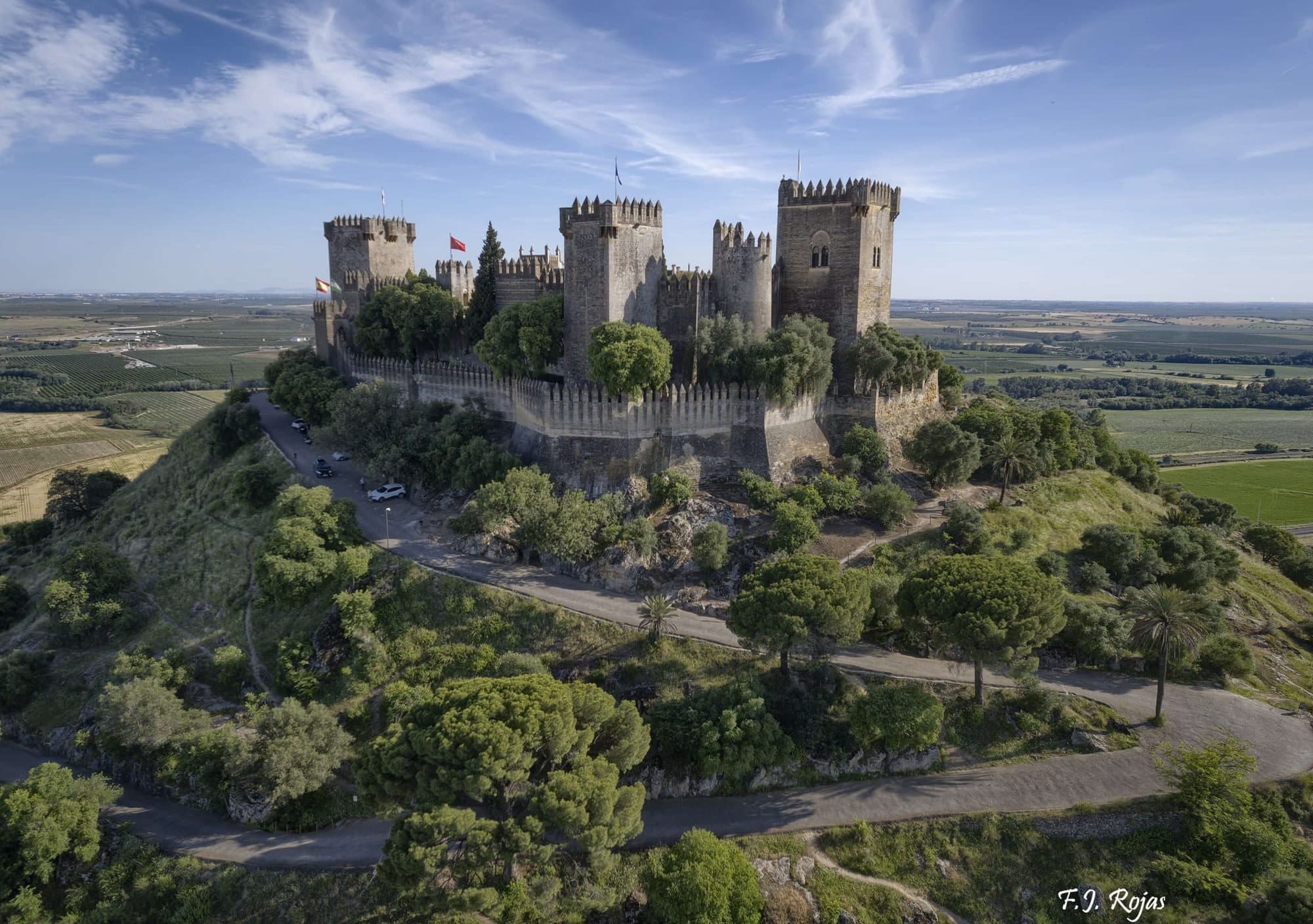
Almodóvar del Río looks out over the Guadalquivir in the heart of the Middle Valley, in the province of Córdoba, and its undisputed star is the castle hill. This rise has drawn settlers for millennia: Chalcolithic remains were found in a small cave on its slopes, while traces of the Late Bronze Age Orientalising period and of Iberian culture, with its distinctive pottery painted with bands and circles, have been discovered on its summit.
From that Iberian world comes one of the most evocative pieces linked to the site: a stone frieze, dated to between the 4th and 3rd centuries BC, depicting a hunt. In it, several horsemen pursue a stag, followed by a cart drawn by donkeys – a scene that brings visitors closer to the everyday lives of those who inhabited these lands long before Rome.
The story, however, begins even earlier. Lower Palaeolithic sites have been recorded within the municipality, near the railway station and at the mouths of streams such as the Temple and the Mochos, where pebbles and hand axes were found. The confluence of the Guadalquivir and the Guadiato also preserves evidence of the transition into the historical period.
Under the Romans, the main settlement spread around the hill and towards the north of the present-day town, where amphorae, coins and tombs have come to light. It is usually identified, though not without some doubt, with Carbula, the fortified settlement mentioned by Pliny in his Natural History, later incorporated into the territory of Colonia Patricia Corduba. This was a land devoted to the olive: from the potteries along the river, such as those at Cortijo de Rojas, El Temple, El Sotillo and Villaseca, vast quantities of oil were shipped out in amphorae.
Alongside this agricultural splendour came remarkable feats of hydraulic engineering, such as the underground aqueducts of Cortijo Nuevo and Fuenreal. Nor did life come to a halt with the fall of the Empire: funerary inscriptions from the 6th and 7th centuries confirm that the site remained inhabited in Visigothic times, extending a history that can be read layer by layer.
Nearby monuments
The monuments in our catalogue closest to Almodóvar del Río (the village is shown in orange).

Community photos
Log in to upload your photos of this village.