What to see in Sant Joan de les Abadesses: monastery and bridges
What to see in Sant Joan de les Abadesses: its 9th-century monastery, the Pont Vell over the Ter and day trips around the Ripollès.
In this article
Between Ripoll and Camprodon, in the heart of the Ripollès, lies a town whose very name tells a story. Sant Joan de les Abadesses, San Juan de las Abadesas in Spanish, owes its name to the women who governed its monastery for centuries, a foundation so old and so unusual that it is worth the trip in its own right. If you're planning a getaway to the Pyrenees of Girona, here's everything you need to organise your visit.
A town in the Ter valley
Sant Joan de les Abadesses stands at the confluence of the River Ter and the Arçamala stream, in what is known as the Sant Joan valley. The town sits 784 metres above sea level and is surrounded by mountains: to the north, the Serra Cavallera; to the south, a range of hills dominated by the peaks of Colomer (1,204 m) and Castelltallat (1,275 m). The municipality ranges from 720 metres on the banks of the Ter to 1,319 metres at its northern tip, near the boundary with Camprodon.
It's a modestly sized municipality, with 3,393 inhabitants according to Spain's National Statistics Institute (INE, 2025), which gives it that unhurried pace so welcome on a short break. Its territory even has a geographical quirk: an appendix that stretches eastwards into the Garrotxa district, home to the hamlet of Santa Llúcia de Puigmal.
A story that begins with a count and his daughter
To understand Sant Joan de les Abadesses, you need to go back to the year 887. It was then that Wilfred the Hairy, Guifré el Pilós in Catalan, and his wife, Countess Guinedilda, founded the monastery as a dowry for their daughter, Emma of Barcelona. She would become its first abbess.
Wilfred is one of the most celebrated figures in medieval Catalan history, and the fact that his name is linked to this corner of the Ripollès gives an idea of how important the place was in those formative centuries. But what is truly exceptional is something else: until the year 945, this was the only convent in Catalonia. For decades, monastic life for women across the whole of Catalonia had its sole home here.
That female legacy was etched forever into the place name. The monastery and the town share a name, and every time someone says "de les Abadesses" they are remembering, perhaps without realising it, Emma and the women who succeeded her.
What to see in Sant Joan de les Abadesses
The town's heritage revolves around its monastery and its relationship with the river that runs through it. These are the must-sees:
- Monastery of Sant Joan de les Abadesses: founded in 887 by Wilfred the Hairy and Countess Guinedilda for their daughter Emma, its first abbess. It was the only convent in Catalonia until 945, something worth bearing in mind as you walk around its walls.
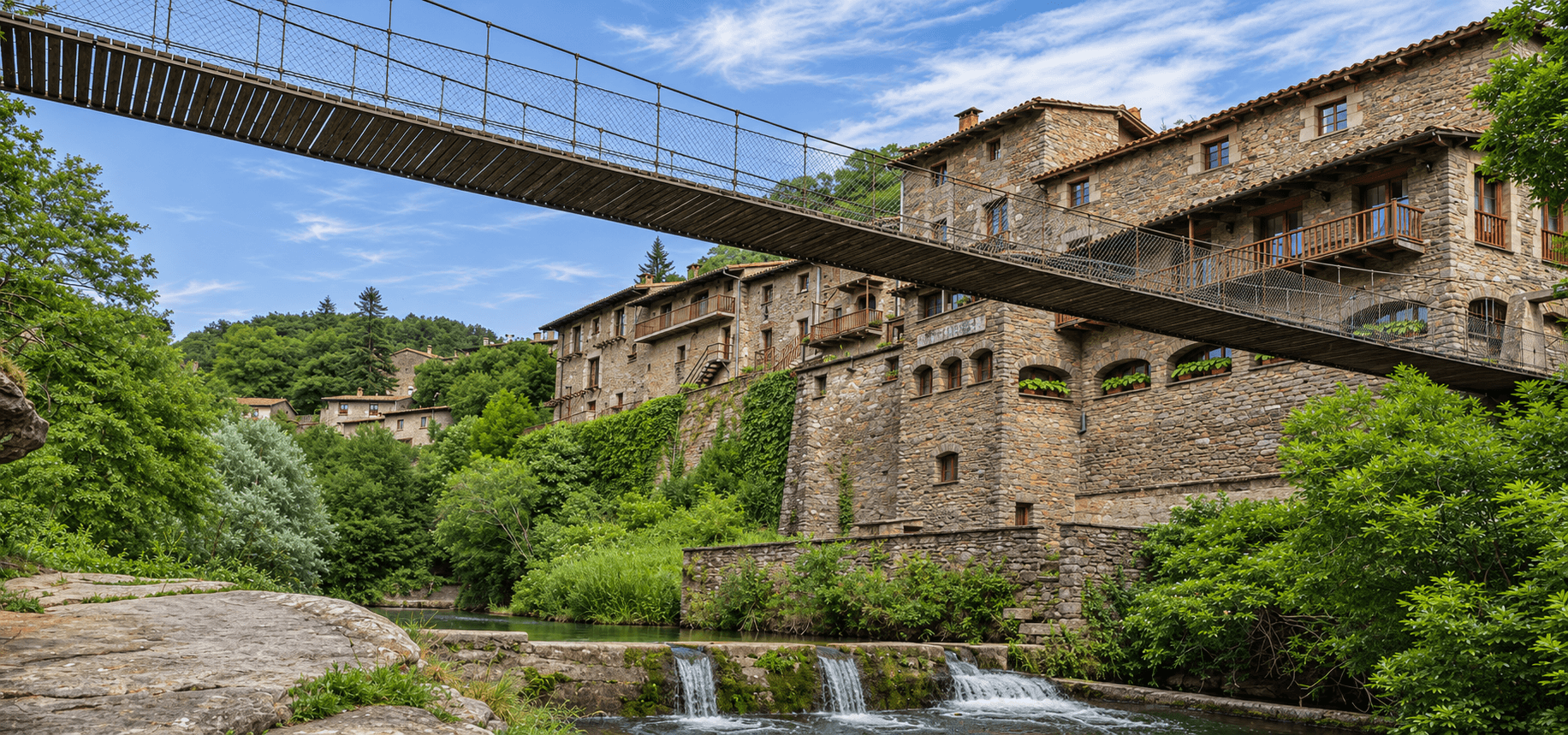
- Pont Vell: the old medieval bridge over the River Ter, one of the town's most recognisable sights and witness to centuries of crossings between the two banks.
- Pont Nou: the 20th-century concrete bridge that also spans the Ter. Seeing it alongside the Pont Vell lets you appreciate, within just a few metres, how the way of crossing the river has changed over time.
Planning your visit
Sant Joan de les Abadesses is 76 kilometres from the city of Girona. By road, the municipality is crossed by the N-260 national road and the C-38 regional road, which links it to Sant Pau de Segúries; local roads also connect it with Ogassa and Riudaura. Bear in mind that the train no longer runs here: until the mid-1980s the town had a rail link to Ripoll and Barcelona, but today the practical option is to go by car.
As for when to go, spring and autumn are the best times to visit the monastery and enjoy the valley, with pleasant temperatures and the landscape at its finest. In winter, remember you're in mountain country and wrap up warm.
A few practical tips:
- Wear comfortable shoes: the stroll between the monastery and the bridges over the Ter is best enjoyed on foot and at a leisurely pace.
- If you're going on a bank holiday or a sunny weekend, arrive early so you can park easily and explore the town before more visitors turn up.
- Set aside some time to sit by the river: the confluence of the Ter and the Arçamala stream is part of the place's charm.
- Before you go, check the monastery's visiting arrangements, as they may vary depending on the season.
Day trips in the surrounding area
If you have more time, the area lets you round off your trip with other interesting monuments less than an hour's drive away:
- Church of Santa Maria (Castellar de n'Hug), about 22.8 km away.
- Castellar de n'Hug Castle, about 22.9 km away, which can easily be combined with the church above.
- Montagut Castle, about 23.5 km away.
- Savassona Castle, about 31.4 km away.
- Church of Sant Sadurní, about 38 km away.
With these stops, Sant Joan de les Abadesses can be the starting point for a weekend route through the castles and churches of inland Catalonia.
A town with far-flung ties
One final curiosity: Sant Joan de les Abadesses is twinned with San Luis Potosí, in Mexico, and with Le Palais-sur-Vienne, in France. It's a detail that shows how this small Ripollès town, which grew up around a monastery governed by women more than a thousand years ago, still looks beyond its mountains.
All in all, Sant Joan de les Abadesses is the perfect visit for anyone looking for history with a story of its own, mountain scenery and the calm of a riverside town. A stroll between the monastery and the Pont Vell is all it takes to see why it deserves a place on your next trip to Girona.
What to see in Sant Joan de les Abadesses
The monuments from our catalogue you'll find in the village.

Near Sant Joan de les Abadesses
 Church
 of Santa Maria (Castellar de n'Hug)
The Church of Santa Maria stands at the heart of Castellar de n'Hug, in the Berguedà: a simple stop for anyone exploring the villages of this Catalan comarca at a leisurely pace.
 Castle
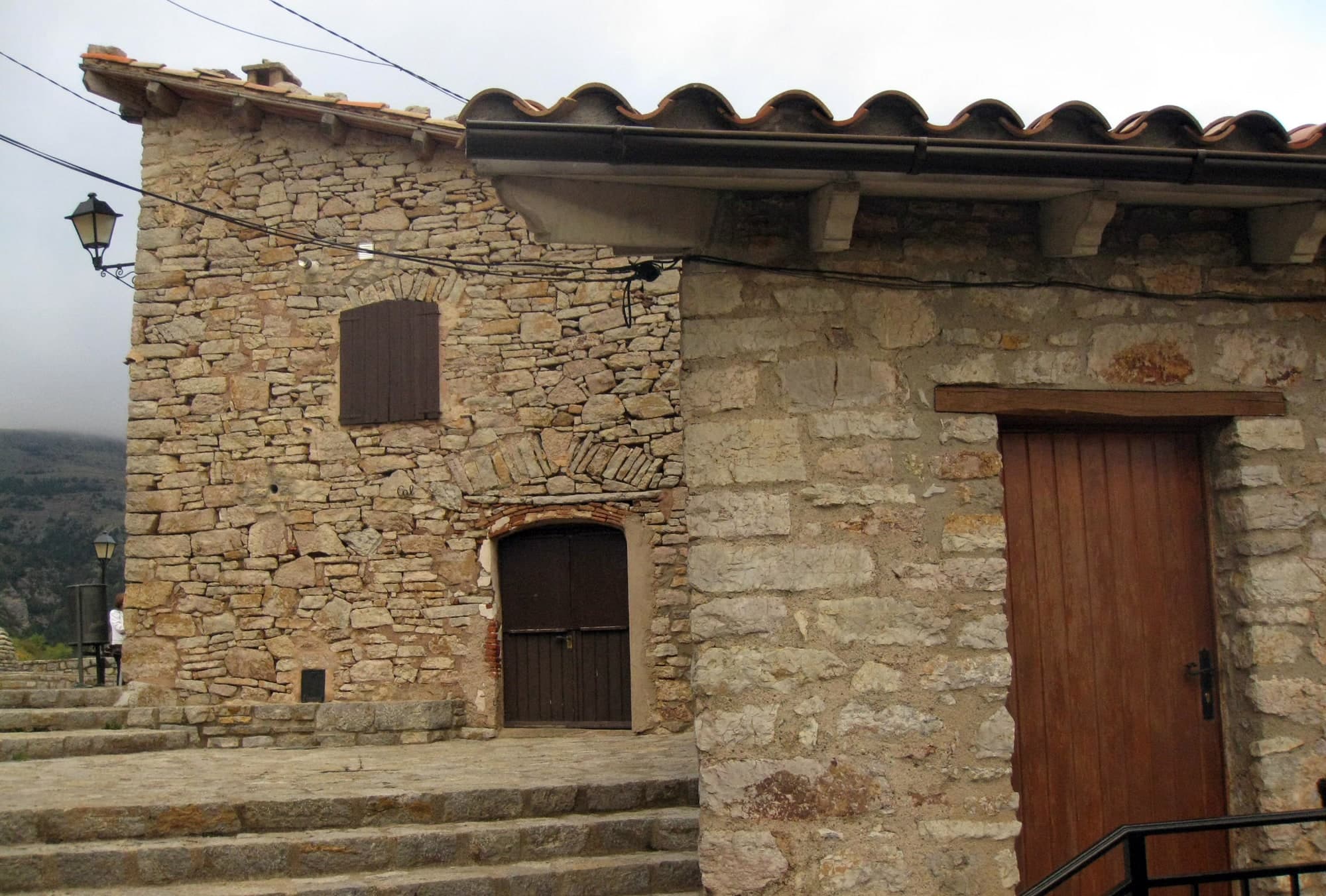
Castellar de n'Hug Castle
A frontier castle in the Berguedà, listed as a Cultural Asset of National Interest, which gives its name and character to the village of Castellar de n'Hug, in the province of Barcelona.
 Castle
Montagut Castle
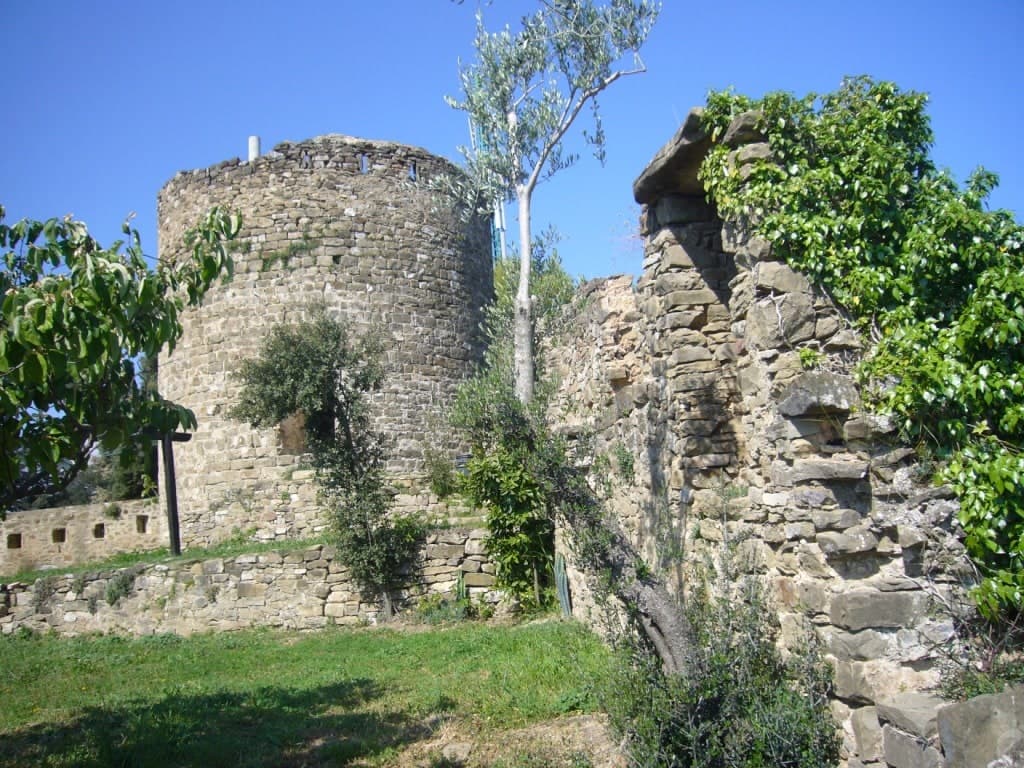
An 11th-century fortress crowning the hill of Montagut, 597 metres up, in the heart of the Garrotxa district of Girona.
Article written with the help of artificial intelligence based on Wikipedia (CC BY-SA 4.0) and our catalogue, and reviewed by the El Trotamundos Curioso team.