The Catalan Pyrenees: Romanesque churches, monasteries and mountain villages from the Vall de Boí to the Ripollès
A route through the Catalan Pyrenees: the Romanesque churches of Taüll and Boí, La Seu d'Urgell, Os de Civis, Sant Joan de les Abadesses and charming villages.
In this article
Some getaways are planned around the scenery, others around the heritage. The Catalan Pyrenees have the rare virtue of not making you choose. Among glacial valleys, ice-cold rivers and peaks that stay snow-capped for much of the year lie some of Europe's most precious medieval treasures: Romanesque churches with slender bell towers, cathedrals that were once the seats of powerful bishoprics and monasteries bound up with the very birth of Catalonia.
In this article we suggest a west-to-east route, from the Alta Ribagorça in the province of Lleida to the lands of Girona, with stops that combine art, history and mountain villages.
The Vall de Boí: Romanesque that reaches for the sky
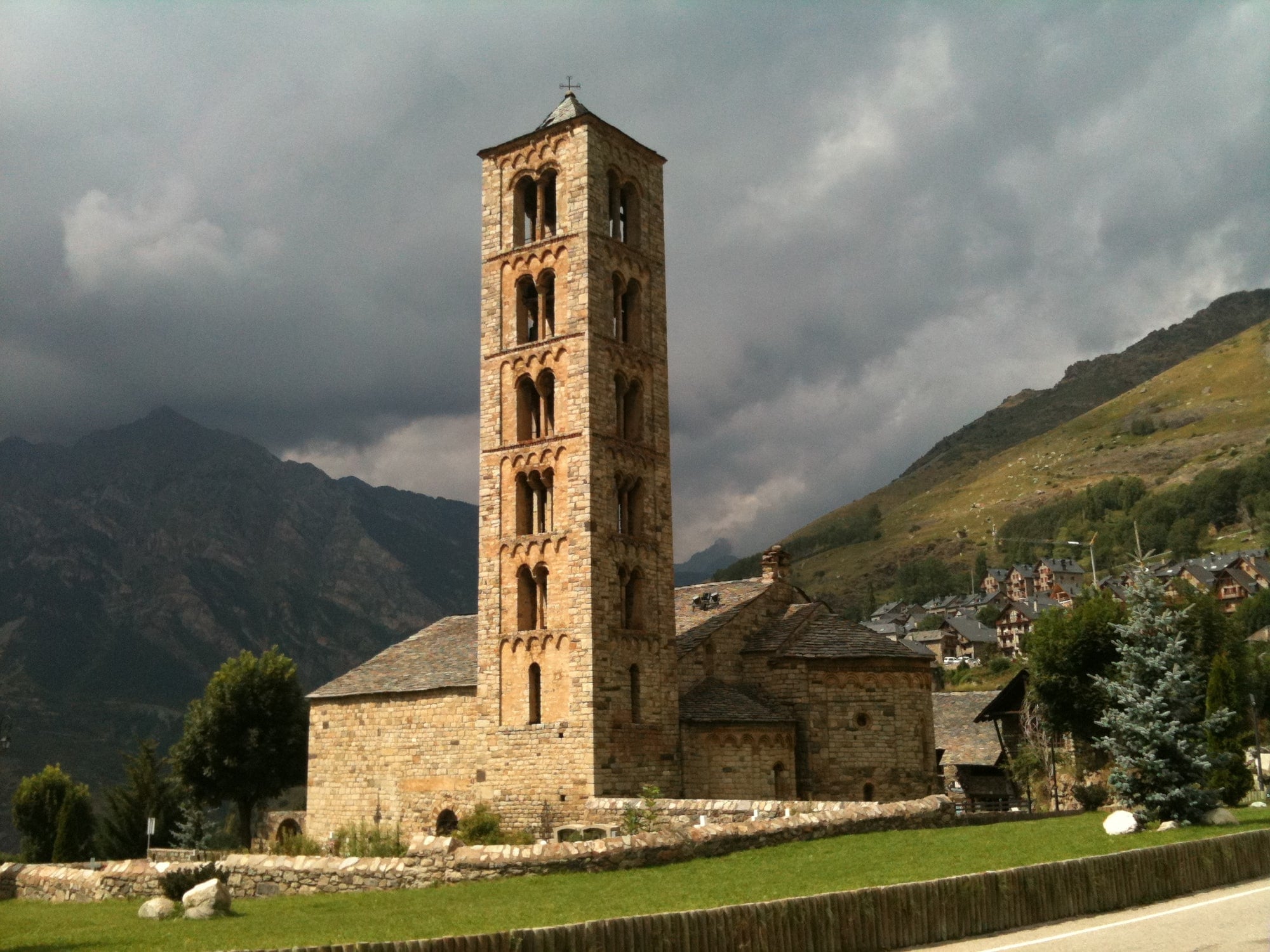
If there is one unmissable place in the Catalan Pyrenees, it is the Vall de Boí. Its group of Romanesque churches, most of them built between the 11th and 12th centuries, was declared a UNESCO World Heritage Site in 2000. What makes them special is not just their age but their coherence: neatly squared stone, apses decorated with Lombard arcading and, above all, those soaring bell towers with paired windows that seem to keep watch over the valley.
These churches were born at a time when the local lords, grown wealthy and in touch with the artistic currents arriving from northern Italy, wanted to leave their mark in the form of places of worship. The result is a landscape in which every village has its tower, and from almost every one you can see another.
The essential stops on a visit to the valley are:
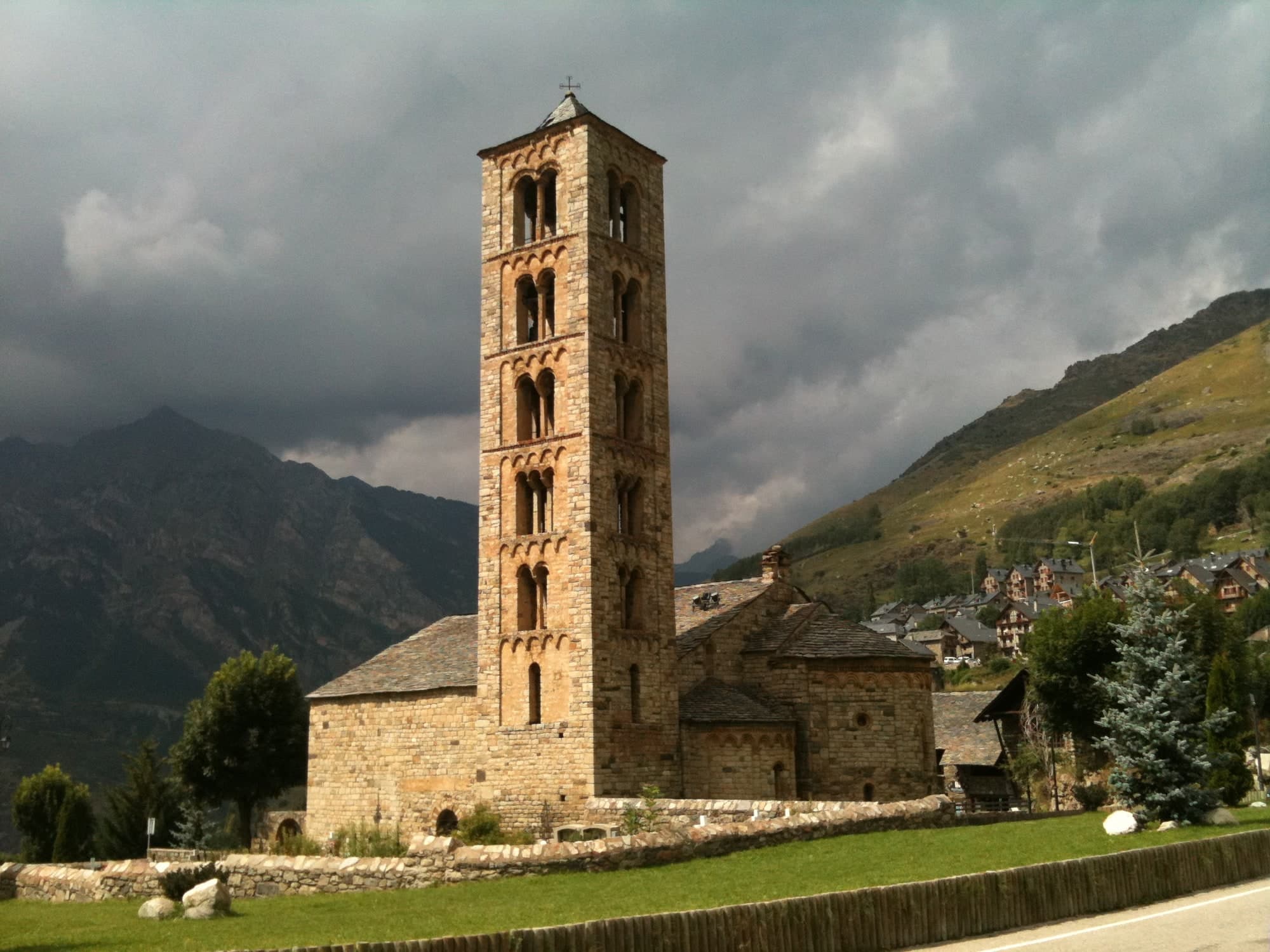
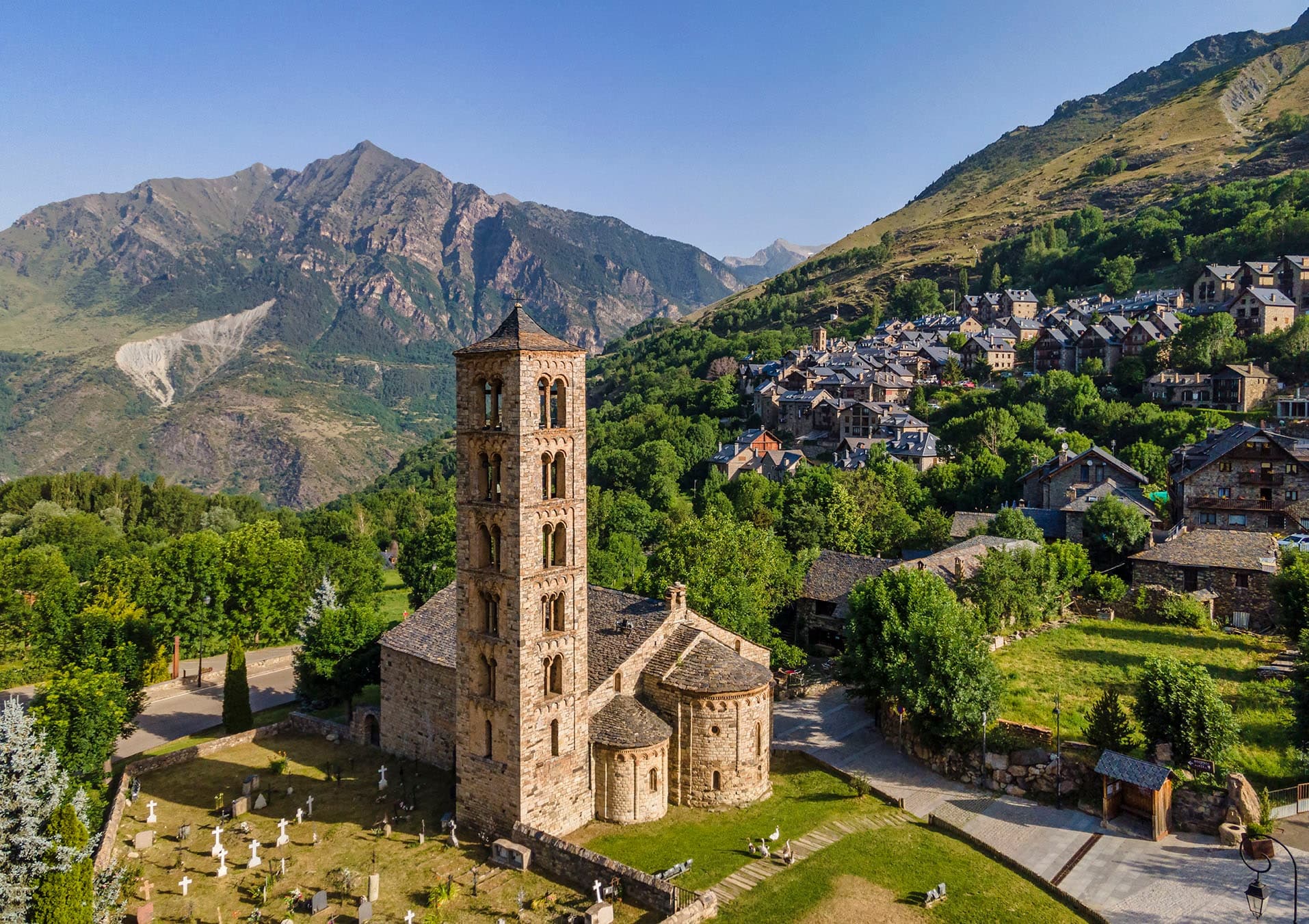
- Sant Climent de Taüll: the most famous. Consecrated in 1123, its six-storey bell tower is almost an emblem of Catalan Romanesque. Its apse was painted with the celebrated Pantocrator, the original of which is now kept in Barcelona, at the Museu Nacional d'Art de Catalunya.
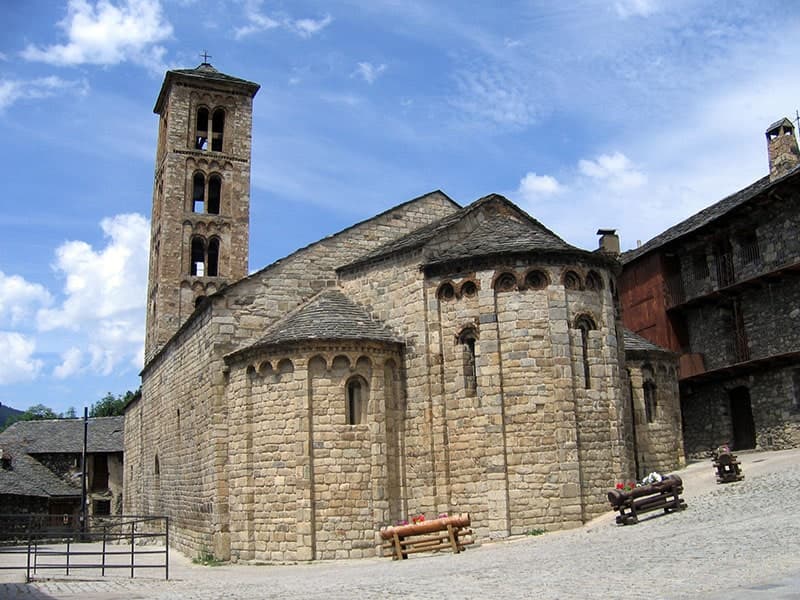
- Santa Maria de Taüll: consecrated just one day after Sant Climent, it stands at the heart of the old village, surrounded by stone houses.
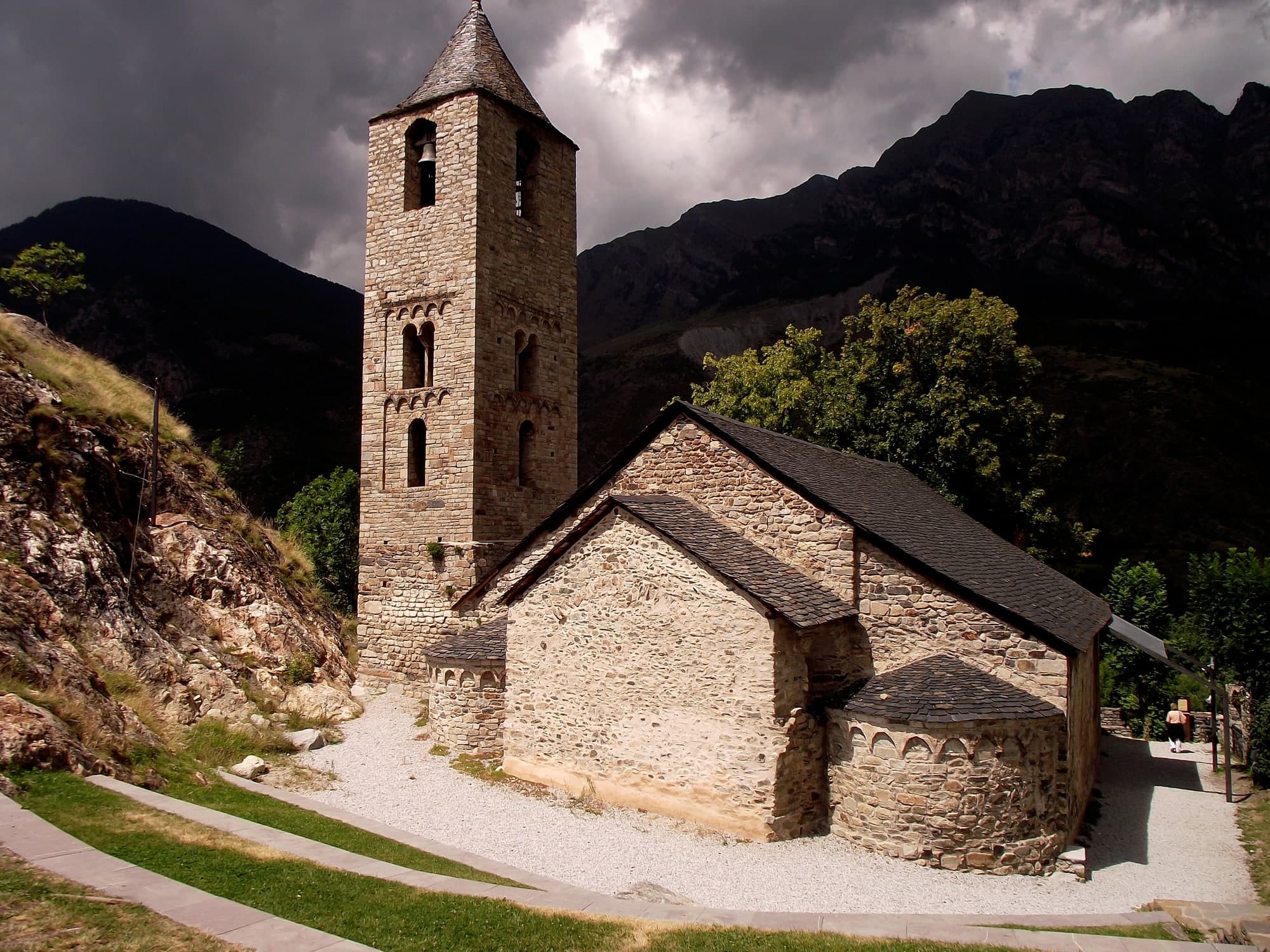
- Sant Joan de Boí: at the entrance to the valley, known for its mural paintings, most of which were also moved to the Barcelona museum.
- Santa Eulàlia d'Erill la Vall: with a slender bell tower and a side portico, it is linked to a remarkable sculptural group depicting the Descent from the Cross.
The village of Taüll deserves time of its own: wandering its steep streets, beneath slate roofs, is the best way to understand how life was lived in these valleys. And if you fancy a little more walking, the Hermitage of Sant Quirc de Taüll, high above, offers one of the loveliest views in the area.
La Seu d'Urgell and its cathedral
Continuing east, the next big stop is La Seu d'Urgell, capital of the Alt Urgell and seat of a bishopric of enormous historical importance. Its bishop is also one of the two co-princes of Andorra, an institutional curiosity with roots in the Middle Ages.
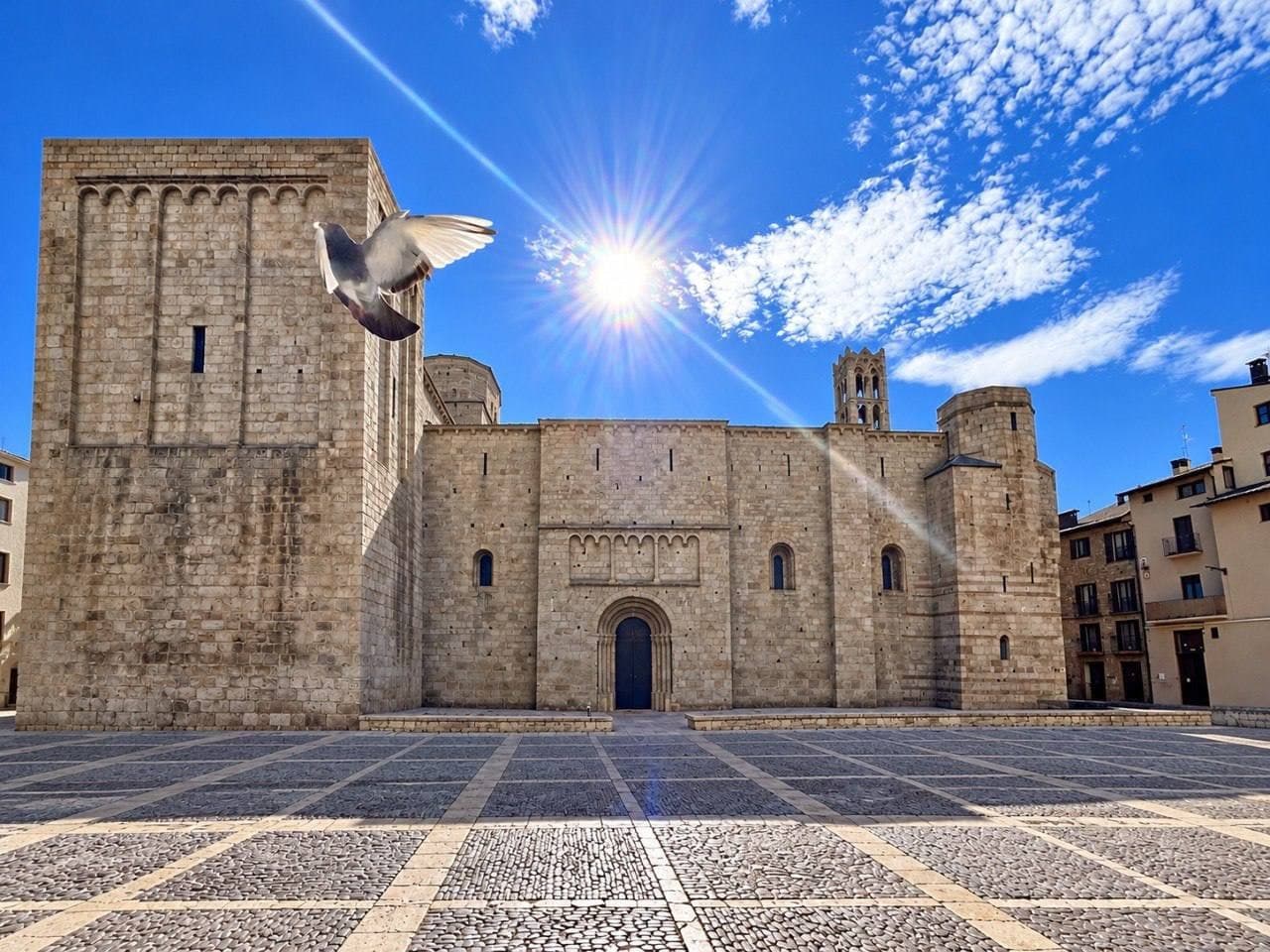
La Seu d'Urgell Cathedral (Santa Maria) is the only Romanesque cathedral in Catalonia to have survived in such an intact state. Built in the 12th century, it shows a clear Italian influence in its façade and in the gallery of the apse. Its cloister, with carved capitals full of human and animal figures, is a small encyclopaedia in stone. Take your time: the details of each capital reward patience.
Os de Civis: the village you reach through Andorra
Near La Seu lies one of the most unusual villages in the Pyrenees: Os de Civis. It belongs to Catalonia, but because of its location the easiest road access runs through Andorran territory. Its status as a remote corner has allowed it to preserve its traditional stone-and-timber architecture and a tranquillity that is hard to find. It is a fine example of the high-mountain villages that for centuries lived from livestock farming and isolation.
The Ripollès: the cradle of Catalonia
Once in the lands of Girona, the Pyrenees soften into broader valleys where, to a large extent, medieval Catalonia was forged. The key figure here is Count Guifré el Pilós (Wilfred the Hairy), whom tradition places at the origin of the line of the Counts of Barcelona.
It was he who, at the end of the 9th century, founded the Monastery of Sant Joan de les Abadesses, installing his daughter Emma as its first abbess. The present church, from the Romanesque period, holds a piece that moves everyone who sees it: the Santíssim Misteri, a 13th-century wooden sculptural group of the Descent from the Cross. The Gothic cloister and the surrounding town round off a highly recommended visit.
Close by, in the municipality of Sant Joan de les Abadesses, Montagut Castle forms part of that landscape of fortifications that guarded the passes of the eastern Pyrenees in the Middle Ages.
Extending the route: the Garrotxa and the Pyrenees meeting the sea
If you have days to spare, the route lends itself to two very worthwhile extensions. To the south, in the volcanic district of the Garrotxa, Castellfollit de la Roca perches above a basalt cliff some fifty metres high, its houses literally hanging over the edge. It is one of the most photographed sights in Catalonia.
And to the east, the Pyrenees finally plunge into the Mediterranean at Cap de Creus. There, high in the Serra de Rodes, the Monastery of Sant Pere de Rodes overlooks the bay of El Port de la Selva with one of the most spectacular views in European Romanesque. Nearby, Cadaqués provides a seafaring finale with its whitewashed houses and its memories of Dalí.
Tips for planning your trip
The Catalan Pyrenees are best enjoyed at a leisurely pace. A few practical recommendations:
- Plan your timings carefully: distances on the map are deceptive. Mountain roads are winding and journeys between valleys take longer than you might think.
- Choose your season: spring and autumn offer magnificent colours and fewer crowds. In winter some roads can be tricky because of snow, so it's wise to check before setting off.
- Pack warm clothing, even in summer: at altitude it gets much cooler in the evening, and church interiors tend to be cold.
- Comfortable footwear: many villages have steep, cobbled streets, and some hermitages can only be reached on foot.
- Check visiting arrangements in advance: churches and monasteries have their own opening hours and, in some cases, can only be visited on a guided tour. Check the official channels before you go.
- Arrive early on bank holidays and long weekends, especially in the Vall de Boí, which draws large numbers of visitors at peak times.
With a week you can take in the highlights of this route at a relaxed pace. With a long weekend, the sensible option is to focus on a single valley: the Vall de Boí or the Ripollès. Either way, the Catalan Pyrenees have a very particular way of drawing you back: there is always another bell tower waiting to be discovered on the other side of the mountain.
Places in this article
 Church
 of Sant Climent (Taüll)
A Romanesque church with a perfect basilica plan in Taüll, the jewel of the Vall de Boí and a UNESCO World Heritage Site since 2000, together with the valley's other Romanesque churches.
 Cathedral
 of Santa Maria (La Seu d'Urgell)
The only entirely Romanesque cathedral in Catalonia, with a Lombard air, stone lions guarding its portal and fortress-like walls in the heart of the Lleida Pyrenees.
 Monastery
 of Sant Joan de les Abadesses
An ancient monastery in the Ripollès that gives its name to the town around it and which, until the year 945, was the only convent for women in the whole of Catalonia.
 Village
Taüll
A Pyrenean village perched at 1,500 metres in the Vall de Boí, where the Romanesque churches of Sant Climent and Santa Maria recall the medieval splendour of the lords of Erill.
 Church
 of Santa Maria (Taüll)
A Romanesque church consecrated in 1123 in the heart of Taüll's old quarter, one of the churches of the Vall de Boí designated a UNESCO World Heritage Site.
 Church
Iglesia de San Juan (Bohí)
Pequeño templo románico lombardo en el corazón del valle de Bohí, Patrimonio de la Humanidad junto a las demás iglesias románicas del valle.
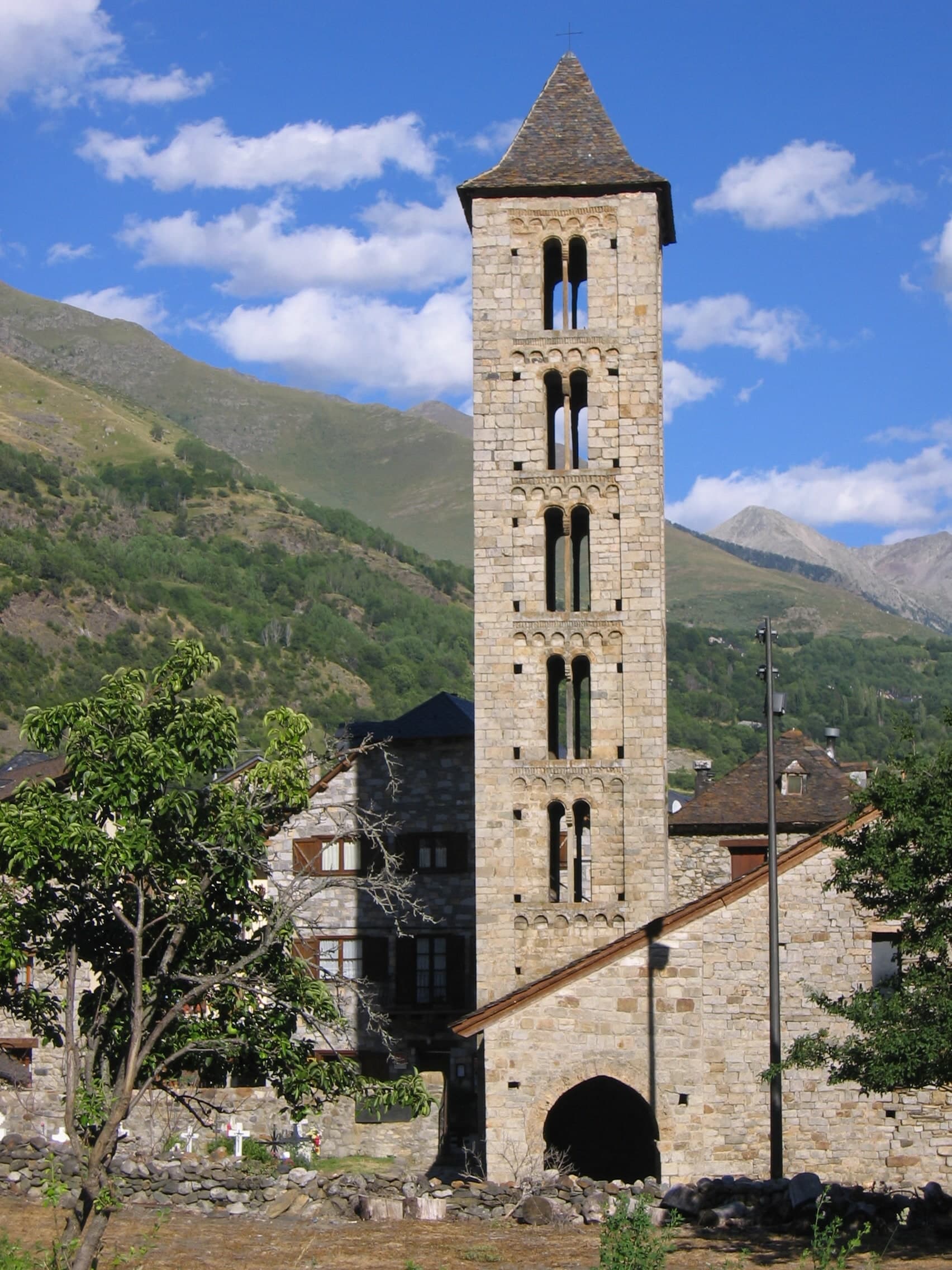 Church
Iglesia de Santa Eulalia (Erill la Vall)
Iglesia románica lombarda de Erill la Vall, en el valle de Bohí, que forma parte del conjunto declarado Patrimonio de la Humanidad por la Unesco en el año 2000.
 Village
Os de Civis
Un pueblo catalán de casas medievales al que solo se llega por carretera desde Andorra, con una iglesia románica de San Pedro rescatada de la ruina por sus vecinos.
Article written with the help of artificial intelligence based on Wikipedia (CC BY-SA 4.0) and our catalogue, and reviewed by the El Trotamundos Curioso team.