
Cathedral of Santa Maria (La Seu d'Urgell)
Description
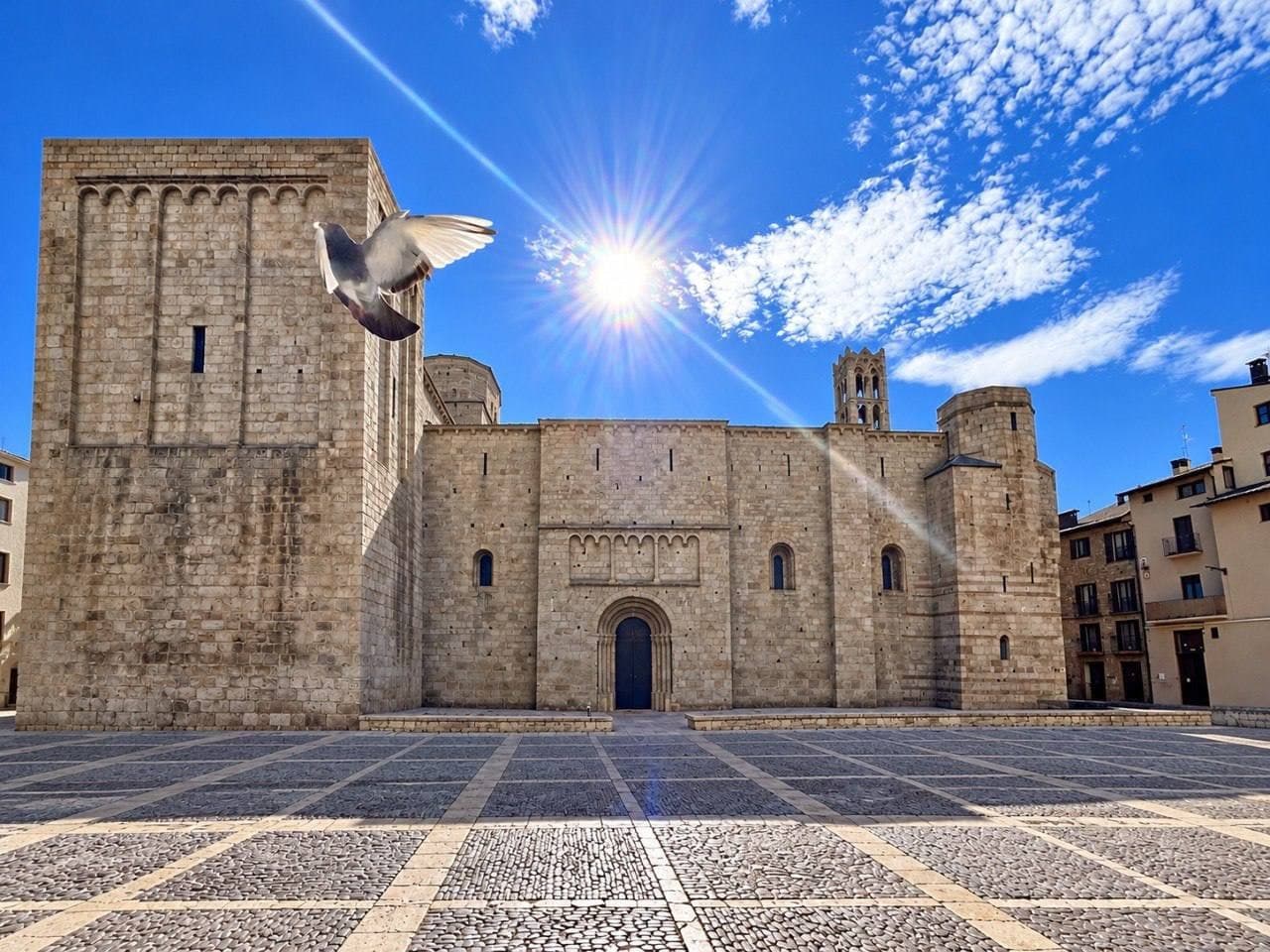
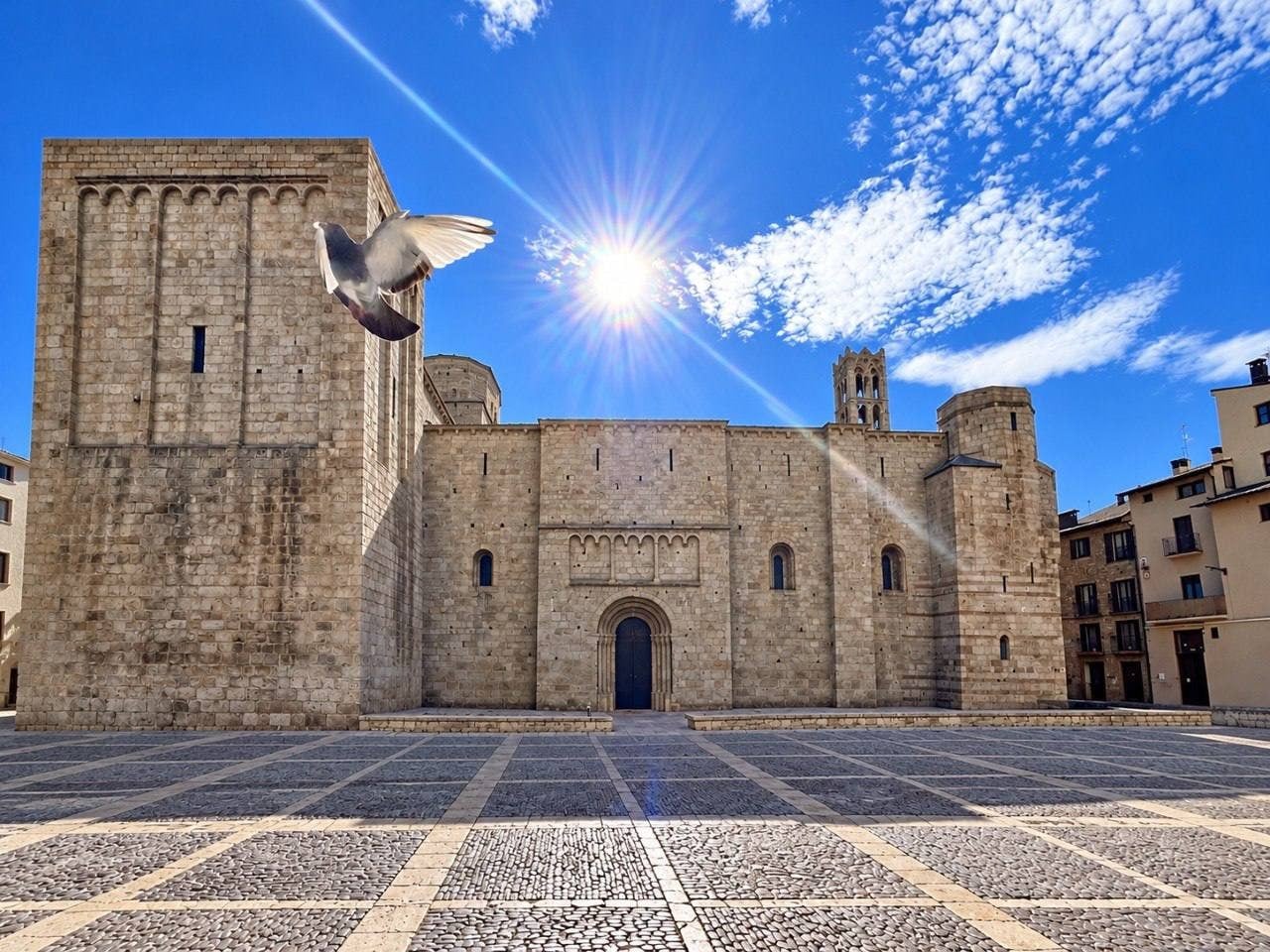
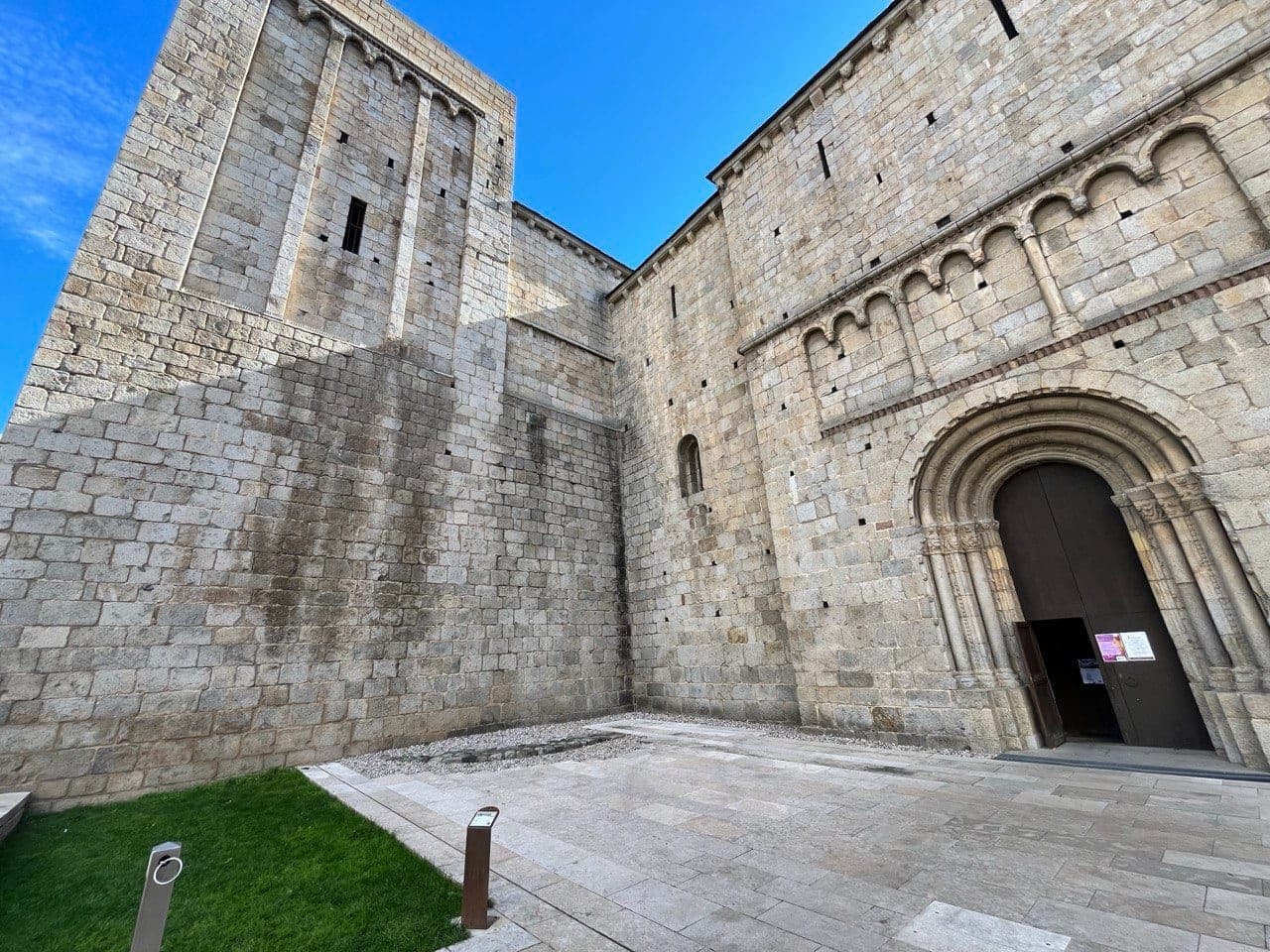
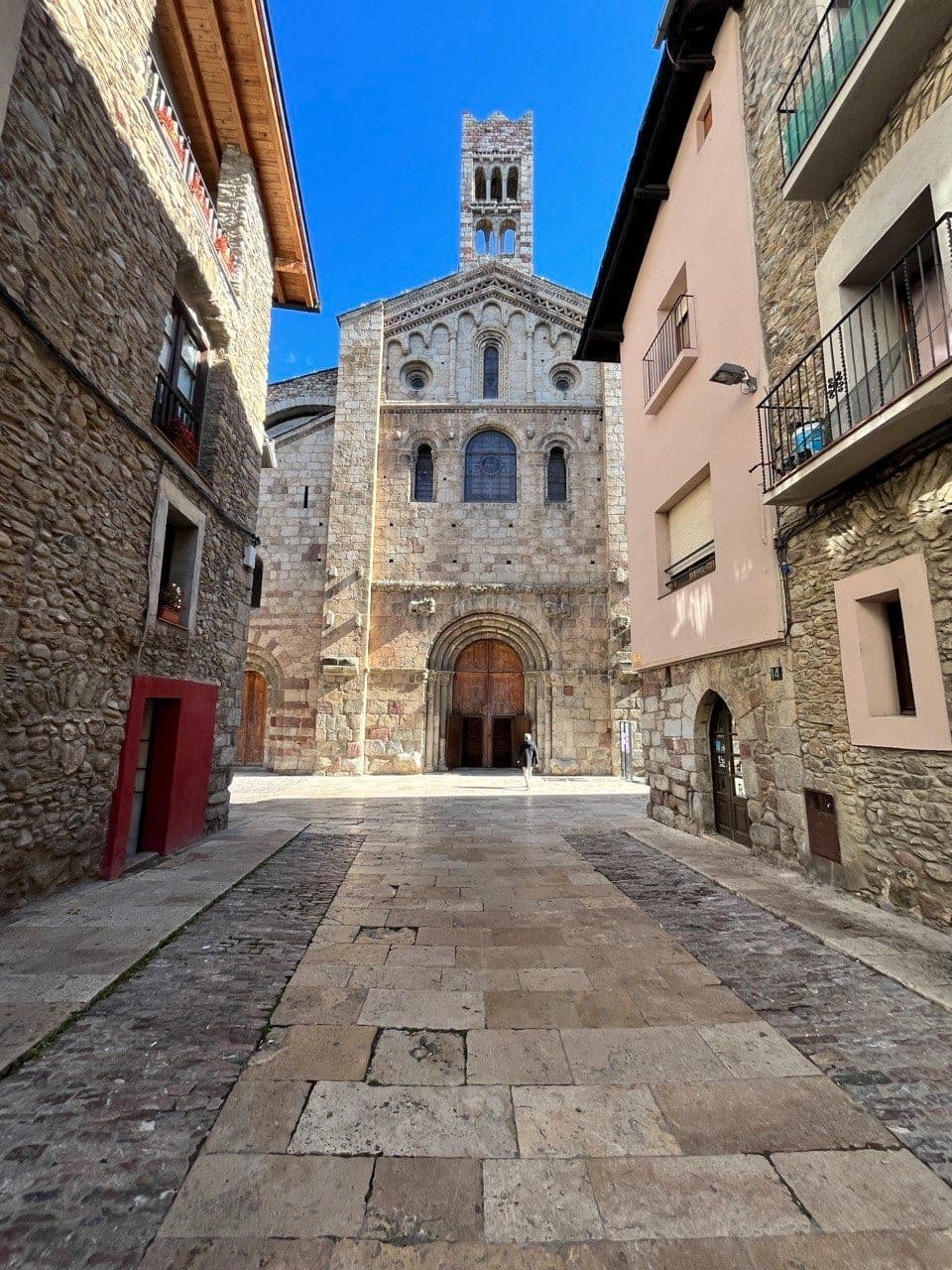
Before stepping inside, it is worth pausing in front of the west façade. Its two-tone granite ashlars, grey and reddish, probably taken from the River Valira, frame a central portal of five archivolts guarded by three pairs of lions: the uppermost ones, carved in high relief, are devouring people. Beside the entrance the Romanesque 'eggs', a symbol of life and resurrection, peep out, while small human faces adorn the outer arch. Such a decorative display is unusual in Catalan Romanesque, which tends to be austere, and it explains why Santa Maria d'Urgell, the only entirely Romanesque cathedral in Catalonia, is regarded as a one-of-a-kind example.
That singularity has an Italian accent. In 1175 Bishop Arnau de Preixens hired Ramon Llambard, a master builder who also worked on San Michele in Pavia and may have been Italian himself, to close the vaults, raise the bell towers and finish the lantern tower within seven years. He brought the Lombard air that can be seen in the bell tower with its twin-arched windows and in the open gallery running around the chevet and transept.
The work had been begun by Bishop Odo between 1116 and 1122, on a site where two earlier cathedrals had already stood. Its extraordinarily thick walls and towers are no accident: in 1195, during the siege by Arnau de Castellbò and Raymond Roger of Foix, the church served to defend the town. The ransom of 30,000 sous emptied the clergy's coffers and the cathedral was left unfinished for good; only the cloister went ahead.
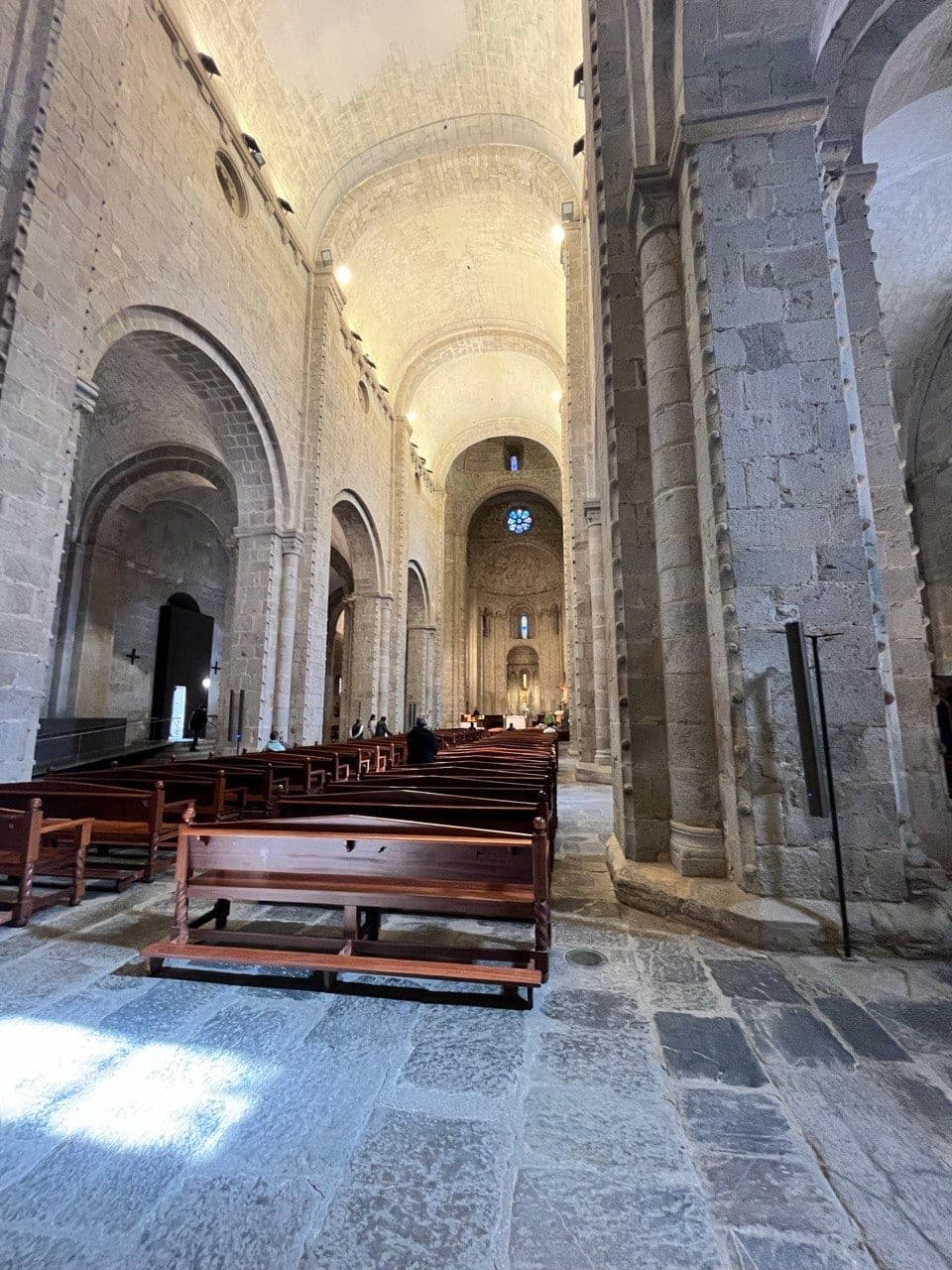
Inside, pride of place goes to the Virgin of Urgell, a 13th-century polychrome carving also known as Our Lady of Andorra because, according to tradition, it was hidden there during the Saracen invasion. The interior looks bare thanks to Puig i Cadafalch, who from 1918 onwards removed 50 tonnes of 18th-century neoclassical plaster. It is well worth rounding off the visit with the cloister, the Church of Sant Miquel and the Diocesan Museum, which together form an ensemble declared a historic-artistic monument in 1931.
Routes that include this monument
Community photos (3)
Log in to upload your photos of this monument.
Best time to visit
From late spring to early autumn, when the Pyrenean climate lets you linger over the façade and the apse at your leisure; in winter the cold bites, although the interior, the cloister and the museum still make for a worthwhile visit.
Location
Similar monuments
 Cathedral
Co-Cathedral of Santa María del Romeral
In Monzón, the Co-Cathedral of Santa María del Romeral shares the seat of its diocese with Barbastro and is protected as a Site of Cultural Interest.
 Cathedral
Girona Cathedral of Saint Mary
Crowning the highest point of Girona, the Cathedral of Saint Mary boasts the widest Gothic nave in the world and a 12th-century Romanesque cloister.
 Cathedral
Barcelona Cathedral
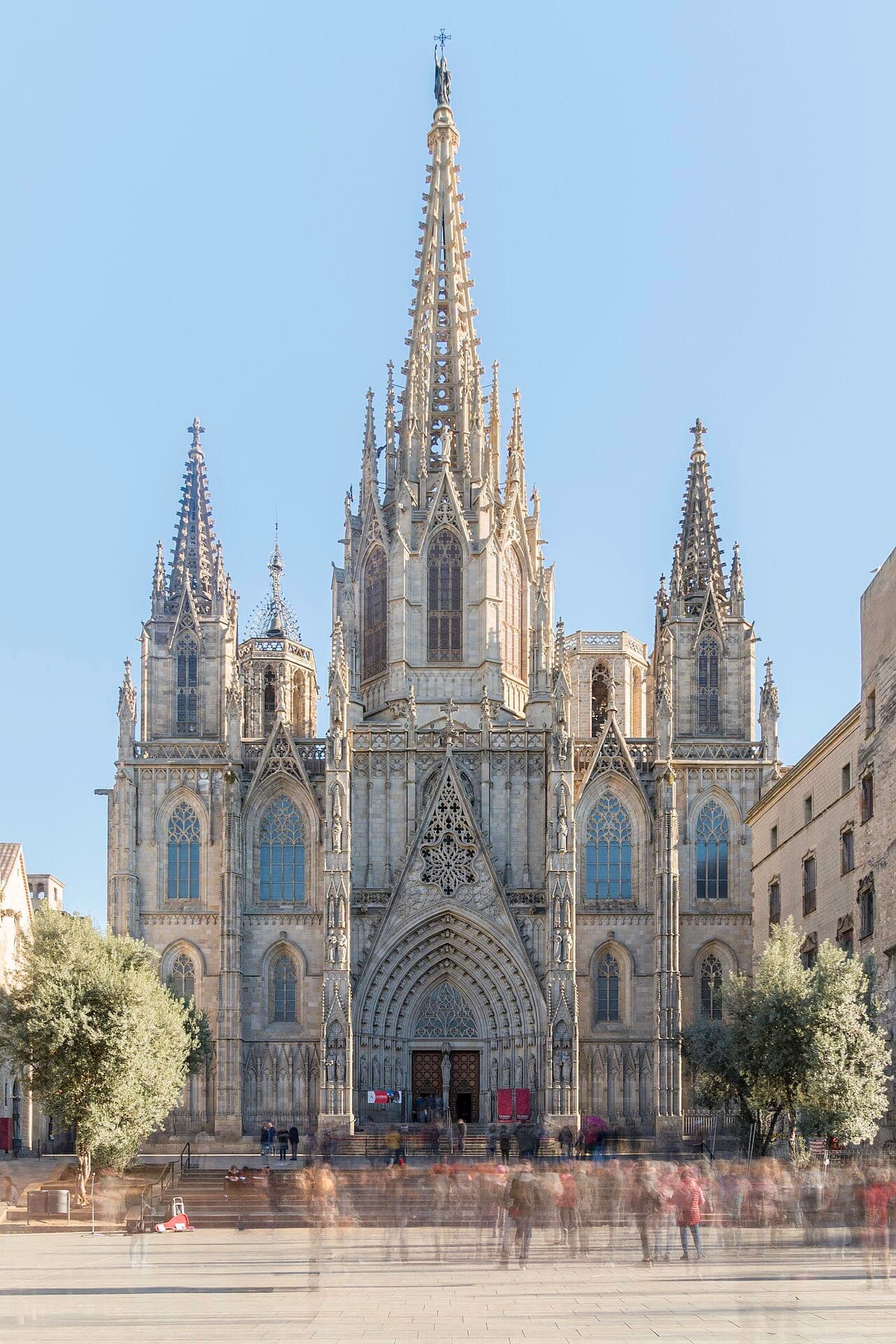
La Seu of Barcelona, a Gothic jewel built between the 13th and 15th centuries, preserves the memory of Saint Eulalia and has a cloister that is home to thirteen white geese.
 Monastery
 of El Miracle
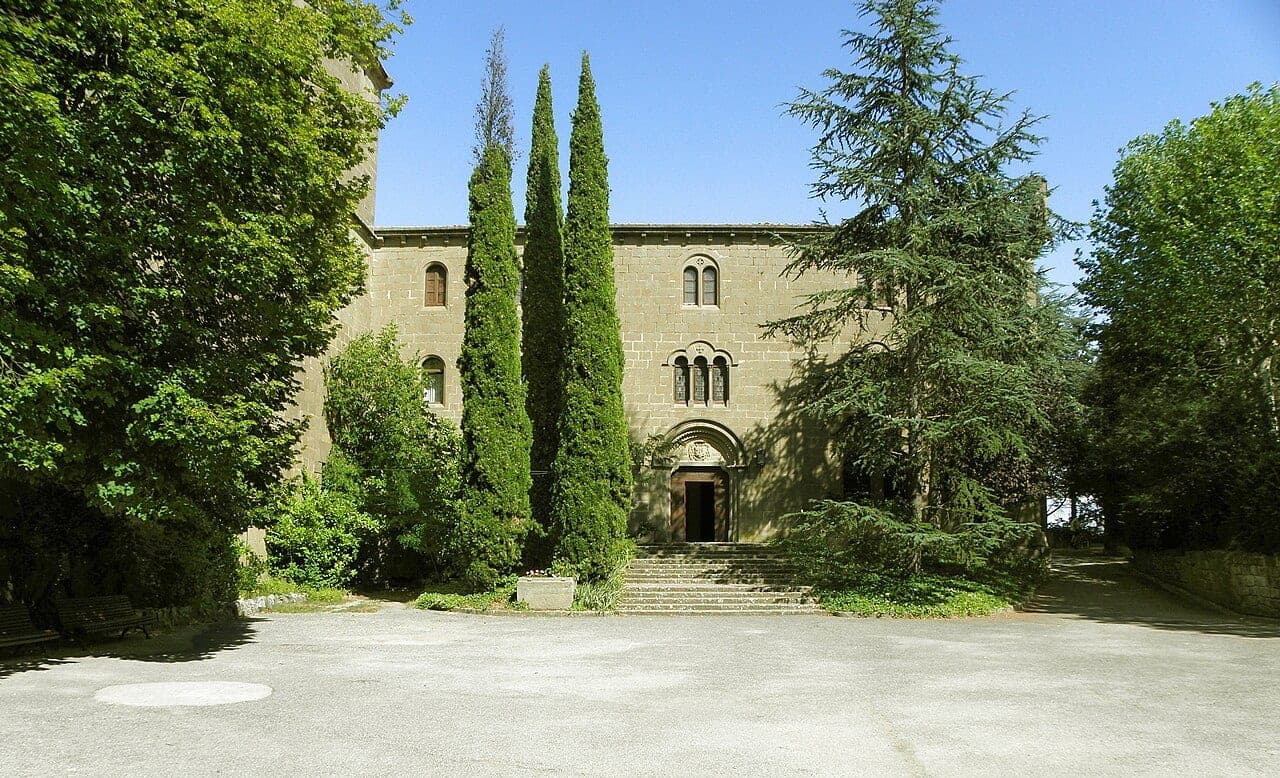
A Benedictine monastery within the Sanctuary of El Miracle, in Riner, where a small community of monks linked to Montserrat keeps monastic life alive.