
Plaza de España
Description
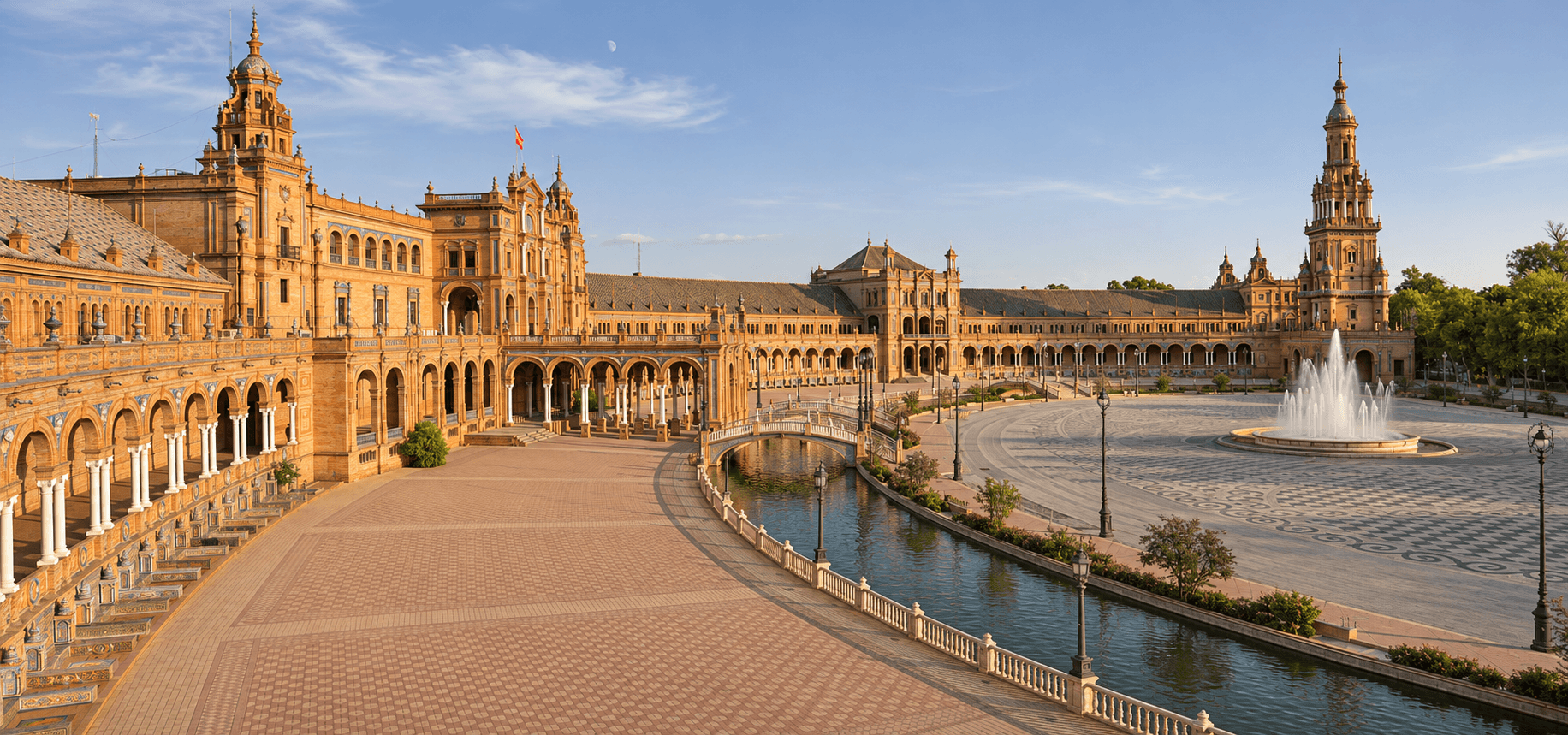
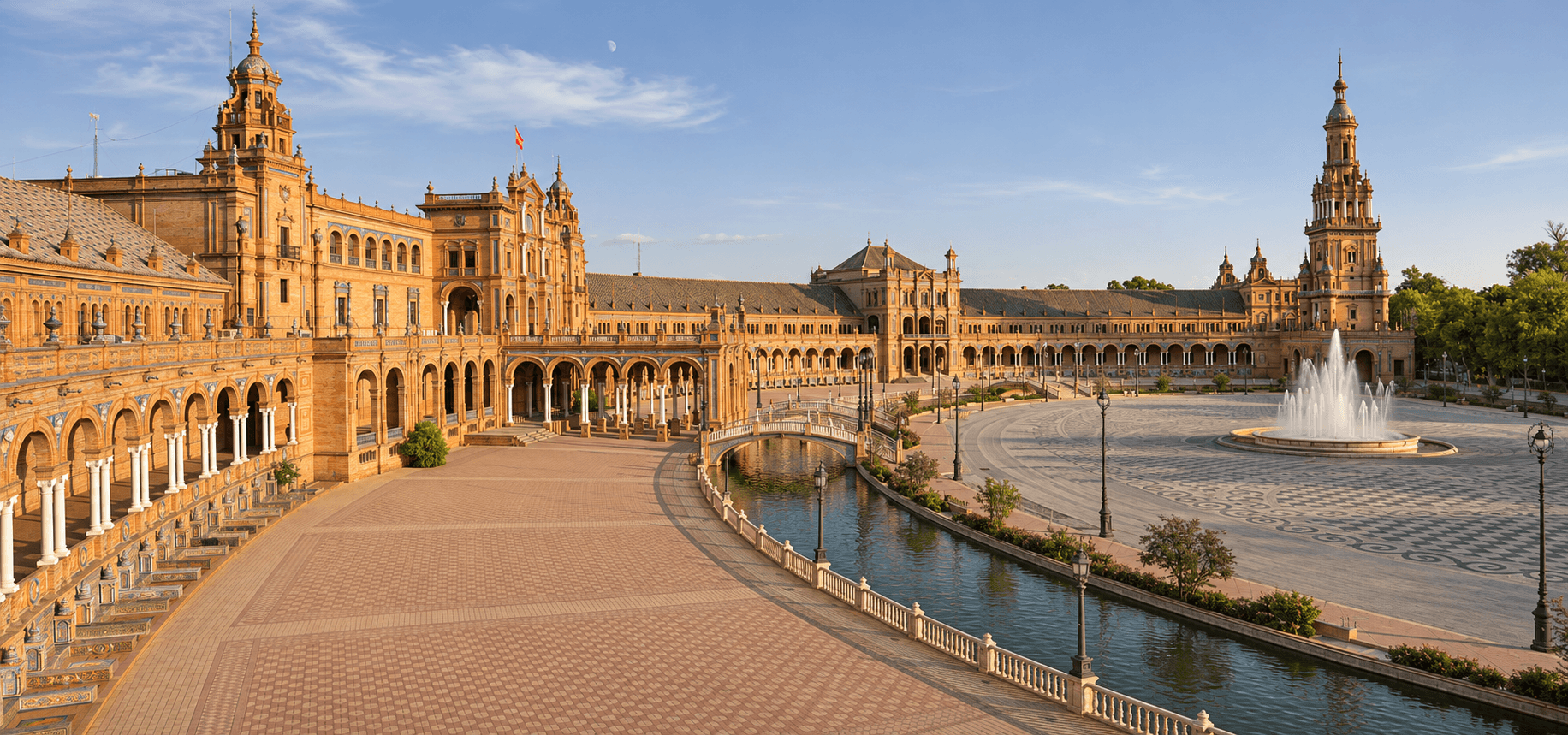
First-time visitors to the Plaza de España tend to stop in their tracks for a moment: an immense semicircle of brick and glazed tiles opens out towards María Luisa Park, ringed by a canal that you can explore in a hired rowing boat and spanned by four bridges dedicated to the kingdoms of Aragon, Castile, León and Navarre. It covers some 50,000 square metres, more than half of which is open space, and it was the largest building of the 1929 Ibero-American Exposition, which Alfonso XIII and Victoria Eugenie opened right here on 9 May that year.
The most enjoyable stroll is along the benches. There are 48 of them, clad in ceramic tiles and dedicated to the Spanish provinces in alphabetical order, each with its coat of arms, a map on the ground, a panel depicting an episode from its history and small bookshelves on either side. Seville, as host city, has no bench of its own, but it features in scenes of local life: the Seises dancing in the cathedral, the Cristo de la Expiración crossing the Triana bridge, the return from the Rocío pilgrimage and the Cruces de Mayo. The decoration is completed by 52 medallions of illustrious figures.
The complex was designed by Aníbal González, who drew inspiration from Palladio's villas and the Trocadéro in Paris. It was built between 1914 and 1929 amid strikes, rising prices and delays: the budget soared from just over 628,000 pesetas to more than 17 million. It was Alfonso XIII who suggested the square should be permanent, and González ended up resigning in 1926, by which time the project had essentially been finalised. Even the Academy of Fine Arts objected to the North and South towers, fearing they would rival the Giralda.
Today the central building houses an Army headquarters, and one of the galleries leads into the Seville Military History Museum. Look closely at the canal balustrades, too: the inner ones were replaced with red marble in 1946, while the outer ones retain the original ceramic tiles, restored in 2009. Since July 2023 it has been listed as a Bien de Interés Cultural (Site of Cultural Interest).
Routes that include this monument
Community photos
Log in to upload your photos of this monument.
Best time to visit
As the visit is almost entirely outdoors, spring or autumn is ideal, avoiding the middle of the day in Seville's summers; in May, the city also celebrates the Cruces de Mayo that appear on its tiles.
Location
Similar monuments
 Cathedral
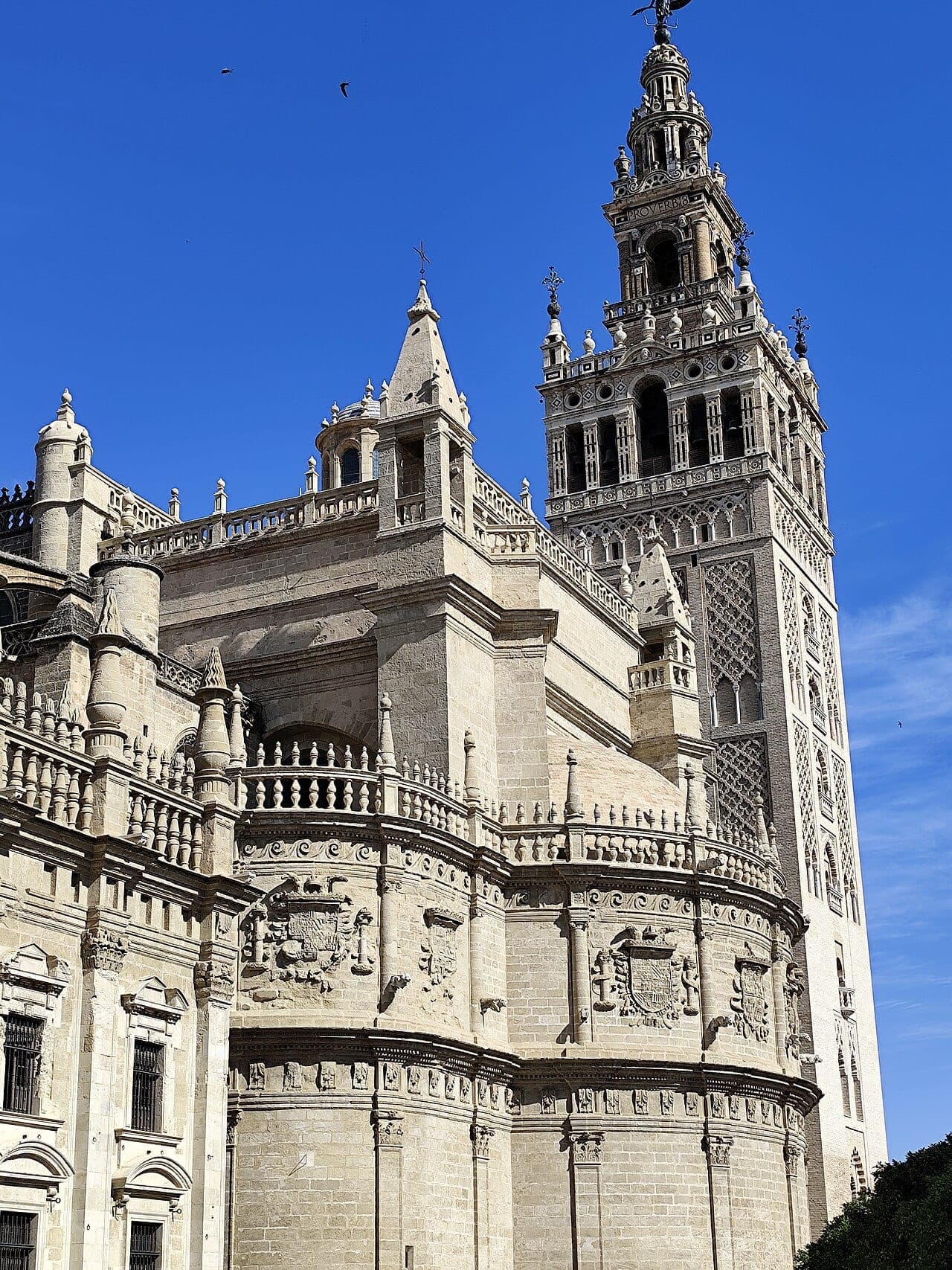
Seville Cathedral
The largest cathedral in the world by area, built on the site of the old great mosque, it is home to the Giralda, the Patio de los Naranjos and the tomb of Christopher Columbus.
 Church
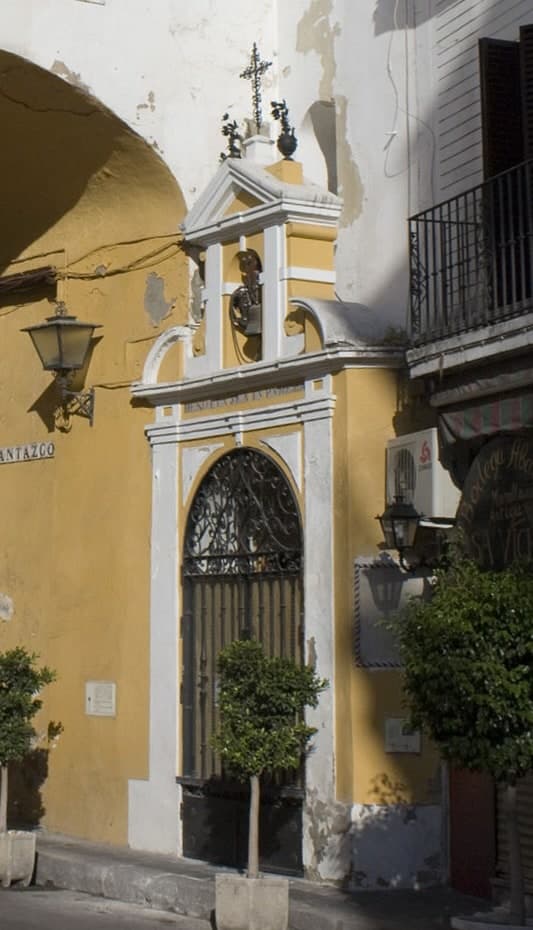
Chapel of the Pura y Limpia
A small 18th-century street chapel beside the Postigo del Aceite, one of the few surviving reminders in Seville of popular devotion to the Immaculate Conception.
 Monastery
Museum of Fine Arts of Seville
One of Spain's great art galleries, housed in the former Convent of La Merced and essential viewing for anyone wanting to discover Murillo, Zurbarán and Valdés Leal.
 Church
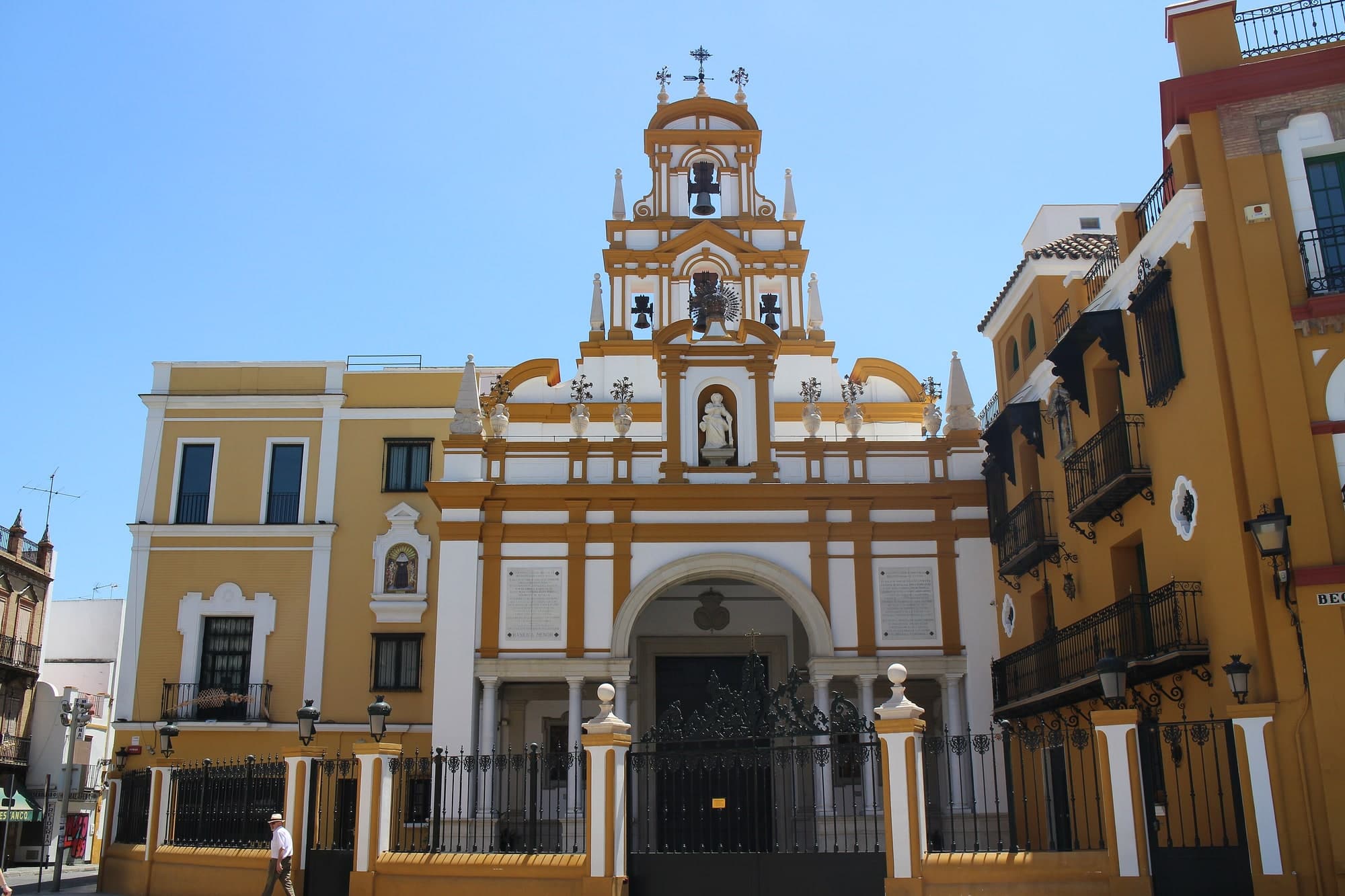
Basílica de la Macarena
Beside the Ronda Histórica, the Basílica de la Macarena is home to the Esperanza Macarena and her brotherhood, the stars of Seville's Madrugada in the early hours of Good Friday.