Frías
Community photos
Log in to upload your photos of this village.
History and heritage
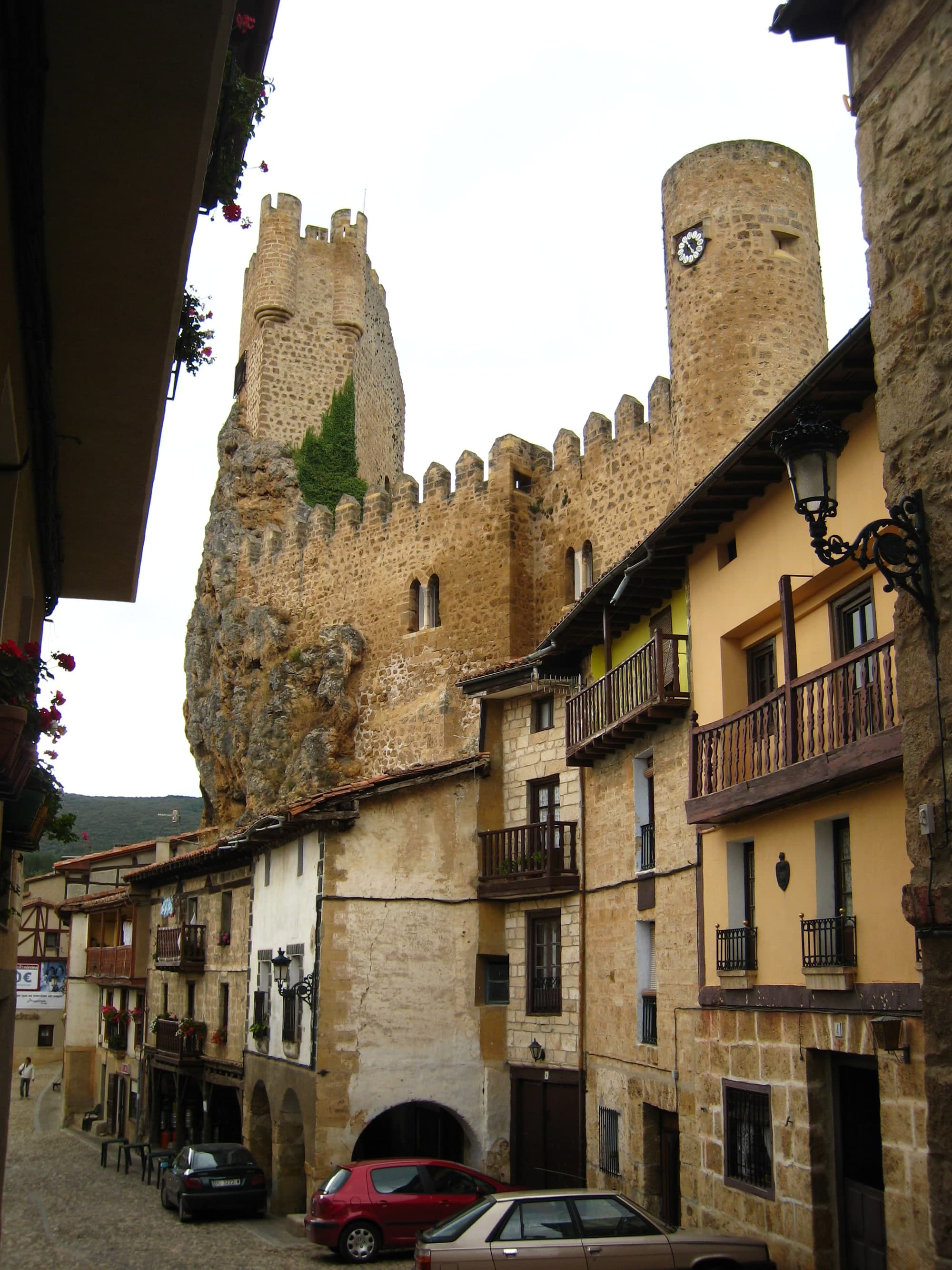
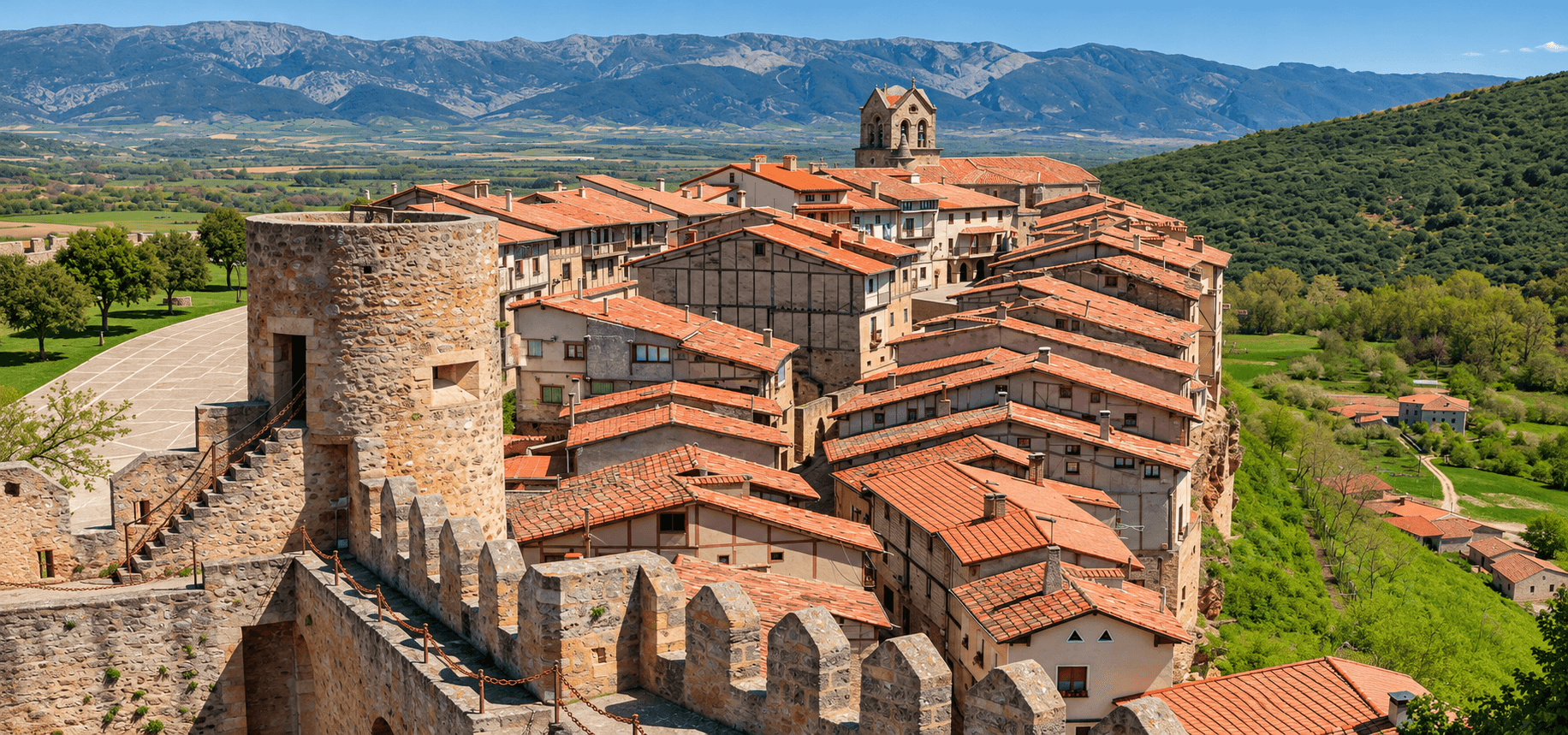
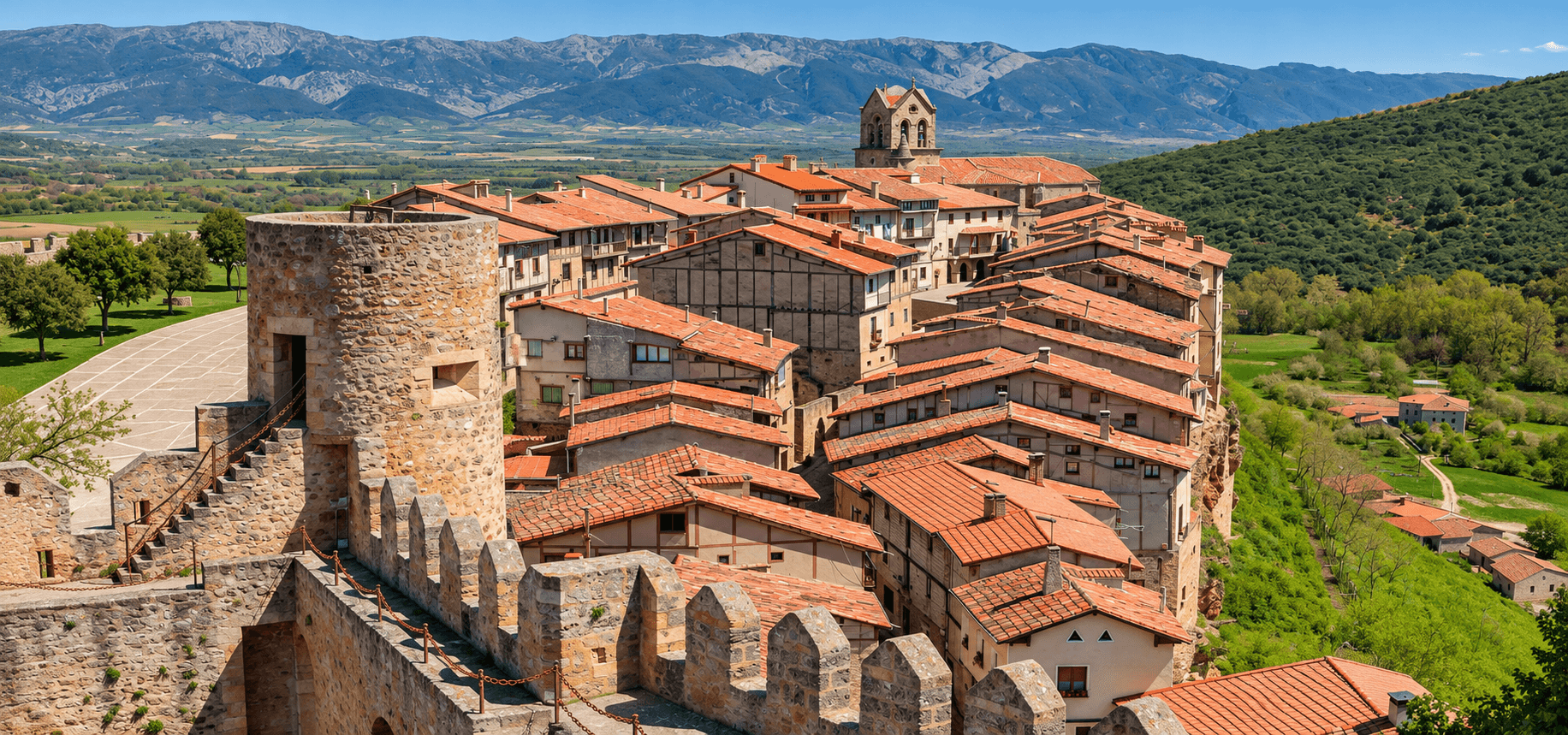
Frías reveals itself from afar: a tightly packed cluster of houses climbing La Muela hill, topped by the Velasco castle and the Church of San Vicente. Strolling through its streets means exploring a town whose medieval layout survives intact, with houses leaning against one another and upper storeys built of tufa and timber framing, opening onto sun-catching galleries known as solanas. It is no surprise that since 2014 it has been listed among the most beautiful villages in Spain.
Its reason for being lies at its feet, in the broad, mighty Ebro. This spot was used to cross the river since at least Roman times, and in the Middle Ages it became a key crossing between the Cantabrian coast and the Meseta. That strategic position brought the prosperity behind its remarkable array of monuments. In the 14th century a tower was built on the bridge to collect the pontazgo, the toll paid by those crossing it, more efficiently.
Its documented history begins in 867, at the height of the resettlement of these lands. It passed through the hands of Count Sancho García, known as "the one of the good fueros", and of the Kingdom of Pamplona under Sancho Garcés III the Great, before becoming bound to Castile. In 1202 Alfonso VIII granted it the Fuero de Logroño, which boosted its economy to the point that it had its own Jewish quarter, and in 1435 John II gave it the title of city, which it still holds.
Shortly afterwards, in 1446, the king handed it over to the Count of Haro, Pedro Fernández de Velasco, in exchange for Peñafiel. When the count began to curtail its charter rights, the townspeople rebelled and in 1450 withstood a two-month siege, after which a brave young man took their grievances to the count in writing. That episode is remembered every year at the Fiesta del Capitán. In 1492 the Catholic Monarchs created the Duchy of Frías for the Velascos, who were lords of the town for centuries.
Nearby monuments
The monuments in our catalogue closest to Frías (the village is shown in orange).